


AI agents for beverage distribution
How AI and machine learning optimise inventory management for beverage distribution
AI and machine learning bring practical gains to inventory management. They fuse demand signals from POS, promotions, and weather. They produce SKU-level forecasts that respect shelf life and expiry. This helps teams schedule replenishment that is shelf-life-aware. The models can tag perishability and suggest first-expiry-first-out flows. For many beverage distributors this reduces both spoilage and missed sales.
AI forecasting can improve accuracy by around 30%, and that figure is important when planning stock levels (source). Start with POS feeds. Next, tag SKUs by shelf life. Then run a pilot on your top 50 SKUs. Use short cycles and iterate. Track fill rate, days of inventory, waste volume in kg or litres, and forecast error (MAPE). These KPIs reveal whether the model improves operations.
Practical steps are simple to adopt. Connect POS and ERP feeds. Label perishable SKUs and critical cold-chain items. Run a pilot period of 60–90 days. Also, let a human review exceptions. For example, a virtual assistant can surface odd patterns for review and can draft responses to suppliers. Our platform, virtualworkforce.ai, accelerates email-driven approvals and order confirmations by grounding replies in ERP and WMS data. This reduces manual copy-paste across systems and lowers handling time per message.
Keep governance. Record audit trails for forecast overrides. Include a supplier contact strategy for rapid replenishment. Use tests such as A/B forecast logic and measure changes in waste and fill rate. Over time, machine learning models learn seasonality, promotions, and the effect of weather on cold drink demand. That insight helps beverage companies move from reactive to predictive operations. It also helps to optimize distribution networks and reduce inefficiency across the supply chain.

Drowning in emails?
Here’s your way out
Save hours every day as AI Agents label and draft emails directly in Outlook or Gmail, giving your team more time to focus on high-value work.
AI-powered demand forecasting for the beverage industry: use POS, weather and consumer trends to reduce waste
AI-powered models combine internal sales data with weather, events, and consumer trends. They predict spikes and slumps so teams can schedule inventory and promotions. Case studies report up to 30% better forecast accuracy, which translates to measurable reductions in food waste and lost sales (source). These gains matter in a tight-margin beverage industry where overstock means spoilage and understock means missed revenue.
Implement short-horizon and long-horizon forecasts. Use 1–4 week forecasts for operational buying and daily route planning. Use longer horizon forecasts for procurement, production planning, and promotional calendars. For quick wins, schedule extra coolers or promotional stacks ahead of hot-weather demand. Also, update the plan when a local event or sudden temperature swing appears in the feed.
Start with a POS feed connection and enrich it with weather and event data. Add consumer trend signals from social listening or syndicated data. Then run the model over recent history. Validate using MAPE and adjust. One practical tactic is to run a pilot on high-turn SKUs where mistakes are costly. A second tactic is to align demand forecasts to warehouse picking schedules and carrier windows.
Forecasting also helps the supplier network. When forecasts are visible to suppliers, replenishment lead times shrink and case fill rates rise. This is a direct path to reduce waste. You can also deploy an ai agent for food to trigger reorders automatically within predefined safety stock bands. These agents can send context-aware emails and update ERP entries when a human approves. That lowers manual workload and keeps teams focused on exceptions.
Supply chain and supply chain management: AI-driven route planning and workflow automation for smarter logistics
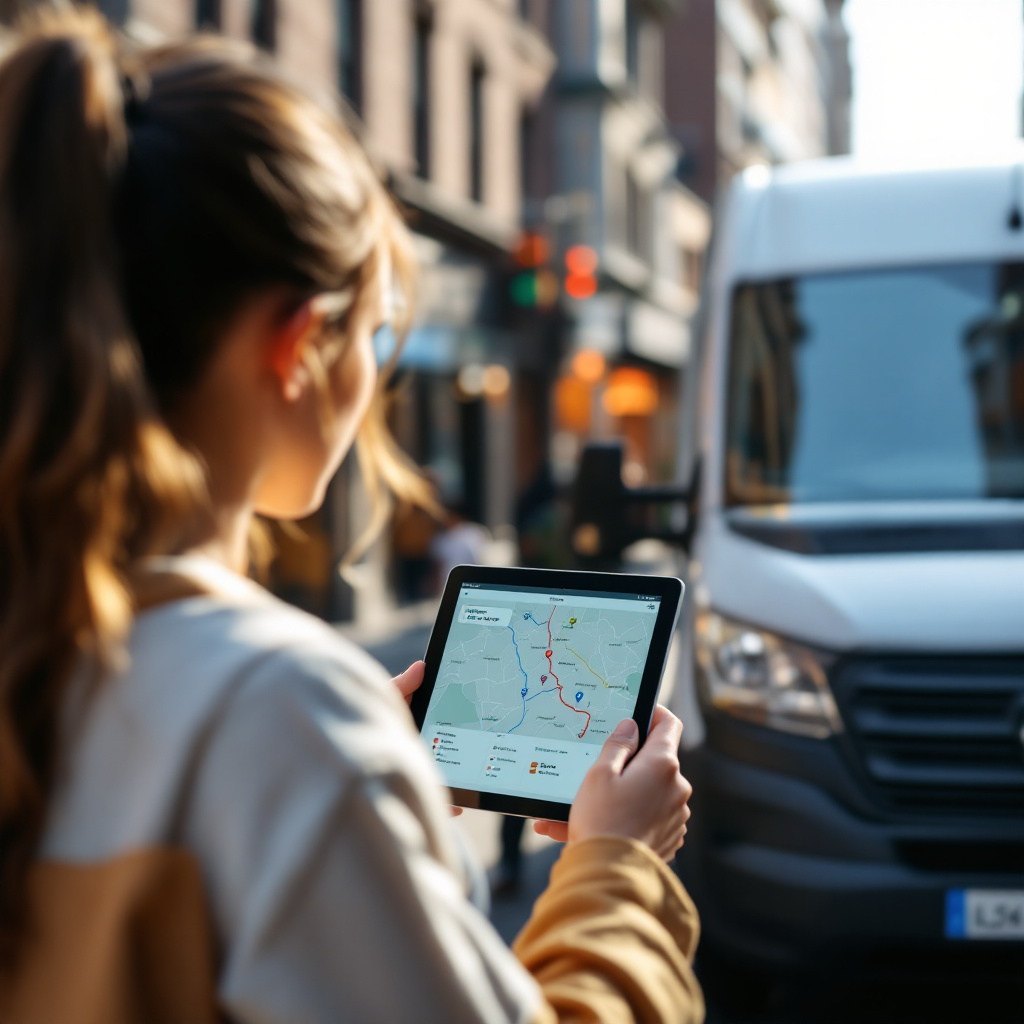
AI improves route planning and dynamic re-routing. It also optimizes load consolidation and delivery sequences. These tools cut miles and time, and they improve customer service with better on-time performance. Industry reports show delivery times can fall by about 20% and logistics costs by roughly 15% when AI-driven routing and scheduling are applied (case study). Those are meaningful efficiencies for beverage distribution.
To deploy, integrate telematics, set delivery windows, and instrument fuel per drop. Then run A/B routes to compare performance. Use route optimisation outputs to rearrange stops and to reduce empty miles. Automate manifest generation and proof-of-delivery capture. Also, automate exception emails so that when a delivery delay occurs, an AI draft is ready and grounded in ERP data. That reduces time spent on repetitive tasks and improves SLA compliance.
Workflow automation reduces manual handoffs. For example, automated load plans can feed picking and packing lists to warehouse teams. Autonomous ai agents can propose split loads, and a human can accept or adjust. This keeps control while leveraging speed. Log KPIs such as on-time percentage, miles per drop, returned pallets, and fuel spend. Improvements in those metrics directly affect margins.
Finally, consider integrating planning systems with digital freight and carrier portals. A tight loop between forecasting, inventory, and routing helps predict supply chain issues before they escalate. That lets operations adapt earlier and keeps shelf availability high across retail partners. For further reading on AI for logistics email drafting and automated correspondence, see tools that bridge messages and operational systems virtualworkforce.ai logistics email drafting.
Drowning in emails?
Here’s your way out
Save hours every day as AI Agents label and draft emails directly in Outlook or Gmail, giving your team more time to focus on high-value work.
AI agent and ai agent for food: virtual assistants and autonomous agents in food and beverage operations
An AI agent is an autonomous decision system that executes tasks and makes recommendations. In the food and beverage world an ai agent for food can automate ordering, perform shelf monitoring, or suggest pricing moves. Virtual assistants help field reps take orders by voice, generate stock alerts, and manage exceptions. These systems reduce manual email handling and speed up responses.
Practical use cases include virtual assistants for field reps, agentised reorder bots for warehouses, and automated price testing engines. A typical flow has an agent propose a reorder when inventory dips below a threshold. A human reviewer then approves the action. This human-in-the-loop guardrail is essential for regulatory compliance and for avoiding costly mistakes.
There are important guardrails. First, keep an audit trail of agent decisions and actions. Second, require human sign-off for large value or high-risk orders. Third, stage rollouts so an agent learns on limited SKUs. Our no-code platform lets operations teams set templates, tone, escalation paths, and data sources without prompt engineering. It also connects to ERP/TMS/TOS/WMS systems so replies are grounded in live data. This reduces errors and accelerates handling times dramatically.
Benefits include faster decisions, fewer manual errors, and consistent order fulfilment. Autonomous ai that runs around the clock can monitor cold-chain alerts and raise instant alarms. At the same time robotics and computer vision can support shelf checks and production lines. Together these tools form an ai platform that automates routine tasks while keeping humans in control for exceptions. This mix preserves uptime and improves overall quality control.
Transforming the food supply chain and food service: benefits, challenges in the food and routes to ai adoption
AI is transforming how the food supply chain and food service operate. Benefits include lower food waste, better margins, and faster fulfilment. The global AI market in food and beverages was valued at about USD 8.45 billion in 2023 and is projected to reach USD 84.75 billion by 2030, a strong growth signal for ROI (market report). Thanks to AI, beverage companies can adapt more quickly to shifts in consumer demand and promotional calendars.
Challenges in the food include data quality, legacy systems, perishability constraints, and regulatory hurdles. Change management is essential. Start with data clean-up, then run focused pilots. Stakeholders such as procurement, operations, and IT must each own tasks in the rollout. Also, define rollback plans and compliance checks so you can revert if a model underperforms.
The adoption roadmap is clear. First, prepare data and connect feeds from POS, ERP, and telematics. Second, pilot on a small set of SKUs or a single route. Third, scale successful pilots while monitoring KPIs. Fourth, implement continuous learning so models improve over time. Basic automation tools should be in place first, then more advanced ai solutions may be layered on.
Risk controls must include performance KPIs, audit trails, and regulatory compliance checks. AI can help predict supply chain issues and highlight at-risk shipments before they fail. When you blend predictive analytics, machine learning, and human oversight, you can reshape operations and get ahead of the competition. For teams managing emails and approvals, using a virtual assistant for logistics can cut handling time and reduce errors in order communications learn more.
Frequently asked questions: optimizing supply, inventory management and the future of food and beverage
This section answers common questions about deploying AI in beverage distribution. It covers ROI timelines, data needs, labour impact, ERP integration, and privacy. The short answers below help teams plan pilots and governance.
How quickly can AI show ROI in beverage distribution?
Pilots often show measurable ROI within 3–6 months for targeted problems like forecasting or route optimisation. Many teams see faster reductions in handling time and fewer stockouts when they start with high-turn SKUs and automate related emails.
What minimum data do I need to start?
At minimum you need POS sales data, SKU master data, and lead time information from suppliers. Telemetry and weather data add value. Connect those feeds and you can run basic forecasts and routing experiments.
Will AI replace warehouse or field staff?
AI reduces repetitive work but typically augments human roles instead of replacing them. Staff shift to exception handling, planning, and customer relationships. This improves job quality and throughput.
How does AI integrate with ERP and WMS systems?
Most AI deployments use connectors or APIs to read ERP and WMS data and to write suggested orders or status updates. No-code platforms reduce integration time and let operations set business rules without heavy IT intervention see example.
What about regulatory and food safety concerns?
Maintain audit trails and require human approvals for high-risk actions. AI should log decisions and provide traceability to support food safety and compliance needs. This protects consumers and your brand.
How can I measure success during a pilot?
Track three core KPIs: fill rate, forecast error (MAPE), and waste volume. Add route metrics like fuel per drop and on-time percentage for logistics pilots. These show clear operational impact.
What skills do teams need to run AI pilots?
Teams need domain expertise, basic data literacy, and an owner for governance. IT supports data connections. Business users run model reviews and approve policies.
How will AI affect customer service emails?
AI can draft context-aware, ERP-grounded replies that reduce handling time per email. That improves SLA adherence and frees agents for complex queries. For logistics-specific email automation, teams can use targeted tools to automate correspondence learn how.
What are simple first pilots to try?
Run a 90-day pilot on forecasting for top SKUs or on route optimisation for a single region. Measure the three core KPIs and refine models weekly. Assign a governance owner to oversee data and approvals.
How will AI shape the future of food and beverage?
AI is poised to drive more personalised ranges, faster replenishment, and tighter margins across the food sector. The future of food and beverage will see autonomous ai agents handling routine tasks while humans focus on strategy and relationships. For teams that want to scale logistics operations without hiring, AI can be a practical path forward read more.
FAQ
What is the best first use case for AI in beverage distribution?
Start with demand forecasting for high-turn SKUs because forecast improvements quickly reduce overstock and stockouts. Forecast gains also feed routing and purchasing decisions, delivering early wins.
How does machine learning differ from traditional forecasting?
Machine learning models learn complex patterns from many signals like POS, weather, and promotions. They adapt faster than rule-based systems and can update forecasts in near real-time.
Can AI help reduce food waste in distribution?
Yes. Better forecasts and shelf-life-aware replenishment lower spoilage and improve fill rate. Tools that connect forecasts to ordering and routing cut unnecessary stock sitting in warehouses.
Are autonomous AI agents safe to use in ordering?
They are safe when paired with human-in-the-loop controls, audit trails, and staged rollouts. Define thresholds that require approval and log every automated decision.
What KPIs should I track for route optimisation?
Track miles per drop, fuel per drop, on-time percentage, and returned pallets. Improved routing shows up quickly in these metrics and drives cost savings.
How important is data quality for AI success?
Data quality is critical. Clean, timestamped POS, accurate SKU masters, and reliable lead times are prerequisites. Invest time in data preparation before modelling.
Can AI integrate with existing ERP and TMS systems?
Yes. Most AI solutions use APIs or connectors to read and write ERP and TMS records. No-code platforms minimize IT effort and speed up rollouts.
Will AI reduce headcount in operations?
AI typically shifts staff from repetitive tasks to higher-value work. It reduces routine manual effort and allows teams to focus on exceptions, relationships, and improvement projects.
What governance is needed for AI in food and beverage?
Governance should include performance KPIs, audit logs, access controls, and compliance checks. Assign an owner for decision rights and rollback procedures.
How do I start a pilot with limited resources?
Pick one region or 50 SKUs, connect minimal POS and inventory feeds, and run for 60–90 days. Measure fill rate, forecast error, and waste. Use the results to secure broader investment.
Drowning in emails?
Here’s your way out
Save hours every day as AI Agents label and draft emails directly in Outlook or Gmail, giving your team more time to focus on high-value work.