


ai — nuvizz optimises last mile delivery in real-time
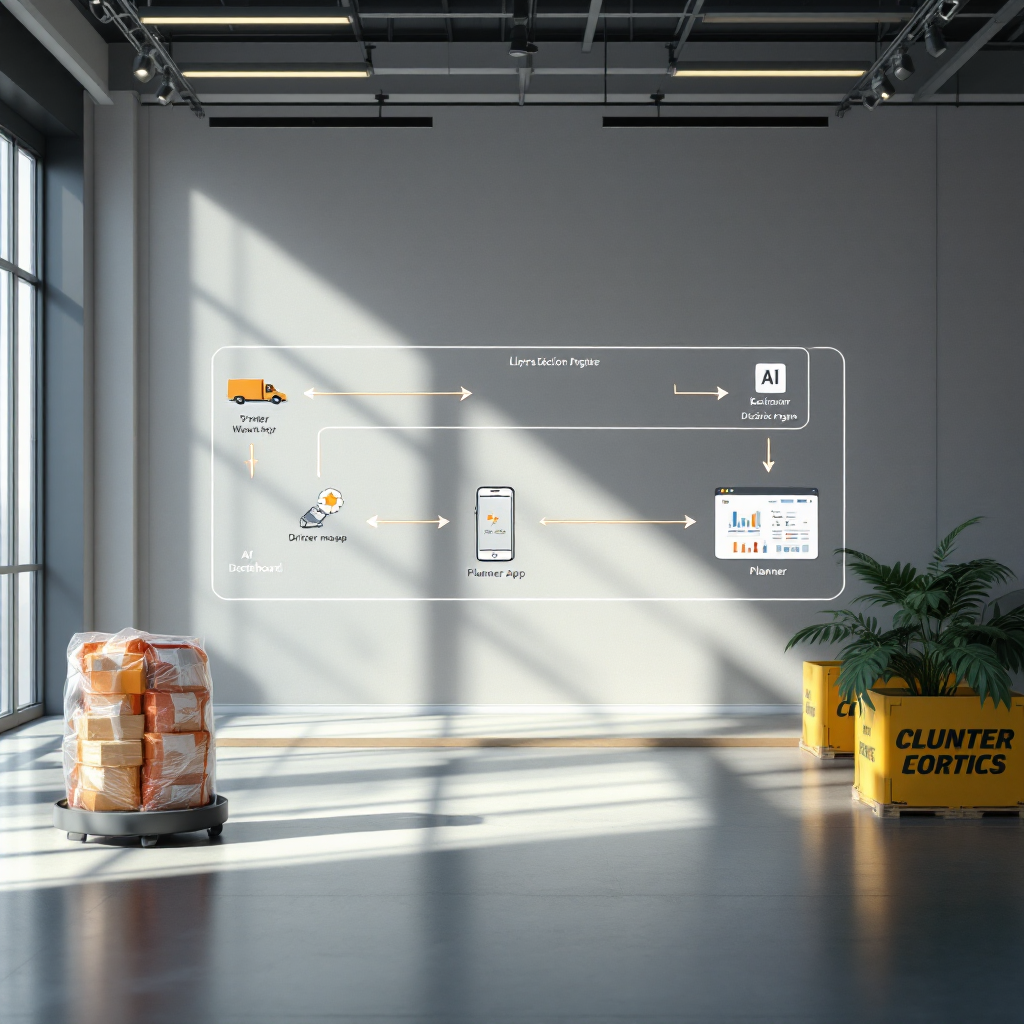
Nuvizz is an AI assistant that focuses on last mile delivery and orchestration. It analyses live inputs and then suggests optimised plans for drivers and carriers. The platform plans routes, manages exceptions, and provides live visibility to planners and customers. Nuvizz’s approach uses a Vizzard-style assistant that gives a dispatcher choices and clear next steps. The assistantic interface keeps human oversight in the loop, so dispatchers select the ideal algorithm to optimize routes and then approve changes.
AI takes telemetry, traffic feeds, ETA predictions and order data. Then it ranks options, so drivers get concise instructions via a driver mobile app. This reduces idle time and helps to streamline handovers between hubs. As a result, logistics teams see measurable gains where AI is active. For example, deployments that use AI have reported roughly 25–35% lower last‑mile cost and up to 95% on‑time delivery rates, according to industry analysis How AI is Making Last-Mile Delivery More Efficient – Debales AI.
Furthermore, Nuvizz integrates with warehouse systems, carrier APIs and map services to offer a single pane of control. It supports real-time delivery updates and notification flows for customers. For operators who want to learn more about putting an AI assistant into shared mailboxes and inbox workflows, see our guide on the virtual assistant for logistics virtual assistant for logistics. Finally, Nuvizz reduces manual steps and lets teams focus on exceptions. This approach helps to streamline the last mile while keeping drivers and dispatchers coordinated, efficient and informed.
delivery logistics — core technologies to optimize last-mile deliveries with ai agents
Last mile delivery relies on several core ai technologies that work together. First, route optimization engines compute cost-effective delivery routes and reduce mileage. Second, ai agents run continuous checks and reroute vehicles when conditions change. Third, computer vision assists scanning and proof-of-delivery tasks. Fourth, autonomous delivery robots and drones handle short urban runs and repeatable routes. Together, these elements form a stack that helps to optimize last-mile delivery and cut labour costs.
Route optimization and dynamic routing cut fuel and time. For example, a good route optimization model uses live traffic, predicted traffic patterns and order priorities to assign stops. Then dispatchers select the ideal algorithm to optimize routes or switch to a faster heuristic for peak periods. AI agents monitor vehicle telemetry and weather feeds in real-time events and data inputs. When delays occur, the agents push alternate plans to the driver mobile app and to the planner dashboard. This process reduces missed slots and helps to streamline cross-dock handoffs.
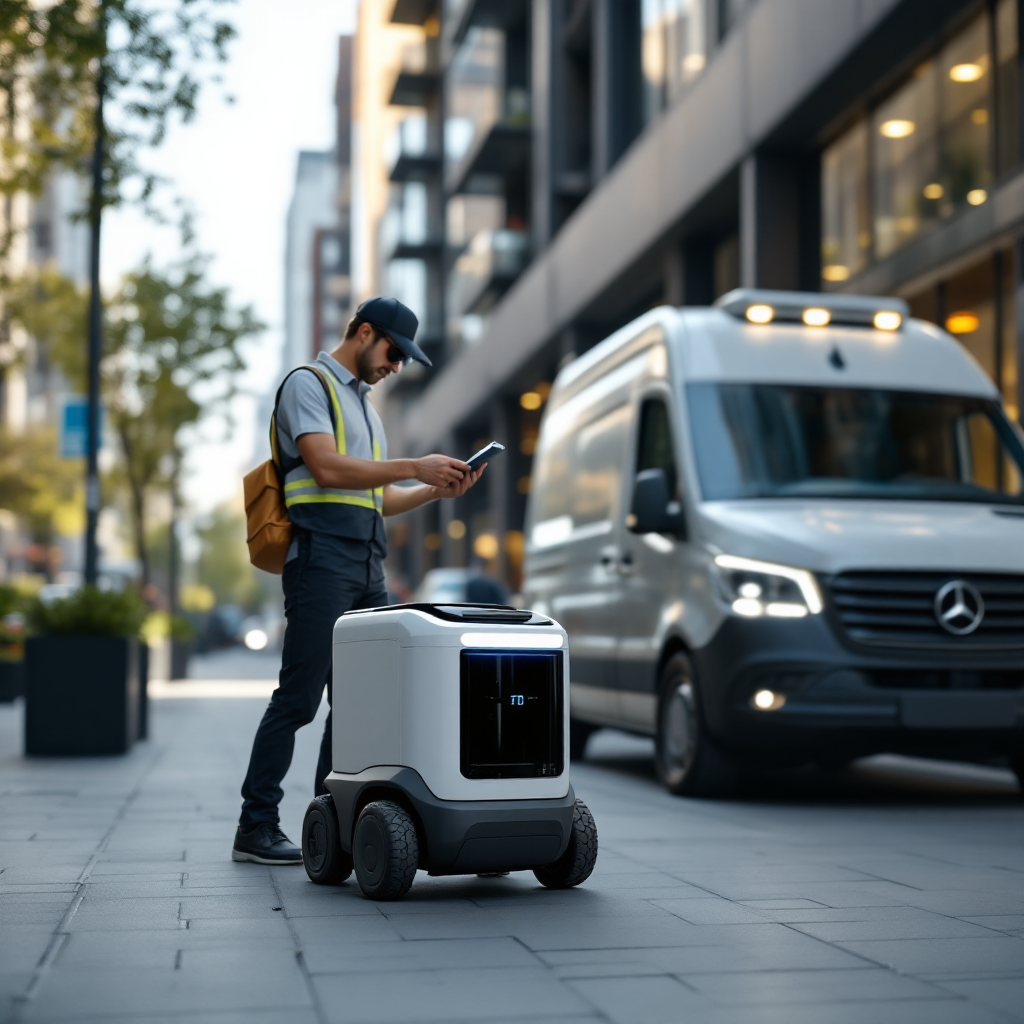
Computer vision and smart glasses accelerate scanning and reduce manual data entry. Pilots have shown time savings for hands-free scanning and safer handling on busy routes. Also, autonomous delivery robots reduce labour costs on low-complexity legs and serve dense urban pockets. When teams integrate robots with dispatch and depot workflows, they gain predictable capacity for last-mile runs.
If you want to automate email workflows around these changes, our automated logistics correspondence resources explain how to connect AI replies to ERP and TMS systems automated logistics correspondence. Overall, these ai technologies let planners forecast demand, adapt plans and keep drivers informed, and they help to minimize manual processes across delivery operations.
Drowning in emails?
Here’s your way out
Save hours every day as AI Agents label and draft emails directly in Outlook or Gmail, giving your team more time to focus on high-value work.
last mile logistics — real-time tracking and supply chain visibility to reduce costs
Visibility drives better decisions across the supply chain. Real-time tracking ties vehicle telemetry to order status, and it gives planners a live view of progress. Teams use that view to reassign loads, shorten idle time and reduce failed deliveries. When systems provide real-time delivery updates, warehouses can stage orders just-in-time, and customers get accurate ETAs.
Key data feeds matter. First, maps and traffic APIs supply live congestion data. Second, vehicle telemetry reports location, speed and load status. Third, order systems show time windows and customer preferences. Fourth, weather feeds flag conditions that might change plans. Integrating these feeds lets AI agents produce routes based on real-time and historical patterns. Then planners apply simple rules to prioritize urgent stops and to avoid risky streets.
In practice, live visibility reduces missed slots and improves fleet utilisation. Operators report fewer failed delivery attempts and faster recovery from disruptions. Also, seamless integration of customer data and customer data from external sources strengthens communication. For customer touchpoints, automated notifications keep customers informed and reduce inbound queries.
To integrate these feeds, start with telemetry and orders. Then add maps and weather. Next, connect carrier APIs and customer portals. If you need help automating collaborative emails that reference live ETAs, see our guide on logistics email drafting AI logistics email drafting AI. Finally, make measurement part of the workflow, and track on-time percentage, failed attempts and time to recover. Those metrics will show how well your visibility investments pay off.
last-mile deliveries — measurable gains: cost reduction, on-time delivery and customer satisfaction
AI delivers measurable ROI in last-mile deliveries. Companies that apply AI report 25–35% cost reductions and up to 90–95% on-time delivery in mature deployments. Those figures appear in industry studies and pilot reports that track route optimization and dynamic rerouting The Role of AI in Improving Last Mile Delivery | FarEye and Debales AI analysis. The gains stem from fewer wasted miles, fewer failed deliveries, and better driver throughput.
Trackable KPIs include cost per delivery, on-time rate, deliveries per driver per shift and customer NPS. Also monitor carbon per delivery to meet sustainability targets. Route optimization reduces mileage and fuel, and smart dispatch improves driver productivity. Meanwhile, smart glasses and vision-assisted scanning shorten handling time at stops. Field trials with delivery robots show lower labour costs on repeatable urban routes Navigating the Last Mile: A Stakeholder Analysis of Delivery Robot ….
Customer satisfaction improves when ETAs become reliable. For this reason, invest in predictive analytics that forecast delivery windows and then communicate them. Predictive analytics and AI models lower uncertainty and keep customers informed. As a result, NPS and repeat purchase rates rise. If you want a practical ROI view, try our virtualworkforce.ai ROI playbook for logistics teams virtualworkforce.ai ROI for logistics. Overall, these measurable outcomes make a compelling case to optimise last-mile delivery with ai and to transform last-mile operations by leveraging data-driven insights.
Drowning in emails?
Here’s your way out
Save hours every day as AI Agents label and draft emails directly in Outlook or Gmail, giving your team more time to focus on high-value work.
integrate omnichannel — how to integrate AI to empower last-mile teams and omnichannel fulfilment
Integrating AI across omnichannel fulfilment starts with a clear plan. First, map processes for e-commerce, click-and-collect and B2B flows. Second, identify integration points: orders, warehouse picks, carrier APIs and customer notifications. Third, run a pilot at small scale. Then scale only when KPIs hit targets. These steps help teams adapt quickly while managing risk and cost.
People and process matter more than technology. Train planners and drivers on new decision flows, and show how AI empowers them rather than replaces them. For example, set rules so humans approve exception moves. Also, create escalation paths and audit logs to track changes. Change management must include clear owner roles and a feedback loop to refine the model.
Quick wins include optimising peak‑period routing and smart‑slotting for customer windows. Also, link carrier tracking to customer notification systems so recipients get concise, timely updates. Integrate return flows and reserve capacity for urgent B2B deliveries. When teams integrate AI with email and ticket handling, they minimise manual processes and speed replies. Our guide on how to scale logistics operations with AI agents offers step-by-step advice for pilots and governance how to scale logistics operations with AI agents.
Finally, measure impact and iterate. Use short sprints to test new routing heuristics, and then measure on-time rates and deliveries per driver. Keep a clear rollout plan, and ensure the AI models get the right input from ERP and WMS systems. Doing so improves fulfilment performance and strengthens the customer experience across channels.
optimize ai agents — deployment checklist, KPIs and next steps for last mile operations
Use this playbook to deploy ai agents in last mile delivery. First, check data readiness. Ensure orders, telemetry, map and carrier feeds are clean and accessible. Then list integration points: TMS, WMS, ERP and customer portals. Next, define pilot metrics and success criteria. Choose a narrow pilot scope, such as a single depot or urban corridor, and measure against baseline KPIs.
Checklist items include data readiness, integration points, safety checks and compliance reviews. Also include sustainability metrics like carbon per delivery and fuel saved. Add user training so dispatchers and drivers adopt the new tools. Remember to set governance for ai decisions, including audit logs and human overrides. An agentic approach helps; give the ai agent clear rules and then let humans refine decisions.
KPI targets should be concrete. Aim for a 25–35% cost reduction where possible, and target 90–95% on-time delivery in mature operations. Track deliveries per driver per shift, failed attempts and customer satisfaction scores. Use a measurement cadence that reports weekly during pilots and monthly during scale. Evaluate vendors on integration ease, proven route optimization results and domain knowledge. For vendor evaluation, consider platforms that can integrate email automation and inbox workflows so teams handle exceptions faster, for example our solutions for ERP email automation in logistics ERP email automation for logistics.
Finally, plan next steps: run the pilot, measure, expand to more routes and then scale regionally. Ensure your team has clear stakeholder owners and that legal and compliance checks pass. By following this checklist, teams can optimize last-mile delivery, minimize incorrect deliveries and scale AI safely and effectively.
FAQ
What is an AI assistant for last-mile delivery?
An AI assistant analyses live data to help plan and run last-mile delivery. It suggests routes, handles exceptions and communicates ETAs to customers and planners.
How does route optimization improve delivery performance?
Route optimization reduces mileage and fuel and increases on-time rates. It uses traffic, order data and priorities to calculate cost-effective delivery routes.
Can AI reduce failed delivery attempts?
Yes. AI uses real-time tracking and better ETAs to reduce missed deliveries and to schedule retries more efficiently. As a result, teams report fewer failed attempts and better recovery times.
What role do AI agents play in dynamic rerouting?
AI agents monitor live events and then propose or enact alternative routes when needed. They use telemetry and weather feeds so drivers get timely instructions.
Are autonomous delivery robots practical today?
Robots are viable for certain urban routes and controlled environments. They lower labour costs on predictable runs, and pilots have shown promising results in density pockets.
How do I measure ROI for an AI pilot?
Track KPIs like cost per delivery, on-time rate and deliveries per driver per shift. Measure baseline performance, run the pilot and then compare improvements over a defined period.
What data feeds are essential for real-time delivery visibility?
Essential feeds include map and traffic APIs, vehicle telemetry, order systems and weather. Integrating carrier APIs and customer portals adds further accuracy to ETAs.
Will AI replace dispatchers and drivers?
No. AI is intended to empower planners and drivers by automating repetitive tasks and giving better suggestions. Humans still make final decisions on exceptions and complex cases.
How can I integrate AI with email workflows and customer communication?
You can connect AI to ERP/TMS and to email systems so communications reference live ETAs and order status. Tools that draft context-aware replies reduce handling time and improve consistency.
What are fast wins when deploying AI in last-mile operations?
Start with peak-period routing, smart slotting and automated customer notifications. Run a small pilot, measure impact and then scale successful tactics across depots and corridors.
Drowning in emails?
Here’s your way out
Save hours every day as AI Agents label and draft emails directly in Outlook or Gmail, giving your team more time to focus on high-value work.