


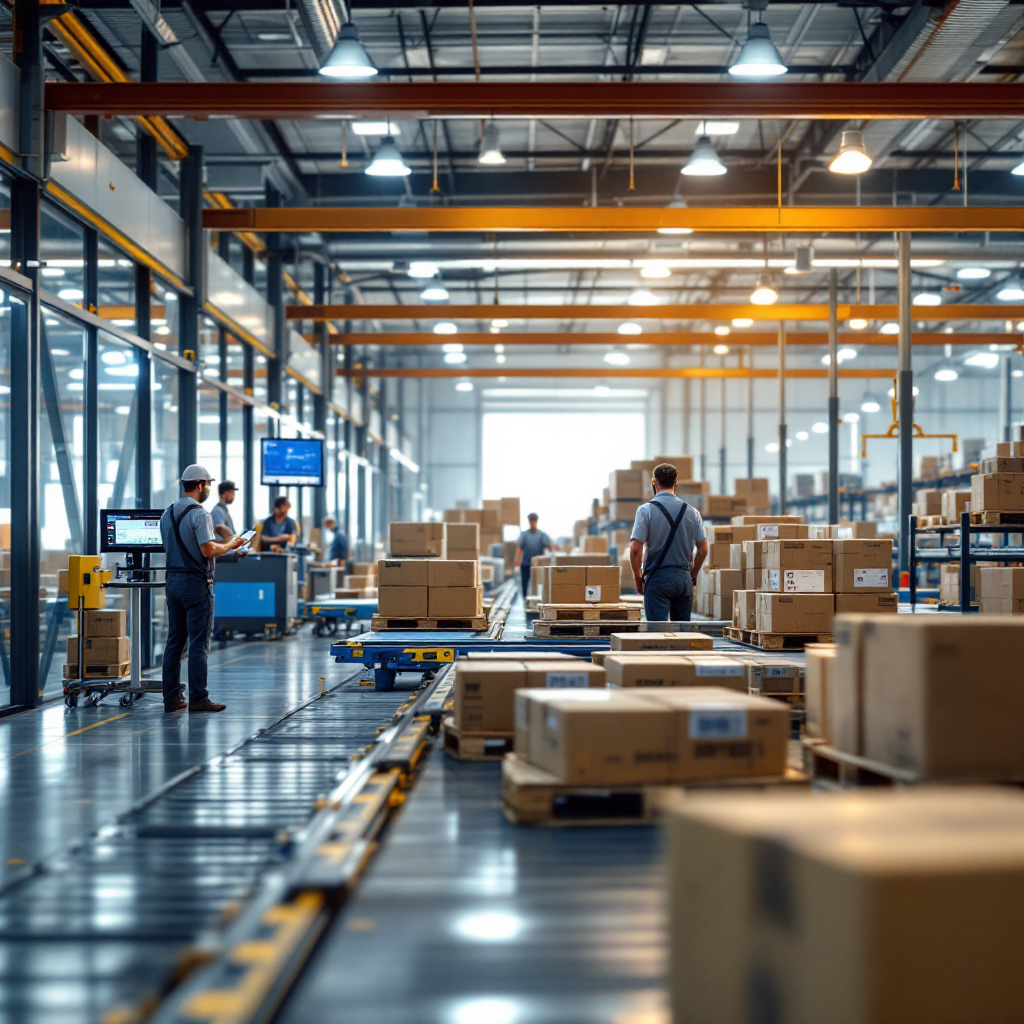
ai agents for logistics optimise the cross-docking process to lift productivity
ai agents for logistics can transform how teams schedule, sequence and move freight through a cross-docking hub. First, they take inbound data and then match loads to outbound departures. Next, they assign docks, sequence pallets and route teams to minimize handling and reduce dwell time. For example, simulation studies show AI optimization can boost throughput by about 20% and cut transaction costs by 10–15% (study on new implementation modes). Also, industry surveys report roughly 46% AI adoption across supply chain organizations, which supports rapid uptake of agent-driven scheduling (StartUs 2025).
Technologies include rule-based agents, reinforcement learning, and multi-agent systems. They connect to TMS and WMS for live inputs. In practice, a dock assignment and sequencing agent can cut truck turnaround by 15–25% in pilot programs. The system uses RFID, barcode scans and carrier ETAs to validate plans and then update teams. KPIs to track include throughput (pallets/hr), average dwell time and on-time departure rate. The approach helps operational efficiency while it reduces manual touchpoints.
Additionally, modular AI agents handle variations in layout and carrier mixes. They can be deployed lane-by-lane and then scaled. For logistics teams that struggle with long email threads and fractured data, a no-code assistant that drafts and cites ETA replies speeds responses and reduces errors; see a practical ops-focused email agent that integrates ERP/TMS/WMS data for fast replies (logistics email drafting). Finally, this chapter shows how to optimize cross-dock operations without replacing human oversight. Operators retain control, and agents make recommendations that humans validate before execution.
real-time visibility and supply chain data with ai-powered routing and warehouse operations for faster and more reliable delivery
Real-time feeds enable AI to re-sequence loads, reassign docks and reroute trucks within minutes. Real-time visibility from RFID, telematics and IoT sensors feeds routing decisions and ETA updates. This mix of sensor streams and analytics lets systems proactively manages exceptions and shortens reaction time to disruption. Combining digital twins and IoT supports predictive adjustments that reduce unnecessary moves and emissions, and it creates smoother yard operations (AI in Logistics 2026).
Typical uses include route re-optimisation, dynamic dock reallocation and exception alerts. Data requirements cover GPS/telemetry, barcode/RFID scans, carrier ETAs and inventory status. With these inputs, ai-powered routing can reroute vehicles to avoid long wait times and then update customers with accurate ETAs. The result is faster and more reliable delivery, improved customer satisfaction and fewer wasted moves. Real-time visibility shortens the time to respond to a late trailer, damaged pallet or gate delay.
Practically, teams should link sensors to forecasting engines and yard management. Also, integrate carrier APIs to get live ETAs and then close the loop with outbound notifications. For teams that want to streamline logistics communications, look at tools that automate replies and cite system facts to stakeholders (virtual assistant for logistics). In addition, the approach supports supply chain orchestration and continuous improvement by logging outcomes and retraining models on exceptions. Thus, ships, trucks and forklifts run with better coordination and improved supply chain efficiency overall.
Drowning in emails?
Here’s your way out
Save hours every day as AI Agents label and draft emails directly in Outlook or Gmail, giving your team more time to focus on high-value work.
automate and streamline workflow using ai solutions and automation across logistics operations at the cross-dock
This chapter shows how to automate end-to-end workflow, from inbound scanning to outbound build. AI solutions help orchestrate sorting, robotic conveyors and ML-driven sort patterns. They also coordinate voice or pick-by-vision stations at manual points. The aim is to reduce misroutes and cut labour costs while improving accuracy.
Core modules include automated sorting, robotic conveyors and machine learning that optimizes sort patterns. These systems reduce manual touches and measure error rate, labour minutes per pallet and percentage of automated sort. Evidence shows that automation plus AI reduces labour errors and increases throughput. Digital worklists and actionable step-by-step instructions reduce confusion during peak windows. Additionally, fail-safe human override paths are essential; operators must be able to take control when required.
Integration is key. Tie WMS/TMS APIs into the automation layer so that each scan updates inventory levels in real time and triggers the next task. For teams that want to automate correspondence about exceptions or ETAs, consider platform services that draft context-aware emails and then update system records (automated logistics correspondence). This keeps the flow of information aligned with workflow execution and reduces rework. In short, warehouse automation and AI-driven coordination let staff focus on exceptions, not repetitive tasks, and that supports operational efficiency and inventory reduction across warehouses and distribution.
ai-driven predictive maintenance helps optimize warehouse operations and improve roi
Predictive maintenance detects wear and predicts failures before they occur. Sensors on conveyors, forklifts and sorters feed vibration, temperature and PLC logs into predictive models. Then the models flag likely faults and schedule maintenance windows that avoid peak staging times. This approach reduces unplanned downtime and improves equipment availability.
Tools and data include vibration sensors, PLC logs, maintenance history and digital twin simulations. With these inputs, teams can forecast MTBF and then reduce emergency repairs. Expected impact includes steady throughput, fewer emergency stoppages and improved ROI. Studies of sustainable strategies to reduce logistics costs highlight predictive models as a lever to cut costs and improve utilization (sustainable strategies preprint).
KPIs to monitor include mean time between failures (MTBF), unscheduled downtime hours and maintenance cost per pallet. When predictive maintenance runs well, capacity planning becomes easier and teams can cut costs on spare parts and overtime. Also, maintenance data feeds back into AI algorithms that refine alerts and scheduling. This is especially important for warehouses and distribution centers with heavy conveyor usage. Finally, validate outcomes by measuring cost per pallet and then comparing before-and-after baselines to confirm ROI.
Drowning in emails?
Here’s your way out
Save hours every day as AI Agents label and draft emails directly in Outlook or Gmail, giving your team more time to focus on high-value work.
tailored solutions and ai agents combine routing and scheduling to optimize cross-dock operations
Tailored solutions work best for specific layouts, volumes and carrier mixes. Start with baseline process mapping, then pilot an agent on a single lane. Run A/B tests and simulation to iterate. This phased technique helps teams optimize lane assignment, truck pooling and time-window compression. It also helps to balance inbound and outbound flows so capacity is used efficiently.
Design wise, hybrid rule-based + ML agents often win. They give predictable decisions and learn subtle patterns over time. Let ai agents handle routine sequencing and alert humans for exceptions. This mix supports supply chain systems integration, including forecasting engines, yard management and billing. Use carrier APIs to sync real ETAs and then align dock plans automatically. The outcome is better dock utilisation and lower carrier waiting time.
Optimization targets include split shipments, lane swaps and automated truck builds. For inventory management and forecasting, integrate WMS feeds and demand signals. For teams wanting to scale without adding headcount, explore guides on how to scale logistics operations with AI agents (scale with AI agents). In practice, tailored solutions improve supply chain orchestration and let ai systems autonomously adjust to peaks. Finally, agents make recommendations and then log results for continuous improvement and analytics.

implementation roadmap to streamline logistics and scale ai solutions with real time KPIs that measure productivity
A pragmatic roadmap reduces risk and accelerates value. Define objectives and KPIs first. Then run a data and sensor audit. Next, pilot on 1–3 docks with a narrow scope. Iterate using digital twin simulation and then scale. This phased approach helps control capital spend and validate model behavior.
Risks include high capital cost, interoperability issues and data quality. Mitigate by staggering investments, using open APIs and standardizing data. Train staff and define human-in-loop rules. For email-heavy exception handling, adopt no-code AI email agents that ground replies in ERP/TMS/WMS and then update records; this cuts handling time and keeps communications accurate (ERP email automation). Also, ensure cyber security, edge compute and continuous monitoring are in place.
Measurable ROI often appears in 3–12 months for pilots. Mature rollouts can show multi-month to 3× ROI. Track real time KPIs such as on-time departure, route deviation rate and error rate. Use dashboards to surface actionable alerts and then run post-mortems for continuous improvement. Finally, discover how ai can validate scenarios in simulation before broad rollout and then transform your cross-dock operations at scale. For teams focused on daily operations and improving customer responses, integrating automated email drafting with backend connectors reduces friction and improves customer satisfaction (improve logistics customer service).
FAQ
What are AI agents for logistics and how do they help cross-dock operations?
AI agents are software processes that make scheduling and routing decisions automatically. They help cross-dock operations by sequencing loads, assigning dock lanes and reducing manual touches to improve speed and accuracy.
How quickly can a pilot show improvements in throughput?
Pilots often show measurable gains within 3–12 months depending on scope. Simulation studies indicate throughput improvements around 20% in optimized scenarios (simulation study).
What data is essential for real-time visibility?
Essential data includes GPS/telemetry, barcode and RFID scans, carrier ETAs and inventory status. Together, these inputs support real-time routing, ETA updates and exception alerts.
Can AI systems automate communication about exceptions?
Yes. No-code AI email agents can draft context-aware replies grounded in ERP/TMS/WMS data. This reduces handling time and keeps stakeholders informed without manual copy-paste.
What is predictive maintenance and why does it matter?
Predictive maintenance uses sensor data and analytics to detect wear and predict failures before they occur. It reduces unscheduled downtime and lowers maintenance cost per pallet.
How do I start a tailored solution for my facility?
Begin with process mapping, then pilot an agent on a single dock lane. Iterate with A/B testing and simulation, then scale when you validate results.
Which KPIs should I track during rollout?
Track throughput, average dwell time, on-time departure, error rate and maintenance metrics like MTBF. These KPIs show operational efficiency and help justify investments.
Are there integration concerns with legacy systems?
Yes. Interoperability can be a challenge, which is why open APIs, data standardization and phased integration are recommended. Work closely with IT and vendors to map connectors early.
How do AI agents handle disruptions like late carriers?
Agents use real-time feeds and carrier ETAs to re-sequence loads and reassign docks. They proactively manages exceptions by sending alerts and proposing adjustments to planners.
Where can I learn more about automating logistics correspondence?
Explore resources on automated logistics correspondence and ERP email automation to see how AI drafts replies and updates systems. These solutions reduce errors and speed responses (automated logistics correspondence).
Drowning in emails?
Here’s your way out
Save hours every day as AI Agents label and draft emails directly in Outlook or Gmail, giving your team more time to focus on high-value work.