


2026: AI and logistics become AI-driven backbone for supply chain visibility and analytics
2026 marks a shift. AI moves from pilots into core systems that run modern supply chain operations. Also, this shift brings unified platforms that connect suppliers, transport and warehouses. For example, the logistics AI market is forecasted to approach ~USD 700 billion by 2034, which shows scale and investor interest (The Intellify). And over 65% of logistics firms now use AI, showing adoption beyond trials (The Intellify).
In practice, companies now build end-to-end supply chain platforms. These platforms combine ERP data, transportation management and warehouse management. They give leaders real-time visibility into orders and inventory. Furthermore, digital twins mirror flows so teams can test scenarios. As one analyst wrote, “AI is no longer a tool for isolated tasks but a backbone for integrated supply chain intelligence” (Lumitech). This quote helps explain the shift toward platform thinking. PwC predicts that enterprise-wide AI strategies will separate leaders from followers (PwC).
Operational dashboards now combine predictive models with new data at the edge. They surface early warnings and suggest corrective actions. So teams make faster, clearer decisions. Also, real-time data streams link telematics, point-of-sale and supplier feeds. This reduces errors and speeds response. For teams that handle complex email workflows, tools like virtualworkforce.ai cut handling time and ground replies in ERP and WMS data. See virtual assistant examples for logistics teams who need faster responses and fewer errors (virtualworkforce.ai).
Short term, leadership should focus on data hygiene and governance. Next, invest in integrated analytics and digital twins. This approach helps supply chain leaders move from reactive fixes to strategic planning. Finally, the era of AI in logistics brings a new baseline for visibility and analytics in the entire supply chain.
Automate and automation: robotics and autonomous systems to redefine warehouse throughput and scalable operations
Warehouse operations now center on automation and collaborative robotics. AMRs and cobots operate beside people. They pick, sort and carry loads with fewer handoffs. Industry reports show AI-powered robotics can improve warehouse efficiency by about 40% while lowering labor cost (Spectra360). This stat explains why many teams scale quickly.
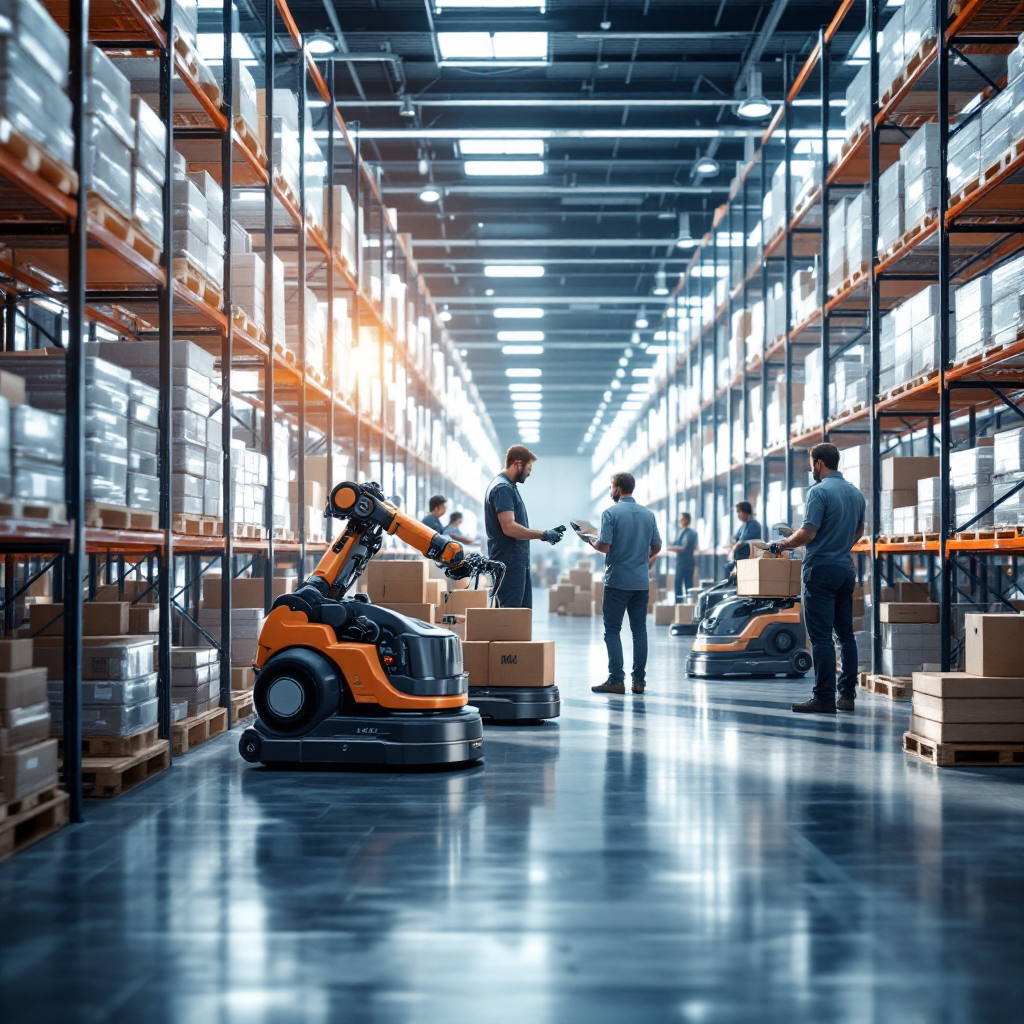
Task automation handles repetitive moves. Meanwhile, collaborative automation keeps humans in the loop for complex picks. This split boosts throughput and accuracy. Also, space use improves because robots can pack aisles tighter. So facilities avoid costly expansions. Key metrics to track include orders per hour, accuracy, robot utilisation and total cost of ownership. These show ROI fast.
Vendors now sell integrated solutions that link autonomous mobile robots, warehouse control systems and transportation planning. This makes route planning inside a site smarter. Additionally, intelligent automation coordinates stocking and shipping windows. The change helps logistics providers meet customer expectations for speed and clarity. Companies that want to automate email-driven exceptions should examine automated logistics correspondence tools, which blend AI with ERP and WMS context (virtualworkforce.ai).
Safety gains are measurable. Robots reduce manual handling injuries, and AI monitoring signals risks before they escalate. Furthermore, automation improves accuracy and reduces mis-ships. For leaders, the decision is less about if and more about how fast to scale. To accelerate adoption, pilot a small fleet, measure orders per hour, then expand. This method helps logistics organizations scale without overcommitting capital.
Drowning in emails?
Here’s your way out
Save hours every day as AI Agents label and draft emails directly in Outlook or Gmail, giving your team more time to focus on high-value work.
Demand forecasting and analytics: AI tools, IoT and agentic models to boost agility and risk management
Demand forecasting now pairs machine learning with IoT telemetry and new digital tools. Predictive models ingest sensor feeds, telematics and POS data. As a result, teams spot supplier delays and transport bottlenecks sooner. Maersk notes that AI’s predictive power enables proactive responses that protect continuity (Maersk). This point highlights practical value.
Agentic AI and agentic models now run scenario simulations. They test what-if cases across routes and production plans. Then, teams choose the least risky path. Also, generative AI helps create contingency plans and draft supplier messages. These tools reduce cycle time for decisions. For firms managing heavy cross-border workloads, AI in supply chains increases certainty for transit windows and customs timelines.
Data sources matter. IoT, telematics and shipment scans enrich forecasts. Big data and data analytics feed ML models that predict demand peaks and stockouts. Consequently, supply chain leaders reduce lost sales and lower safety stock. For operations that rely on many emails to confirm ETAs, AI agents that write context-aware replies speed exception handling. Learn how AI for freight forwarder communication can reduce manual email work (virtualworkforce.ai).
Metrics to measure include forecast accuracy, service levels and reduction in emergency shipments. Also, measure the time to detect and correct supplier delays. Better forecast tools improve agility and build supply chain resilience. Finally, firms that pair forecasting with real-time alerts and playbooks adapt in real time when disruption occurs.
AI in supply chains: 3PLs, global trade and smarter orchestration to manage disruption
AI changes how 3PLs and shippers work together. Now, carriers and 3PLs use AI to predict cross-border delays and to recommend multimodal options. This reduces lead times and optimizes costs. Also, AI helps with customs prediction and smarter route planning. The shift toward AI-driven orchestration gives shippers dynamic choices during disruption.
For example, 3PLs offer APIs that surface carrier risk, transit time variance and price volatility. This kind of orchestration makes the entire supply chain more resilient. Freight providers that embed AI into transportation management systems can auto-select carriers and adjust routing on the fly. In practice, this reduces the need for manual planning and decreases emergency reroutes. To learn how to scale logistics operations without hiring more staff, review guides on how to scale with AI agents (virtualworkforce.ai).
AI also drives smarter shipment consolidation and carrier selection. This improves fill rates and cuts emissions. Meanwhile, logistics providers must meet rising customer expectations for tracking and updates. So tools that automate correspondence and document workflows are now table stakes. Enterprises that adopt AI across partners see a competitive gap emerge. Research shows many companies are already ahead in AI adoption, which increases the pressure on others to modernize (IPHTechnologies).
Practical guidance for shippers: require 3PLs to expose APIs, demand SLAs that include prediction accuracy, and insist on visibility across modes. Also, adopt systems that link booking, customs and yard operations. This approach helps manage global trade volatility and keeps freight moving during shocks.
Drowning in emails?
Here’s your way out
Save hours every day as AI Agents label and draft emails directly in Outlook or Gmail, giving your team more time to focus on high-value work.
Sustainability and sustainable logistics: carbon-aware AI to reshape emissions and make supply chains scalable
Sustainability now sits alongside cost and speed. Carbon-aware routing and load optimisation cut emissions and save money. AI analyses modal trade-offs and flags when a slower mode reduces CO2 without harming lead time. Also, packaging optimisation reduces volume and the number of shipments. These changes support sustainable logistics goals and reduce waste.
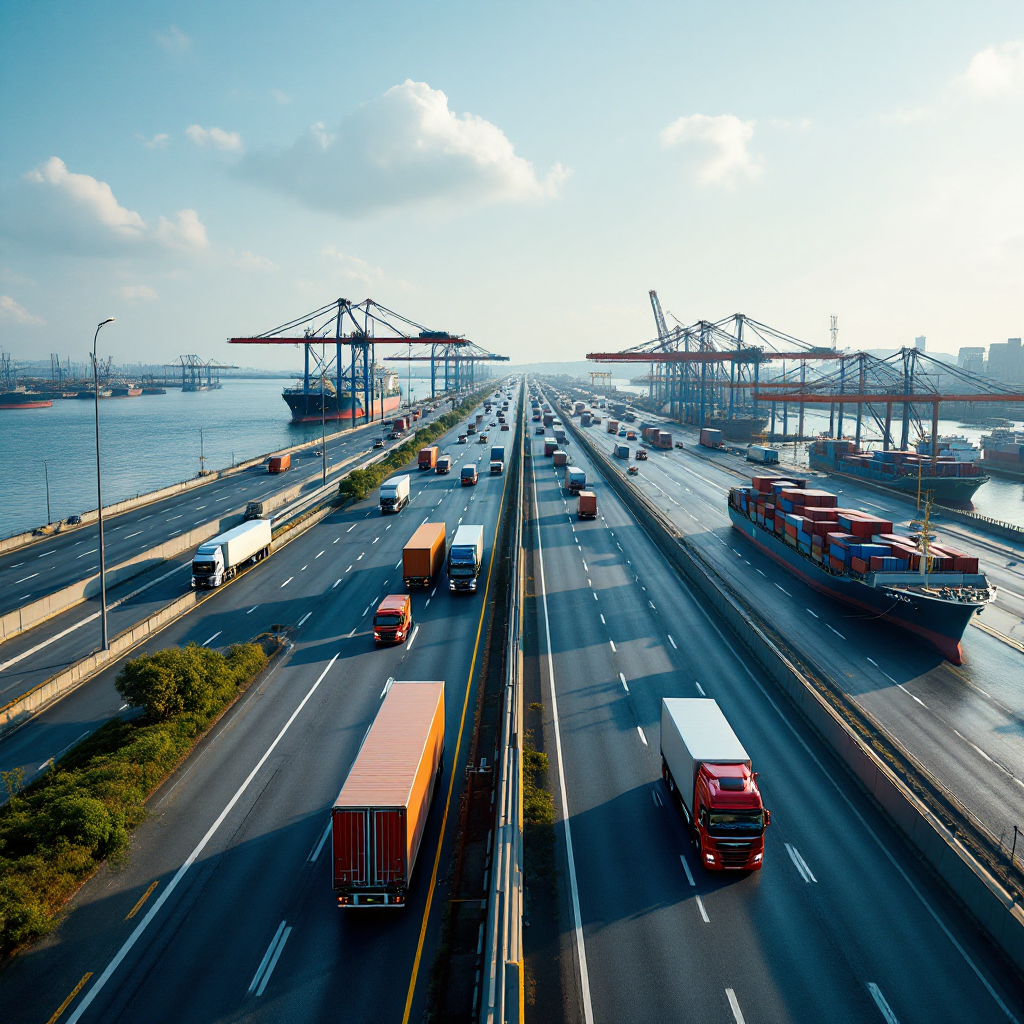
AI models calculate emissions by shipment, by route and by carrier. Then they recommend consolidation or modal shift when feasible. This helps shippers meet corporate sustainability targets while preserving service. Also, life-cycle data ties product choices to logistics emissions. So procurement decisions can include transport carbon scores. To measure success, compare baseline emissions and track reductions per shipment over time. Use consistent KPIs to align teams around sustainability.
Many logistics teams now expect their partners to offer carbon metrics. This demand drives new data feeds and reporting. Additionally, AI helps identify underutilised capacity and accelerates load sharing. The net result is fewer miles and reduced emissions per unit. For organizations balancing speed and sustainability, tools that provide transparent trade-offs are essential. In short, sustainable logistics is now scalable, measurable and part of standard operations.
From tools to strategy: forecasting the near future of artificial intelligence in logistics (forecast, disruption and scalable AI tools)
Looking ahead, AI adoption will broaden. PwC and others predict that enterprise-wide AI strategies will separate leaders from followers (PwC). Also, generative AI and agentic AI will add new capabilities and new risks. Companies must plan governance, model risk controls and change programs.
First, create a clear data and integration plan. Then, define use cases that deliver fast ROI. For example, automating email workflows using no-code AI agents improves response times and reduces errors. See how AI for customs documentation emails speeds replies and keeps records consistent (virtualworkforce.ai). Next, appoint owners for model performance and for data quality. This reduces surprises from model drift.
Talent matters. Train logistics teams on new digital tools. Also, recruit data engineers who know transportation management systems. For vendor selection, prefer providers that offer transparent model behavior and easy integrations. Scalable AI means you can add new data sources, like IoT and big data, without rebuilding core systems. Finally, balance innovation with risk management. Define escalation paths when models fail. This protects the entire supply chain and keeps customer experience stable.
To sum up, the near future is about integrating AI across people, partners and platforms. Leaders who act now will accelerate resilience and adapt in real time as conditions change. For practical next steps, use an ROI playbook and prioritize pilots that scale, such as automated logistics email drafting and context-aware replies (virtualworkforce.ai). This will help logistics teams convert tools into strategy for 2026 and beyond.
FAQ
How will AI change logistics visibility in 2026?
AI will consolidate data from suppliers, carriers and warehouses to provide unified dashboards. As a result, teams will get fast alerts and suggested actions to prevent issues.
What role do robots play in modern warehouses?
Robotics automate repetitive tasks and support human pickers on complex work. They improve throughput and accuracy while reducing physical strain on staff.
Can AI improve demand forecasting and reduce stockouts?
Yes. AI models that use IoT and POS data can predict demand shifts more accurately. Consequently, companies experience fewer stockouts and better service levels.
How should shippers evaluate 3PLs for AI readiness?
Ask for APIs, transparency on models and measurable SLAs for prediction accuracy. Also, require evidence of integration with transportation management systems.
Is sustainability compatible with fast shipping?
AI helps identify modal and consolidation options that lower carbon without harming lead times. Thus, sustainability and speed can coexist with intelligent planning.
What governance is needed for enterprise AI in logistics?
Define ownership for data, model performance and escalation procedures. Also, implement auditing, access controls and routine validation for predictive systems.
How do AI email agents help logistics teams?
No-code AI agents draft context-aware replies and cite ERP or WMS records. This saves time and reduces errors in routine communications.
Will generative AI replace planners?
Generative AI will assist planners by producing scenarios and drafts, but humans will keep final control. The technology accelerates planning rather than fully replacing experienced staff.
What metrics should logistics leaders track for AI pilots?
Track forecast accuracy, orders per hour, accuracy, email handling time and emissions per shipment. These metrics show operational and sustainability impact.
How can small logistics teams start with AI?
Begin with focused pilots that automate high-volume, low-complexity tasks like email replies or exceptions. Then, scale successful pilots and link them to core systems for wider value.
Drowning in emails?
Here’s your way out
Save hours every day as AI Agents label and draft emails directly in Outlook or Gmail, giving your team more time to focus on high-value work.