


How an ai agent improves forecasting and inventory in consumer goods supply chain
An AI agent ingests sales history and runs time-series models, and it includes promotions, weather, and events. It updates forecasts in near real-time and helps teams act faster. For example, an AI agent might reforecast daily before store opens, and then trigger orders or alerts. The goal is to improve forecast accuracy, reduce days-of-stock, cut lost-sales rate, and free up working capital. KPIs matter, and teams track mean absolute percentage error, fill rate, and inventory turnover.
Industry adoption shows why this matters. PwC reports that 79% of businesses currently use AI agents, and that two-thirds can quantify benefits such as better efficiency and fewer stockouts. At the same time the market for AI in retail is growing fast; analysts forecast a sizable market by 2026 with retail AI spending climbing. These facts help justify pilots and budgets.
Practically, an AI agent uses demand signals and external feeds to predict spikes, and it flags anomalies so planners can intervene. The AI agent also optimizes safety stock by SKU-store and suggests transfer orders. As a result, lost-sales decline and markdowns fall, and the retailer sees margin and service improvements. A short case example shows the effect: one grocery client reduced stockouts by 28% after deploying an AI agent that automated reorder rules for perishable SKUs. That pilot focused on high-velocity SKUs and then scaled.
Operationally, teams must ensure data readiness and governance. Start small, measure forecast accuracy uplift, and expand the agent scope when SLAs hold. Also, integrate order management and POS feeds. For teams using AI for emails and order queries, our platform helps by drafting context-aware replies that cite ERP and TMS data; see our work on virtual assistant logistics for logistics teams virtual assistant logistics. In short, an AI agent can forecast demand, and then it can turn predictions into action across the supply chain, so planners and operations keep shelves stocked and customers happy.
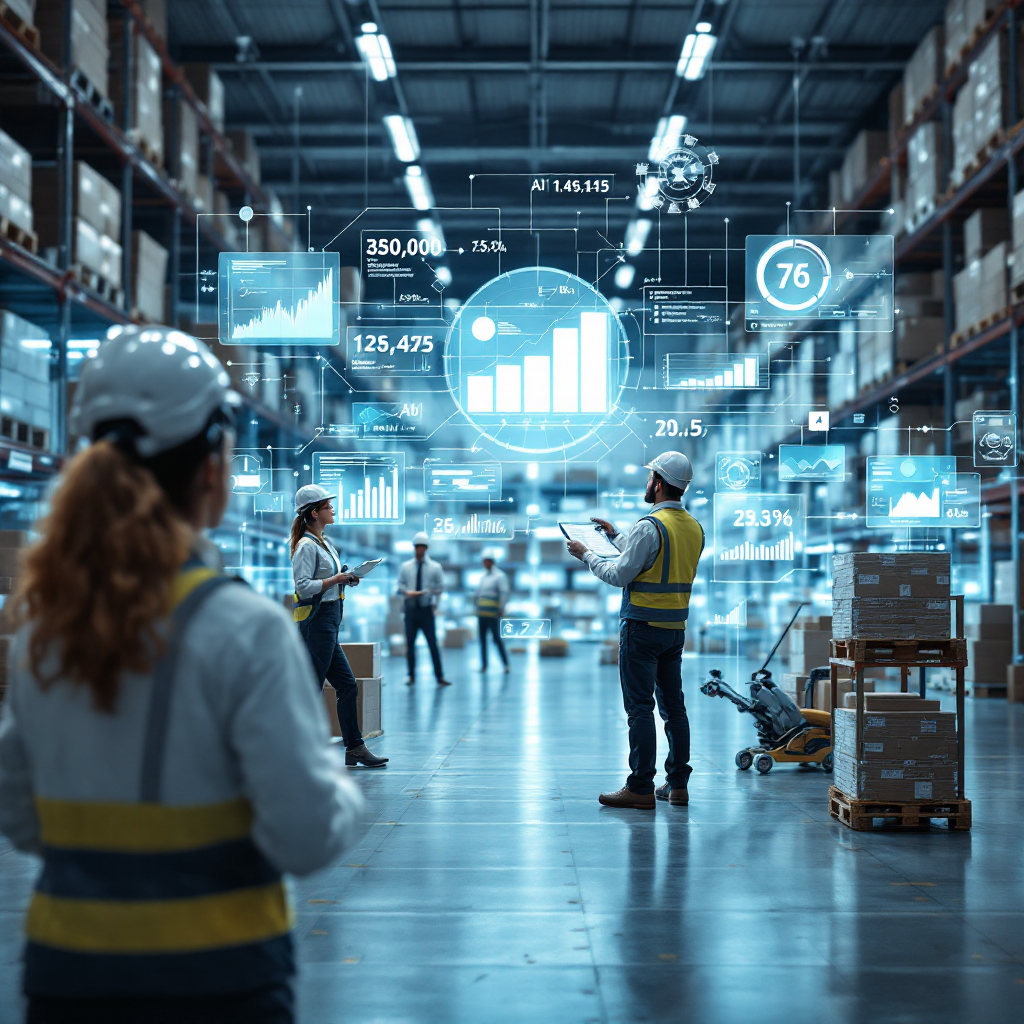
How agentic ai enables agentic commerce and reshapes the retailer role in retail and consumer
Agentic AI refers to autonomous agents that discover, compare, and purchase on behalf of customers. Agentic commerce is starting to change how transactions flow and who owns the customer relationship. McKinsey explains that “Agentic commerce uses AI shopping agents to transform retail with hyperpersonalized experiences and autonomous transactions,” and that shift affects marketplaces, brands, and retailers alike McKinsey.
For the retailer, agentic shopping introduces new touchpoints and new technical needs. Retailers must expose APIs, manage permissions, and integrate payments. More importantly, retailers must protect merchant control over recommendations, and they must safeguard customer trust and consent. Agentic AI is redefining expectations for transparency, and purposeful design matters if retailers want to keep control of the brand experience.
Agentic commerce also creates continuous personalized offers and automated reorders that act across consumer journeys. Retailers that adapt will find new revenue streams, and those that lag will lose wallet share. Still, risks are real. Brands must address privacy, consent, and explainability so agents operate within rules and brand guidelines. Regulators and customers expect clear consent flows and audit trails for automated purchases.
Because agentic AI can automate routine choices, the retailer role shifts from pure seller to platform and curator. Retailers will orchestrate offers, manage third-party agent access, and ensure high-quality product catalogs. At the same time, retail teams must invest in integration and controls. To learn how teams scale AI agents in logistics and customer contact, read our guide on how to scale logistics operations with AI agents how to scale logistics operations with AI agents. If brands adopt agentic AI carefully, they gain a competitive advantage and stronger customer relationships while keeping guardrails in place.
Drowning in emails?
Here’s your way out
Save hours every day as AI Agents label and draft emails directly in Outlook or Gmail, giving your team more time to focus on high-value work.
Use ai agents and use ai to personalise customer experience and meet consumer needs in retail and consumer goods
AI agents enable highly personalized consumer interactions across channels. For example, conversational assistants use natural language to build shopping lists, recommend bundles, and suggest replenishment. A voice agent can hear a shopper say “I need milk and detergent,” and then add items, check on-hand inventory, and schedule a reorder. These flows improve conversion lift, repeat purchase rate, and basket size.
Personalization links tightly to inventory. When offers are tailored, retailers can reduce markdowns and better allocate stock. For instance, targeted bundles can shift demand away from excess inventory, and timely reorders can prevent stockouts. Marketers benefit too; targeted promotions improve ROI while saving fulfillment cost.
AI agents can generate customer insights from behavior, and those insights feed product innovation and loyalty programs. Agents analyze signals such as repeat purchase cadence and preferences, and then they suggest tailored loyalty rewards. Those moves boost brand loyalty and customer engagement. At the same time, retailers must protect consumer trust and provide clear opt-in choices.
Operational teams will need new workflows and controls. Agents must align with order management and product catalogs, and they must follow escalation paths when exceptions occur. Our platform helps operations teams by drafting replies and updating systems automatically, which reduces manual copy-paste across ERP and TMS, and it improves first-pass accuracy; see our ERP email automation for logistics ERP email automation. Use ai agents sparingly at first, and then scale where ROI is clear. This approach lets teams balance personalization with inventory health, and it helps deliver an exceptional customer experience throughout the customer journey.
Use cases: automation, dynamic pricing and automated reordering for consumer goods
Primary use cases for AI in consumer goods distribution include automated reordering, dynamic pricing, promotion optimisation, route and fulfilment automation, and returns handling. Each use case maps to an operational lever. For example, automated reordering reduces time to replenish and avoids emergency shipments. Dynamic pricing improves margin capture during demand spikes. Route optimisation saves fuel and shortens delivery windows.
Here are short notes on each use case. Automated reordering: agents monitor consumption patterns and trigger replenishment. Dynamic pricing: agents analyse competitive data and shopper cues to adjust prices. Promotion optimisation: agents simulate uplift and place promotions where margin and inventory align. Fulfilment automation: agents route orders to the best node to save cost and time. Returns handling: agents assess reason codes and recommend restock or disposition to minimize waste.
To implement, start with small pilots for high-value SKUs and then scale to full categories. Integrate POS, warehouse, and ecommerce data, and set clear SLAs for agent decisions. Vendors and industry leaders report measurable operational gains across many pilots, and millions of shoppers already interact with automated shopping tools Sendbird. Teams should measure conversion lift, cost per order, and time to fulfil, and they should prepare governance for decision-making by autonomous agent services.
Finally, for logistics-centric teams, automation often begins with email workflows and exception handling. Our no-code agents focus on service automation for shared mailboxes, and they connect to ERP/TMS/WMS so replies are grounded in source systems; see automated logistics correspondence for examples automated logistics correspondence. By combining AI-driven planning with operational automation, consumer goods companies improve service and reduce working capital.

Drowning in emails?
Here’s your way out
Save hours every day as AI Agents label and draft emails directly in Outlook or Gmail, giving your team more time to focus on high-value work.
How ai adoption can accelerate supply chain resilience and retailer operations
Adopting AI can accelerate resilience across the supply chain and improve retail operations. First, focus on data readiness, and then widen agent scope. Build governance and continuous learning loops so models improve. This path reduces emergency shipments, and it improves supplier collaboration. It also shrinks lead-time variance and lowers carrying cost.
Benefits are clear. AI systems support faster replenishment decisions, and they help planners see risk earlier. When agents analyze multi-source signals they can predict disruption and suggest alternatives. Those suggestions let teams avoid stockouts and reallocate stock proactively. In short, AI anticipates demand shifts and acts in ways that protect service levels and margins.
Governance matters. Monitor models continuously, set performance SLAs, and require audit trails for agent decisions. Responsible AI practices keep agents aligned with brand rules and regulatory needs. Teams must ensure agents act within policy and that human overrides are simple. Also, risk management must cover data accuracy and supplier constraints.
Investments are rising because the market sees value. Analysts estimate rapid market growth for AI in retail and consumer goods, and that momentum gives retail teams reason to act now Prismetric. Retail operations that embrace AI will accelerate decision cycles and improve customer outcomes. For hands-on logistics improvements using AI agents and email automation, explore our guide on improving logistics customer service with AI improve logistics customer service with AI. With careful rollout and clear metrics, AI adoption strengthens supply chain resilience and helps retailers stay competitive.
How to accelerate ai adoption: metrics, ROI and a pragmatic rollout to use ai agents at scale
Start with a concise playbook to deploy AI at scale. First, identify a high-impact pilot. Second, define success metrics and secure data flows. Third, implement agent controls and measure ROI. Fourth, scale according to results and governance readiness. This approach helps teams deploy AI without overwhelming operations.
Suggested metric set includes forecast accuracy, fill rate, cost per order, time to fulfil, customer NPS, and incremental margin. Also measure exception rate and human escalation frequency. These metrics show where agents drive value and where human work remains essential. Remember that mixed workflows often deliver the best results.
Budget and market signals support investment. The global retail AI market is projected to grow substantially by 2026, and teams should set realistic vendor expectations Prismetric. Choose partners with deep data fusion, domain knowledge, and strong governance. Our platform offers no-code setup and role-based controls so IT approves connectors while business users control agent behavior. That model speeds rollout and reduces the need for heavy engineering.
Finally, keep a short checklist for leaders. Include governance, integration, partner selection, change management, and consumer transparency. Measure ROI at regular intervals and adapt to new consumer behavior and consumer expectations. If teams embrace AI, they can transform operations and customer experience. To learn practical steps for logistics teams, read our ROI and scaling playbook virtualworkforce.ai ROI. By combining pilots, metrics, and governance, brands to optimize operations and deliver exceptional customer outcomes while managing risk.
FAQ
What is an AI agent in the context of consumer goods distribution?
An AI agent is an autonomous or semi-autonomous system that performs tasks such as forecasting, order management, or customer interaction. It uses algorithms and data to make recommendations and to act within set rules.
How do AI agents improve forecast accuracy?
AI agents analyze historical sales, promotions, and external signals like weather and events to produce dynamic forecasts. They update predictions in near-real-time and reduce errors, which lowers stockouts and markdowns.
Are AI agents secure and compliant with privacy rules?
Security depends on implementation and governance. Vendors must provide role-based access, audit logs, and consent flows so consumers and retailers keep control of customer data and transactions.
Can small retailers deploy AI agents without large IT teams?
Yes, no-code solutions let business users configure agents while IT approves connectors. This reduces the need for heavy engineering and speeds pilots for high-impact SKUs.
What metrics should I track in an AI rollout?
Track forecast accuracy, fill rate, cost per order, time to fulfil, customer NPS, and incremental margin. Also monitor exception rates and human escalation.
How do AI agents affect the shopper experience?
AI agents enable personalized offers, smart reorders, and conversational shopping assistants that simplify the shopping experience. They can increase conversion and repeat purchases when they respect preferences and consent.
What is agentic commerce and why does it matter?
Agentic commerce uses autonomous agents to discover and buy products on behalf of consumers. It matters because it reshapes how retailers, marketplaces, and brands interact with customers and manage transactions.
How should brands manage risks from autonomous agent decisions?
Brands should set governance, require transparency for agent actions, and provide human override paths. Model monitoring and SLAs help manage risk and maintain consumer trust.
Can AI agents help with returns and reverse logistics?
Yes, agents can evaluate return reasons, suggest disposition actions, and automate communications. This reduces processing time and the cost of reverse logistics.
Where can I learn more about practical AI agent deployments for logistics?
Explore resources that show email automation, order management integrations, and ROI examples for logistics teams. For instance, our guides cover automated logistics correspondence, ERP email automation, and scaling logistics operations with AI agents automated logistics correspondence, ERP email automation, and scaling with AI agents.
Drowning in emails?
Here’s your way out
Save hours every day as AI Agents label and draft emails directly in Outlook or Gmail, giving your team more time to focus on high-value work.