


AI, aviation, and the aviation sector — What AI in aviation means for airline industry logistics
AI now sits at the heart of modern aviation logistics. AI agents are autonomous or semi‑autonomous software that ingest sensor, schedule and external data to act or advise in real‑time. First, they collect telemetry from aircraft and ground systems. Next, they fuse schedules, crew rosters and weather to produce fast decisions. For operators, this reduces manual lookups and speeds responses, so teams spend less time copying between ERP and email. For example, virtualworkforce.ai automates data-driven replies inside Outlook and Gmail, pulling ERP and TMS context to cut handling time per email from about 4.5 minutes to 1.5 minutes.
Quick facts help set priorities. Airlines report plans to boost AI spending, with surveys showing more than 60% planning investment increases within three years [source]. AI in logistics can cut fuel use by up to about 15% through smarter flight paths and routing [source]. Predictive maintenance models hit detection accuracies exceeding 90% and can reduce unscheduled downtime about 20% [source]. These numbers matter because they translate directly into lower operational costs and better passenger outcomes.
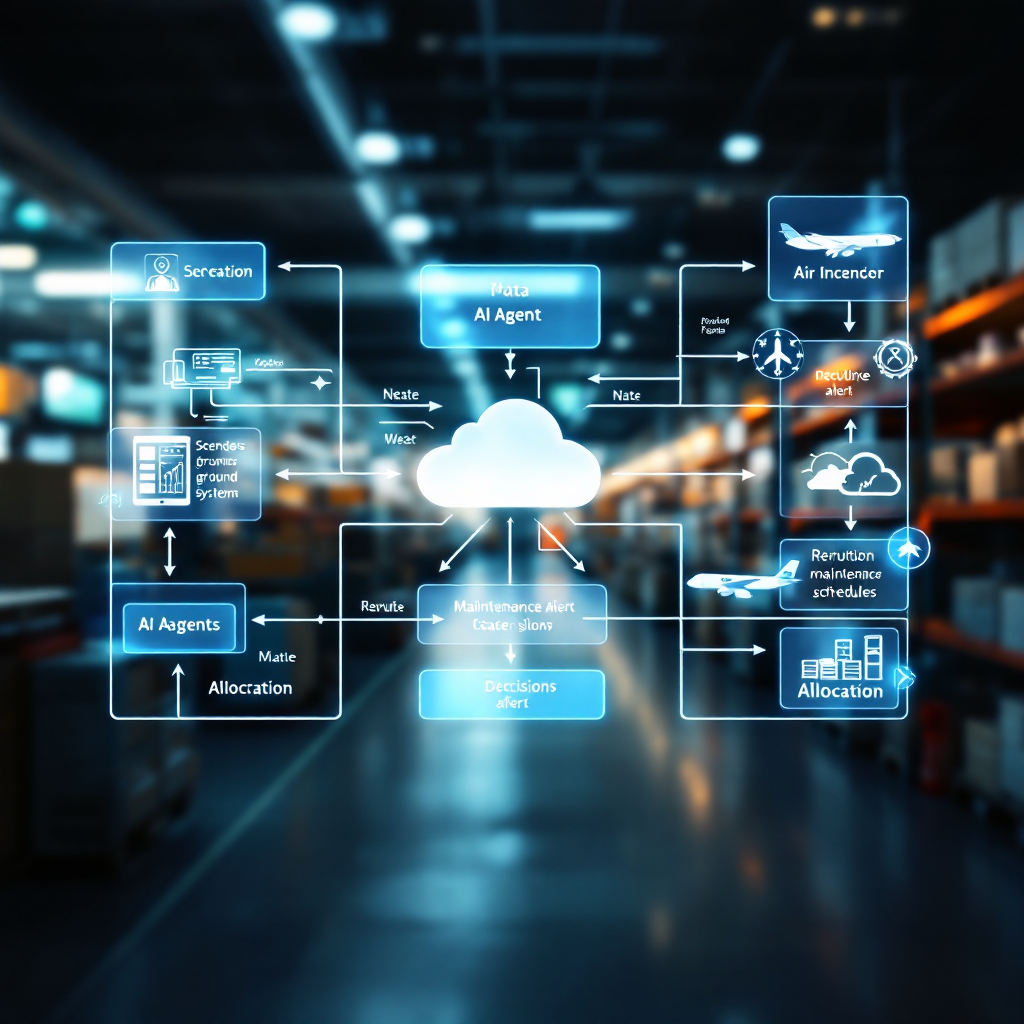
Visuals make complex interactions clear. Below, a simple schematic shows data flows: sensors → AI agent → decisions. The diagram highlights how data flows across systems, and how intelligent agents provide recommendations or automated actions. In addition to aircraft telemetry, data sources include ATC feeds, airport status, ground operations logs and passenger booking engines. That integrated view helps airlines improve turnaround and reduce cascading delays.
ai agent, ai-powered and generative ai — Core technologies and how they operate
AI in aviation rests on several core tech pillars. Machine learning models learn patterns from historical flights, maintenance logs and sensor streams. Digital twins mirror aircraft and airport assets to run what‑if scenarios. Generative AI helps planners simulate complex scenarios, such as cascading disruptions or crew shortages. Computer vision monitors ramps and baggage handling areas to spot exceptions. IoT links telemetry from engines, APU units and ground support equipment to analytics pipelines. Together, these elements enable continuous improvement and faster decision cycles.
Technical outcomes are measurable. Predictive maintenance models reach around 90% detection accuracy in studies, which enables timely interventions and fewer spare-part surprises [source]. Similarly, AI route planning has shown fuel savings near 10–15% when it optimizes flight paths using real-time weather and traffic [source]. Continuous learning lets models adapt to new conditions, and edge deployments reduce latency for real-time control.
Safety and verification come first. Models require validation, explainability and clear fallbacks. Human pilots and ground staff must retain override authority, and audit trails should record every automated action. Agentic AI and autonomous AI agents must run within approved safety cases, and designers must document human‑in‑the‑loop thresholds. For adoption, airlines need governance that covers cybersecurity, data lineage and regulatory compliance. That governance helps build trust across the aviation industry and among aviation companies.
Drowning in emails?
Here’s your way out
Save hours every day as AI Agents label and draft emails directly in Outlook or Gmail, giving your team more time to focus on high-value work.
use cases, optimization, predictive maintenance and allocation — Concrete applications that reduce costs and delays
AI offers many practical use cases across airline and airport processes. Route optimisation saves fuel and shortens block times by factoring in dynamic weather, traffic and aircraft performance. For example, AI route planning has been credited with up to ~15% fuel reduction when it recomputes flight paths using live data [source]. Predictive maintenance gives another clear saving: airlines can cut unscheduled downtime about 20% by scheduling proactive repairs from high‑accuracy predictions [source]. That lowers operational costs and reduces the chance of flight delay.
Allocation problems suit AI well. Dynamic gate allocation and crew scheduling reduce conflicts and shorten turnaround. One industry study shows faster turnaround and better on‑time performance when platforms integrate multi-source inputs [source]. Practical examples include AI sequencing of ground‑handler tasks, optimized baggage handling flows and automated cargo routing. These support both passenger flights and freighter operations.
Case in point: an airline deploying AI-powered crew and gate allocation reduced average turnaround by roughly 12%, relying on models that ingest air traffic, ground support availability and aircraft health. That improvement cut knock‑on delays and improved passenger flow. For logistics teams handling operational emails and ETAs, no-code AI agents such as virtualworkforce.ai can automate email drafting, cite ERP data, and update records, thus smoothing exception handling and reducing manual friction. For more on automating logistics correspondence and email drafting, see resources on virtualworkforce.ai/automated-logistics-correspondence/ and virtualworkforce.ai/logistics-email-drafting-ai/.
real-time, decision-making and ai agents in aviation — How real‑time agents change operations
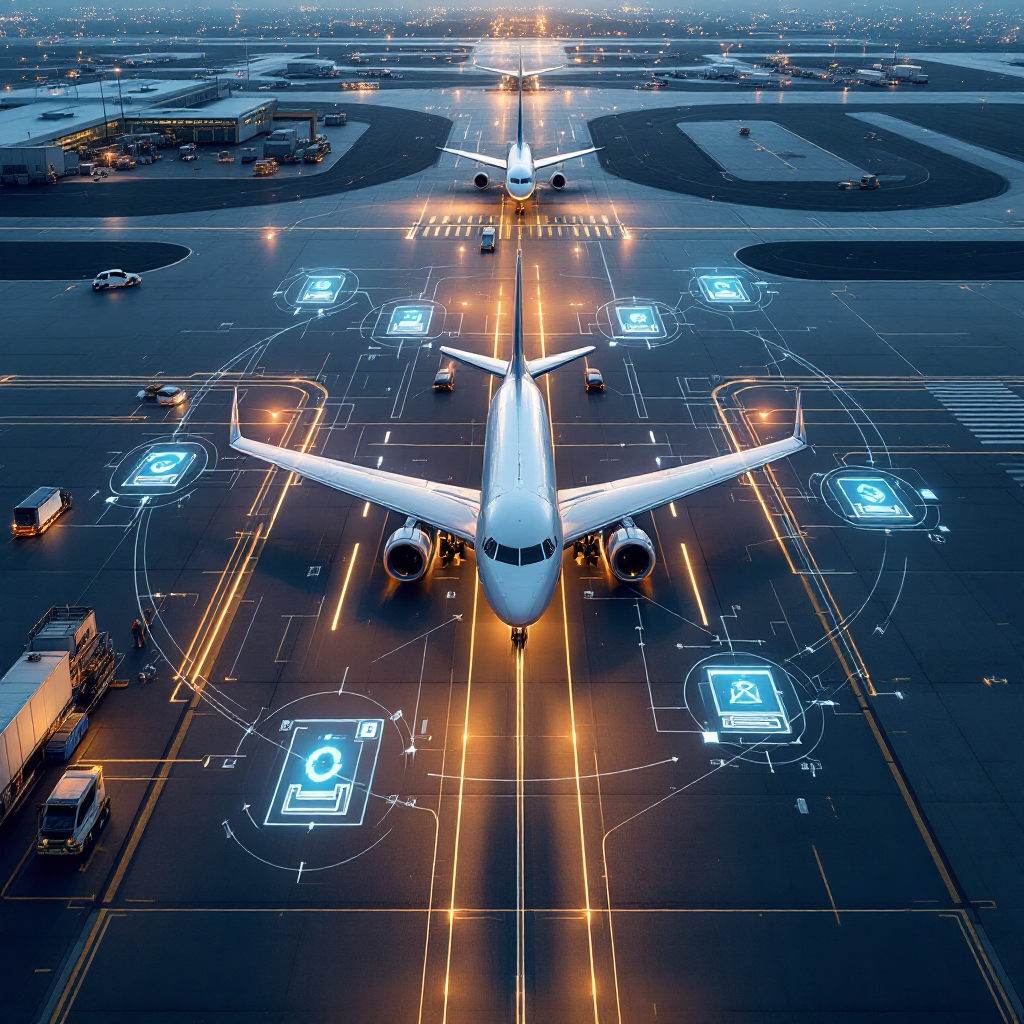
Real-time AI agents ingest ATC streams, weather, aircraft health and ground status to recommend or execute immediate changes. They can reroute an aircraft, absorb a delay by reshuffling connections, or swap gates to reduce passenger impact. AI agents continuously monitor data and raise recommended actions in dashboards. In faster loops, they can trigger automated system updates for crew rostering or cargo manifests.
Measured benefits include better on-time performance and quicker recovery from disruption. For example, platforms that process vast amounts of data from air traffic, weather and ground activity have shown average improvements to turnaround and performance metrics near 12% [source]. Furthermore, advanced AI can shorten disruption propagation and reduce cascading flight delay. Edge processing and hybrid cloud architectures matter here. Edge reduces latency for critical decisions, while cloud provides heavy compute for model retraining. Integration with ATM systems, however, needs strict validation and certified interfaces. Airlines must balance low-latency control with safe, auditable change management.
Consider a real example: during a severe weather cell, an AI-powered operations platform recomputed flight paths and suggested altered connections to preserve crew duty windows. The platform fed updates to passenger rebooking engines and ground support teams, limiting missed connections and decreasing compensation events. That practical scenario shows how AI enhances decision-making and keeps both aircraft and passengers moving safely.
Drowning in emails?
Here’s your way out
Save hours every day as AI Agents label and draft emails directly in Outlook or Gmail, giving your team more time to focus on high-value work.
passenger, passenger experience, airport and airline — Passenger benefits and safety improvements
Passengers feel AI benefits in concrete ways. Fewer delays and smarter rebooking reduce missed connections. AI-driven notifications offer personalised updates, so travelers know gate changes or baggage status faster. For passenger experience, that means less anxiety and more predictable journeys. Airlines can use AI to prioritise vulnerable transfers, and to reroute bags proactively in case of tight connections, improving baggage handling and customer experience.
Safety also improves. Early fault detection from predictive maintenance means fewer in‑flight issues and faster ground repairs. AI enhances crew situational awareness with consolidated dashboards that show aircraft health and traffic constraints. Automation reduces repetitive clerical work, lowering human error in operations and flight operations tasks. For example, airlines using predictive maintenance saw detection accuracy above 90% and lower unscheduled downtime roughly 20% [source].
KPI impacts are measurable. Better on-time performance, fewer missed connections and reduced compensation payouts all trace back to smarter operational decisions. In addition, improved baggage handling and faster turnaround times boost satisfaction scores. For customer‑facing teams handling high‑volume email and booking exceptions, AI services such as virtualworkforce.ai provide thread-aware, data-grounded replies that cut handling time and free staff for complex passenger issues. Operators should track metrics like OTP, baggage mishandles and booking recovery time to quantify gains.
solutions in aviation, using ai, challenges of ai and transform — Deployment, governance and the path ahead
Deploying AI solutions in aviation requires a clear roadmap. Start with high‑value pilots: predictive maintenance or fuel optimisation often top the list. Next, scale to allocation and real‑time autonomy. Airlines should secure data feeds and define metrics such as fuel saved, downtime reduced and turnaround improvement. Pilots must connect existing aviation systems and maintain robust data quality. Fragmented systems and missing telemetry remain common barriers.
Governance is essential. Operators need model explainability, safety cases and human‑in‑the‑loop thresholds. Cybersecurity and compliance with aviation regulators must guide design. Workforce upskilling also matters; the aviation industry needs professionals comfortable with AI and machine learning. If airlines can overcome these challenges, the potential of AI is large. The future of aviation includes deeper integration of digital twins, V2X and autonomous agents to coordinate global flows.
Below is a simple KPI table to help leaders track pilots and justify investment.
| KPI | Typical Improvement |
|---|---|
| Fuel saved | Up to ~15% [source] |
| Unscheduled downtime | ~20% reduction via predictive maintenance [source] |
| Turnaround improvement | ~12% faster on average [source] |
Suggested next steps include defining a high‑value pilot, securing clean data feeds, setting measurable targets and planning staff reskilling. For ops teams facing repetitive email workflows, operators can accelerate ROI using no-code AI agents to automate logistics correspondence; see virtualworkforce.ai/automated-logistics-correspondence/ and virtualworkforce.ai/virtualworkforce-ai-roi-logistics/ for guidance. With proper governance and phased pilots, AI agents can transform operational efficiency while keeping crews and passengers safe.
FAQ
What is an AI agent in the context of aviation?
An AI agent is software that ingests sensor, schedule and external data to act or advise in real‑time. It can recommend reroutes, trigger maintenance checks or draft operational emails to reduce manual work.
How much fuel can AI save for airlines?
AI route optimisation and fuel planning can save up to about 15% in fuel under ideal conditions. These savings come from smarter flight paths, weight planning and real‑time weather adjustments [source].
Does predictive maintenance really work?
Yes. Predictive maintenance models have reported detection accuracies above 90%, enabling proactive repairs. This capability typically reduces unscheduled downtime by roughly 20% [source].
Can AI improve passenger experience?
AI reduces delays, speeds rebooking and gives personalised notifications that improve passenger experience. It also helps with baggage handling and faster connections, which lowers travel stress.
Are real‑time AI agents safe to use in operations?
They can be, when paired with rigorous validation, explainability and human‑in‑the‑loop controls. Operators must create safety cases, audit trails and override options before live deployment.
What are common deployment challenges?
Challenges include fragmented data systems, inconsistent data quality and a shortage of AI-skilled aviation staff. Governance, integration and cybersecurity are additional hurdles.
How should airlines start an AI project?
Begin with a focused pilot that has clear metrics, such as fuel percent, downtime percent or turnaround percent. Secure the data feeds and set human oversight rules before scaling.
What role do digital twins and generative AI play?
Digital twins let teams run what‑if scenarios on aircraft and airport assets, and generative AI helps plan complex disruption responses. Together they improve planning and faster recovery.
Can AI automate operational emails and correspondence?
Yes. No-code AI agents can draft context-aware emails using ERP and TMS data, reduce handling time and keep shared mailboxes consistent. Tools like virtualworkforce.ai focus on automating logistics email drafting and can speed response times significantly.
How will AI reshape the future of aviation?
AI will enable tighter integration across the aviation ecosystem, more autonomous agents and smoother travel experiences. With careful governance, it will also reduce costs and enhance safety across the industry.
Drowning in emails?
Here’s your way out
Save hours every day as AI Agents label and draft emails directly in Outlook or Gmail, giving your team more time to focus on high-value work.