


How AI transforms aviation logistics: predictive analytics, real‑time data and measurable cost savings
AI is changing how aviation teams plan, act, and measure results, and it does so with speed and scale. For example, early adopters using AI in logistics report roughly a 15% reduction in logistics costs and about a 35% improvement in inventory levels, which proves that data-driven decision making pays off 15% reduction in logistics costs and 35% improvement in inventory levels. In practical terms, AI fuses weather feeds, flight schedules, fuel telemetry, and maintenance logs so planners can spot issues before they cause long delays.
Predictive analytics and real-time processing let teams forecast problems, and then reroute shipments or reschedule checks with less friction. Airlines and cargo hubs use models that take historical data and current sensors to produce recommended actions. These actions include alternate routings for parts, prioritized spare shipments, and dynamic staging for dock doors. Trackable metrics include cost per tonne‑km, inventory turns, on-time performance, and MTBF, and leaders measure them every shift to keep gains steady.
However, data quality and governance matter most. Trusted data platforms and strict integration practices must exist before gains appear, and IATA highlights that operational silos remain a major root cause of delays and inefficiency IATA and the silos that cause delays. Therefore, teams should validate inputs and set role-based permissions to protect critical operational data. In practice, companies also combine human review with automated checks so that machine outputs remain reliable.
For ops teams drowning in email and manual lookups, a no-code AI assistant that drafts context-aware replies and cites source records can cut handling time and reduce errors. Our work with ops teams shows faster replies and fewer mistakes when email replies pull ERP, TMS, and WMS records together; see an example of virtualworkforce.ai’s virtual assistant for logistics for how email becomes a data-driven workflow virtual assistant for logistics. Finally, teams should track operational efficiency and safety metrics in parallel so cost savings do not outpace system resilience, and so aviation leaders can scale benefits across the network.
AI-powered airline operations: predictive maintenance, reducing flight delays and improving air traffic responses
AI-powered systems help maintenance crews detect wear earlier, and they do so by combining sensor streams and maintenance history. Predictive maintenance models flag components before failure, and that reduces unscheduled removals and AOG time. Airlines using such approaches see measurable drops in maintenance cost per flight hour, and they recover aircraft to service faster. The airline industry now tests AI models that suggest parts orders and spare routing, and teams schedule checks around forecasts rather than fixed calendars.
When delays occur, adaptive systems propose crew rostering adjustments and slot swaps so flights restart with minimal disruption. These systems ingest flight schedules, gate availability, and live airport conditions to generate options. In congested airspace, an AI-powered planner can propose adaptive routes or suggested delays that reduce fuel burn and cascade effects. This capability matters because even small changes translate into fewer missed connections and lower compensation costs.
Air traffic planning also benefits. AI can blend weather, traffic flow, and runway turn rates to recommend minute-by-minute adjustments. The result is smoother throughput, and fewer long holds. Teams balance automation and human oversight, and they keep an operator in the loop for critical decisions. For teams that need to automate routine communications about status and rebooking, integrating AI with real-time feeds cuts response time and raises customer satisfaction.
Practical pilots show that one carefully scoped workflow—such as automatic component reordering linked to maintenance action—yields quick wins and builds trust. If you want to see applied email automation inside an airline control center, read how automated logistics correspondence can cut cycles and keep records synced automated logistics correspondence. Finally, training staff to read AI outputs and to validate alerts is essential so that results scale safely across the network.

Drowning in emails?
Here’s your way out
Save hours every day as AI Agents label and draft emails directly in Outlook or Gmail, giving your team more time to focus on high-value work.
Air cargo and freight: digital twins and autonomous systems to optimise cargo handling and throughput
Air cargo flows depend on timing, and digital twins let planners simulate changes before committing resources. Digital twin pilots at major cargo hubs mirror terminal layout, dock doors, tugs, and conveyor flows so teams test load sequencing and staffing scenarios. When simulation runs match live sensors, managers can reduce misrouted consignments and improve load factors. The combination of a digital twin with IoT feeds and AI recommendation engines helps to optimise load sequencing and to allocate ground equipment efficiently.
Freight operations also benefit from autonomous vehicles and drones within secured airport zones. Autonomous tugs and pallet movers reduce manual handoffs, and closed-loop systems enable faster turnaround. These systems require robust integration with cargo management systems and clear safety validation. Successful pilots graft simulation outputs into the planning cycle, and then measure throughput, turnaround time, and dock utilization to prove value.
For cargo carriers and integrators, better visibility means fewer exceptions. AI classification and OCR speed customs processes, and automated email agents reduce manual correspondence. Logistics customers see faster claim resolution and better ETAs when a digital twin informs physical moves. You can learn how AI helps freight teams communicate and reduce email workload in a practical implementation for freight forwarders AI for freight forwarder communication.
Finally, as aviation and logistics merge data sources, teams should track service-level KPIs and business value. Use real-time sensor feeds to validate simulations, and then refine rules to keep load plans aligned to demand. That way, air cargo teams move more volume with fewer errors and with improved margins, and they prove the ROI of digital twins and autonomous systems to stakeholders.
Automate booking, baggage handling and passenger experience with chatbots and generative AI
Customer touchpoints block or enable flow, and AI helps to automate booking changes, baggage handling updates, and passenger communications. Generative AI and conversational ai power assistants that answer common inquiries and draft rebooking emails after disruption. A conversational chatbot can triage a complex inquiry, and then escalate to human agents when needed. This approach lowers call center volumes and speeds passenger recovery after disruptions.
For baggage handling, automated tracking and claims triage reduce manual work. AI reads sensor feeds and baggage tags, and then surfaces likely mismatches for human review. The process automates routine replies, and it links status updates to booking records so agents do less copy-paste. When combined with secure data connections, this pattern improves response times and customer satisfaction.
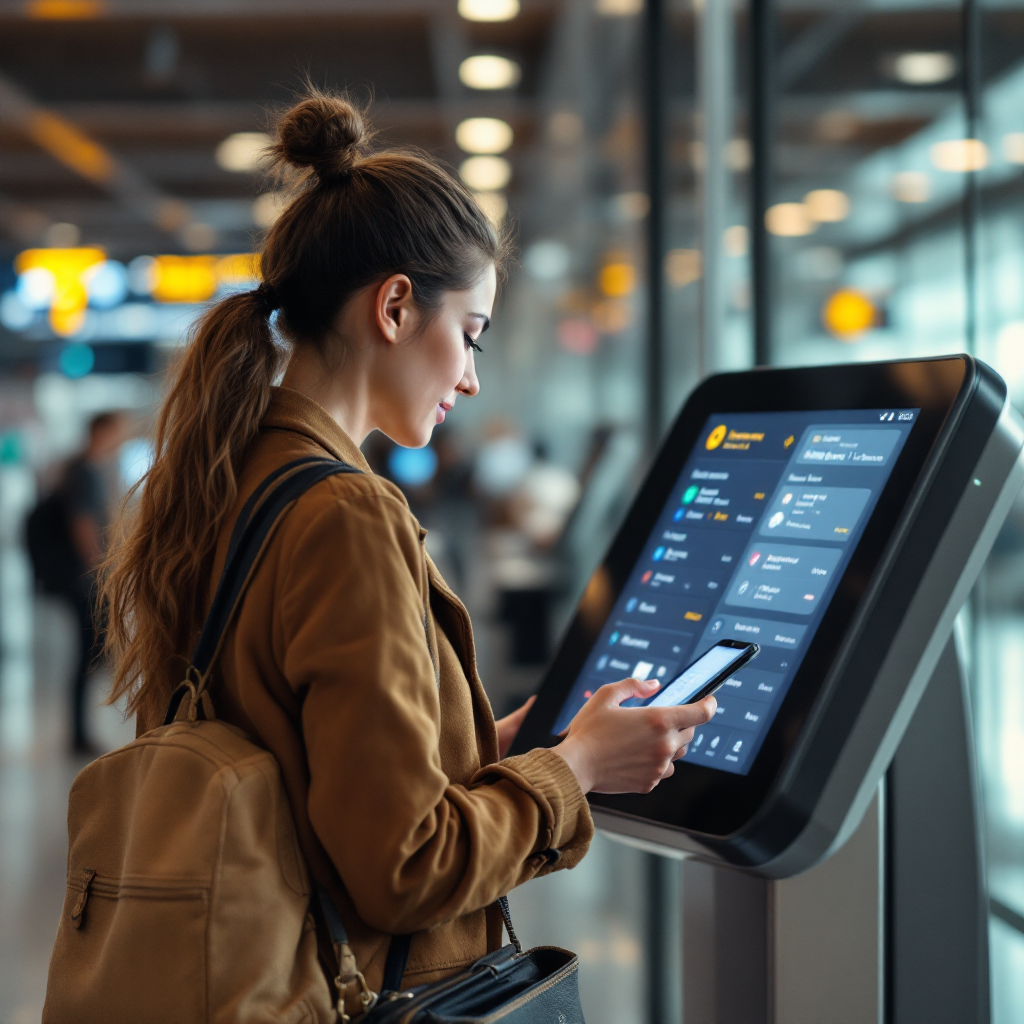
Chatbots and a lightweight mobile app can give passengers control over rebooking, and they can provide contextual explanations for changes. When you design the escalation path well, human agents get fewer repetitive queries and can handle exceptions faster. Our platform reduces email handling time by drafting accurate, data-grounded replies and by updating backend systems; see the logistics email drafting AI example for similar throughput gains in operations teams logistics email drafting AI.
Keep privacy and auditability front and center. Role-based access, redaction, and clear escalation ensure compliance and preserve trust. Use generative AI sparingly for open text, and pair it with deterministic checks for transactional updates. The goal is better passenger experience and faster resolution, and that delivers higher customer satisfaction and stronger NPS scores.
Drowning in emails?
Here’s your way out
Save hours every day as AI Agents label and draft emails directly in Outlook or Gmail, giving your team more time to focus on high-value work.
Operations with AI: streamlining airport workflows, AI agents and secure data integration across logistics operations
Operations with AI require orchestration across many systems: BHS, FIDS, AODB, and cargo systems. An AI agent that integrates these feeds can sequence ground handling, prioritize transfers, and predict passenger flow through security and gates. By automating routine coordination, teams free staff to handle exceptions and safety checks. However, AI integrates only as well as the data it receives, so integration architecture and APIs must be robust.
Trusted data and governance protect both safety and privacy. IATA and industry guidance recommend role-based access and auditable pipelines so that data-driven decisions remain transparent. Teams should pilot a bounded workflow—such as gate reassignments triggered by delayed arrivals—measure cycle time improvements, and then expand. Pilot-first deployments build operator trust, and then they scale across terminals and hubs.
Security matters too. Data security and per-message redaction protect passenger data while enabling useful automation. In practice, platforms that combine deep data fusion with thread-aware email memory reduce repeated queries and lost context across shared mailboxes. If your ops team needs to scale without extra hires, see guidance on how to scale logistics operations without hiring and how email automation can shrink workload and errors how to scale logistics operations without hiring.
Finally, measure business impact. Use short feedback cycles, and then refine agents and alerts. That way, airports and airlines move from proof-of-concept to day-to-day value while preserving safety and compliance in a complex aviation environment.
Use cases and roadmap to transform the airline industry: top 10 AI solutions and how to adopt them
Use cases are the map from strategy to delivery. The top 10 AI solutions for a typical program include: 1) predictive maintenance; 2) cargo load optimisation; 3) dynamic route and fuel optimisation; 4) chatbots for customer service; 5) automated baggage tracking; 6) passenger flow forecasting; 7) crew rostering optimisation; 8) automated ground vehicle scheduling; 9) demand forecasting and dynamic pricing; and 10) safety and compliance analytics. This list of top 10 ai outlines where teams find cost savings and resilience.
For adoption, pick quick wins first. Quick wins include chatbots, baggage tracking, and demand forecasting, and they prove value fast. Medium-term projects such as predictive maintenance and cargo optimisation need cleaner data and stronger integration. Long-term ambitions include digital twins and autonomous vehicles. Each phase requires a sponsor, clear KPIs, and a data readiness checklist.
To adopt responsibly, verify suppliers for security and scalability and set up phased rollouts. Train staff to read AI signals and to report anomalies so that machine outputs improve over time. Use a no-code setup where possible so business users can configure tone, escalation paths, and templates without waiting for IT. If you want an ROI primer for logistics-focused AI pilots, review the ROI framework for logistics programs that shows measurable efficiency gains virtualworkforce.ai ROI logistics.
Finally, combine governance with experimentation. Advanced ai and practical experiments together create business value while protecting safety. That balance helps commercial aviation and complex aviation networks transform their operations and capture measurable, repeatable business value.
FAQ
What is an AI assistant for air operations?
An AI assistant for air is a software agent that helps operations teams with routine tasks such as status updates, booking changes, and supplier emails. It uses data from systems to draft accurate replies and to surface recommended actions, and it reduces manual lookups.
How does predictive analytics reduce delays?
Predictive analytics forecasts likely disruptions by combining historical data and real-time inputs. Teams then reroute shipments, reschedule maintenance, or adjust gates to prevent delays from cascading.
Can AI improve baggage handling?
Yes. AI speeds baggage matching, tracks items with sensors, and automates claims triage so human agents focus on exceptions and customer recovery. The result is fewer lost items and faster resolutions.
What are the top use cases to start with?
Start with low-risk, high-impact use cases such as chatbots for common inquiries, automated baggage tracking, and demand forecasting. These yield quick wins and provide the data foundation for bigger pilots.
How do digital twins help cargo hubs?
Digital twins simulate terminal flows and resource allocation before changes are made in the real world. This lets teams test load sequencing and staffing scenarios and then measure throughput improvements reliably.
Are AI agents safe for critical operations?
They can be, when paired with governance, role-based access, and audit logs. Human oversight for critical actions preserves safety while automation handles routine coordination.
What role do email AI agents play in logistics?
Email AI agents draft context-aware replies and cite the relevant records in ERP and TMS, and that speeds responses and cuts errors. They also log actions and can update systems to keep records synchronized.
Do airports need new infrastructure to try AI?
Not always. Many pilots run on existing APIs and sensor feeds, and some programs use a no-code approach so business teams can configure behavior. Still, secure integrations and clean data improve results.
How do I measure success for an AI pilot?
Define KPIs such as cycle time reduction, decrease in unscheduled removals, lower cost per tonne‑km, and improved customer satisfaction. Run short pilots, measure impact, and then scale based on results.
Where can I learn more about automating logistics email and workflows?
See resources on automating logistics correspondence and on how to scale logistics operations with AI agents to understand practical implementation steps and ROI. These guides show how to reduce workload and to improve response quality automated logistics correspondence and how to scale logistics operations with AI agents.
Drowning in emails?
Here’s your way out
Save hours every day as AI Agents label and draft emails directly in Outlook or Gmail, giving your team more time to focus on high-value work.