


Why AI is central to modern farming (ai, agriculture, agricultural revolution, agriculture industry)
AI now drives major shifts across the agriculture industry. First, global demand for higher yields and lower costs pushes rapid technology adoption. For example, analysts forecast that precision agriculture will widely adopt AI agents, with a strong move toward data-led decisions and autonomous tools by 2025. This projection reflects tight resource limits, labour shortages, and regulatory pressure to cut chemical inputs. Next, the agricultural revolution has a new phase: data, sensors and autonomy. Farmers make decisions faster and with more confidence because AI processes vast inputs continually.
Using artificial intelligence on farms helps teams track weather, soil and crop status. For example, agents analyze satellite imagery, soil probes and weather feeds to spot stress early. As a result, teams reduce waste and focus effort where it matters. Importantly, AI doesn’t replace farmer judgement. Instead, it augments it. Operators keep final control while AI suggests actions that raise productivity and improve sustainability.
The market response underlines the trend. Investment and new services expand in the wider agriculture industry, and businesses offer AI-powered monitoring, forecasting and control. The adoption of ai agents in agriculture is accelerating as vendors combine remote sensing, machine learning and robotics. This change helps farms manage risks and scale operations. Finally, because supply chain links matter, farms that integrate digital tools communicate better with processors and logistics partners, which lowers post-harvest loss and improves timing for harvest and shipment.
Overall, the path is clear. Precision agriculture tools, powered by AI and guided by sensors, help farmers optimise inputs and protect yield. The potential of ai to reduce labour, cut costs and increase resilience makes it central to modern agriculture. Therefore, early adopters stand to gain a performance edge and a route to a more sustainable future.
What an ai agent does on the farm — core data, models and capabilities (ai agents in agriculture, ai agent, capabilities of ai agents, applications of ai)
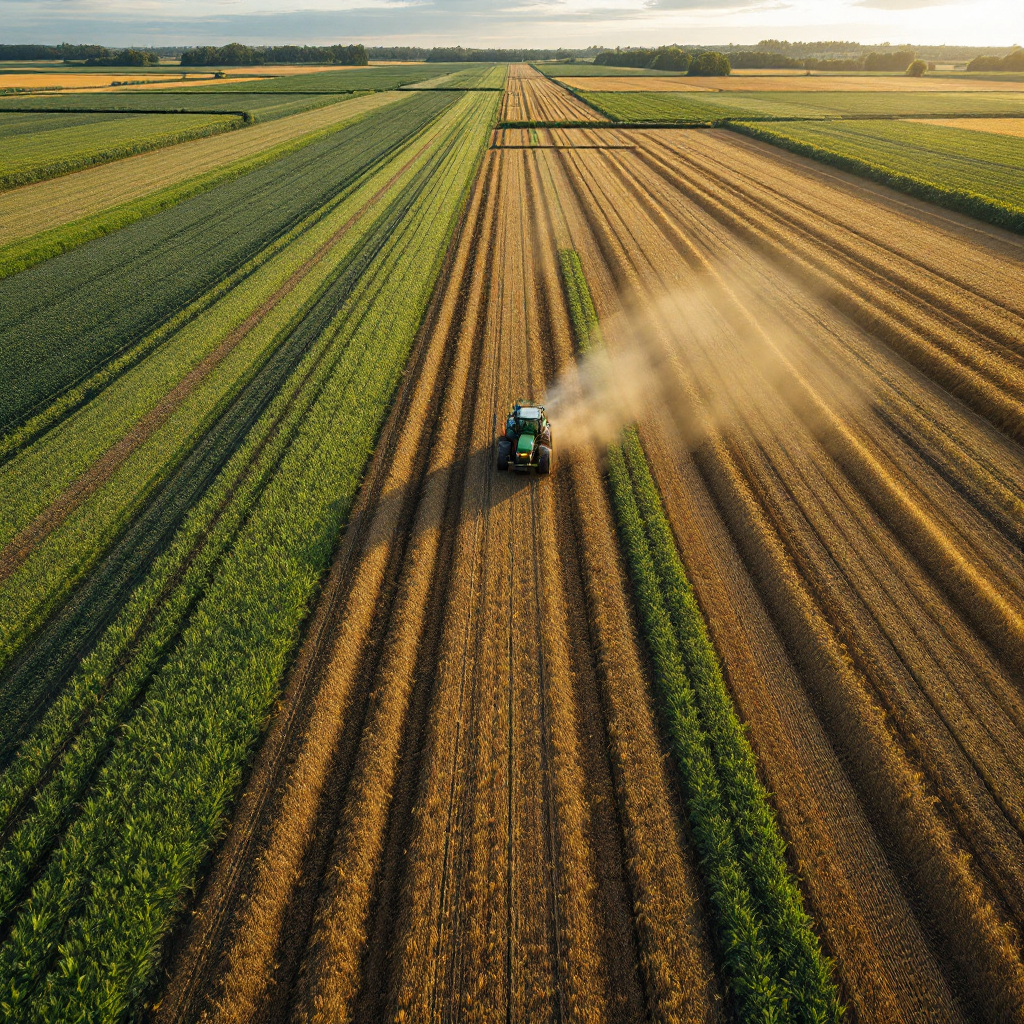
An AI agent on a holding ingests many data streams and turns them into tight, practical actions. First, agents analyze satellite and drone imagery, sensor arrays and weather feeds. They then run detection models to flag disease, prediction models to forecast stress and prescription models to recommend precise doses of water, fertiliser or pesticide. For instance, an ai agent monitoring a greenhouse can compare leaf colour, humidity and nutrient data and trigger alerts or adjust systems automatically.
Agents provide several common tasks. They do disease detection based on image analysis, irrigation scheduling tied to soil moisture, pest forecasting from weather and trap counts, and variable-rate application for fertiliser and sprays. These capabilities of ai agents allow closed-loop control: sensors report, models decide and systems act. Real-time responses reduce crop loss and the need for blanket treatments. For example, precision spraying systems identify target weeds and spray only the plant, which lowers pesticide use dramatically.
AI models run at different cadences. Some models process hourly telemetry to manage irrigation. Others scan weekly imagery to plan planting. The ai agent then issues outputs: alerts to a mobile app, schedules for crew, or control signals to a centre pivot or an autonomous sprayer. These outputs form a clear chain from data to decision to action. Agents analyze trends and learn over time, which improves recommendations as you collect more local data.
Applications of ai span scouting, irrigation, harvest planning and supply forecasting. Field teams use the insights to focus labour and prioritize interventions. In addition, deployable ai solutions include cloud dashboards, edge devices and API integrations. For connectivity-limited sites, models can run on local gateways and sync when a connection appears. In practice, a well-designed ai agent reduces uncertainty, saves input costs and supports more resilient operations.
Drowning in emails?
Here’s your way out
Save hours every day as AI Agents label and draft emails directly in Outlook or Gmail, giving your team more time to focus on high-value work.
Agentic automation: robots and autonomous machines that act (agentic, agentic ai, automation, farm)
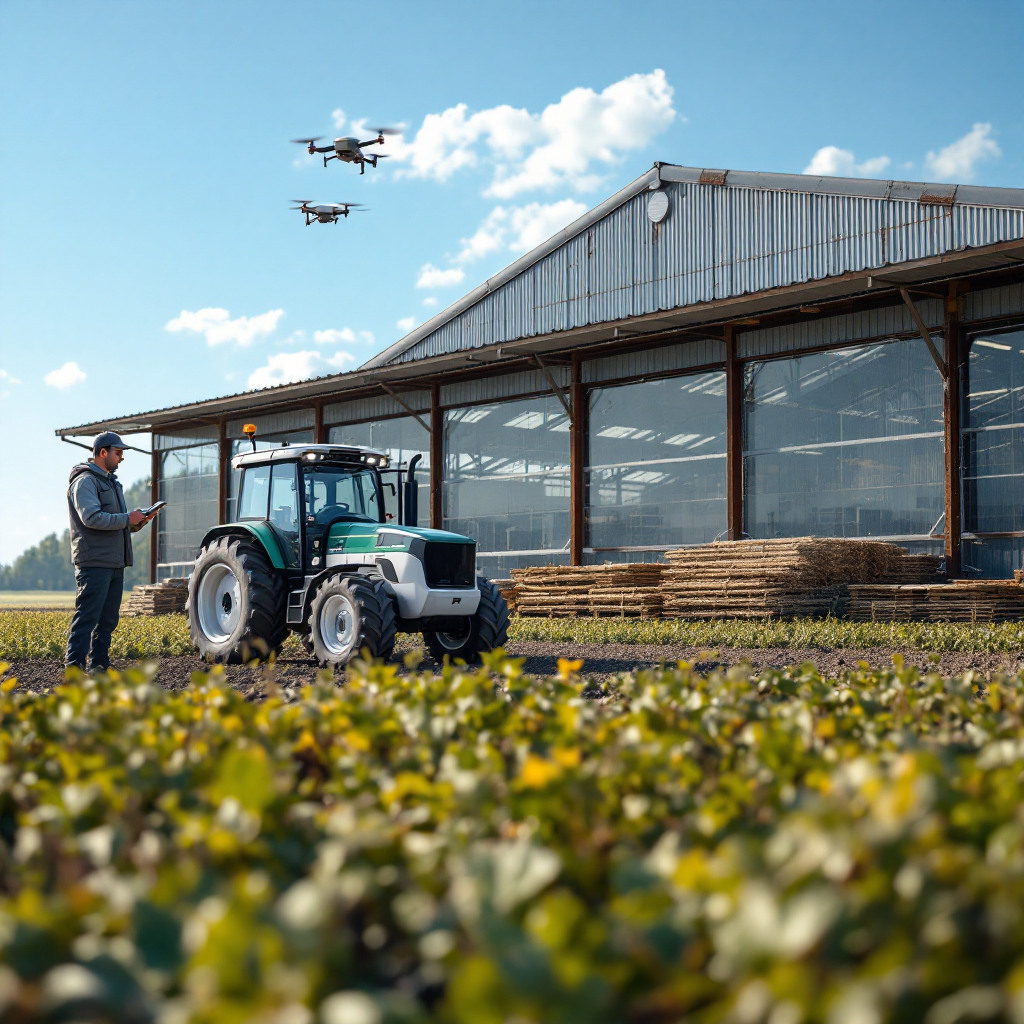
Agentic automation brings physical machines under AI control. Tractors, drones, robotic weeders and milking robots now execute tasks with little human input. These autonomous agents combine perception, planning and control to run repeatable work. For instance, major OEMs offer autonomous tractors that follow planned paths and adjust heading to avoid obstacles. Drones perform multispectral scouting missions at dawn and provide maps that guide decisions the same day.
One practical benefit is 24/7 operation. Machines work when humans cannot, which speeds seasonal tasks and spreads load. Precision sprayers such as See & Spray style systems apply chemicals only where needed, which in trials cut pesticide use by very large margins. Some reports note reductions as high as 90% in targeted systems, depending on crop and practice (case examples). These figures show why many growers test robot-assisted spraying.
Robotic weeders remove plants mechanically or with directed sprays, which lowers chemical dependency. Also, autonomous harvesters reduce peak labour demand and increase pick timing accuracy. Machines reduce wheel overlap and soil compaction by following optimised paths, which can improve soil health and long-term yield. Meanwhile, robotic systems collect vast sensor data that feeds back into models, closing the control loop.
However, agentic ai brings new responsibilities. You must set safety zones, define fail-safes and train staff. Regulations often require human oversight for certain operations. Still, the practical returns include less crew time spent on repetitive tasks, reduced input costs, and better timing of interventions. As a result, progressive farms combine human expertise with agentic automation to scale smarter operations without losing local knowledge.
Practical ai solutions and how to use ai on your holding (ai solutions, use ai, ai in agriculture, implementing ai)
Start by identifying a single problem you want to solve. First, map priorities: reduce irrigation costs, cut pesticide use, or improve harvest timing. Next, list the hardware you need: a few soil sensor probes, drone imagery service, and an edge gateway for local processing. Choose vendors that support open standards so you can integrate later. For example, link field insights to your farm management system or ERP so plans match inventory and logistics.
A practical rollout follows these steps. Start with a pilot plot, run baseline measurements, and then deploy sensors and an initial ai system. Define clear KPIs, such as percentage reduction in water use or time saved on scouting. Train one or two operators to run the pilot and feed corrections back into the models. This cycle speeds learning and reduces risk. You should also allocate a budget for maintenance and data storage.
When you implement ai, consider models and data. Integrate sensors with drone imagery and connect weather forecasts so models can predict stress and recommend actions. If connectivity is poor, use solutions that store data locally and sync periodically. Many providers now offer subscription or service-based deployment, which lets you adopt capability without heavy capital expense. This approach lowers barriers in the first year while you measure benefit.
For administrative tasks and supply chain communication, consider automating email and order workflows so harvest windows and dispatches align. Our platform supports operations teams in logistics and order queries; teams typically cut handling time by more than half when they automate emails linked to ERP and shipment systems (see example integration). In addition, integrating with ERP and freight systems helps the business manage post-harvest flows; see guidance on ERP email automation for logistics here. Finally, pick vendors that offer clear SLAs and on-site training to help your crew adopt the tools.
Drowning in emails?
Here’s your way out
Save hours every day as AI Agents label and draft emails directly in Outlook or Gmail, giving your team more time to focus on high-value work.
Measurable impacts and case studies from the field (implementing ai agents in agriculture, applications of ai, agricultural)
Field reports provide numbers that help judge ROI. In cotton, adoption of AI-driven crop management has produced yield improvements in the range of 12–17% in several trials, which directly boosts revenue per hectare (case studies). Grape production trials showed about 25% uplift in yield while cutting water use by roughly 20% in some sites (example vineyard work). These are headline figures; your results will vary with soil, climate and data quality.
Precision spraying systems give a striking example of input savings. Technology that identifies target weeds and applies sprays only where needed can reduce pesticide volumes dramatically. One set of trials reported up to 90% reductions in chemical use under ideal conditions (trial report). This shows how agents automate targeting and help preserve beneficial species while lowering chemical spend.
Market forecasts also support adoption. Analysts project rapid growth in AI applications for the sector, which creates new revenue streams for agri-tech services and better economics for larger farms (market analysis). Investment in data platforms and analytics pays off when models reduce risk and improve scheduling for harvest and logistics. For example, better weather forecasting and predictive modeling help choose optimal harvest windows and reduce spoilage.
Nevertheless, variability matters. Case outcomes depend on crop type, scale and local execution. Data-poor sites see slower gains than data-rich sites. Also, smallholders may need cooperative models or service providers to access the full benefit. Still, across contexts, agents provide measurable benefits: higher yield per hectare, lower input costs, and improved timing for market supply. For operations focused on export, automating logistics correspondence reduces delays; see methods for improving freight and customs email workflows with AI tools (practical guide).
Risks, governance and practical next steps for embracing ai (embracing ai, agriculture industry, implementing ai agents in agriculture, ai solutions)
Risks accompany any new technology. Data privacy, vendor lock-in and skill shortages top the list. Therefore, start with a clear data governance plan. Define who owns the sensor and imagery data, how you store it, and how long you keep it. Also, insist on exportable formats and APIs so you avoid lock-in. Open standards help when you want to switch providers or integrate extra services later.
Safety is critical for autonomous machinery. Set clear safety zones and testing protocols before full deployment. Carry out staged trials that escalate autonomy only after successful manual runs. Staff must receive hands-on training and written procedures. Buy appropriate insurance and update workplace risk assessments. Also, engage neighbours and regulators early for operations that may affect public space or fly drones.
Plan workforce change. Use pilots to re-skill teams so they can supervise and maintain systems rather than perform repetitive chores. This shift keeps local knowledge in-house and reduces the risk of alienation. Farmers make better long-term choices when staff have both agronomic skills and technical literacy. Co-op models and shared-service providers can spread cost and speed adoption for smaller holdings.
Finally, set realistic expectations. AI can assist with forecasting, targeting and scheduling, and ai can also help integrate data across operations. But ai is not a shortcut to instant gains; it needs good data and disciplined testing. For governance, require audit logs and role-based access for any ai system. For practical next steps, run phased pilots, define KPIs and involve legal and operations teams. These measures reduce risk and help capture value. If you want to scale your back-office communications and logistics without hiring, explore approaches to scale logistics operations with AI agents and automated correspondence (further reading).
FAQ
What is an AI agent in agriculture?
An AI agent in agriculture is software that ingests data, runs models and issues actions or recommendations for the field. It can trigger alerts, produce schedules or send control signals to irrigation systems, drones and autonomous machines.
How quickly can a farm see ROI from AI?
ROI varies by problem and scale. Some pilots show input savings or time reductions within a single season, while larger system deployments may take one to three seasons to mature. Clear KPIs and baseline measures speed accurate ROI assessment.
Will AI replace farmworkers?
AI automates repetitive tasks but generally complements skilled workers rather than replacing them. Staff often shift to higher-value roles such as supervising machines, analysing reports and managing exceptions.
Can smallholders access AI benefits?
Yes. Cooperative models, subscription services and local service providers let smaller farms use AI without high capital outlay. Shared data platforms and leasing options lower entry barriers.
How does AI reduce pesticide use?
AI improves targeting by combining imagery and sensor data to identify exact weed or disease locations. Systems like precision sprayers then apply chemicals only where needed, which reduces overall pesticide volumes.
Do I need constant internet to use AI?
No. Some solutions process data locally on edge devices and sync when connectivity exists. This design suits remote sites and still supports regular model updates and reporting.
Is data ownership a concern?
Yes. Farms should define data governance up front, including ownership, retention and sharing rules. Request APIs and exportable formats to avoid vendor lock-in and keep operational control.
How safe are autonomous machines?
Safety depends on design and operational controls. Implement staged tests, geofencing and fail-safe procedures. Train staff and comply with local rules for autonomous operation and drone flights.
What metrics should I track in a pilot?
Common KPIs include percentage change in yield, water and chemical use, labour hours saved, and time to detect disease. Baseline measurements are essential to make these comparisons valid.
Where can I learn about automating logistics and communications with AI?
For farm-to-market logistics, integrating ERP and automating correspondence helps with dispatch and customs paperwork. See practical resources on ERP email automation and AI for customs documentation to improve margins and reduce delays (ERP automation).
Drowning in emails?
Here’s your way out
Save hours every day as AI Agents label and draft emails directly in Outlook or Gmail, giving your team more time to focus on high-value work.