


ai — What AI does on the farm
AI powers many tasks on the modern farm. Sensors in the soil report soil moisture and nutrient levels. Weather stations feed weather forecasts into local controllers. Drones collect high-resolution imagery. Satellites add wider views through satellite imagery. Edge devices run lightweight models near the sensor, while cloud models perform heavy analytics. Together these systems form data pipelines that move sensor data, imagery, and telemetry from field to model. Latency matters. For real-time alerts, pipelines must deliver data in seconds to minutes. Otherwise, an outbreak can spread before a response.
Technical terms matter, but they need not confuse. NDVI (Normalized Difference Vegetation Index) is a simple ratio that highlights plant greenness. Multispectral imagery captures several light bands beyond RGB to detect stress earlier. Computer vision and deep learning process these bands to flag anomalies. Machine learning and machine learning algorithms extract patterns from historical yield, remote sensing, and sensor streams. In trials, farms using similar systems report yield gains up to ~30% and reductions in water and fertilizer use around 25%–40% (trial summary). Also, real-time agricultural sensor networks for soil quality have improved decision accuracy by roughly 40% (soil monitoring study).
AI systems combine data sources like on‑field sensors, weekly drone surveys, satellite feeds, and farm records. Then advanced AI ingests that mix to generate actionable alerts and forecasts. For example, a drone flight might spot early pest damage and feed that image to a model that issues an alert to a farm manager. First, the edge node runs a quick filter. Next, it uploads selected tiles for deeper inference in the cloud. Finally, the system pushes an alert and an actionable recommendation. These recommendations reduce wasted inputs and improve crop health.
Transitioning from data to action requires robust pipelines, secure APIs, and monitoring. Also, on-the-ground calibration and agronomic ground truth are essential to keep learning models accurate. Remote sensing provides scale. In practice, farms combine weekly drone checks with bi‑weekly satellite passes to monitor crops, balance latency with cost, and keep models updated.
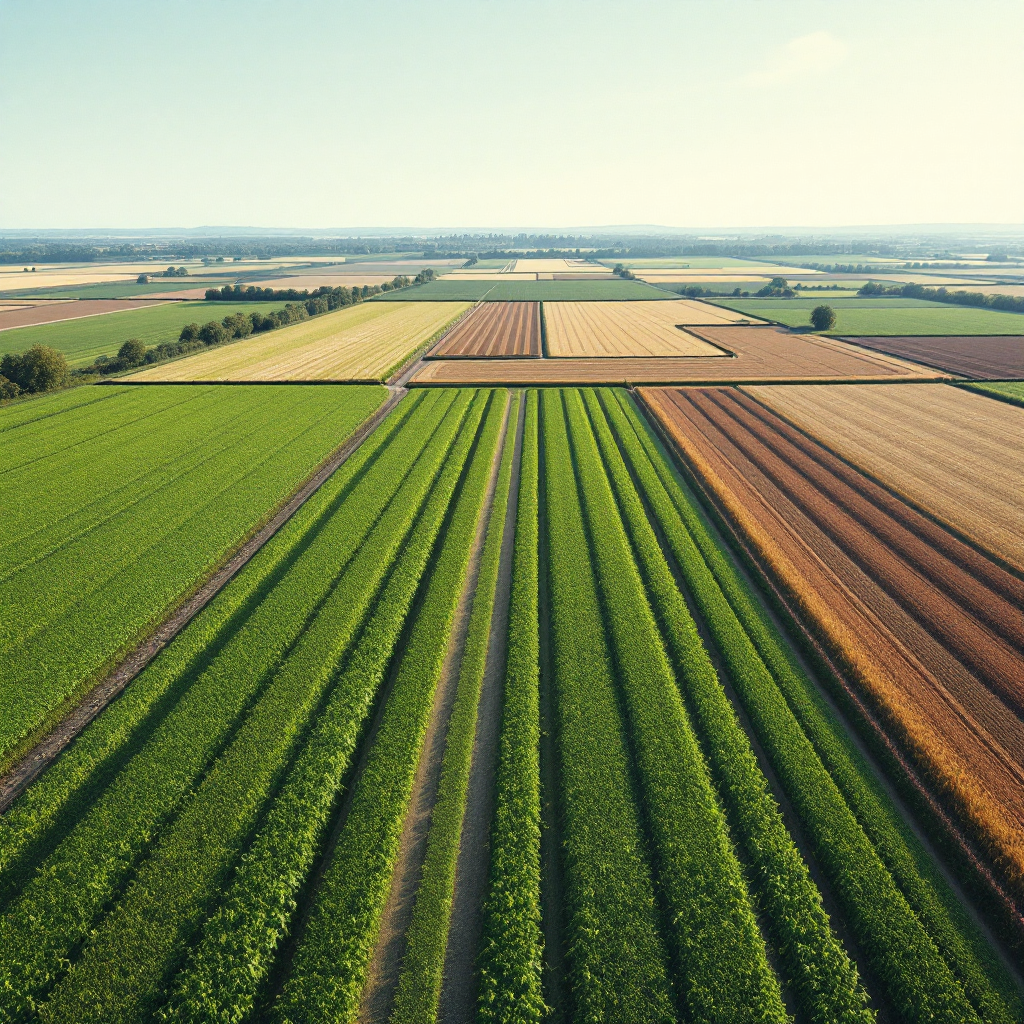
agriculture — Sector impact and adoption by 2025
Adoption of AI across agriculture accelerated rapidly by 2025. A recent readiness survey found that over 70% of agritech firms had integrated some form of AI-driven analytics or assistant into operations (adoption framework). Therefore, many commercial growers now use analytics to plan planting, watering, and harvest windows. ROI often shows up within one to two seasons because AI reduces waste and raises crop yield. For example, farms report crop yield improvements and resource savings that translate directly into improved profitability.
Field crops and large commercial farms led early uptake. These operations benefit from scale, dependable connectivity, and capital to test new systems. By contrast, small-scale farmers and regions with low connectivity face barriers. Across India and parts of Africa, infrastructure and skills gaps slow adoption. Still, targeted programs can support farmers through extension and partnerships with agricultural extension services. For instance, programs that bundle low-cost sensors with training help small producers make data-driven decisions and connect to markets.
AI agriculture now spans use cases from yield prediction to supply forecast. Smart agriculture projects often combine satellite imagery, sensor networks, and agronomic models to generate farm-level and regional forecasts. As the sector scales, governments and investors must focus on equitable access. Policy that funds rural connectivity, training, and open data can spread benefits to smallholders. In addition, private-public partnerships can reduce risk for early adopters and create templates for rollout.
Adoption matters for policy and investment because higher uptake improves food security and reduces environmental footprint. For example, the benefits of ai include reduced fertilizer use and better timing of operations, which lower emissions and input costs. These changes support sustainable agriculture and increase the resilience of food systems. Finally, tracking progress across regions helps prioritize support where it will most increase productivity and social benefit.
Drowning in emails?
Here’s your way out
Save hours every day as AI Agents label and draft emails directly in Outlook or Gmail, giving your team more time to focus on high-value work.
ai assistant — How AI assistants work and what they deliver
An AI assistant on the farm acts like a continuously available agronomy aide. The ai assistant collects sensor readings, drone snapshots, and weather forecasts. Then it fuses those inputs and sends timely alerts to field teams. Interfaces vary. Many farmers prefer mobile push notifications and dashboards. Some teams use a lightweight chatbot for quick Q&A while others deploy voice prompts for hands-free access during fieldwork. For ops teams, a farm management assistant can draft field reports and log actions to back-end systems.
Functionally, assistants run a mix of prediction and automation. They deliver yield prediction, real-time pest alerts, irrigation schedules, and labour prioritisation. For example, a vineyard irrigation agent might save roughly 25% of irrigation water while keeping yields stable. Another case shows early pest detection via drone plus AI that cut pesticide use by about 30% and lifted yields ~15% in trial plots. These practical benefits come from ai-powered analytics that convert raw sensor data into actionable recommendations.
Under the hood, an ai agent uses learning models and computer vision to detect anomalies. It applies agronomic rules to avoid false alarms and hands off complex decisions to a human agronomist when confidence is low. For automation, APIs link the assistant to irrigation controllers, machinery autosteer systems, and logistics platforms. Our experience building no-code agents that ground responses in enterprise systems shows how operations teams can automate repetitive communications and keep audit trails—see a practical logistics example for context virtual assistant for logistics.
Training and integration matter. Farmers need straightforward training on the assistant’s interface and its limits. Also, data governance and role-based access keep sensitive field and contract data secure. For teams that already use ERP or TMS systems, an assistant that connects via APIs can automate status emails and updates, saving hours per week and improving decision speed (automation example). In short, an agriculture assistant reduces routine work, supports farm management, and helps teams make informed decisions faster.
crop — Crop monitoring, pest detection and predictive yields
Crop monitoring focuses on plant- and field-level health. Systems use multispectral imaging, anomaly detection, and plant stress indices to flag issues early. Weekly drone surveys combine with bi‑weekly satellite passes to set monitoring cadence. Then models translate images into heatmaps that show where to sample or spray. Farmers want clear outputs: a heatmap, a confidence score, and next steps. That clarity speeds action.
Detection and diagnosis rely on computer vision and pattern recognition. For plant disease detection and disease detection, models compare current images to historical baselines. They flag likely disease outbreaks and recommend targeted interventions. In trials, forecast accuracy for crop yield can reach up to about 90% when models blend remote sensing, sensor data, and historical weather. For example, early targeted spraying after an AI alert reduced pesticide use and lowered input costs in several field trials (case studies).
Alerting matters. An alert should state the issue, the confidence, and an explicit agronomic action. For instance: “High likelihood of fungal infection in Block C (confidence 78%). Recommended action: spot fungicide application within 48 hours and collect 5 samples for lab confirmation.” This approach helps an agronomist and crew prioritise work. Also, integrating weather forecasts reduces false positives by showing when wet conditions may trigger stress that looks like disease.
Practical monitoring cadence depends on risk. High-value crops get weekly drone checks. Broad-acre crops often rely more on satellites and sparse drone sampling. Typical monitoring cadence balances cost and lead time. For targeted diagnoses, ground truth sampling remains essential. The best ai tools combine remote sensing, local sensors, and agronomic knowledge to monitor crops, detect plant disease detection, and recommend smart crop protection plans that save inputs and protect yields.
Drowning in emails?
Here’s your way out
Save hours every day as AI Agents label and draft emails directly in Outlook or Gmail, giving your team more time to focus on high-value work.
precision farming — Optimising inputs with AI‑powered tools
Precision farming tightens the link between measured need and applied input. Variable-rate fertilizer and pesticide application put resources only where required. Automated irrigation scheduling responds to soil moisture and short-term weather forecasts. Robotics deliver spot treatments and mechanical weed removal, while autosteer tractors follow optimized paths to save fuel. These ai-powered actions reduce fertilizer and chemical use by roughly 25%–40% and water use by up to 25%–50% in documented projects.
Implementation starts with sensor placement and calibration. Soil moisture probes, nutrient sensors, and in-field weather stations feed the models. Then agronomic rules and machine learning recommend nutrient management actions and variable-rate maps. Agronomic expertise remains central. An agronomist should validate maps, advise thresholds, and supervise initial rollouts. Ground truth sampling ensures models learn local crop response and limits drift.
Precision agriculture links to measurable outcomes. Variable-rate fertilizer reduces input costs and lowers runoff. Better nutrient management improves crop quality and profitability. Robotics and spot-spray systems reduce pesticide load and improve worker safety. In practice, farms that automate spraying and integrate guidance systems see faster application windows and lower emissions.
To adopt these tools, farms need robust data governance, consistent calibration, and the right hardware. Integration with farm management software and machinery control ensures a closed-loop system that can both recommend and execute actions. For operations teams overwhelmed by routine messages about maps, schedules, or exceptions, no-code agents can automate communications and free staff for field tasks (ops automation example). Overall, precision farming combines sensors, analytics, and robotics to make modern farming more efficient and sustainable.
supply chain — From field alerts to market and policy decisions
Field-level intelligence feeds market-level decisions. Reliable crop yield estimates inform harvest timing, storage allocation, and contract matching. Early alerts about disease outbreaks or frost risk change logistics plans and reduce post-harvest loss. Traceability improves when sensor data ties to harvest lots and quality grades. As a result, buyers can price more accurately and avoid shortages.
Downstream value also includes sustainability reporting and compliance. Auditors and buyers ask for provenance, input records, and emissions data. AI-driven monitoring helps firms assemble these records automatically. For example, better yield prediction supports demand forecasting, which reduces waste in distribution networks and improves profitability. Data-driven decisions here mean less spoilage and better market matches.
Risks remain. Data ownership and privacy can create tension between platform providers and farmers. Ethical stewardship requires transparent governance and inclusive access. As one report argues, “Responsible innovation in AI for agriculture must balance technological advancement with ethical governance to ensure equitable access and environmental sustainability” (ethical stewardship). To mitigate risk, extension programs, open data initiatives, and partnerships with agricultural extension services can support small-scale farmers and reduce barriers to entry.
Operationally, tools that automate logistics correspondence and documentation cut manual work and speed decision loops. For teams handling many supply emails and confirmations, AI email agents can draft context-aware replies and update systems—see how automating logistics emails reduces handling time and errors (automation in logistics). Finally, governance frameworks should ensure fair access, data portability, and training pathways so that the benefits of the ai ecosystem reach a wide audience and support sustainable farming practices.
FAQ
What is an AI assistant for farms and how does it work?
An AI assistant collects sensor data, imagery, and weather information and then analyzes it to provide recommendations. It pushes alerts, helps schedule tasks, and can link to machinery or enterprise systems to automate routine actions.
Can AI really improve crop yield?
Yes. Trials and industry reports show yield improvements up to about 30% when farms adopt integrated monitoring, analytics, and precision actions (trial). Results depend on crop type, baseline practices, and correct model calibration.
How often should I monitor my fields with drones or satellites?
High-value crops often use weekly drone surveys, while broad-acre crops rely more on bi-weekly satellite passes. Cadence balances cost, latency, and the speed of crop changes.
What are the main barriers to AI adoption in agriculture?
Common barriers include connectivity, upfront cost, skills gaps, and data governance concerns. Small-scale farmers often need targeted programs and extension support to adopt technology effectively.
How do AI tools help with pest control?
AI tools detect early signs of pest damage through imagery and sensor patterns, then generate targeted pest control alerts. Early detection often reduces pesticide use and limits spread.
Are these systems safe for farmer data?
Systems can be safe if they include role-based access, audit logs, and clear data ownership policies. Ethical frameworks and transparent governance improve trust and adoption.
Do I need a data scientist to use AI on my farm?
Not always. Many providers offer no-code interfaces and pre-trained models, but agronomic input and some technical oversight help ensure accuracy and effectiveness.
How does AI affect post-harvest loss?
Better yield prediction and harvest timing reduce post-harvest loss by enabling optimized logistics and storage planning. That produces higher quality and less waste.
Can AI systems automate communication and reporting?
Yes. AI email agents and assistants can draft context-aware replies, log actions in ERP systems, and automate routine correspondence to save time and reduce errors (logistics automation).
How do I get started with AI on my farm?
Start small with a pilot that combines sensors, a simple dashboard, and agronomic support. Then scale successful pilots, ensure proper calibration, and establish data governance and training pathways.
Drowning in emails?
Here’s your way out
Save hours every day as AI Agents label and draft emails directly in Outlook or Gmail, giving your team more time to focus on high-value work.