


AI — Brief summary of what AI brings to the energy sector
AI means software that analyses data and suggests or makes decisions. It senses patterns, predicts demand, and recommends actions. In the energy sector, AI improves reliability and cuts costs. For example, many energy companies report faster decision-making and lower operating costs when they adopt AI. A recent survey found about 55% of adopters saw faster decisions, and 57% registered cost savings. These numbers matter for utility planners and for executives in energy firms who must balance budgets and resilience.
AI is used across generation, transmission and distribution. It supports grid balancing, renewable forecasts, and outage response. It also enables predictive maintenance and better energy management. For instance, forecasting helps match supply to demand and reduces waste. Better matching reduces the need for peaking plants and lowers emissions. The result is higher energy efficiency and improved sustainability. AI also supports the shift toward clean energy and distributed energy resources by making variable resources more predictable.
On a practical level, AI changes workflows. Operators, engineers, and planners get sharper situational awareness and quicker alerts. Automation reduces repetitive tasks and speeds decisions, and AI assistants can draft reports or highlight anomalies for human review. If you want an example from operations automation, see how our approach to email automation speeds replies and keeps operational context intact at virtualworkforce.ai virtual assistant for logistics. This kind of automation frees human agents to focus on high-value work and keeps threads and data grounded reliably.
AI adoption also shapes the energy landscape. It creates new tools for the energy market, for utilities, and for energy producers. It supports grid operators and energy providers as they manage variability. Finally, it provides measurable ROI and a clear path to better operational performance and lower risk.
AI agent — What an AI agent is and why utilities use them
An AI agent is an autonomous, goal-directed programme that senses, predicts and acts. It takes inputs, reasons about outcomes, and then executes steps. Some AI agents operate in seconds to make control decisions. Others coordinate multi-step processes that span hours or days. Agentic AI is the category that plans across steps and pursues goals. Agentic AI systems can balance competing objectives like cost, emissions, and reliability. Utilities use these programmes to automate control loops and to scale decision-making without adding staff.
AI agents differ from simple models. A statistical model forecasts a variable. An AI agent acts on that forecast, and it can also replan when conditions change. For example, an agent may throttle battery dispatch, call for load-shedding, or reroute islanding logic in a microgrid. These actions require contextual awareness, rules, and safety checks. Operators still set goals and guardrails, and the agent executes within those constraints.
Utilities deploy AI agents for automated control, for real-time optimisation, and for fast fault response. They help with dispatch, voltage regulation, and protection coordination. Agents also handle non-control tasks: they triage alarms, summarize incidents, and route escalations. In operations where email and ticket traffic tie up teams, AI agents can automate the full lifecycle of operational messages. For more on how AI streamlines communication and routing in ops, see our guide on how to scale logistics operations with AI agents, which shares principles that apply in utilities as well.
AI systems used as agents must integrate with control hardware and operator workflows. They need robust telemetry, fail-safe behaviour, and clear escalation paths. When utilities adopt AI agent deployments, they usually start with pilots, then expand to more complex arenas. That staged approach reduces risk and builds operator trust. Agents can also complement human agents by handling repetitive tasks and by surfacing only the exceptions that need human judgment.
Drowning in emails?
Here’s your way out
Save hours every day as AI Agents label and draft emails directly in Outlook or Gmail, giving your team more time to focus on high-value work.
AI agents for utilities — Use case examples in energy operations
Use cases for AI agents cover the full energy production and distribution lifecycle. Common use cases include demand forecasting, predictive maintenance, distributed energy resources coordination, battery dispatch, grid balancing, and outage response. For example, forecasting models help plan dispatch and reduce reserve needs. Predictive maintenance spots failing transformers and prevents outages. Distributed energy resources and energy storage get coordinated for the best grid outcomes. Each use case reduces risk and saves money when implemented well.
Concrete results already exist. A survey showed that about 66% of adopters reported improved operational efficiency. In a field demonstration, a public utility in Alaska used AI-driven control on microgrids and cut diesel consumption by roughly 40% while maintaining reliability. That case shows how intelligent control can both save fuel and lower emissions. These examples prove that agents can help with cost and carbon reduction at the same time.
AI agents for utilities also support customer-facing workflows. They can triage outage reports, draft status updates, and route messages to the right teams. For teams overwhelmed by repetitive messages, our work at virtualworkforce.ai shows how automatic routing, context grounding, and draft replies reduce handling time and improve quality. See our piece about automated logistics correspondence for details on threading and grounding that translate to utility customer service.
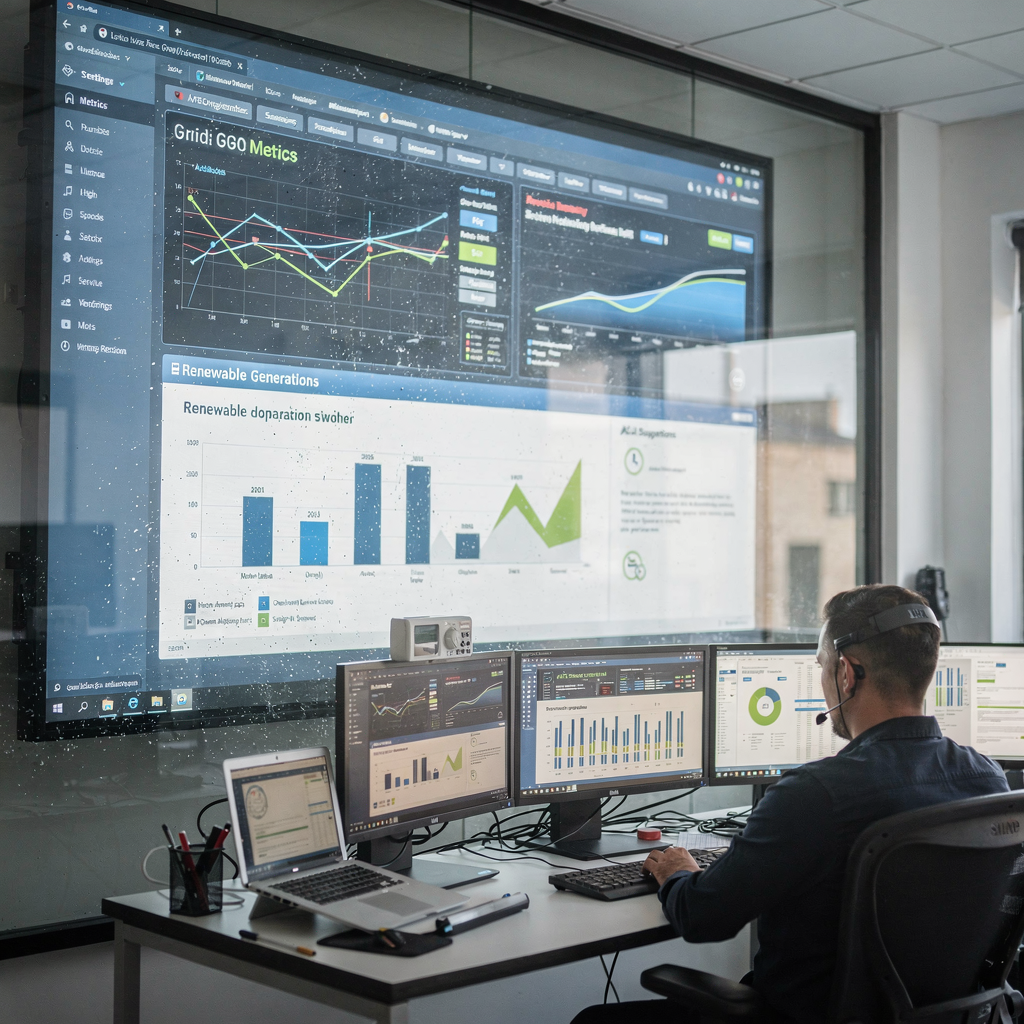
Operators get better situational awareness because agents aggregate data from meters, SCADA, and weather forecasts. They provide clear action recommendations and can even implement safe automated steps. As a result, outage response becomes faster, restoration times fall, and customers see fewer interruptions. These benefits matter across the utilities sector and for energy providers who manage mixed portfolios of centralized and distributed assets.
Integration and AI platform — How AI fits into utility IT/OT and the energy landscape
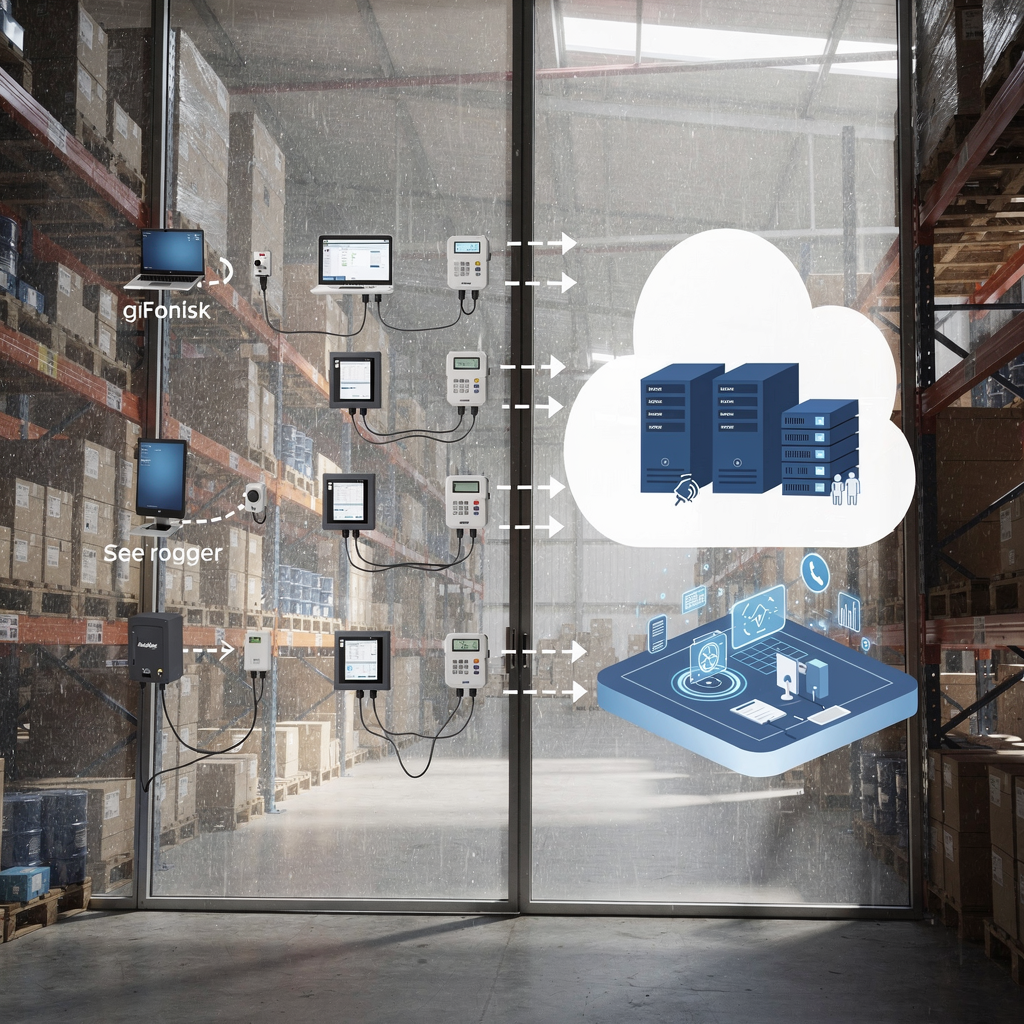
AI must connect to existing IT and OT. Integration with SCADA, ADMS, meters, digital twins, and historian systems is essential. An AI platform that ties to both cloud and edge enables different deployment patterns. Edge agents run close to hardware for low-latency control. Cloud platforms handle long-horizon forecasting and fleet optimisation. This split reduces risk and keeps critical control functions local while enabling broader analytics in the cloud.
Integration needs clear data pipelines, model validation, and governance. Utilities must validate ai models and track drift. They must also secure telemetry streams and enforce role-based access control. Good governance ensures reproducibility and auditability. It also makes it possible to scale AI safely. To support operational teams, an ai platform should offer easy connectors to ERP and asset systems, and it should support zero-code or low-code configuration so business teams can tune rules without breaking controls.
Deployment choices depend on the use case. For microgrid control, deploy edge AI agent instances that act in real-time. For multi-day forecasting, run cloud models that integrate market data and weather. Each approach needs testing and rollback procedures. Utilities should also align vendor integration and internal IT operations. Vendor selection matters as much as technical fit. For teams dealing with high email volumes and operational tickets, integrating AI-driven email automation brings measurable gains in speed and accuracy. Learn more about automating operational email workflows and integrations at our guide on automating logistics emails.
Finally, cybersecurity and resilience must be part of any rollout. Design for graceful degradation and human override. Monitor performance continuously and keep operators in the loop. This approach protects infrastructure and builds trust with field crews and regulators alike.
Drowning in emails?
Here’s your way out
Save hours every day as AI Agents label and draft emails directly in Outlook or Gmail, giving your team more time to focus on high-value work.
Types of AI and generative AI — Tools and assistants for energy companies
There are many types of AI used in the energy industry. Statistical machine learning covers regression and time-series forecasting. Reinforcement learning optimises sequential decisions like battery dispatch. Optimisation engines solve scheduling problems and market bids. There are also generative AI and conversational AI tools that help with text, reporting, and operator support. If you want a quick taxonomy, think in three groups: predictive models, prescriptive optimisation, and conversational assistants.
Practical uses include automated incident triage, shift handovers, and report drafting. AI assistants can summarise alarms, create post-mortems, and surface trend insights. They also draft operator instructions and standard operating procedures. These assistants reduce manual work and cut the cognitive load on teams. When operators must share knowledge across shifts, an assistant that keeps thread memory and context is invaluable.
Generative AI helps with documentation and training, but it needs guardrails. Outputs may hallucinate, so grounding to verified data is critical. Use retrieval-augmented methods and strict validation before you publish or act. Keep privacy and compliance controls in place, and limit what the assistant can do without human approval. For teams focused on operations, a grounded workflow that drafts emails and pulls ERP, WMS, or TMS data reduces error rates and improves traceability, which is what our solution at virtualworkforce.ai targets. For a practical primer on AI in logistics and communication, see AI in freight logistics communication.
Finally, choose the right type of model for each task. Small, efficient models often suffice for chat and triage. More complex models run for optimisation and heavy forecasting. Balance accuracy with energy footprint and latency. That balance defines success in operational settings.
Energy transition and energy and utilities — Costs, carbon and responsible AI integration
The energy transition depends on tools that enable cleaner energy and smarter grids. AI helps integrate renewable energy and supports the move to sustainable energy. A recent study said AI “play[s] a pivotal role in facilitating the integration of renewable energy sources into the power grid, thereby enhancing consumer access to energy that is both reliable and sustainable” [ScienceDirect]. That quote captures the promise and the practical role of AI in the shift to clean energy.
At the same time, AI workloads increase energy consumption in data centres. Analyses show that electricity demand for AI compute has grown substantially and that some hardware is energy intensive [MIT Technology Review]. For responsible adoption, energy firms must weigh benefits and costs. Options to reduce footprint include model efficiency, workload scheduling to low-carbon hours, and running data centres on renewables. Research into model compression and more efficient accelerators also helps. The industry is responding with both software and hardware improvements, and with operational measures to curb unnecessary compute.
Practical mitigation steps include prioritising high-value ai use cases, starting with pilots, and embedding governance from day one. Measure benefits and energy consumption together. Use energy-aware metrics and report both business impact and carbon impact. This roadmap aligns ai adoption with the energy strategy and with regulatory expectations. For guidance on how AI can reduce carbon through optimisation and forecasting, see NVIDIA’s overview of AI in energy [NVIDIA].
To summarise the steps: prioritise use cases that deliver real operational savings, pilot agents carefully, embed model validation and security, and measure both ROI and energy consumption. These steps help utility companies and energy providers scale AI safely while supporting the broader energy transition and protecting energy infrastructure.
FAQ
What is an AI agent and how does it differ from other AI tools?
An AI agent is software that senses, predicts, and acts to achieve goals. It differs from basic models because it plans multi-step actions and can replan as conditions change. Agents often include safety checks and escalation paths so humans stay in control.
How do AI agents improve grid reliability?
AI agents process telemetry and forecasts quickly and recommend or take actions that stabilise the grid. They can dispatch storage, adjust setpoints, and prioritise repairs, which reduces outages and shortens restoration times. These actions improve overall operational resilience.
Can AI help integrate renewable energy into the grid?
Yes. AI improves forecasts for wind and solar and coordinates distributed energy resources. Better forecasts reduce curtailment and make renewable energy more usable. This supports a smoother integration of renewable energy into the system.
Are there measurable benefits from using AI in utilities?
Yes. Surveys and field pilots show measurable benefits like faster decision-making and cost savings. For instance, about 55% of adopters reported faster decisions, and pilots have cut fuel use in microgrids by around 40% [DataForest].
What are the energy costs of running AI solutions?
AI compute can be energy intensive, especially for large models and extensive training. Recent analyses highlight rising electricity use in data centres. To manage costs, organisations reduce model size, schedule workloads during low-carbon hours, and use renewable-powered data centres.
How do utilities validate AI models before deployment?
Utilities run staged pilots, compare model outputs to ground truth, and implement model governance. They monitor drift, require explainability for critical decisions, and set clear rollback procedures. These measures protect operations and build operator trust.
Where do conversational AI and generative AI fit in the utility workflow?
Conversational AI and generative AI assist with reporting, triage, and shift handovers. They draft messages, summarise incidents, and train staff. However, they need grounding and guardrails to avoid hallucination and to meet compliance requirements.
Can AI agents replace human operators?
No. AI agents augment human operators and handle repetitive or high-frequency tasks. Humans remain responsible for strategy, oversight, and critical judgments. Agents help by reducing workload and by surfacing exceptions that require human attention.
How should a utility start with AI projects?
Start small with high-value use cases, run pilots, and measure both business and energy impacts. Embed governance early, ensure cybersecurity, and involve operators in design and testing. This approach lowers risk and speeds useful ai adoption.
What role does data play in successful AI deployment?
Data is essential. Quality telemetry, meter reads, maintenance logs, and weather feeds enable accurate models and reliable agents. Clean data pipelines and clear data ownership support better outcomes and easier scaling of AI initiatives.
Drowning in emails?
Here’s your way out
Save hours every day as AI Agents label and draft emails directly in Outlook or Gmail, giving your team more time to focus on high-value work.