


Why AI agents matter for energy companies in the evolving energy landscape
The evolving energy landscape demands faster, smarter decisions. AI agents turn raw METRICS and telemetry into operational choices that teams can act on immediately. They ingest SCADA feeds, sensor logs, meter reads and weather inputs. Then they detect anomalies, prioritise work and suggest actions. This reduces manual triage and helps teams respond proactively.
Seventy-four percent of energy and utility companies now use AI to solve data challenges, which shows the scale of adoption (IBM). Yet only about 1% report AI maturity, and that gap marks a major opportunity for investment (McKinsey). Utilities that deploy AI agents for grid monitoring and outage prediction cut response time and improve reliability. For example, several utility providers now use AI to reduce the scale and duration of an outage by routing crews more effectively.
For energy companies the strategic case is clear. AI agents help optimise asset use, reduce mean time to repair and lower operating cost. They also support decarbonisation goals by helping to integrate variable renewables and reduce carbon emissions. As a result, investment in AI is not just a cost; it is an enabler of efficiency and resilience across the energy sector.
Practical steps start with mapping use cases and data flows. First, identify high-value processes such as predictive maintenance and demand forecasting. Next, pilot with limited scope and clear KPIs. Finally, scale once models show reliable operational benefit. If you manage operations email and field dispatch, consider tools that automate data-driven communications so teams spend less time on routine coordination and more time on critical decisions, for instance by integrating operational email automation like virtualworkforce.ai to speed workflows.
Predictive maintenance and ai-powered energy operations for utilities
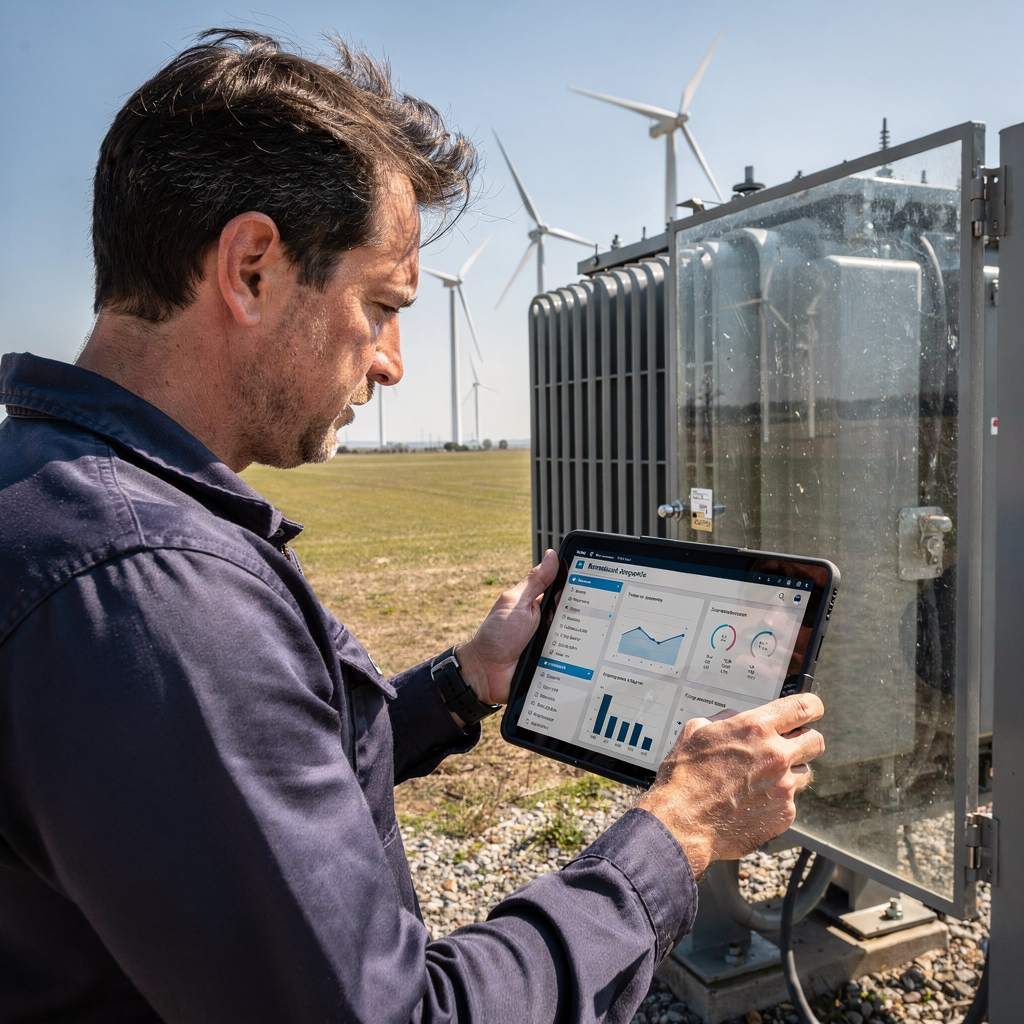
Predictive maintenance prevents failures, lowers repair spend and extends the life of critical assets. It does this by using condition data from sensors and SCADA systems to detect patterns that precede faults. Utilities feed vibration, temperature and current data into ML models. These models then flag assets that need inspection. This reduces downtime, cuts unplanned maintenance and improves asset utilisation.
Common benefits include reduced downtime, lower repair costs and better asset utilisation. Large utilities and vendors have documented these gains. For example, Duke Energy and other utility companies deploy AI to schedule work before failure, reducing service interruptions and improving safety. Vendors and platforms combine field history with weather and load data to make maintenance schedules more efficient and less disruptive.
Technically, predictive programmes rely on several building blocks. First, high-quality data from sensors, SCADA and maintenance logs. Second, ML pipelines for anomaly detection and remaining useful life estimation. Third, integration with work-order systems so alerts translate into dispatched tasks. Fourth, human-in-the-loop controls that let engineers validate critical recommendations. Together these parts create an operational loop that keeps assets running longer and crews focused on value.
To pilot predictive maintenance, start small and measure impact. Select one asset class with good telemetry and frequent failures. Then label events, train anomaly detectors and test alerts on a control group. Track mean time between failures, repair cost and crew utilisation. If you use email for operational coordination, consider automating the notification workflow so that alerts generate accurate, data-backed emails to crews and contractors; solutions such as virtualworkforce.ai can reduce handling time and keep context attached to every message. Over time expand scope to cover transformers, feeders and plant equipment to scale the programme across the utility.
Drowning in emails?
Here’s your way out
Save hours every day as AI Agents label and draft emails directly in Outlook or Gmail, giving your team more time to focus on high-value work.
Real-time energy management: ai energy assistant, energy data and forecast
Real-time control depends on fast, accurate forecasting and tight feedback loops. An AI energy assistant uses historical energy data, market signals and weather inputs to forecast short-term energy demand and supply. This forecasting reduces curtailment for variable renewable energy and improves dispatch decisions. NVIDIA and other providers focus on scalable forecasting tools that improve accuracy for wind and solar generation (NVIDIA).
In practice, the assistant ingests real-time data from meters, telemetry and market feeds. Next, it runs ML models that predict load, renewable output and price signals. The results feed control systems to schedule dispatch, charge storage or trigger demand response. For example, a dispatch decision can shift a battery charge window by an hour to capture lower-cost energy, thus lowering procurement cost and improving grid stability.
Designing an ai energy assistant starts with clear goals. Define the forecast horizon and required latency. Choose models that balance accuracy and compute cost. Then integrate the forecasts with energy management systems and SCADA so signals can act automatically. Implement control loops that monitor outcomes and retrain models when performance drops. This ensures forecasts remain relevant as consumption patterns shift.
Real-time features to consider include dynamic dispatch, storage optimisation and automated demand response. The assistant should also provide human-readable recommendations so operators can override when needed. For distributed assets, edge inference reduces latency and data movement, and cloud-based training keeps models fresh. If your team relies on operational email to manage dispatch and exceptions, link forecast alerts to structured email workflows so teams receive clear, contextual instructions; see how automated email drafting can speed responses in logistics and operations contexts (operational email automation).
Agentic AI, generative AI and conversational AI to automate customer engagement
Agentic AI and generative AI expand what automation can do. Agentic AI can act on rules and data to drive decisions, while generative AI creates human-like text for messaging and reports. Conversational AI powers chat, voice and email interfaces that handle routine queries. Together they let energy providers automate customer engagement across billing, outage notifications and energy-saving advice.
Use cases include automatic outage notifications that reach customers via SMS and email, retail customer engagement for tariff guidance and chatbots that resolve billing questions without a human. Conversational AI can also personalise energy-saving tips by analysing consumption patterns and suggesting low-cost actions. This improves customer satisfaction and reduces call centre load.
Caution is required. Generative outputs can be fluent but sometimes incorrect. Governance and transparency must ensure that automated replies cite sources and that critical decisions are auditable. Regulators expect clear records and safe escalation. Design systems to escalate to human agents for safety-critical or complex enquiries, and maintain logs for audit trails.
To pilot these capabilities, start with narrow tasks such as billing FAQ and outage status messages. Test conversational flows with real customers and measure customer satisfaction and resolution rate. For operations that rely on email, agentic AI that automates the full email lifecycle offers fast wins. Our platform, virtualworkforce.ai, automates intent detection, routes messages and drafts replies grounded in ERP and operational records, which reduces handling time and increases consistency. For more on improving customer service with AI, consider this practical guide (improving customer service with AI).

Drowning in emails?
Here’s your way out
Save hours every day as AI Agents label and draft emails directly in Outlook or Gmail, giving your team more time to focus on high-value work.
Sustainability trade-offs: AI systems, data centres and renewable energy solutions
AI systems deliver efficiency but they also demand compute, which uses power. In 2023 data centres accounted for roughly 4.4% of US electricity consumption, and AI workloads are increasing that footprint (IEE PSU). This means the energy cost of training and serving models matters for sustainability choices.
At the same time, AI can reduce carbon emissions if used wisely. For instance, optimised dispatch, better forecast and smarter asset use can lower fossil fuel peaker events. A careful approach balances model complexity with carbon impact and prefers low-carbon sources for heavy compute. As one analysis notes, “AI’s environmental and economic sustainability depends on use case and energy source—when properly optimised, AI can reduce emissions in some scenarios” (Medium).
Practical choices include using efficient ai models and scheduling heavy training during periods of abundant renewable energy. Colocating compute near low-carbon power and using carbon-aware scheduling reduces lifecycle impact. Also, measure energy consumption and model carbon cost per forecast or per decision to evaluate net benefit. This turns sustainability from an afterthought into a design constraint for AI initiatives.
For energy companies, the goal is a net reduction in energy use and carbon emissions through smarter operations. Use renewable energy for compute where possible, and favour edge inference for real-time control to cut data movement. Finally, track both direct and indirect impacts so you can report the sustainability gains from AI-enabled energy solutions and demonstrate progress toward energy goals and sustainable energy commitments.
Building an ai platform and selecting ai tools to improve customer experience and energy operations
Adopting an ai platform requires a clear plan: pilot, scale, govern and measure. Start by defining use cases such as predictive maintenance, forecasting and customer service. Then prepare data pipelines that connect meters, SCADA, ERP and field systems. Good data hygiene and governance reduce model bias and improve uptime.
Choose your deployment mix carefully. Cloud training and edge inference often work best together. Cloud keeps models fresh and scalable. Edge reduces latency for real-time control. Select ai tools that support observability, model audit trails and versioning. This makes it easier to meet regulatory needs and to trace decisions when customers or regulators ask why a choice was made.
Set practical KPIs from day one. Track uptime, forecast error, maintenance cost savings and customer satisfaction. Define privacy and access rules for energy data and system logs. Establish a governance board that includes operations, security and customer teams so changes reflect operational reality and customer needs.
For quick wins, automate routine operational email and customer messages. That reduces manual triage and increases consistency. Our own experience with virtualworkforce.ai shows teams cut average handling time and reduce errors by grounding replies in ERP, TMS, WMS and document stores. If you want to scale operations without adding headcount, review options like how to scale logistics operations with AI agents for parallel use cases (scale operations with AI agents). Also explore vendor comparisons and integration guides to pick tools that match your tech stack (best AI tools).
Finally, measure ROI and iterate. Show value in 3–9 months with a narrow pilot. Then expand to other assets and customer segments. This staged approach keeps risk low and builds confidence among stakeholders while delivering tangible operational efficiency and better customer experience.
FAQ
What are AI agents and how do they help energy companies?
AI agents are autonomous or semi-autonomous services that process data and make recommendations or act. They help energy companies by turning large streams of energy data into actionable steps for operations, maintenance and customer engagement.
How can predictive maintenance reduce costs for utilities?
Predictive maintenance uses sensor and SCADA data to identify faults before they fail. This reduces downtime, lowers repair costs and improves asset utilisation by scheduling work at the right time.
What is an AI energy assistant and what does it do?
An AI energy assistant forecasts demand and supply, and suggests dispatch choices. It links energy data and real-time control to reduce curtailment and improve grid stability.
Can generative AI be used for customer engagement safely?
Yes, when governed and monitored. Generative AI can automate billing messages and advice, but systems must include transparency, escalation and audit trails to ensure accuracy.
How do AI systems affect sustainability in the energy sector?
AI systems consume compute, which uses power, but they can also reduce overall carbon emissions through smarter dispatch and improved energy efficiency. The net effect depends on use case and energy sources for compute.
What data sources power predictive and forecasting models?
Models use sensors, SCADA, meters, weather feeds and market signals. Combining these sources with historical maintenance and operational logs provides the context models need to perform well.
How quickly can energy companies show ROI from AI pilots?
With focused pilots on high-value use cases, teams can show measurable results in three to nine months. Quick wins often come from automating routine communications and using predictive alerts for frequent faults.
What governance is needed for agentic AI in operations?
Governance should include model auditing, access control, human-in-the-loop checks and clear escalation paths. This ensures safety, traceability and regulatory compliance.
How do I choose between cloud and edge deployment?
Use cloud for model training and heavy data analysis, and edge for low-latency inference in control loops. The right balance depends on latency needs, connectivity and data sensitivity.
Where can I learn more about automating operational email and responses?
Practical guides and vendor pages explain how to automate email workflows for operations and customer service. For example, see resources on automating logistics correspondence and AI-driven email drafting to adapt similar approaches for energy operations.
Drowning in emails?
Here’s your way out
Save hours every day as AI Agents label and draft emails directly in Outlook or Gmail, giving your team more time to focus on high-value work.