


ai assistant overview for utility inboxes in the energy sector
Energy teams receive large volumes of email every day. First, an AI assistant for inboxes triages incoming messages. Next, it classifies intent, prioritises urgent cases, and can auto-reply to standard billing inquiries or outage confirmations. For example, an ai email assistant can route meter alerts into CRM records and surface them to field teams. This cut manual triage and made email communication more reliable across teams. Pilot data shows strong gains: firms report up to a 30% increase in engagement and a 25% faster response time when AI handles routine messages. Similarly, utilities have seen around a 20% reduction in operational costs on common service tasks when automation is applied.
Where does this fit in the energy sector? It belongs in customer care, outage communications, billing queries, and meter alerts. An AI assistant speeds first replies and reduces repetitive work for customer service teams. It also supports digital transformation by turning email threads into structured data. virtualworkforce.ai uses AI agents to automate full email lifecycles so operations can focus on complex tasks, not every routine message. The platform grounds replies in operational systems, which reduces errors and improves customer satisfaction. For energy suppliers and energy providers, this reduces administrative overhead while keeping a clear audit trail.
Security and compliance matter. Automated processing must respect gdpr and follow Ofgem guidance. Also, energy companies should measure KPIs such as first-response time, percent automated replies, and escalation rate. Finally, choose solutions that can integrate with AMI, CRM, and billing systems to create seamless, accurate responses that customers can trust. For context, some trials report higher satisfaction for automated replies; Octopus Energy trials suggested automated replies sometimes outperformed humans in speed and consistency, which helped improve customer experience and reduce costs.
ai agent and virtual assistant use cases: automate inbox and email management for energy companies
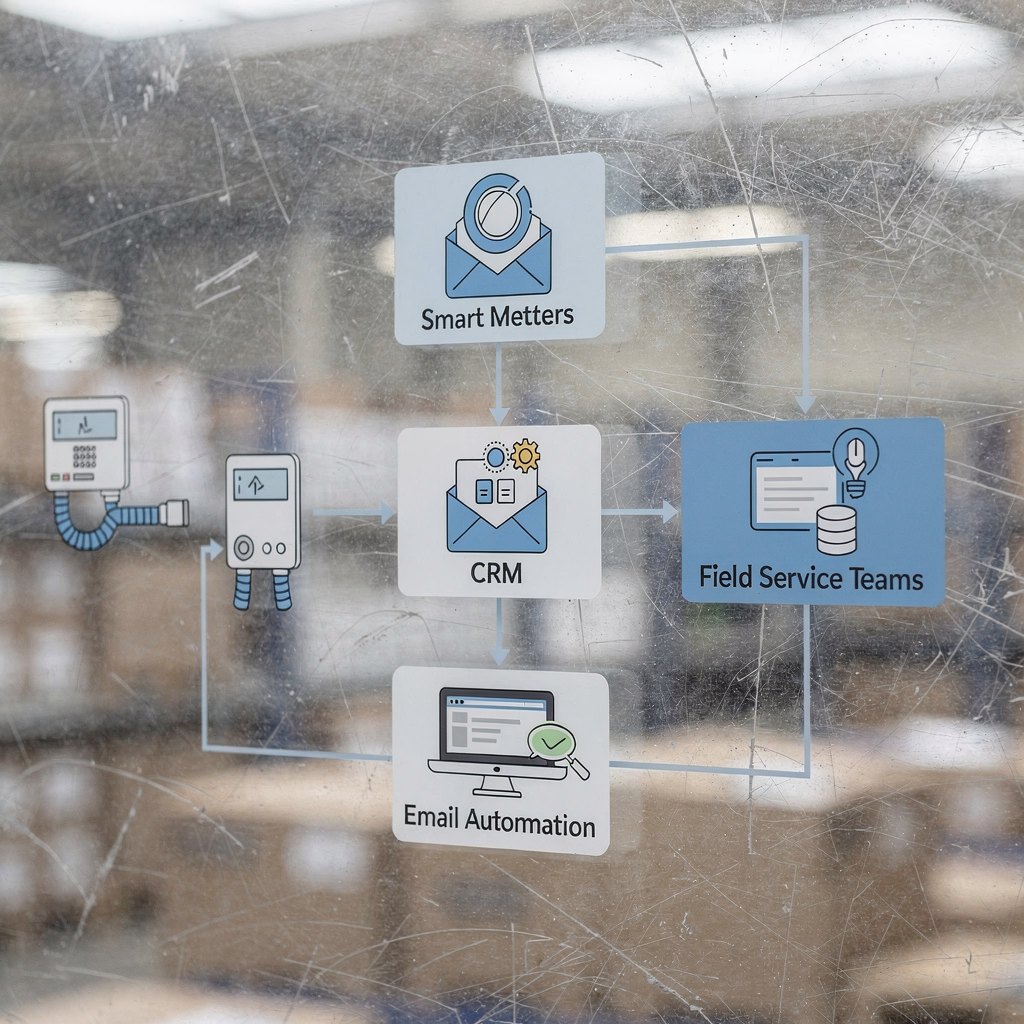
Energy companies face common, repetitive email flows. First, billing inquiries and payment reminders dominate many inboxes. Second, outage messages and AMI meter alerts generate urgent tickets. A well‑trained ai agent, combined with a virtual assistant, can automate triage and reply to many of these queries. For example, when a smart meter flags a consumption anomaly the ai agent can create a customer email, attach relevant meter data, and offer a secure self-service link. This reduces manual lookup and helps customers understand their usage. In addition, the assistant can send confirmation messages for received payments or scheduled field visits.
Use cases extend beyond billing. Bots can acknowledge complaints, follow up on meter-reading requests, and confirm tariff changes. These flows cut repetitive tasks and speed first response. In practice, a conversational AI or ai virtual assistant handles 60–80% of routine queries and escalates complex issues. That split keeps humans focused on complex tasks while automation handles routine volume. KPI suggestions include first-response time, percent automated replies, escalation rate, and customer satisfaction. Track time-to-resolution and the rate of repeat inquiries to measure success.
Integrating the ai agent with AMI and CRM systems matters. When systems integrate, the assistant pulls accurate telemetry, timestamps, and tariff records into email drafts. Then it updates the CRM conversation so customer relationship management remains intact. For operators, this improves knowledge management and keeps inbox ownership clear. virtualworkforce.ai automates the full email lifecycle, creating structured data and pushing it back into ERP or CRM systems so workflows run smoother. Finally, pilots often offer a free trial or proof-of-value to validate gains before wide rollout and to ensure the AI model meets sector expectations.

Drowning in emails?
Here’s your way out
Save hours every day as AI Agents label and draft emails directly in Outlook or Gmail, giving your team more time to focus on high-value work.
crm integration and data analysis to streamline email communication and self-service for energy providers
CRM integration makes automated email replies act intelligently. First, linking an ai assistant to a customer relationship management system preserves interaction history. Then, the assistant can personalise replies using past contacts, tariff choice, and recent payments. This improves accuracy and helps agents run targeted marketing campaigns when appropriate. Data analysis on historical email patterns and smart‑meter telemetry allows the assistant to predict likely issues and propose appropriate responses. In this way, ai and data deliver relevant information to agents and customers.
Self-service is central to customer experience. For example, an automated email can include a secure link to update a payment method, post a meter reading, or check an outage status. These email threads remain thread-aware, which helps the assistant pick up context across replies. To keep compliance and traceability intact, the integration must map email intents to CRM fields and preserve an audit trail for regulatory review. This matters for energy suppliers and utility companies alike.
Data analysis also highlights patterns in amounts of data coming from smart meters, call centres, and billing systems. Use this insight to optimize routing rules and escalation thresholds. The assistant can tag messages with intent, urgency, and required documentation. That makes processes more efficient and reduces manual handoffs. It also supports knowledge management by surfacing templates and precedents. When integrating ai with CRM, choose platforms that offer secure connectors and role-based access. virtualworkforce.ai connects ERP, TMS, WMS, SharePoint and inboxes so teams get grounded replies and a full operational context. This reduces administrative overhead and leads to reduced operational costs while keeping customer data safe.
ai bot, conversational ai and chatbots for real-time replies and automate customer workflows in utility companies
Real-time responses matter during outages and high-volume billing cycles. A conversational ai or ai bot can reply immediately to common outage queries, provide status updates, and send confirmation of ticket creation. When well configured, chatbots manage simple billing inquiries, route complex queries to specialists, and update CRM records automatically. This approach keeps customer service teams free for nuanced cases and improves customer satisfaction by reducing wait times.
Playbooks automate the sequence: inbox message → ai bot reply → CRM update → field ticket if needed. This workflow reduces manual intervention and keeps audit trails intact. Monitor bot misunderstanding rate, fallback frequency, and resolution time. These metrics reveal where the ai model needs fine‑tuning. Use human‑in‑the‑loop controls so agents can review sensitive billing or regulatory decisions. That balance lowers risk and ensures compliance, especially for gas companies and other regulated energy suppliers.
Deploy chatbots where they add clear value. For example, automate customer confirmations for scheduled meter reads, send automated outage bulletins, or propose tariff switches. Also, ensure the chatbot links to secure portals for payments. This lets customers complete tasks without agent handoffs. When selecting a solution, test with generative ai only for draft content and keep the final send under review until the assistant reaches target accuracy. Finally, track how many cases the bot resolves end-to-end and measure CSAT to verify the expected gains. A staged rollout helps teams learn and keeps business processes under control.
Drowning in emails?
Here’s your way out
Save hours every day as AI Agents label and draft emails directly in Outlook or Gmail, giving your team more time to focus on high-value work.
ai platform, ai email assistant and ai solutions: choosing the right ai and best ai for gas companies and the energy industry
Choosing the best AI for energy requires specific criteria. First, focus on data security and crm compatibility. Second, confirm local language support and sector intent accuracy. Third, examine vendor SLAs and audit logs. The right ai platform will offer domain fine‑tuning, human‑in‑loop escalation, and templates for regulatory messages. These features help utility companies meet compliance and give accurate responses at scale.
Procurement should start with a proof‑of‑value pilot. Measure reduced operational costs, automation rate, and improve customer satisfaction. Then evaluate total cost of ownership and energy footprint. Artificial intelligence consumes compute and energy; therefore compare efficient models and consider batch processing to lower environmental impact. For guidance on AMI integration and data, review vendor steps and confirm how they will integrate with existing systems. virtualworkforce.ai offers zero-code setup and deep data grounding across operational systems, which helps teams scale without fragile prompts.
Consider in‑house fine‑tuning versus platform vendors with prebuilt energy templates. In‑house gives control, while vendors speed deployment. Also, include a procurement checklist: proof‑of‑value, measurable KPIs, integration plan, training data needs, and a plan for scalable operations. Don’t forget gdpr obligations and risk management for customer data. Finally, check whether the solution can automate repetitive tasks and automate customer messaging across all channels, including voice assistants where appropriate. Choosing the right ai takes careful trade-offs between speed, accuracy, and sustainability.
email management risks and governance: customer data, ai assistance, voice assistants, automation and sustainability
Email management brings governance responsibilities. First, protect customer data and follow gdpr when automating decisions. Second, enforce encryption, role-based access, and retention policies. Third, build breach response plans and test them. In regulated markets, maintain audit logs and clear escalation paths so humans remain accountable for billing or tariff choices. These steps reduce legal and reputational risk for energy companies and energy providers.
AI assistance must include fail-safes. Track false positives, misunderstood intents, and fallback rates. Then, run manual reviews for sensitive cases. Also, monitor the compute footprint of AI systems. The energy use of large models can be significant; prefer efficient models, scheduled batch runs, or scaled compute to manage carbon impact. For technical teams, define policies on integrating ai and perform regular audits to keep models aligned with compliance.
Operational controls matter as much as technical ones. Define playbooks for outage communication, confirmation messages, and complaint handling. Test these playbooks in a pilot and iterate based on user feedback. Include staff training and a phased rollout with clear KPIs such as response time, automation rate, and improve customer satisfaction. Finally, keep a roadmap that covers compliance review, staff enablement, and scalable deployments so the project grows safely. If you want, I can expand any chapter into a one‑page brief with recommended KPIs, a 6‑month rollout plan, and a short vendor‑evaluation template.
FAQ
What is an AI assistant for utility inboxes?
An AI assistant automates email triage, classification, and basic replies for utility inboxes. It reduces manual effort and speeds first responses while logging actions into CRM systems.
How does an ai agent connect to smart meters?
An ai agent can ingest AMI alerts and generate emails or tickets when anomalies or outages occur. Then it attaches relevant meter data and updates the CRM so field teams can act rapidly.
Can a virtual assistant handle billing inquiries?
Yes, virtual assistants can handle common billing inquiries and send payment reminders. They escalate complex or disputed billing matters to human agents for review.
What KPIs should I track for email automation?
Track first-response time, percent automated replies, escalation rate, and customer satisfaction. Also monitor fallback frequency and bot misunderstanding rate for continuous tuning.
Is CRM integration necessary?
CRM integration keeps interaction history intact and personalises replies. It also enables targeted retention offers and accurate updates to customer relationship management records.
How do you ensure data protection with AI?
Follow gdpr principles, use encryption, set retention policies, and maintain access controls. Also keep full audit logs for regulatory review and incident response.
What is the energy impact of using AI?
Some AI models consume significant compute and energy. To reduce impact, choose efficient models, batch processing, and monitor model energy use as part of sustainability efforts.
When should a chatbot hand over to a human?
Hand over when the query is complex, sensitive, or when the bot hits a fallback. Define clear escalation rules so customer service teams intervene when needed.
Can email automation improve customer satisfaction?
Yes, automation speeds response times and reduces repetitive errors, which can improve customer satisfaction. Measure CSAT to confirm gains and tune the assistant accordingly.
How do I choose the right ai platform for a gas company?
Evaluate security, CRM/AMI compatibility, language support, and vendor SLAs. Run a proof‑of‑value pilot to measure reduced operational costs and validate accuracy before full deployment.
Resources and research cited above include industry studies and expert commentary from sources such as the U.S. Department of Energy and market analyses that demonstrate measurable gains from AI email assistants. For further reading on logistics email automation and how AI helps other operations, see related resources on virtualworkforce.ai such as the pages on virtual assistant logistics, automated logistics correspondence, and guidance on how to improve logistics customer service with AI. External research includes reports on AMI integration and AI adoption trends (Voices of Experience: Leveraging AMI Networks and Data), generative AI statistics (Master of Code), expert testimony on AI in energy (TechPolicy transcript), and analyses of AI use cases (LeewayHertz).
Drowning in emails?
Here’s your way out
Save hours every day as AI Agents label and draft emails directly in Outlook or Gmail, giving your team more time to focus on high-value work.