


ai assistant for water utilities — what it is and why utility teams should adopt it
An AI assistant is a TERMÉSZETES NYELV eszköz that reads, triages and drafts replies to customer emails. It uses TERMÉSZETES NYELVI FELDOLGOZÁS and pattern recognition to label intent, pull records from billing and CRM, and produce accurate draft replies. For water utilities facing hundreds of thousands of inbound messages, an AI assistant reduces manual triage and frees team time. For example, a generative system delivered a ~30% increase in engagement and a ~25% reduction in email response time after deployment ebben az esettanulmányban.
First, the tool reads the message. Next, it assigns intent. Then, it either routes the note to a human or drafts a reply. This process helps utility teams manage volume. Water utilities that handle large populations often face spikes after storms and outages, and automated triage helps prioritise safety reports and billing disputes. A market report shows adoption of such tools climbing roughly 40% year-on-year, which reflects how the water industry is prioritising digital transformation WaterData.
Privacy and compliance matter. Data residency rules and GDPR-style controls must be enforced. Therefore, utilities must set access controls and logging. As Sergio Tobar put it, „The deep research model always provides sources and everything with OpenAI will provide sources if you ask.” That emphasis on transparency supports regulatory reporting and auditability Sergio Tobar idézet.
When to adopt? When email volumes grow, when response SLAs slip, or when customers need faster help during an outage. virtualworkforce.ai builds AI agents that automate the full email lifecycle for ops teams. If your goal is to streamline the inbox and reduce repeated lookups across ERP, TMS or SharePoint, then an AI assistant can help. You can also read guidance on how to scale operations without hiring for related implementation patterns hogyan bővítsük a logisztikai műveleteket munkaerő felvétel nélkül.
use cases and service delivery — manage leaks, service requests and non-revenue water
Water utilities get emails about leaks, test results, appointments and billing questions every day. An AI assistant identifies SZIVÁRGÁS reports and escalates urgent items. It classifies service requests and creates tickets with attachments and location details. It also flags anomalous usage that may point to NEM-BEVÉTELI VÍZ and triggers targeted customer outreach. For utilities with large customer bases, these patterns cut resolution time and reduce water waste.
Core USE CASES include leak reports and escalation, appointment scheduling for repairs, billing and affordability queries, VÍZMINŐSÉG alerts, and conservation campaigns. An AI-driven triage can detect sentiment and urgency, which improves field dispatch priorities. In practice, teams see fewer repeat messages, faster detection-to-dispatch times, and measurable reductions in unnecessary truck rolls. A federal affordability survey found utilities with over a million accounts receiving hundreds of thousands of emails each month, which highlights the need for scalable service delivery LIHWAP survey.
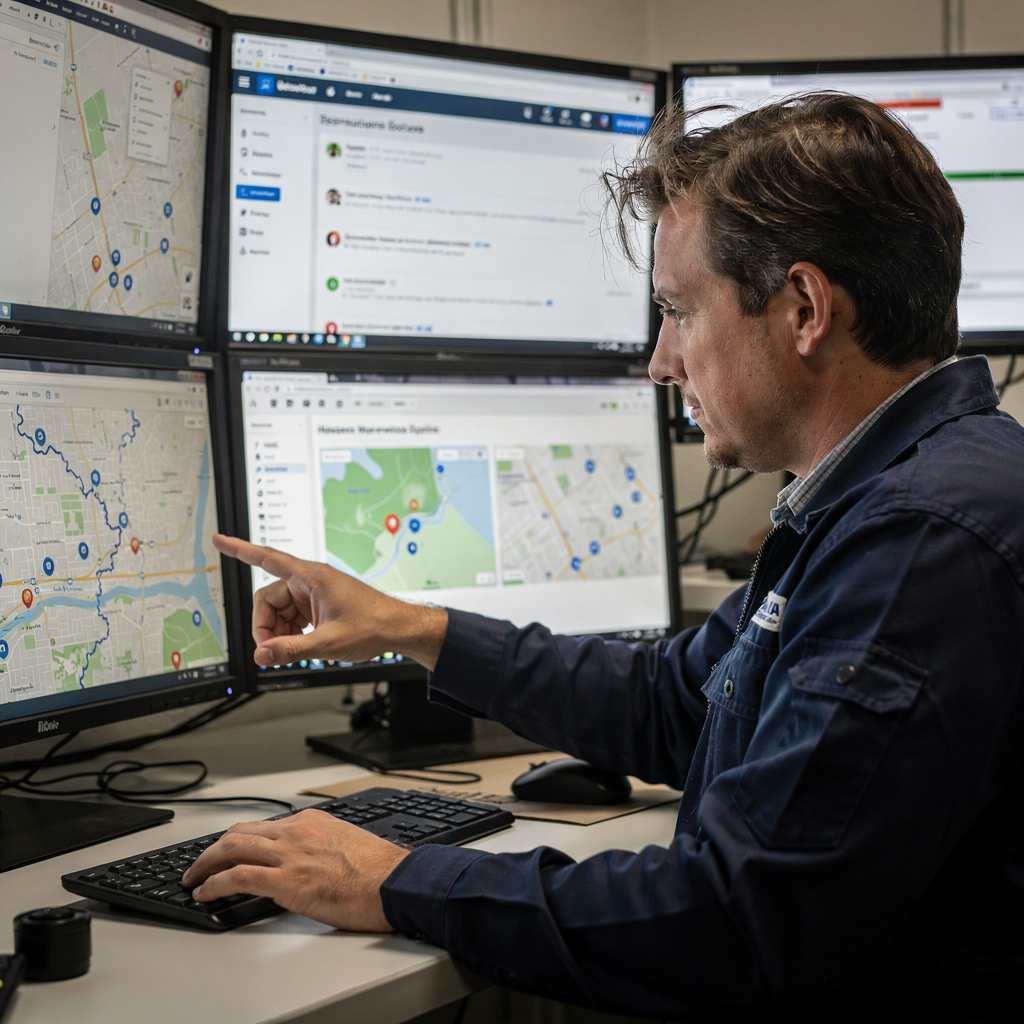
Using AI agents, operations can map emails to work-order systems and GIS. This allows field crews to receive clear instructions and customer context. For example, when an AMI feed shows a sudden spike in WATER USAGE, the AI drafts a request to confirm a possible main break. That request includes usage graphs and suggested response tiers. The approach helps water professionals and field teams make informed decisions fast. If you want technical examples of email-grounded automation applied in operations and ERP, see our write-up on ERP email automation ERP e-mail automatizálás az ERP-ben.
Drowning in emails?
Here’s your way out
Save hours every day as AI Agents label and draft emails directly in Outlook or Gmail, giving your team more time to focus on high-value work.
automation, traditional automation in water utilities and better than traditional automation
Traditional automation in water utilities often relies on rule-based auto-responders and fixed templates. Those systems match keywords and then send canned replies. By contrast, AI provides KONTEKSTUSÉRZÉKENY replies and multi-turn thread understanding. AI recognises intent even when customers describe a problem poorly. That makes AI better than traditional automation for ambiguous reports and complex billing queries.
AI systems use TERMÉSZETES NYELVI MEGÉRTÉS to extract location, timestamps and meter IDs from freeform emails. They also apply MACHINE LEARNING models to detect sentiment and urgency. As a result, safety or contamination reports are prioritised correctly. When a customer complains about taste or discolouration, the AI can attach past lab results and recent SCADA alerts, and then escalate to infrastructure management for inspection. This reduces time to action and helps protect water resources.
However, risks exist. Over-automation can mishandle legal claims or sensitive customer data. For that reason, keep humans in the loop for complex or regulated cases. Set clear escalation rules and maintain audit logs. Use human review loops to ensure quality. In practice, teams combine AI agents and manual oversight to get both speed and accuracy. That balanced approach helps optimise processes using machine learning while avoiding unsafe automation. For further reading on how AI improves customer service workflows, see our guide on improving logistics customer service with AI hogyan javítsuk a logisztikai ügyfélszolgálatot mesterséges intelligencia segítségével.
integrate, deploy and run ai agents in real-time with water utility management systems
To operate effectively, AI must INTEGRATE with CRM, billing systems, work-order platforms and SCADA or AMI feeds. A good deployment plan maps data fields and defines APIs for secure access. Start with a deployment checklist that includes data mapping, role-based access control, logging and escalation rules. Then test the agent in shadow mode so staff can review suggestions before the AI takes action. That method reduces deployment risk and builds trust with customers and staff.
When you DEPLOY AI agents, tie them to real-time alerts. For instance, an AMI anomaly can trigger an automated email check and then a work-order if the customer confirms a leak. That real-time linkage cuts detection-to-dispatch time and reduces wasted truck rolls. Role-based escalation ensures safety incidents go to subject matter experts. For end-to-end scenarios, aim for thread-aware memory so long email conversations stay coherent across multiple shifts and teams. This helps field operations and FIELD SERVICE MANAGEMENT.
virtualworkforce.ai integrates across ERP, TMS, WMS and SharePoint so emails become structured data and attach to tickets automatically. The platform supports secure APIs and audit trails, which helps satisfy regulator requests and protects SENSITIVE CUSTOMER DATA. To start, pilot with one use case, such as leak reporting or appointment scheduling, then scale after measuring KPIs. This phased approach helps infrastructure management teams move from manual inboxes to a reliable operational workflow.
Drowning in emails?
Here’s your way out
Save hours every day as AI Agents label and draft emails directly in Outlook or Gmail, giving your team more time to focus on high-value work.
customer experience in water utilities and roi in water utilities — metrics to track
Measure both customer-facing and operational metrics. Track AVERAGE RESPONSE TIME, FIRST-CONTACT RESOLUTION and CUSTOMER SATISFACTION. Also measure NPS and email automation rate to understand adoption. CUSTOMER EXPERIENCE in water utilities depends on consistent answers and faster service. When customers get timely updates during an outage, they report higher trust. Target higher customer satisfaction by automating common queries and ensuring human escalation when needed.
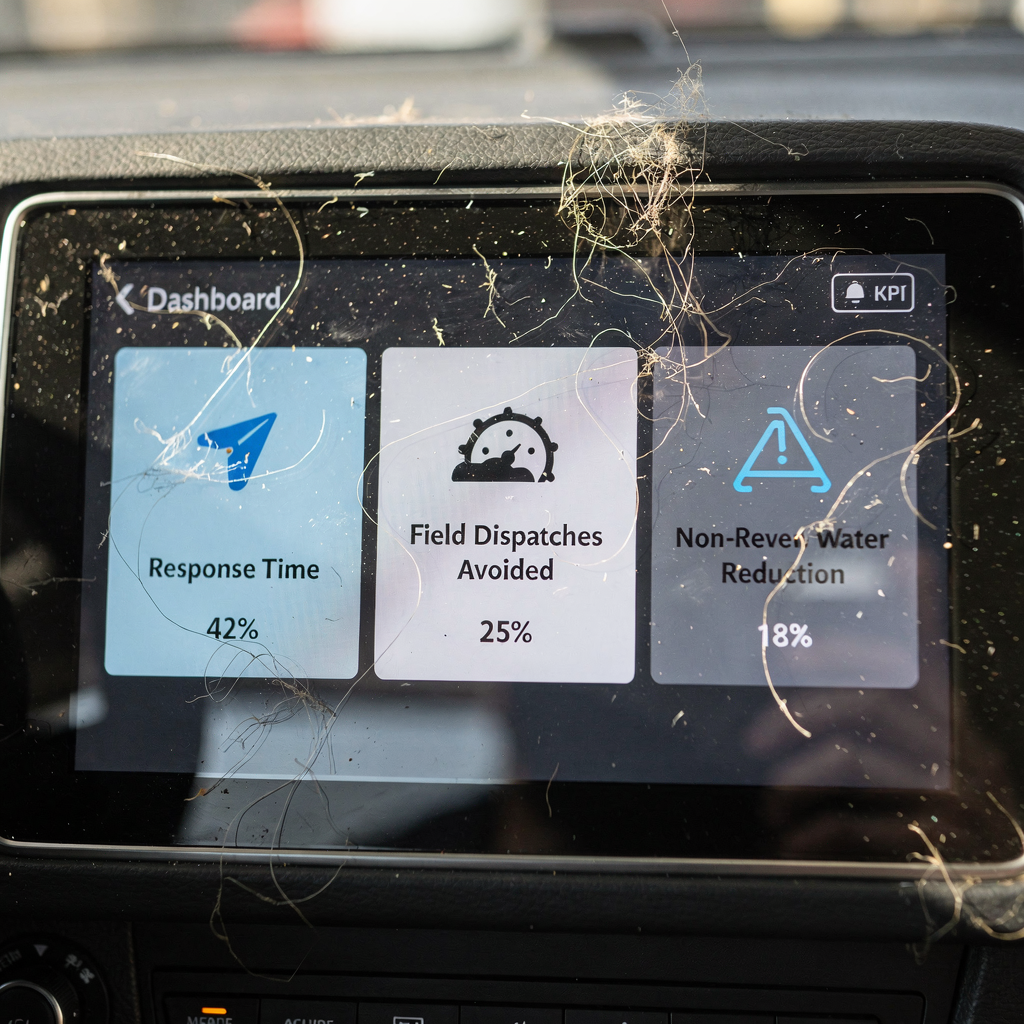
Operational KPIs matter for ROI in water utilities. Count reduction in manual handling hours. Track fewer unnecessary field visits and the percentage change in NEM-BEVÉTELI VÍZ. Use a simple ROI model: labour savings plus avoided truck rolls plus faster billing dispute resolution equals payback period. Typical improvements from early deployments include about 25–30% faster handling and higher engagement, which supports reduced operational costs and improved operational efficiency.
Also capture analytics from email threads. Actionable analytics can show common complaint drivers and peak times. Use those insights to transform scheduling and resource allocation. For water providers pursuing sustainable water goals, these savings support reduced water waste and better stewardship of water resources. Finally, communicate results internally and externally to show measurable resilience gains and faster service for customers.
challenges in water utilities — governance, water quality, optimise operations and next steps for water providers
Challenges in water utilities include data privacy, integration with legacy IT, and the need for auditability. VÍZMINŐSÉG incidents are especially sensitive. False positives on safety alerts can erode trust. Therefore, implement robust governance, logging and human review. For regulatory audits, models must provide traceability and source links. As one expert noted, „Harnessing AI in customer engagement is revolutionizing how utilities educate and empower their communities about water use” vízszektorbeli elemző idézet.
Start small. Pilot with a single use case like SZIVÁRGÁS reporting, then run shadow tests and measure KPIs. Keep humans involved for FŐVEZETÉK-TÖRÉS and legal complaints. Use role-based escalation and maintain frequent retraining cycles for models so accuracy improves. Train staff to interpret model suggestions and to own exceptions. That approach helps customers and staff adapt while the system learns from real interactions.
Next steps for water providers include running governance reviews and mapping legacy interfaces. Build explainability into each automation path. Track CSÖKKENT OPERÁCIÓS KÖLTSÉGEK and document higher customer satisfaction. For teams that want examples of end to end automation in operations, our platform automates inbox-to-ticket flows and delivers consistent replies while preserving operator control. These practical steps help optimise service delivery, support sustainable water goals, and help water management teams make informed decisions.
FAQ
What is an AI email assistant for water utilities?
An AI email assistant is a tool that reads and classifies incoming customer messages, then drafts replies or routes them to the right team. It uses natural language processing to understand intent and extract structured information from freeform emails.
How can an AI assistant help with leak reports?
An AI assistant recognises messages describing leaks and extracts location and meter details to create a ticket. Then it can attach AMI trends to speed up field dispatch decisions, which reduces water waste.
Will AI replace human staff in service requests?
No. AI handles routine service requests and drafts replies, but humans remain responsible for complex or legal issues. That hybrid model improves quality while preserving oversight.
How do I protect sensitive customer data when using AI?
Use role-based access, encryption and data residency controls to protect sensitive customer data. Also ensure audit logs and model explainability are enabled for regulator reporting.
What metrics should utilities track to measure ROI?
Track average response time, first-contact resolution, manual handling hours saved and avoided truck rolls. Combine these to compute payback and ROI in water utilities.
Can AI detect anomalies in water usage?
Yes. AI can correlate AMI feeds with customer messages to detect anomalous water usage and flag potential non-revenue water. That helps prioritise field visits.
How do I start a pilot for an AI email assistant?
Begin with a single use case like leak reporting or billing queries. Run the AI in shadow mode, measure KPIs and then scale with governance and staff training. This reduces risk and builds trust.
What integrations are required for real-time operation?
Integrate with CRM, billing systems, work-order platforms and AMI or SCADA feeds. Secure APIs and data mapping are essential for real-time alerting and ticket creation.
How accurate are AI replies for billing and affordability queries?
When grounded in ERP and billing history, AI drafts accurate, context-aware replies. Still, complex disputes should be escalated to humans to ensure compliance and fairness.
Where can I learn more about implementing email automation?
Explore resources on ERP email automation and implementation patterns to see examples and technical guidance. For practical steps on scaling without large hires, review our guide on scaling operations.
Drowning in emails?
Here’s your way out
Save hours every day as AI Agents label and draft emails directly in Outlook or Gmail, giving your team more time to focus on high-value work.