


ai: how ai email and ai assistant as an ai agent cut inbox time and raise productivity
AI changes how teams handle email and it reduces busywork fast. AI sorts messages, prioritises urgent threads, and drafts replies that match tone and policy. In practice, an AI agent reads subject lines and body text, applies intent labels, and routes tickets. The result: fewer manual triage steps, quicker first replies, and more time for higher‑value tasks. For example, operations teams often face 100+ inbound messages per person per day; by automating triage and templating, firms report drops in per‑message handling time from around 4.5 minutes to near 1.5 minutes with end‑to‑end automation. virtualworkforce.ai automates the full email lifecycle and grounds responses in ERP and document systems, so replies are accurate and traceable, and teams reduce rework and errors.
Market demand signals that AI will keep scaling in inbox automation. Analysts forecast significant market growth for AI‑powered email assistants through the 2020s and into the 2030s, with estimates varying by horizon but showing double‑digit CAGR for several years AI Powered Email Assistant Market Report 2025, Share & Size By 2034. Also, email volume projections through 2030 signal that automation will be essential to maintain service levels Email Statistics Report 2025-2030 [Updated 2026]. Teams can use AI tools to personalise responses and to reduce repetitive work without adding headcount.
Practical steps matter. First, pilot automatic triage on a single high‑volume mailbox, and measure time saved, first‑response time, and error rate. Second, map the top ten inbound intents and then route the top three to automated flows. Third, use A/B testing to compare standard process and AI‑assisted process over 90 days. This approach generates measurable KPIs, including response time, customer satisfaction, and cost per contact. Finally, create a simple data‑flow map for emails before enabling external models to ensure logging and governance are in place. Actionable: run a 90‑day pilot on one shared inbox and report delta on handling time and productivity.
email management and ai chatbots: using chatbots and ai chatbot for customer support in renewable energy firms
Chatbots and AI chatbots free support teams to handle complex cases. In the energy sector, use cases include billing queries, outage notices, installation scheduling, and automated handovers to human agents. An AI chatbot can answer routine billing questions, look up meter readings, and create tickets when required. It can also attach contextual data from IoT devices so agents see the full picture. For example, energy suppliers use generative AI to speed replies and to integrate meter context into answers, which reduces repeat contacts and improves service quality Virtual Assistants for Energy Efficiency: Real World Tryouts. This reduces time to resolve and increases customer satisfaction.
Customer experience improves when chatbots handle routine flows and escalate only when necessary. Chatbots can route installation scheduling requests to dispatch teams, and they can signal outage notices directly into operations dashboards. They also create structured data that feeds CRM systems and ERP records. In addition, chatbots enable teams to provide around the clock support while keeping staffing lean. That matters for energy companies that must balance service with cost.
Actionable: map your top ten inbound intents, then deploy an ai chatbot for the three most frequent. Train the bot using historical email threads and meter logs, and monitor first‑contact resolution and customer satisfaction. Link the bot to your dispatch rules and escalation paths so that ownership remains clear. For more on automating operational email and routing, see how automated logistics correspondence tools can integrate similar flows for field teams automated logistics correspondence. Measure CSAT and time‑to‑resolve during the pilot and iterate weekly.

Drowning in emails?
Here’s your way out
Save hours every day as AI Agents label and draft emails directly in Outlook or Gmail, giving your team more time to focus on high-value work.
environmental services and renewable energy: link IoT, ai agent alerts and actionable reports
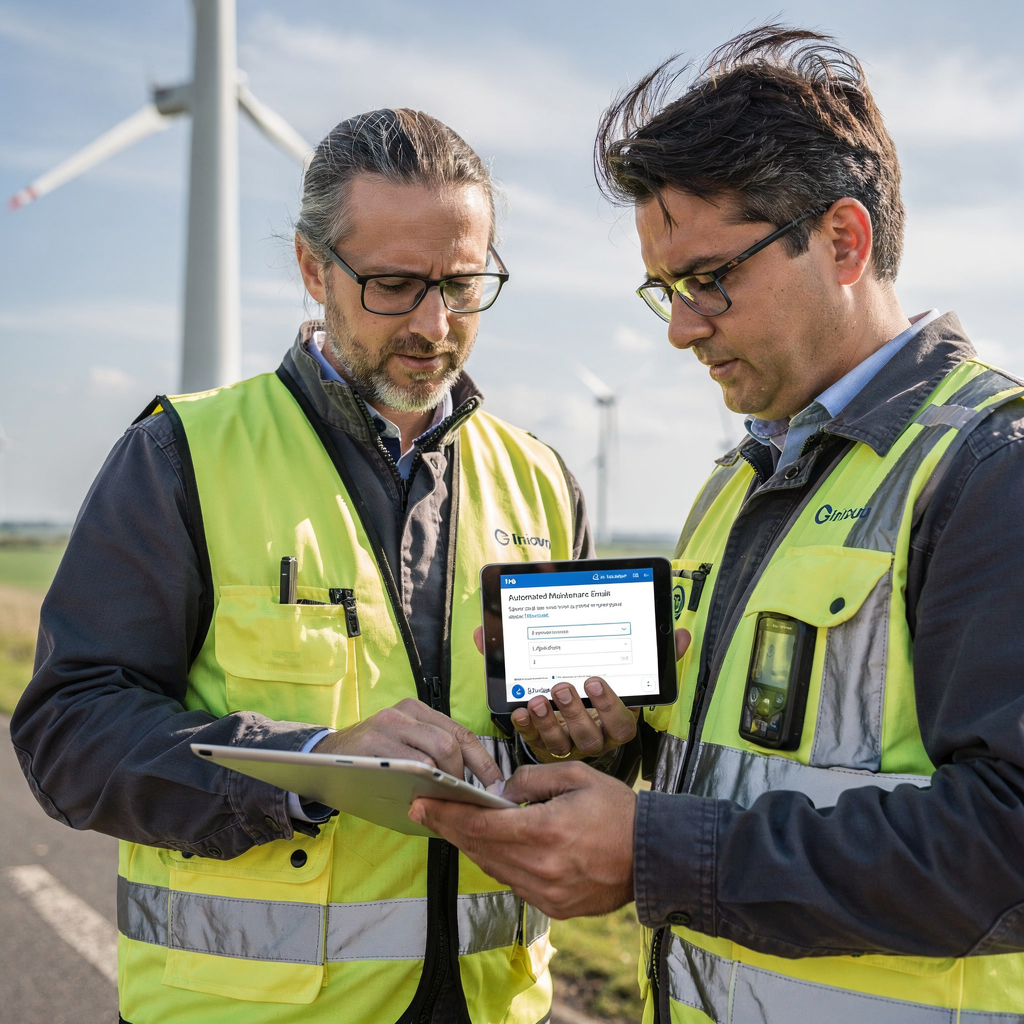
Connecting IoT feeds to an AI agent produces timely alerts and concise reports. Solar arrays, turbines, and storage systems send telemetry that an AI agent can parse, and then it can create targeted email alerts when thresholds breach. These alerts can notify field technicians, operations managers, and customers with tailored details. As a result, fault detection speeds up and asset uptime improves, which increases energy production and maximises yield. For example, automated summaries of panel output and inverter status clarify whether a drop represents shading, inverter fault, or grid issue.
AI processes can also compile weekly performance reports for ops and clients. These reports include KPIs such as availability, mean time to repair, and production versus forecast. By automating this, engineers spend less time on admin, and more time on remediation. This has direct environmental services benefits: faster fixes mean more clean energy delivered to the grid and fewer emissions from backup generation. At the same time, linking email alerts to ticketing systems ensures traceability and reduces repeated inquiries.
Actionable: send weekly automated performance summaries to operations and customers, and include clear KPIs. Start by connecting one asset type (for example, rooftop solar) and build a template that shows yield, downtime, and suggested actions. Use the template to calculate potential savings and to guide potential customers through energy plans and reporting. Also, make sure the data‑flow keeps customer identifiers separate for privacy and compliance before using external models.
best ai email assistant and benefits of ai: KPIs, ROI and productivity metrics for energy firms
Energy firms need concrete KPIs to justify AI investments. Key metrics include reduced handle time per message, improved first‑contact resolution, and lower cost per contact. Benchmarks should measure response time, customer satisfaction, and the number of escalations avoided. For ops teams, the most direct ROI comes from reduced manual lookup and fewer field trips driven by faster diagnostics. For instance, a well‑configured AI agent that drafts replies and attaches data from ERP and asset logs reduces repetitive work and increases consistency across replies.
Run a 90‑day A/B test comparing AI‑assisted inbox handling to the standard process. Track delta in productivity and CSAT, and convert time saved into FTE equivalents. Also track carbon footprint implications: fewer phone calls and fewer site visits can lower emissions, while compute for AI adds load to data centres. Use vendor commitments to renewable supply when choosing providers. For context on data centre demand and supplier planning, see reports projecting large increases in AI data‑centre demand and industry plans for renewable sourcing New report finds Microsoft’s AI data center demand to surge 600%.
Actionable: run a 90‑day A/B test and report savings in handling time, CSAT, and costs. Add a carbon KPI to the report to compare avoided travel emissions against added compute emissions. Prefer vendors that publish verified 24/7 renewable commitments and that demonstrate traceable energy procurement. For guidance on scaling operations with AI agents and linking to ERP systems, review how to scale logistics operations with AI agents how to scale logistics operations with AI agents.
Drowning in emails?
Here’s your way out
Save hours every day as AI Agents label and draft emails directly in Outlook or Gmail, giving your team more time to focus on high-value work.
ai-powered inbox analytics and email management: privacy, security and compliance considerations
AI capabilities depend on data, so control and governance are essential. Energy firms must protect customer data while extracting value from email and telemetry. Start by mapping every data flow: identify where emails land, which systems they touch, and which external models they call. Then redact sensitive fields before sending content to any third‑party model. Implement model governance, logging, and access controls. Also, tie agreements to sourcing commitments when vendors claim renewable supply so that sustainability promises are verifiable.
Risk facts help prioritise controls. Data centres consumed roughly 4.4% of U.S. electricity in 2023, and AI workloads are a major driver of growth in compute demand Why AI uses so much energy — and what we can do about it. Large providers project steep rises in demand and stress the need for renewable supply New report finds Microsoft’s AI data center demand to surge 600%. Therefore, require vendors to disclose energy sources and to follow GDPR or equivalent rules. Also, embed privacy policy statements in customer‑facing templates and ensure that contracts include clauses for data minimisation and incident handling.
Actionable: create a data‑flow map for email handling and redact sensitive fields before AI processing. Include logging for every automated reply and retention rules tied to customer consent. Finally, include cybersecurity measures and verify vendor renewable energy commitments during procurement.
ai assistant, chatbots and future impact: data centre energy use, renewable energy sourcing and the benefits of ai trade‑offs
The growth of AI and machine learning will increase compute demand, and that requires careful trade‑offs. AI improves operational efficiency and can cut field visits by enabling remote diagnosis, which reduces diesel use and travel emissions. However, the underlying infrastructure runs in data centres that draw electricity. Data centres accounted for roughly 4.4% of U.S. electricity in 2023, and forecasts suggest AI workloads will drive that number higher Why AI uses so much energy — and what we can do about it. At the same time, large providers plan aggressive growth and have signalled intentions to power new capacity with continuous renewable energy to reduce carbon impact New report finds Microsoft’s AI data center demand to surge 600%.
Energy teams must weigh the trade‑offs and include carbon and energy KPIs when selecting vendors. For instance, include metrics for avoided site visits and improved uptime against the carbon footprint from compute. Prefer providers that commit to 24/7 renewable energy or offer granular energy attribution. This lets teams balance gains from enhanced customer engagement and operational efficiency with the environmental impact of AI systems. As IBM put it, “Marrying AI adoption with net-zero pledges requires innovative approaches to energy management, including the integration of renewable energy sources in data center operations” The Future of AI and Energy Efficiency – IBM. Similarly, industry reports recommend powering new AI capacity with continuous renewable energy to ensure sustainable growth New report finds Microsoft’s AI data center demand to surge 600%.
Actionable: include carbon and energy KPIs in vendor selection and prefer providers with verified 24/7 renewable commitments. Also, require proof of renewable sourcing in contracts and quantify net benefits by comparing energy‑saving effects like fewer site visits against added compute energy. Finally, pilot AI in one business unit and measure both service quality and carbon footprint to make informed decisions.
FAQ
How does an AI agent reduce inbox time for operations teams?
An AI agent automates triage, labels intent, and drafts replies using contextual data. It reduces manual lookup and forwards, which saves time and cuts handling errors.
Can chatbots handle billing and outage notices for energy customers?
Yes. Chatbots can answer routine billing questions and send outage notices while creating tickets for complex issues. They also hand over to human agents when escalation is needed.
What data should I map before enabling external models?
Map where emails arrive, which systems they touch, and which third‑party APIs they call. Then redact sensitive fields and define retention and logging rules.
Do AI tools increase a company’s carbon footprint?
AI tools add compute demand, which can increase electricity use and carbon footprint if data centres use fossil power. However, AI can also enable energy savings through fewer site visits and better asset uptime, so measure both sides.
How do I measure ROI for an AI email pilot?
Track reduced handling time, CSAT improvements, and cost per contact. Convert time saved into FTE equivalents and include avoided travel or other operational savings.
What governance controls are recommended for email automation?
Implement data minimisation, model governance, logging, and access controls. Also, include vendor clauses for renewable sourcing and incident handling.
Can AI integrate with IoT and ERP systems?
Yes. AI agents can attach telemetry from solar arrays or storage and pull records from ERP to draft accurate replies. Integration increases context and reduces errors.
What are quick wins for renewable energy firms using AI?
Quick wins include automating high‑volume inboxes, deploying chatbots for common customer queries, and sending weekly performance summaries. These steps free engineers for repairs and improve service quality.
How do I choose a vendor for AI email automation?
Choose vendors that offer end‑to‑end automation, data grounding in ERP and document systems, and transparent energy sourcing. Require proof of renewable commitments if sustainability matters.
Will AI replace human agents in customer support?
AI will automate routine work and improve consistency, but human agents remain essential for complex cases and judgement calls. The optimal model pairs AI with humans to enhance service and efficiency.
Drowning in emails?
Here’s your way out
Save hours every day as AI Agents label and draft emails directly in Outlook or Gmail, giving your team more time to focus on high-value work.