


ai, solar companies, solar industry — why an ai assistant for solar companies changes the game
AI transforms how solar teams work. Also, it addresses common problems that hold back growth: missed leads, slow booking, forecasting uncertainty and high maintenance costs. For many solar companies, forecasting uncertainty alone creates schedule risk for installers and for grid-contracted projects. When forecasts improve, crews deploy with confidence. For example, LSTM and other deep learning approaches have boosted solar electricity generation forecasts by up to 20–30% compared with older methods (study). That accuracy reduces idle crews and lowers imbalance fees for projects tied to grid schedules.
Also, AI-driven operations can cut operations and maintenance costs by roughly 15–25% through predictive maintenance and optimized control systems (research). Therefore, the business case becomes straightforward. A small utility-scale operator that reduces unscheduled downtime by 20% saves tens of thousands per MW per year. In addition, AI speeds up customer response and lead follow-up. Case studies show AI-driven lead routing and qualification can lift conversions substantially; one provider reported lead conversion uplifts above 40% after automation (example).
Practical outcomes matter. First, fewer missed calls. Second, faster booking and on-site surveys. Third, lower O&M spend via predictive alerts. Fourth, better portfolio forecasting that eases grid integration. The International Renewable Energy Agency notes that intelligent tools powered by AI and big data are essential for managing complex power systems (IRENA). For a solar business leader, those lines sum up to measurable gains: reduced scheduling risk, lower per-customer acquisition cost, and improved asset uptime. If your team wants to streamline communications and automate routine responses, our operations-focused AI workflow can help. For a deeper look at automated assistants built for operations, see this resource on practical virtual assistants for logistics and operations (tools and setup).
ai voice agents, voice agent, ai voice assistant — streamline booking, consultation and customer inquiries
AI voice agents handle inbound and outbound calls with natural speech. Also, they qualify leads, book consultations and reduce lead drop‑off. Voice systems can run 24/7. Therefore, they scale outreach and keep prospects engaged overnight and on weekends. Many installers lose customers because scheduling waits. An AI voice assistant answers simple questions, captures lead details and schedules a site survey. As a result, conversion improves and response times fall.
Here is a practical sample call flow. First, the voice agent greets the homeowner, confirms address and roof type, and asks whether they rent or own. Second, it captures contact info, preferred time windows and interest in tax incentives or financing. Third, the agent checks calendar availability and books the consultation. Finally, it sends a confirmation SMS or email. The minimum data points to capture on first contact are name, phone, address, ownership status, roof orientation, and preferred booking window. Also capture any notes about accessibility or HOA rules. This approach streamlines booking and helps field teams prepare.
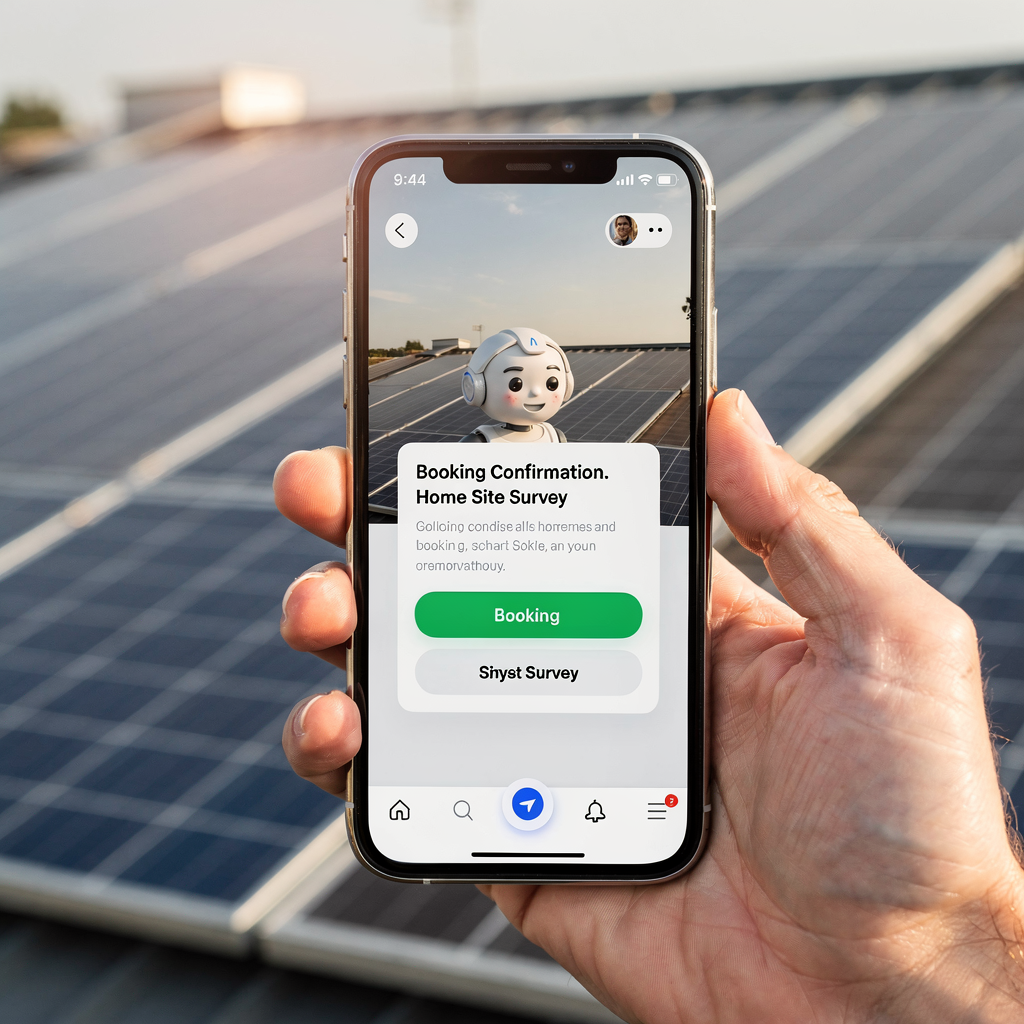
AI voice agent for solar companies cut repetitive call handling and free up human agents for complex cases. The voice ai records every call and adds structured lead details into CRM. Then automated followup flows with reminders and pre-installation checklists keep the homeowner informed. For teams that want to automate answering service and cut lead drop, a custom ai voice agent will help by acting as the first responder and by qualifying leads before transfer to the sales team. If your team uses email and calendar systems heavily, you can connect this to email automation workflows to close the loop; learn how similar setups scale operations without hiring extra staff (case study).
Drowning in emails?
Here’s your way out
Save hours every day as AI Agents label and draft emails directly in Outlook or Gmail, giving your team more time to focus on high-value work.
automation, crm, call centers, customer support, voice agent for solar companies
Integrating a voice agent into existing systems matters. First, link the voice agent to CRM and calendar systems so appointments sync instantly. Second, use webhooks and events to automate reminders, confirmations and followup tasks. Third, route complex calls to call centers or human agents with context attached so no one repeats questions. A well-designed integration removes duplicate data entry and shortens time‑to‑contact. Also, it supports monitoring and audit logging for compliance.
Required CRM fields include customer name, phone, email, address, roof type, lead source, preferred installation window, and lead status. For automation, set webhooks to push new lead objects, booking confirmations and escalation events. Calendar sync must support time‑zone handling and buffer rules. Transfer to human agent should carry the full transcript, captured lead details and a summary of any automated checks. That way, human support sees the full context. Audit logging is essential for traceability and for regulatory requirements.
Practical implementation steps follow. First, map existing workflows and identify every call handling step that repeats. Second, pilot the voice agent in one region and connect it to CRM and to a small team of human agents. Third, define escalation rules so human agents take over when the assistant cannot resolve an inquiry. This reduces workload and helps with change management. For teams that handle heavy email and operational correspondence, the same principles apply; automated email agents can label, route and draft replies to long running threads, reducing manual triage time (automation example).
Finally, train staff on handover procedures. Also, monitor every call and every call transfer. That provides feedback loops to improve scripts and model responses. Use logs to measure call-to-appointment rate and to tune escalation thresholds. These small steps make a voice agent for solar companies a dependable part of the sales and customer support mix.
analytics, solar panel, solar power, ai-powered, scaling, solar business
Analytics turn voice interactions and IoT telemetry into operational advantage. First, collect panel‑level telemetry and combine it with weather and inverter data. Second, run ai-powered analytics to flag drops in output and to predict faults. These models improve detection of panel faults and enable predictive maintenance. As a result, teams reduce unplanned downtime and extend asset life. For grid-scale and distributed portfolios, analytics improve portfolio forecasting that helps with bidding and capacity planning (report).
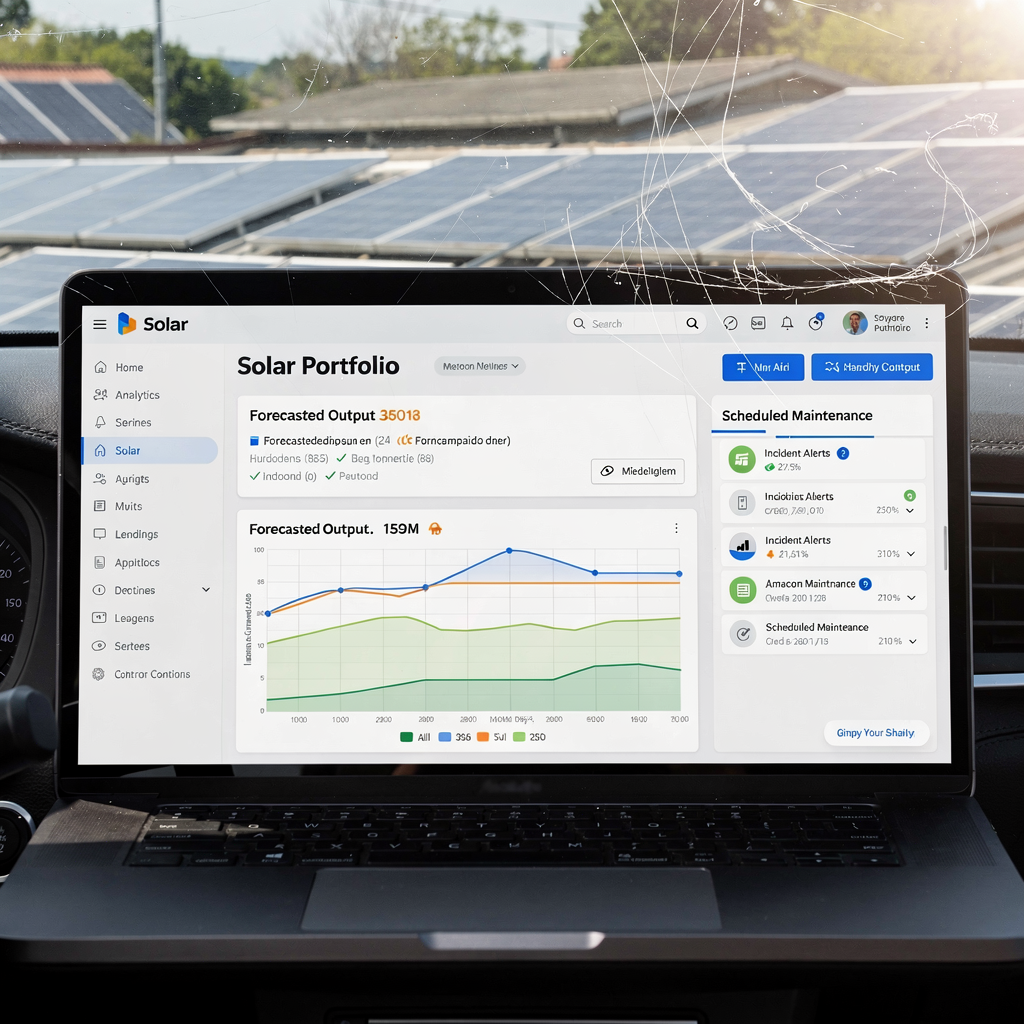
Track metrics that link analytics to business outcomes. Start with forecast accuracy and mean time to repair. Also monitor call-to-appointment rate, cost per booked consultation and lifetime value per customer. Real-time alerts help field crews respond faster. Furthermore, combine voice transcripts with sensor alerts so the system can trigger an inspection when a homeowner reports low production. An analytics pipeline that ties customer calls to panel telemetry creates clear causal signals for ROI.
AI models also support scaling. With better telemetry and smarter predictions, a small operations team can manage larger portfolios. For scaling, focus on model explainability, on ensemble forecasts and on measurable KPIs. Use A/B testing to see which outreach messages shorten scheduling windows and which reminders reduce no-shows. If your team wants to connect voice interactions into operational analytics quickly, solutions that automate the lifecycle of operational messages provide a fast path to structured data and predictable automation gains (example ROI and workflow).
Drowning in emails?
Here’s your way out
Save hours every day as AI Agents label and draft emails directly in Outlook or Gmail, giving your team more time to focus on high-value work.
customer engagement, solar sales, inquiry, consultation, ai voice agent for solar, roi
Converting inquiries into sales requires consistent, fast followup. First, use automated lead scoring to route high-value prospects to the sales team. Next, deploy personalised outreach sequences that use voice, email and SMS to nurture the lead. AI helps keep leads warm and reduces time-to-booking. For metrics, conversion and conversion rates improve when teams reduce lag between first contact and consultation.
Here is a simple ROI model. Take average contract value, multiply by conversion uplift, subtract automation cost, and divide by monthly recurring savings from reduced manual work. For example, a 40% uplift in qualified leads and a $3,000 average sale produce clear payback within months for regional installers. Use A/B testing on scripts and timing to optimise performance. Also, track followup cadence effectiveness and adjust the lead qualification process based on results.
Practical playbook items include schedule consultations automatically after initial qualification, attach FAQs and pre-visit checklists to confirmations, and use automated reminders to cut no-shows. Lead nurturing flows should include financing and tax incentives content tailored for each prospect. An ai voice agent for solar that captures lead details and then sequences followup will help sales teams close faster. If you want to reduce email and message handling as part of that playbook, check operational email automation tools that draft, route and log replies automatically (email automation guide).
agent for solar, assistant for solar companies, implementation risks, automation, scaling, customer engagement
Deploying an agent for solar requires a phased approach. First run a pilot in a small territory. Then measure KPIs and iterate. Finally, roll out at scale with training for call centers and field crews. Start with a clear data plan. Define which data sources feed models and who owns each dataset. Data quality affects performance. Also, privacy rules and consent matter. Include explicit consent flows when collecting homeowner contact and telemetry data.
Risks and mitigations are straightforward. Data variability can skew models; mitigate that by using conservative thresholds and by keeping human agents in the loop for uncertain cases. Model interpretability matters for technician acceptance; therefore provide clear decision logs and escalation paths. For compliance and consent, store proof of opt-in and allow easy opt-out. Use audit trails to show why the assistant recommended a particular action.
Training the assistant includes scripting high-frequency calls, feeding real transcripts and running supervised fine-tuning. Then push updates gradually. During rollout, keep a human support channel open so field teams can flag false positives and misrouted inquiries. Use a playbook for escalation so the assistant escalates to human agents when confidence is low. An initial pilot should measure forecast accuracy, call-to-appointment rate, mean time to repair and customer satisfaction. After the pilot, scale while monitoring those KPIs closely.
For operations teams that handle large volumes of email and operational messages, a custom ai that automates the full message lifecycle helps your business by reducing response times and error rates. virtualworkforce.ai builds AI agents that automate repetitive, data-dependent communications, turning email from a bottleneck into a reliable workflow. If you want an actionable plan to implement and to mitigate risk, start with a small pilot, measure, iterate, then scale with training and governance. That way you protect customers, protect privacy and grow your solar business predictably.
FAQ
How does an AI assistant for solar companies improve forecasting?
AI assistant models use historical production data, weather forecasts and inverter telemetry to produce tighter output predictions. For instance, deep learning approaches have been shown to improve forecast accuracy by 20–30% in academic studies (source).
Can an ai voice agent handle both inbound and outbound calls?
Yes. A voice agent can run inbound and outbound campaigns, qualify leads and schedule consultations. It captures lead details and then routes high-value calls to the sales team or to human agents when needed.
What integration points are required to deploy a voice agent?
Key integrations include CRM, calendar, SMS/email providers and call centers for escalation. Webhooks and event triggers automate followup and update lead status in real time.
Will analytics detect issues at the solar panel level?
Analytics that combine inverter telemetry and weather data can flag panel or string underperformance. Those ai-powered alerts help schedule targeted maintenance before problems grow.
How can I estimate ROI from an ai voice agent for solar?
Use a simple formula: (average contract value × conversion uplift) − automation cost = net gain. Then divide by recurring savings to estimate payback period. Start with conservative uplift estimates and validate during a short pilot.
What data privacy steps should I take when using voice AI?
Collect explicit consent for recordings and for communications. Store consent records and provide an easy opt-out path. Keep transcripts and PII access-controlled and logged.
How do voice agents escalate to human agents?
Set confidence thresholds so the agent transfers calls when uncertain. Attach a summary, transcript and captured lead details to the transfer so human agents see context immediately.
Can AI help with tax incentives and financing questions?
Yes. The assistant can provide standard information about local tax incentives and financing options and route complex financial inquiries to a human specialist. Keep the incentive content updated to avoid errors.
What is the typical pilot plan for an assistant for solar companies?
Run a pilot in one small territory, measure KPIs like call-to-appointment rate and forecast accuracy, iterate scripts and models, then expand. Include training for human agents and clear escalation rules.
Where can I learn more about automating operational messages and emails?
For practical guidance on automating operational correspondence and email workflows, see resources that explain end-to-end message automation and ROI for operations teams (automation guide) and examples of scaling operations without hiring (scaling guide).
Drowning in emails?
Here’s your way out
Save hours every day as AI Agents label and draft emails directly in Outlook or Gmail, giving your team more time to focus on high-value work.