


ai agents work: real-time inventory and battery management
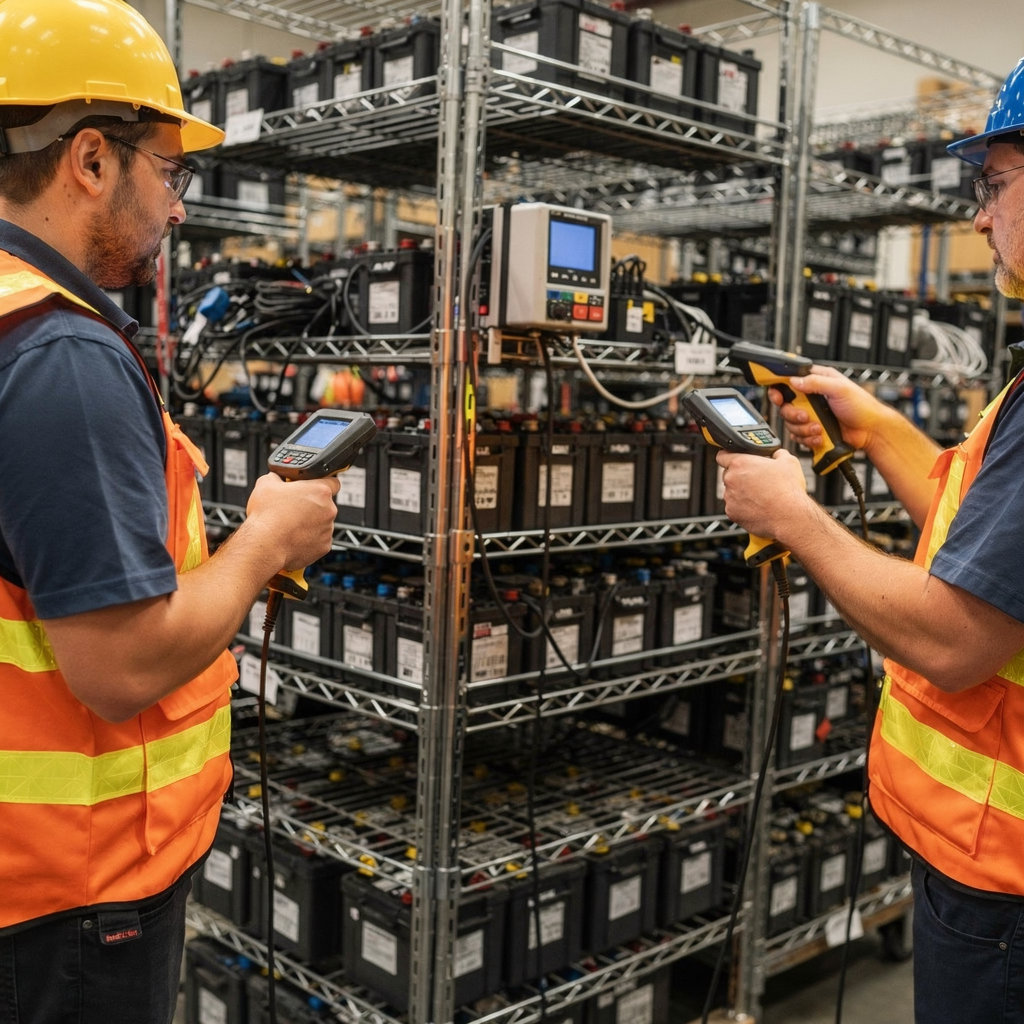
AI agents work by sensing, reasoning and acting to keep BATTERY stock balanced and BATTERY MANAGEMENT data actionable. First, agents ingest continuous telemetry from cells, warehouses and production lines. Then, they normalise streams from BMS, MES, WMS and supplier feeds so that allocation decisions use live SOH and SOC inputs. For example, an EV manufacturer can link BMS telemetry to an inventory agent that prioritises packs with higher SOH for fast-turn orders, reducing rush replacements and warranty claims. In trials, manufacturers report 15–20% operational gains after adopting AI-led control, and teams commonly see 20–30% fewer inventory errors when agents manage reorder triggers.
Agents continuously monitor thresholds and trigger autonomous reorders when stock falls below safety levels, while they flag slow-moving lots for consolidation. Also, agents run simple scoring to decide which packs to allocate to high-priority orders. This process reduces stockouts, lowers excess stock and shortens fulfillment lead times. Latency targets depend on the operation; critical moves typically require sub‑minute to five‑minute windows. Edge deployments handle low-latency rules at the site, while cloud services run heavier analytics and long-range forecasts. A sensor at cell level, combined with gateway telemetry, keeps the agent informed of rapid voltage or temperature shifts so the agent can reroute inventory or schedule preventive checks.
Implementation requires data contracts and integration with management systems, plus clear audit trails for every autonomous action. For teams that want to automate email and manual triage that accompany inventory exceptions, our company offers tailored automation; see how we handle operational correspondence in logistics with automated workflows at automated logistics correspondence. Finally, agents produce actionable insights that let supply chain managers focus on exceptions rather than routine tasks. As a result, organisations gain operational resilience and a clear path to an efficient supply chain.
ai agent and digital twin: optimize production and battery design
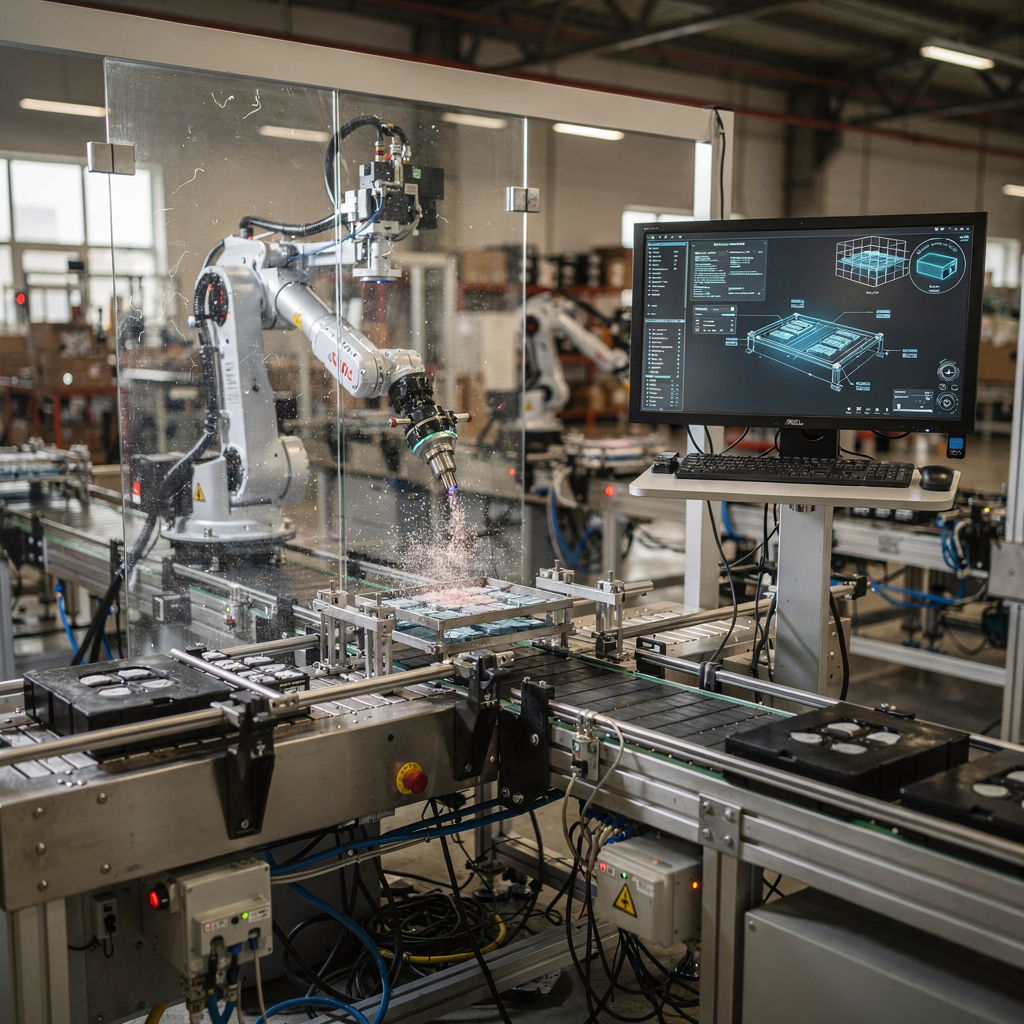
A single AI agent coupled with a digital twin can shorten development cycles and stabilise process control. First, a digital twin models cell chemistry, thermal behaviour and ageing. Next, the AI agent runs optimisation loops and proposes parameter changes for electrode mix, coating speed and drying profiles. These loops use physics-informed machine learning and lab validation to keep recommendations realistic and safe. For example, AI-driven digital‑twin workflows have cut EV battery development cycles by about 30%, while reducing the number of physical experiments needed to reach target performance.
Agents support battery design by suggesting trade-offs between energy density and cycle life. Then, teams test a narrowed set of recipes rather than dozens of blind trials. Also, inline quality gates driven by the agent reduce anomalies on the line and improve yield. The agent evaluates trade-offs using an ai model that blends empirical data and first principles. Because the agent proposes experiments, R&D teams accelerate learning and can document the experiment tracking trail automatically. For organisations that need to manage large volumes of lab reports and supplier queries, consider how AI can automate correspondence; see our approach to logistics email drafting at logistics email drafting AI.
Technical checklists for a successful deployment include validated physics‑informed ML, secure model retraining pipelines, experiment tracking and validation against lab data. In addition, teams should enforce governance for model updates and include human review for high‑risk changes. Finally, agents do not replace engineers; they let engineers test more hypotheses per cycle. Thus, companies reduce time-to-market and gain a competitive advantage in next-generation cell design and production tuning.
Drowning in emails?
Here’s your way out
Save hours every day as AI Agents label and draft emails directly in Outlook or Gmail, giving your team more time to focus on high-value work.
supply chain management: demand forecasting, resilience and end-to-end visibility
AI brings probabilistic demand forecasting and multi-echelon inventory optimisation to the BATTERY SUPPLY CHAIN. First, agents collect data across planning, orders, shipments and retail signals. Then, they compute probabilistic forecasts that include seasonality, promotions and component lead times. These forecasts improve service while lowering working capital. Trials combining digital twins and AI have shown 20–30% improvements in forecast-driven metrics, and teams that adopt predictive models see measurable reductions in excess inventory and expedited freight spend in recent studies.
Agents also monitor supplier risk and perform scenario planning to improve supply chain resilience. For example, agents score suppliers for delivery reliability and regulatory exposure, then recommend multi-sourcing or buffer strategies. In addition, agents provide end-to-end visibility by merging supplier telemetry, QC reports and customs feeds into a single state of supply chain. This single state enables faster root‑cause analysis for quality issues and more accurate days‑of‑cover calculations. Key KPIs include forecast error (MAE/MAPE), fill rate and supplier lead‑time variability.
Organisations should integrate AI into supply chain planning with clear data contracts and secure APIs. Also, combining AI with sound risk management practices yields a resilient supply chain that can handle shocks. For teams that face heavy email volumes tied to forecasting and supplier queries, our tools reduce manual handling and keep communications grounded in ERP and TMS data; see guidance on scaling logistics operations without hiring at how to scale logistics operations without hiring. Finally, agents do more than predict demand; they recommend trade-offs and help teams implement contingency plans quickly.
agents into supply chain management to transform traditional automation and enable agentic ai
Traditional automation runs fixed workflows and hard rules. By contrast, agentic AI adapts, learns policies and makes contextual trade-offs across objectives like cost, delivery and battery life. First, a conventional rule will route an order based on simple inventory thresholds. Then, an AI agent can weigh warranty risk, projected degradation and expedited freight cost, and choose the best path. This shift from deterministic rules to policy learning enables the system to act more like an intelligent agent that reasons under uncertainty.
Enter ai agents into supply chain management and you get systems that learn from feedback and improve over time. For example, an agent may choose between expedited freight and delayed shipment to use higher‑quality cells, because projected degradation would increase future warranty claims. Agents continuously update their policies using reinforcement signals from operations, and they produce audit logs for human review. Governance must include human‑in‑the‑loop thresholds, clear explainability and safety overrides. Also, pilot deployments should limit scope, for instance to one part family, before scaling up.
Teams should build robust MLOps, model validation and change management to avoid brittle behaviour. In addition, companies must balance autonomy with control to ensure legal and regulatory compliance. For organisations that need to automate routine communications that arise during these decisions, virtualworkforce.ai automates the full email lifecycle so stakeholders get context and data without delay; explore how we automate freight-forwarder communication at AI for freight forwarder communication. Ultimately, agentic AI does not replace supply chain managers; it gives them better information and more time to handle strategic problems.
Drowning in emails?
Here’s your way out
Save hours every day as AI Agents label and draft emails directly in Outlook or Gmail, giving your team more time to focus on high-value work.
ai in supply chain: integrate suppliers, traceability and state of supply chain
To build a reliable state of supply chain, teams must integrate supplier telemetry, QC reports and shipment feeds into a single model. First, harmonise part IDs and timestamps. Next, stitch customs data, test certificates and delivery notes so provenance becomes actionable. This approach improves recalls, warranty handling and ESG reporting. For example, pilots that combined supplier integration with digital twins reported faster root‑cause times and up to 50% lower carrying costs in targeted lines.
Data needs include secure APIs, data contracts and agreed schemas so systems can exchange certified facts. Blockchain can provide immutable provenance, but it does not replace the need for clean operational integration. Agents provide continuous monitoring across the model and flag anomalies that require manual review. Also, agents can recommend supplier substitutions based on performance, cost and carbon footprint, which improves supply chain resilience.
Security and compliance matter because supplier data often contains IP and personal data. Therefore, use strict access controls and GDPR‑equivalent protections. Furthermore, create audit trails so every agent decision is explainable to supply chain teams and auditors. If your operations run high volumes of operational email about supplier quality or customs, virtualworkforce.ai can remove the manual burden and create structured data from inbound messages; see our ERP email automation for logistics at ERP email automation for logistics. Finally, a consistent state model across partners enables better supply chain planning and faster responses to disruptions.
future of supply chain management and the future of supply: how ai agents can transform supply
The future of supply and the future of supply chain will be shaped by agentic orchestration and richer digital twins. First, agents will coordinate across companies to balance inventory and production dynamically. Then, automated contract negotiation and live sourcing recommendations will speed decisions. Also, AI will accelerate discovery for next‑gen chemistries such as solid electrolytes, helping reduce time-to-market for new cells. Researchers already show AI-led materials discovery accelerating lab cycles and material screening.
Strategic benefits include lower total cost of ownership, improved battery performance and better circularity. Agents can suggest end‑of‑life pathways that increase reuse and recycling rates. Still, risks remain. Data silos, model brittleness during rare supply chain disruptions and geopolitics can limit gains. Therefore, teams should validate models with domain experts, and maintain human oversight for high‑impact choices. A practical roadmap starts with a clean data foundation, targeted pilots for inventory or QC, strong MLOps and governance, and then scaling to end‑to‑end agentic workflows.
Finally, organisations that build these capabilities will secure a competitive advantage. They will keep pace with rapidly changing demand from electric vehicles and grid energy storage. By leveraging AI across planning, forecasting and operations, supply chain managers can create more resilient and efficient supply networks. AI agents offer real‑time coordination, proactive risk signals and improved decision‑making, so modern supply chains become more reliable and responsive.
FAQ
What are AI agents in the battery supply chain?
AI agents are autonomous software entities that sense data, reason about context and act to optimise tasks across the battery supply chain. They automate routine tasks, make recommendations and execute approved actions while keeping humans in the loop.
How do AI agents improve inventory management?
Agents ingest telemetry from BMS, MES and WMS systems to produce live state and reorder actions, which reduces stockouts and excess stock. They also prioritise packs for orders based on SOH and SOC, improving fulfilment and reducing warranty risk.
Can AI agents speed up battery development?
Yes. Pairing an AI agent with a digital twin enables optimisation loops and experiment recommendation, which can shorten development cycles by about 30% in some studies source. This reduces the number of physical experiments and accelerates design validation.
Are AI agents secure when sharing supplier data?
Security depends on proper data contracts, access controls and compliance with GDPR or equivalent regulations. Organisations should use secure APIs, clear IP boundaries and audit trails to protect supplier information.
What is the difference between traditional automation and agentic AI?
Traditional automation runs fixed rules and deterministic workflows. Agentic AI learns policies, balances conflicting objectives and adapts to new data, offering more flexible autonomous decision-making.
How do AI agents help with supply chain resilience?
Agents provide probabilistic forecasts, supplier risk scoring and scenario planning which help teams plan contingencies. They also automate contingency triggers and multi‑sourcing recommendations to reduce disruption impact.
What data streams are essential for AI agents?
Essential streams include BMS telemetry, MES production data, WMS inventory feeds and supplier shipment reports. Harmonised part IDs and timestamp synchronisation make integration reliable and traceable.
Can AI agents automate operational email across supply chain teams?
Yes. AI agents can classify, route and draft accurate replies grounded in ERP, TMS and WMS data, which reduces handling time and increases consistency. Virtualworkforce.ai focuses on automating the full email lifecycle for ops teams to remove this bottleneck.
How do organisations start with AI agents?
Begin with a clean data foundation, run targeted pilots for inventory or QC, then build MLOps and governance for scaled rollouts. Pilots should be small and measurable to prove value before wider deployment.
What limits the impact of AI agents in supply chains?
Key limits include data silos, model robustness during rare events and regulatory or geopolitical constraints. Continuous validation by domain experts and strong governance mitigate these risks and improve long‑term performance.
Drowning in emails?
Here’s your way out
Save hours every day as AI Agents label and draft emails directly in Outlook or Gmail, giving your team more time to focus on high-value work.