


AI assistant improves supply chain visibility and risk management.
An AI assistant can map suppliers, materials and provenance to expose gaps in data. Also, it combines LARGE LANGUAGE capabilities with knowledge graphs to build supplier maps and provenance trails. The approach helps teams see where records stop, who owns which batch, and which links lack traceability. A recent review shows that combining LLMs with knowledge graphs improves transparency when data are fragmented, and it suggests approaches to avoid leaking proprietary content Advancing battery research through large language models: A review. Therefore, teams gain a clear list of missing attributes and can prioritise audits.
In practice, the system ingests invoices, certificates of origin, quality reports and sensor feeds. Then it links entities to create a searchable graph. Next, a human can query provenance or ask for alternative suppliers. This reduces finger-pointing during disruption. For example, an automated alert will flag a supplier with a single-source dependency and propose vetted alternates. The benefit is early detection of bottlenecks and AI-based sourcing suggestions that cut disruption risk. A useful metric to track is the percentage of suppliers with end-to-end traceability.
Also, the model supports SUPPLY CHAIN experts by surfacing evidence and confidence scores. Artificial intelligence and MACHINE LEARNING models provide probabilistic links between records. In addition, data-driven visualisations show where to focus audits. For teams using operational email, virtualworkforce.ai demonstrates how AI agents can automate data retrieval from ERP and routing workflows, which reduces manual lookups and speeds verification ERP email automation for logistics. Consequently, organisations can maintain cleaner supplier graphs and stronger risk controls. Finally, governance layers enforce who may see what provenance data, which helps manage privacy and IP risks while the organisation scales this capability.
Energy storage and battery materials: optimise sourcing with battery management system data.
An AI assistant links upstream material records with cell performance from the battery management system. First, the tool merges supplier metadata for lithium, cobalt and other battery materials with BMS logs. Then it correlates batch attributes with cell ageing, energy density and charge cycles. As a result, procurement teams can prioritise suppliers and chemistries that match production goals. For illustration, Argonne National Laboratory used automation to run over 6,000 experiments in five months, which shortened feedback loops between lab discovery and sourcing Autonomous discovery-driven Argonne study.
Additionally, advanced AI compares time-series data from test rigs with field BMS outputs. This reveals which material grades produce the best battery performance on specific assembly lines. Then engineering can reduce scrap and rework by matching material grades to process windows. The technique speeds research and development and helps scale advanced battery chemistries into production more quickly. Also, it supports optimisation of battery packs and energy storage devices for particular use cases.
Further, the platform can recommend supplier qualification steps, flagging where poor data quality may hide risks. The system provides a material-to-cell yield improvement metric to track progress. For teams integrating operational email and vendor communications, automating routine supplier queries saves time. Our company has seen operations teams cut handling time per email from around 4.5 minutes to 1.5 minutes, which frees engineers to focus on material validation rather than chasing documents how to scale logistics operations without hiring. In short, linking battery materials, BMS-derived cell metrics and supplier data helps firms accelerate material selection and reduce costly iterations.

Drowning in emails?
Here’s your way out
Save hours every day as AI Agents label and draft emails directly in Outlook or Gmail, giving your team more time to focus on high-value work.
Predictive analytics and predictive maintenance to analyse fleet data and reduce downtime.
Predictive analytics ingest fleet telematics and BMS outputs to forecast capacity fade, thermal events and likely failures. First, models consume time-series data from on-vehicle sensors and centralised logs. Then they learn patterns that precede battery degradation and thermal runaways. As a result, maintenance teams receive early warnings and can act before failures escalate. This reduces unplanned downtime and improves SAFETY AND RELIABILITY for EV fleets.
Also, fleet-scale predictions help prioritise interventions on high-risk vehicles. For example, the platform can predict a decline in state-of-health for a set of battery modules and recommend targeted balancing or replacement. Thus, scheduled interventions cut roadside failures and extend usable life. A quick metric to track here is the reduction in unplanned failures per 10,000 vehicle-km.
Furthermore, combining predictive maintenance with remote diagnostics yields faster fault resolution. The AI models use both supervised learning and NEURAL NETWORKS to detect anomalies and to rank probable causes. In addition, a VIRTUAL ASSISTANT can triage alerts, create tickets, and populate maintenance forms. Teams that implement such automation reduce mean time to repair and improve fleet uptime. For companies working on EV and autonomous vehicle deployments, timely predictions are essential. Also, this approach helps improve EV battery warranties and lowers operational cost across multiple fleets.
Finally, predictive systems must account for POOR DATA QUALITY and sensor drift. Therefore, continuous data collection and validation remain critical. The system benefits when teams invest in consistent telemetry and clear data governance, which ensures that analysis reveals reliable signals rather than noise.
Autonomous, AI-powered virtual assistant for real‑time plant and logistics control.
An autonomous, AI-powered virtual assistant gives operators a single conversational interface for status, alerts and action suggestions. Also, it unifies factory dashboards, logistics updates and supplier emails into one workflow. The assistant can answer natural language queries about stock, production cadence, or delivery ETA. Then it suggests actions, such as automated reorder triggers or a production change suggestion. This speeds decisions at scale and reduces manual coordination.
Evidence from autonomous labs and factories shows that robotics plus AI increases throughput and reproducibility. In addition, the assistant can route exceptions, draft responses to carriers, and attach the right documents. For example, virtualworkforce.ai automates the full email lifecycle for ops teams, grounding replies in ERP, TMS and WMS data so teams avoid manual lookups and inconsistent responses virtual assistant for logistics. This tight integration reduces delay and improves traceability across shipments and orders.
Also, the assistant supports real-time production adjustments. It monitors BATTERY MANUFACTURING lines and suggests parameter tweaks when a drift appears. The platform links to AI MODELS that score quality and recommend corrective actions. In addition, the assistant handles repetitive correspondence and creates structured records from emails, which feeds management software and supports audit trails automated logistics correspondence. Consequently, the plant and logistics teams see fewer manual errors, faster response times, and better alignment between production and distribution plans.
Drowning in emails?
Here’s your way out
Save hours every day as AI Agents label and draft emails directly in Outlook or Gmail, giving your team more time to focus on high-value work.
Management system and data centre coordination: scale monitoring, compute and sustainability.
A management system that aligns supply-chain management with compute resources runs models where data live. First, edge inference handles latency-sensitive tasks near the sensors. Then cloud training consolidates anonymised batches for model updates. Also, this split reduces data transfer and keeps sensitive records local. The approach lowers compute cost and often reduces carbon intensity per model update.
Industry players combine grid intelligence and AI to manage load and storage. For instance, companies use intelligent energy management to charge battery energy storage systems during low-carbon hours. CATL’s AI strategy blends analytics with grid intelligence to optimise production and storage, which supports wider deployment of battery technologies CATL’s AI Strategy. Therefore, aligning compute with operational schedules can reduce operating cost.
Also, teams should track compute energy per inference and the associated CO2. This metric helps quantify sustainability gains from model placement choices. In addition, the system should integrate with DATA CENTER monitoring and energy metering. That way, teams can schedule heavy training runs during low-carbon windows and use cheaper renewable electricity. The quick KPI is kWh per inference and related CO2 per inference.
Finally, adopting AI PLATFORMS and MANAGEMENT SOLUTIONS that support edge and cloud reduces friction during scale-up. For firms that rely on frequent emails and vendor coordination, linking these tools to automated email workflows reduces manual overhead. See our guidance on automating logistics correspondence for practical steps to connect email, ERP and TMS systems AI for freight forwarder communication.
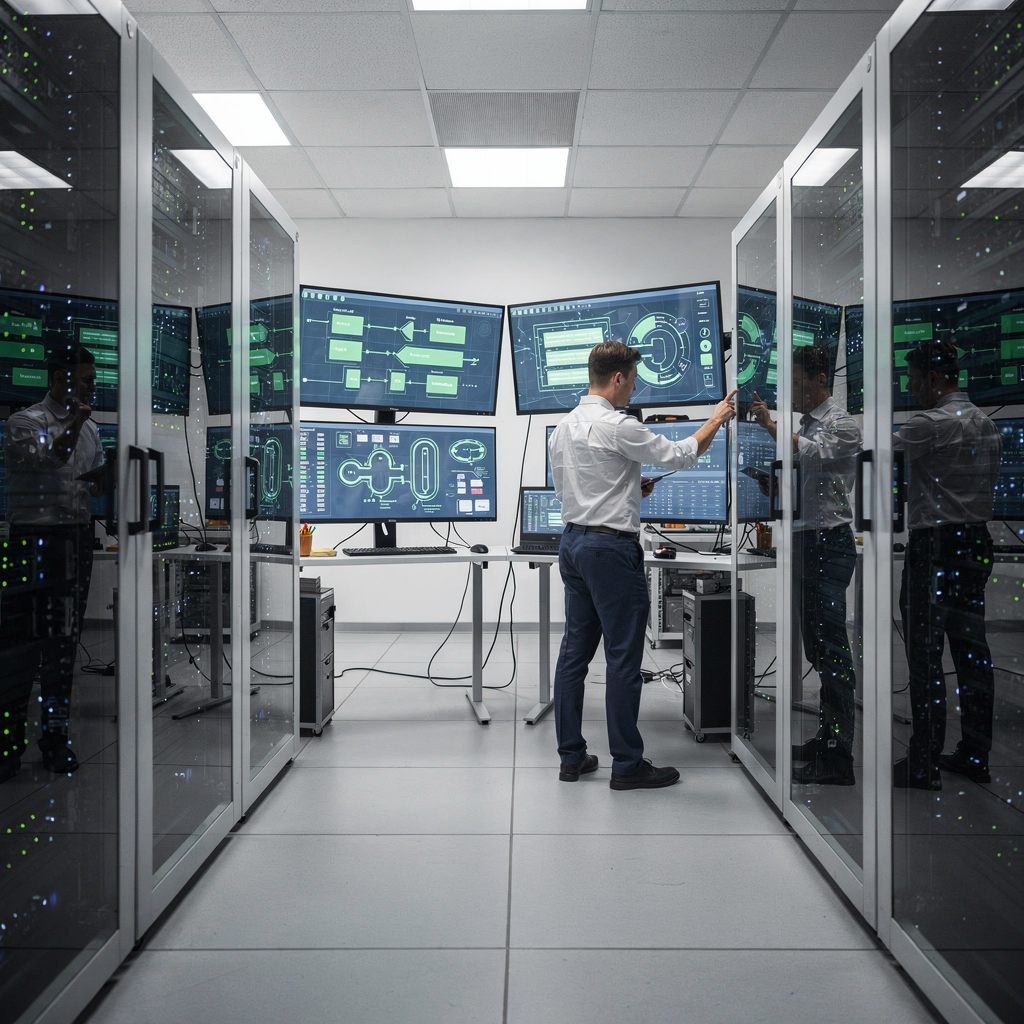
AI revolution: governance, security and pathways to deploy AI assistants across the battery supply chain.
The AI revolution in battery supply chains raises governance, security and compliance issues. First, key risks include data privacy, IP protection and model security. Also, cross-border regulation complicates how models access supplier records. Therefore, teams must define data access policies and audit trails before wide deployment.
Start by choosing high-value pilots such as predictive maintenance or supplier risk scoring. Then pilot integrations with ERP and battery management system feeds. Next, scale when metrics prove ROI. Surveys show many enterprises report dozens of generative AI use cases and strong movement into production, which supports a staged deployment path Survey says: Enterprises shift from AI pilots to production. In addition, Dr John Smith notes that AI assistants can “foresee supply disruptions and suggest alternative sourcing strategies before issues arise” Artificial Intelligence‐Driven Development in Rechargeable Battery.
Also, include regular model audits and versioning. Implement secure enclaves for sensitive supplier data and define roles for who can query provenance. Furthermore, combine automated checks with human review to maintain accuracy and compliance. For teams overwhelmed by email, implementing AI agents that automate the full email lifecycle reduces manual triage. Our platform shows how AI with human oversight routes and resolves messages, clears backlogs and preserves traceability.
Finally, track business KPIs such as ROI horizon in months and the percentage of pilot use cases in production. Use these metrics to guide broader deployment. With careful governance and staged implementation, AI systems can accelerate research and operations while protecting IP and privacy. The overall path balances emerging AI capabilities with practical controls, enabling safer scaling across multiple partners and jurisdictions.
FAQ
What is an AI assistant for the battery supply chain?
An AI assistant is a software agent that automates data tasks and guides decisions across procurement, manufacturing and logistics. It connects supplier records, laboratory results and operational telemetry to provide actionable insights and suggested actions.
How does a knowledge graph improve provenance tracking?
A knowledge graph links entities such as suppliers, batches and test results so gaps become visible. It enables queries about origin, certifications and chain-of-custody, which helps teams prioritise audits and reduce risk.
Can AI use battery management system data to choose materials?
Yes. AI models correlate BMS data with lab outcomes to reveal which material grades best match production lines. This reduces scrap and improves material-to-cell yields.
Is predictive maintenance suitable for EV fleets?
Absolutely. Predictive maintenance analyses time-series telemetry and predicts failures before they occur. That reduces unplanned downtime and improves safety and performance.
How does a virtual assistant help plant operators?
A virtual assistant provides a single conversational interface for status checks, alerts and suggested actions. It automates repetitive communications and creates structured records from emails and tickets, which streamlines workflows.
What role do data centres play in AI deployment?
Data centres host training and large-scale inference, while edge devices handle latency-sensitive tasks. Coordinating edge and cloud reduces energy per inference and can lower carbon intensity for model operations.
What governance is needed when deploying AI across suppliers?
Governance requires clear data access policies, model audits and role-based permissions. Also, teams should implement secure data enclaves and maintain traceability for compliance and IP protection.
How quickly can organisations see ROI from AI pilots?
Timeframes vary, but many organisations see measurable benefits within months when pilots focus on high-value tasks like predictive maintenance or supplier risk. Track ROI horizon and the share of pilots moved to production.
Are autonomous lab workflows relevant to supply chains?
Yes. Autonomous experiments accelerate materials discovery and feed validated results into procurement decisions. Rapid iteration shortens the feedback loop between research and manufacturing.
How can operations teams reduce email bottlenecks with AI?
AI agents can read intent, fetch data from ERP and draft replies, automating the full email lifecycle. This improves response speed, consistency and traceability while freeing staff for higher-value work.
Drowning in emails?
Here’s your way out
Save hours every day as AI Agents label and draft emails directly in Outlook or Gmail, giving your team more time to focus on high-value work.