


mining — why ai is transforming mining operations for mining companies
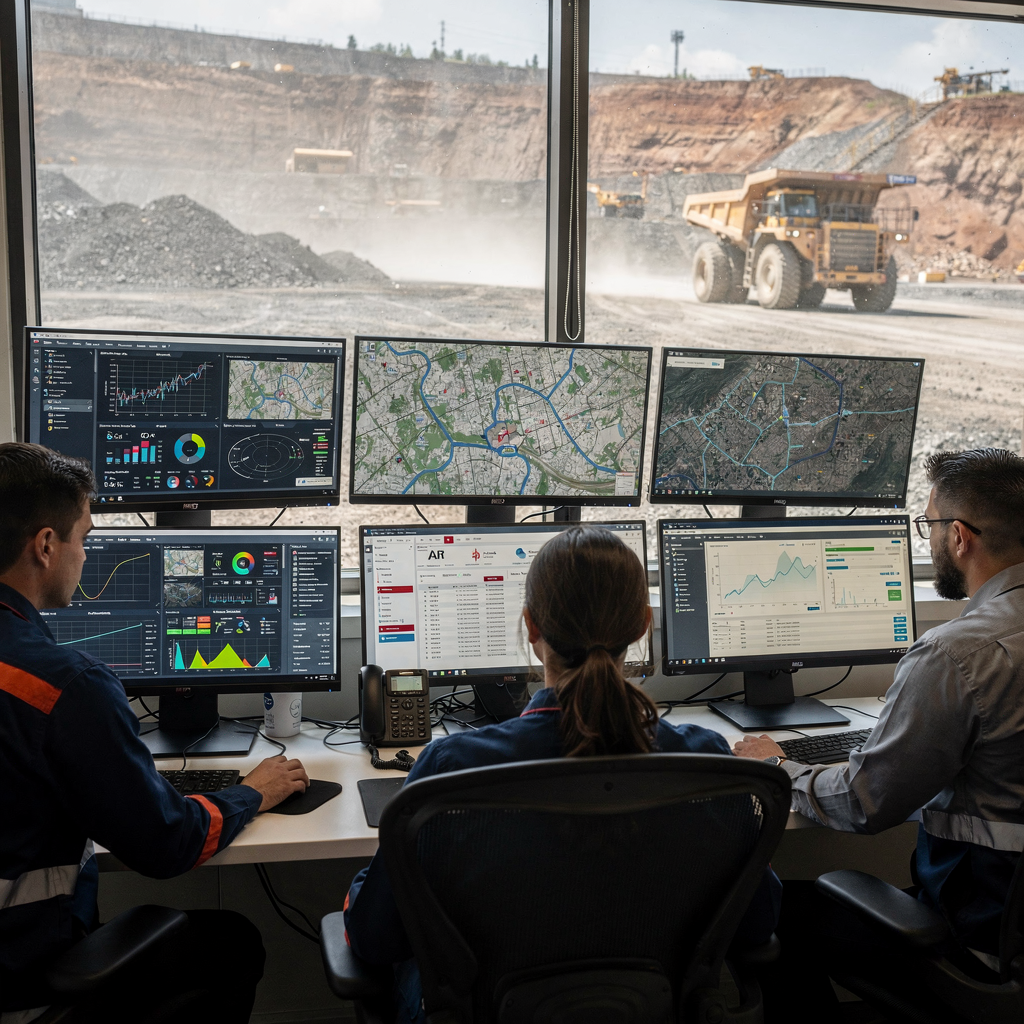
Mining is a large, asset‑intensive industry that runs 24/7. First, the sector’s hazards, scale and asset intensity make it an early target for AI‑led change. Second, crews work in high‑risk environments where reducing human exposure matters. For example, driverless haulage and remote process control reduce time people spend near heavy gear. The market reflects that shift. The autonomous equipment market was roughly USD 4.08bn in 2023 and analysts forecast a rise to about USD 7.8bn by 2031, at a CAGR near 10.8% L’IA transforme l’exploitation minière alors que le marché mondial de l’IA dans les mines devrait …. That growth shows why many mining companies now invest in pilots and rollouts.
In Australia and Chile large‑scale deployments are accelerating. Australia leads adoption across extraction and processing, and miners there use AI to manage supply flows and optimize plant performance Le rôle de l’IA dans les opérations minières en Australie – Appinventiv. Rio Tinto’s Pilbara case is widely cited for scale; many fleets run driverless haul trucks and extensive fleet orchestration. These examples show how AI can lower cost per tonne and raise uptime. As a result, leaders measure safety, throughput and cost per tonne before and after deployment.
Readers should care because the levers are direct. Safety improves, downtime drops, and unit operating costs fall. Also, AI helps enforce compliance and standard procedures. For ops teams, an AI agent reduces manual triage, frees skilled staff for complex tasks, and helps optimize shift plans. If you want to explore practical ways to scale operational automation, start with small pilots and then link results to enterprise governance; read how to scale logistics operations with AI agents for a comparable approach in logistics and operations comment faire évoluer les opérations logistiques avec des agents IA.
ai agent and ai agents for mining — what agentic AI does on site
An AI agent senses, decides and acts with limited human oversight. Put simply, an AI agent is a software or robotic system that closes a loop: it reads sensors, infers state, makes a choice, and takes action. Agentic AI denotes higher autonomy and sustained, goal‑directed behaviour. In mining, AI agents for mining run short cycles many times per minute. They process vibration and temperature feeds. Then they flag alerts and adjust control setpoints. They also learn from results and refine predictions over time.
On site, typical tasks include vehicle pathing, drill control, ore sorting and sensor fusion. Agents analyze streaming telemetry to spot anomalies and trigger maintenance windows. Simpler AI delivers clear value today via predictive alerts and scheduling. Industry research found that “Most AI Agents Not Yet Autonomous, but Simpler Solutions Deliver Good Value” which supports a phased approach La plupart des agents IA ne sont pas encore autonomes, mais des solutions plus simples …. For clarity, here is a plain worked example of an AI agent cycle: sense → infer → act → learn. First, sensors read axle load, temperature and GPS. Next, the AI agent infers that an axle is overheating. Then it reduces speed and routes the vehicle to a maintenance bay. Finally, the agent logs the outcome and updates thresholds for future alerts.
That loop reduces incidents and keeps gear running longer. Intelligent agents perform routine triage autonomously while humans handle exceptions. Agents built to access plant historians and ERP systems can fetch spare‑parts data, schedule technicians, and post work orders with minimal human intervention. This approach enables mining operations to be safer and more productive. If you want a useful analogy in logistics email automation, see our virtual assistant for logistics page that shows how AI automates repetitive operational messages assistant virtuel pour la logistique.
Drowning in emails?
Here’s your way out
Save hours every day as AI Agents label and draft emails directly in Outlook or Gmail, giving your team more time to focus on high-value work.
autonomous and automation — deploy ai agents to automate and optimise mining equipment
Deployment usually follows a staged pattern. Teams pilot mobile gear first. Then they expand to continuous processes such as conveyors and mill control. Pilots typically target clear KPIs. For example, operators trial driverless haulage and then widen the scope to plant control loops. Over time, they automate scheduling and maintenance tasks. A technical stack often combines edge sensors, vehicle control, fleet management and cloud analytics. Process mining helps verify that systems follow validated procedures and meet compliance requirements.
More than 2,000 haul trucks that are autonomous‑ready or already operating are tracked globally, and OEMs supply integrated fleets to large operators. Komatsu, for instance, has been a key supplier to large fleets. These fleet footnotes show why hardware, software and vendor choice matter. Vendors provide device firmware, fleet managers and analytics platforms. Companies must plan for connectivity, cyber resilience and safe interlocks. You should also map outage modes, and then design fallback procedures to avoid unplanned downtime.
Risks require active management. First, safety interlocks must disable motion on fail. Second, fleet scheduling needs robust rules to avoid congestion. Third, procurement choices should include integration with legacy control systems. Enterprise teams must define governance and data ops plans in advance. Scaling from pilot to enterprise AI requires attention to procurement, vendor management and change programmes. For IT and ops teams that want to link emails and operational tasks, an ERP‑email automation approach can streamline operator queries and parts requests automatisation des e-mails ERP pour la logistique. Finally, process optimization and clear maintenance schedules reduce costs and help operators keep plants on plan.
ai in mining and ai agent solutions — use cases in safety, maintenance, supply and workflow optimisation
Core use cases map directly to measurable business outcomes. Predictive maintenance cuts unplanned downtime. Autonomous haulage lowers exposure and reduces cycle time. Real‑time process optimisation boosts throughput. Supply chain rescheduling smooths inventory and delivery. Process mining reveals actual workflows and shows where inefficiency arises. When paired with machine learning, process mining improves remaining useful life (RUL) prediction and maintenance grouping.
Practical case studies show the pattern. First, haulage case: a fleet that uses AI to sequence loads and estimate cycle‑time saw higher utilization and fewer delays. Second, predictive maintenance: a dumper fleet that runs vibration analytics gets proactive alerts and replaces bearings before failure. Third, plant process optimisation: process models that tune reagent dosing improved recovery on low‑grade ore and reduced reagent cost. These use cases deliver measurable gains: fewer accidents, higher equipment availability and lower cost per tonne.
Process mining tools like ARIS and other process discovery platforms help teams to see actual workflows, and then test where automation will add value Process Mining à l’ère de l’IA — Revue intégrative des méthodes …. Agents automatically generate alerts, and they can push structured outcomes back into ERP and maintenance systems. Agents analyze sensor trends and historical faults so that planners can optimize maintenance schedules and spare parts stocking. This workflow automation drives cost savings and improves efficiency and safety.
For teams that handle many operational messages, an AI‑powered email automation solution can reduce handling time and improve consistency. Our product automates the full email lifecycle for ops teams, which frees mining professionals to focus on strategic tasks. That single change can empower organizations and amplify the impact of other AI deployments. If you want details about automating operational correspondence in logistics contexts, see automated logistics correspondence examples correspondance logistique automatisée.
Drowning in emails?
Here’s your way out
Save hours every day as AI Agents label and draft emails directly in Outlook or Gmail, giving your team more time to focus on high-value work.
enterprise ai and deploy ai — scaling, procurement and business transformation for leading companies
Pilots prove feasibility. Scaling to enterprise AI is harder. Leaders create governance, data ops and procurement playbooks. They also link KPIs to business transformation goals. Define metrics such as safety incidents, mean time between failures, tonnes per operating hour and cost per tonne before any large rollout. This discipline avoids pilot fatigue and shows business value.
Procurement decisions matter. Buy versus build debates arise for core control software, fleet managers and analytics. Many teams choose OEM ecosystems for hardware and third‑party software for advanced analytics. Vendor choice should reflect integration capability with legacy control systems and ERP. Leading companies balance vendor roadmaps against internal data‑ops capability. If your team needs clear guidelines for buying AI tools that support operations, consider procurement practices used by leading companies and how to align contracts to measured outcomes.
Data readiness is essential. Enterprise AI requires consistent telemetry, labelled failure records and strong metadata about assets. Teams must set up data ingestion, validation and lineage. Processes that combine process mining and RUL modelling accelerate adoption. Agentic AI adoption depends on solid data foundations. In addition, human roles change. Staff move from repetitive decision work to oversight, exception handling and continuous improvement. That shift requires training, change communications and role redesign so that mining professionals know how to make decisions with AI support.
Finally, measure the ROI. Business value comes from reduced downtime, better throughput and improved safety. Keep pilots focused on measurable targets and then scale. For operations that include heavy email loads and inbound asks from suppliers and carriers, integrating enterprise AI with email automation reduces bottlenecks and supports procurement and fulfilment processes across the supply chain.
revolutionize — future outlook for agentic ai in mining, generative ai, autonomy and modern mining practices
Agentic AI will shift from local control to planning and cross‑site coordination. In time, agentic AI in mining will plan shifts, coordinate electrification, and recommend sustainable mining investments. S&P Global comments that AI use cases will expand into electrification and sustainability efforts, which is a major strategic pivot Copper in the Age of AI: Challenges of Electrification | S&P Global. Generative AI and advanced planning models could support scenario planning and stakeholder reporting. At the same time, model safety and explainability must be central.
Caveats remain. Regulatory constraints, data quality and workforce reskilling will shape timelines. Agentic AI solutions will need robust testing, and firms must build compliance into deployment playbooks. ISG’s research points out that simpler solutions deliver good value now while full autonomy matures La plupart des agents IA ne sont pas encore autonomes, mais des solutions plus simples …. Also, McKinsey notes that work partnerships between people, agents and robots are reshaping roles as AI handles routine tasks and humans focus on complex decisions AI: Work partnerships between people, agents, and robots | McKinsey.
Strategic next steps for teams are clear. Run a risk‑aware pilot. Embed process mining and RUL modelling. Prepare procurement and change programmes in parallel. Explore how AI agents will link from extraction to processing and then into the supply chain so that planners can optimize processes across sites and suppliers. The future of mining will include agentic AI and generative tools that help plan and justify electrification and sustainable mining investments. For ops teams dealing with many inbound messages, enterprise AI that automates email workflows will empower organizations to act faster and reduce inefficiency. Start small, measure outcomes, then expand to amplify impact on safety, productivity and cost savings.
FAQ
What is an AI agent in the context of mining?
An AI agent is a software or robotic system that senses, infers and acts with limited human input. It performs tasks such as monitoring sensors, triggering alerts, and executing control actions to support mining operations.
How do AI agents improve safety at mine sites?
AI agents analyze telemetry and camera feeds to detect hazards and trigger alerts in real time. They also reduce human exposure by automating repetitive or hazardous tasks and by optimizing traffic and scheduling to avoid dangerous interactions.
Are fully autonomous systems common today?
Not yet. Many deployments use simpler agents that deliver clear value, and full autonomy is emerging in phases. Industry research notes that simpler solutions are already valuable while full autonomy matures La plupart des agents IA ne sont pas encore autonomes, mais des solutions plus simples ….
What use cases deliver the fastest ROI?
Predictive maintenance, haulage sequencing and process optimization often return value quickly. These reduce downtime, cut costs and improve throughput. Process mining combined with ML speeds up deployment and helps prove measurable outcomes.
How should a company start a pilot?
Start with a focused problem, define KPIs and collect required telemetry. Run a short pilot with clear success metrics for safety, uptime or cost per tonne. Then use results to plan procurement and enterprise rollout.
What procurement choices do teams face?
Teams choose buy versus build for fleet managers, control systems and analytics. They must ensure vendor products integrate with legacy control systems and ERP. Well‑structured contracts tie vendor performance to measurable KPIs.
Can AI agents work with existing systems like ERP and maintenance tools?
Yes. Agents built to access plant historians, ERP and maintenance systems can fetch parts data and schedule work orders automatically. This integration streamlines workflows and helps keep maintenance schedules aligned.
Will AI replace mining professionals?
No. AI handles routine and data‑heavy tasks so humans focus on complex decision making, oversight and continuous improvement. Agentic AI adoption reshapes roles rather than eliminates them.
How does process mining help AI deployments?
Process mining reveals real workflows and identifies bottlenecks and inefficiency. When paired with machine learning, it improves RUL estimates and helps prioritize automation opportunities.
What are practical next steps for a mining manager?
Run a risk‑aware pilot, embed process mining, and prepare procurement and change programmes. Also, measure safety, MTBF and cost per tonne. For operational messaging and partner coordination, consider email automation to reduce manual triage and speed responses correspondance logistique automatisée.
Drowning in emails?
Here’s your way out
Save hours every day as AI Agents label and draft emails directly in Outlook or Gmail, giving your team more time to focus on high-value work.