


ai assistant to transform CX for gas distribution and gas companies
Customer experience matters for gas distributors and gas companies. An AI assistant can reduce contact centre strain, answer common queries, and improve customer satisfaction while cutting costs. For example, chatbots and IVR systems can handle routine billing and outage reports 24/7, which typically yields call deflection rates between 20% and 40%, and lowers wait times for complex cases. In practice, energy teams report faster response times and fewer escalations when they integrate an AI chatbot with existing CRM and billing systems; this approach helps to automate common inquiries and repetitive tasks while keeping agent performance high.
Several vendors and case studies show that virtual assistants can triage emails, route incidents, and draft replies grounded in operational data. At virtualworkforce.ai we focus on email-heavy workflows for operations teams, and we see typical productivity wins as teams reduce handling time per message from roughly four and a half minutes to one and a half minutes. This effect improves customer support and reduces errors in replies to outage and billing emails.
Deployment tips: start with a narrow virtual assistant pilot for billing and outage notices, connect a knowledge base and ERP, and train the model on historical email threads. Also, measure call centre KPIs such as first-contact resolution, average handling time, and call volume after IVR changes. For further reading on how to improve logistics customer service with AI and apply similar patterns to utilities, see this guide on improving logistics customer service with AI come migliorare il servizio clienti nella logistica con l’IA.
Finally, remember regulatory compliance and data protection. Use encryption for customer data and maintain audit logs for every automated response. For teams wanting to automate operational email and streamline replies across field and office staff, our page on virtual assistant logistics shows practical examples and setup steps assistente virtuale per la logistica. By designing IVR flows that escalate only when needed, a gas utility can keep SLAs tight and improve overall customer experience.

ai-powered analytics for predictive maintenance in oil and gas operations
Predictive maintenance uses sensor data and machine learning models to forecast failures before they cause downtime. When teams adopt AI-powered analytics, they can schedule repairs, replace parts proactively, and extend asset life. Industry reports commonly cite predictive maintenance delivering around 15–20% cost savings and up to 30% efficiency gains in operational output. These figures come from deployments that combine SCADA feeds, vibration sensors, and historical maintenance logs.
To implement predictive models, feed historical data, maintenance records, and operating conditions into supervised learning pipelines. Then, validate models against held-out failure events and refine thresholds for alerts. Clear KPIs help teams move from pilot to production: reduction in emergency repairs, mean time between failures, and maintenance cost per asset. Actionable insights must be delivered to field teams as concise work orders, and the workflow should integrate with ERP or CMMS so technicians receive context automatically.
Integration matters. Edge processing often reduces latency for real-time anomaly detection, while cloud services handle heavy model training. Teams should plan a phased rollout with a few critical assets, then expand. For logistics-focused operations that rely on accurate scheduling and minimal disruption, combining predictive maintenance with intelligent route planning improves delivery reliability and reduces idle time. Learn more about automating logistics correspondence and linking alerts to workflows in our automated logistics correspondence resource corrispondenza logistica automatizzata.
Use a robust data quality programme because noisy sensor streams will undermine models. Finally, embed SRE and MLOps practices to monitor drift and retrain models. This ensures the models remain accurate and the operational teams retain trust in AI-powered maintenance decisions.
Drowning in emails?
Here’s your way out
Save hours every day as AI Agents label and draft emails directly in Outlook or Gmail, giving your team more time to focus on high-value work.
ai agent for safety monitoring and compliance in gas utilities and the gas industry
Safety monitoring is a core use case for an AI agent in gas utilities. AI-driven anomaly detection can identify leaks, pressure swings, and unusual flow patterns faster than manual checks. Several deployments that run AI alongside SCADA and IoT systems report about a 25% reduction in incidents after implementation. Real-time alerts allow rapid response and limit damage, and automated logs simplify regulatory compliance and audit trails.
Design a safety monitoring workflow that feeds sensor alerts to operations dashboards and to on-call staff via SMS or secure apps. Ensure encrypted channels for sensitive telemetry and maintain full traceability for every automated action. Regulatory compliance requires that teams keep immutable logs and generate periodic compliance reports; AI can auto-populate these reports using the same incident data that triggered the initial alert.
For field teams, integrate AI alerts with dispatch and route planning so that a technician receives a clear work order, location, and recommended actions. This reduces response time and improves decision-making on site. Also, include scenario-driven incident response playbooks to guide operators; the AI agent can suggest next steps based on historical outcomes and external data such as weather.
One useful practice is to run AI detection in parallel with existing safety systems during a trial. This approach builds confidence and reveals gaps in telemetry. For an example of end-to-end automation that ties alerts to emails and follow-ups, explore how teams automate freight and customs messages with AI to maintain traceability across systems IA per le email di documentazione doganale. By combining automated monitoring with clear governance, gas companies can meet regulatory compliance and improve safety across the network.
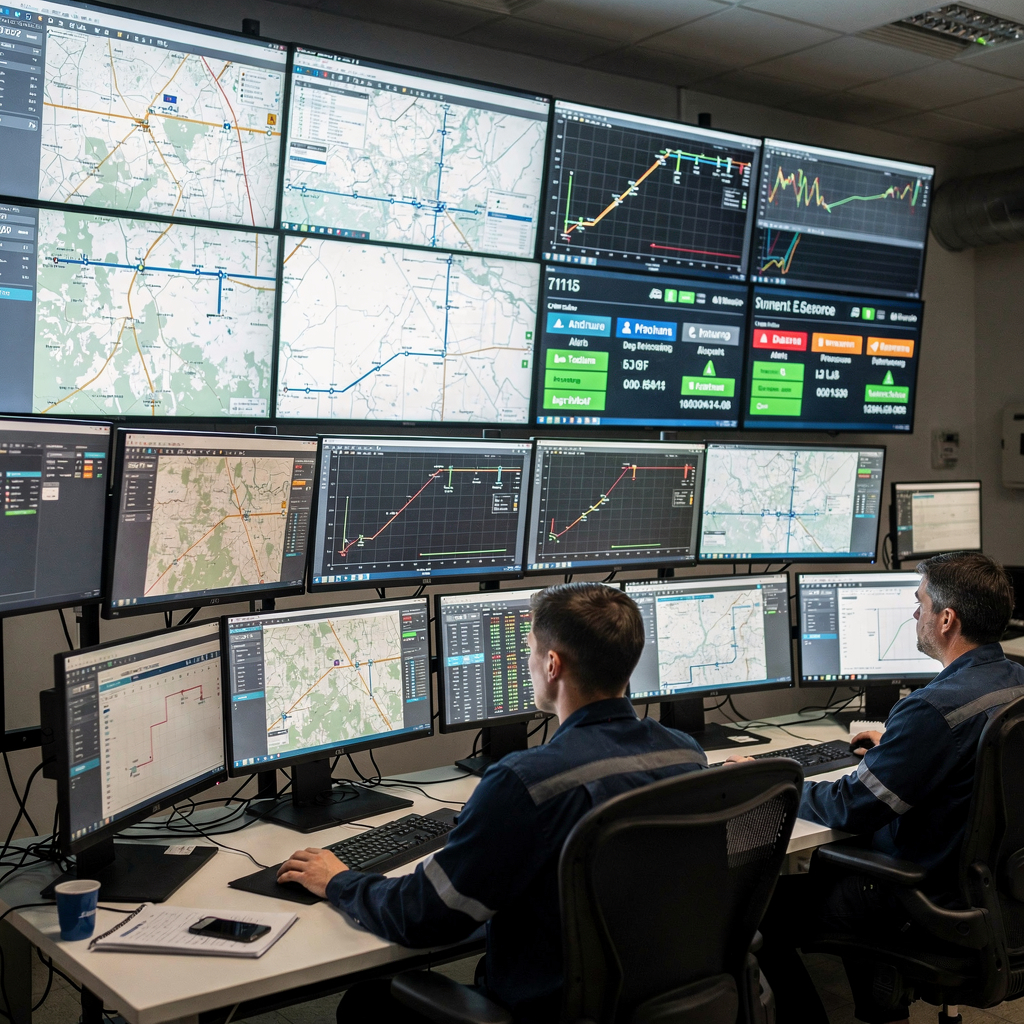
transform delivery and logistics: optimisation for gas distributors and service companies
Delivery and logistics represent a big share of operational cost for gas distribution. Machine learning models that forecast demand and optimise routes reduce fuel use, minimise stockouts, and lower delivery times. Accurate forecast models use historical consumption, weather, and market signals to predict daily demand; this reduces excess inventory and improves dispatch planning. For many service companies and utilities, combining demand forecast with route optimisation yields measurable cost savings.
Practical steps include integrating ERP and transport management data, then applying optimisation models to create daily delivery plans. These models should respect regulatory and safety constraints, and they must be able to re-route in real time when incidents or outages occur. Seamless integration with field mobile apps ensures drivers receive updated manifests and that delivery confirmations flow back into the supply chain management system.
For teams that handle bulky procurement and field servicing, automation improves both scheduling and customer communication. When deliveries slip, automated notifications via SMS or email keep customers informed and reduce inbound calls. Virtualworkforce.ai has examples that show how automating email and dispatch correspondence speeds resolution and keeps operations moving; see how organisations scale operations without hiring in our scaling guide come scalare le operazioni logistiche senza assumere.
Finally, monitor delivery KPIs such as on-time rate, fuel cost per stop, and load factor. Use these metrics to refine models and to prioritise investments in advanced ai technology for fleet telemetry. Over time, a closed-loop system that gathers delivery outcomes will continuously refine forecasts and optimisation, and therefore raise energy efficiency and boost productivity across the network.
Drowning in emails?
Here’s your way out
Save hours every day as AI Agents label and draft emails directly in Outlook or Gmail, giving your team more time to focus on high-value work.
engineering ai and system integration: streamlining legacy systems for global energy and oil and gas companies
Legacy systems present a major barrier to AI adoption in global energy and oil and gas companies. To streamline integration, adopt an architecture that separates data ingestion, model training, and decision delivery. Use connectors to pull telemetry from SCADA, ERP, CRM, and field devices; then normalise historical data before applying models. Good data analysis and quality checks reduce false alarms and increase model longevity.
Edge versus cloud trade-offs matter. Edge compute reduces latency for real-time control, while cloud services simplify training and storage. Decide based on latency requirements, security posture, and compliance constraints. Also, implement MLOps to manage training, version control, and deployment. This engineering AI approach helps teams scale from pilot projects to enterprise-wide rollouts while keeping traceability and governance intact.
Practical roadmap steps include: define clear KPIs, run a proof of value on a small set of assets, integrate with ERP and Salesforce where relevant, and establish SRE support for production. For automation of operational messages tied to shipments and field work, review our resource on AI for freight forwarder communication which shows patterns for integrating models into existing workflows IA per la comunicazione con gli spedizionieri. Security is essential: adopt encryption, role-based access, and immutable logs to meet compliance requirements.
Finally, invest in staff training and change management. Engineers and operators need clear documentation and runbooks so that AI suggestions are trusted and adopted. By combining industry-specific procedures with advanced ai technology, organisations can refine decision-making and deliver consistent, auditable outcomes.
business case: benefits of ai for gas companies, ROI, call center change and rollout plan
The benefits of AI for gas companies include operational efficiency, cost savings, and improved safety. Typical outcomes reported in the sector are around 15–20% lower maintenance costs and up to 30% efficiency gains. Additionally, over half of senior leaders in energy sectors report regular interaction with generative tools, which supports executive sponsorship for pilots 350+ statistiche sulla Generative AI.
For a call centre rollout, start small: automate common inquiries and billing flows, add IVR routing for outage reports, and measure call volume changes weekly. Train agents to handle escalations and to trust automated drafts produced by AI so staff time shifts from repetitive tasks to complex cases. Track KPIs such as call center volume, first call resolution, and average handling time to calculate ROI. Also, include cost savings and safety improvements in the financial model for a full picture.
Governance and compliance requirements must be clear from day one. Assign roles for data owners, compliance officers, and operations leads. Use a RACI model for rollout and maintain an audit trail for every automated decision. Note that AI assistants can sometimes make errors; an industry analysis found that assistant responses can be incorrect in a minority of cases, which is why human-in-the-loop processes remain essential Gli assistenti IA commettono errori diffusi.
To quantify benefits, combine reduced maintenance spend, lower delivery costs, fewer incidents, and less call centre labour. For teams that manage logistics and operations, our ROI resource explains how to quantify savings from automated correspondence and improved throughput virtualworkforce.ai ROI per la logistica. A phased rollout checklist with clear KPIs, stakeholder training, and compliance steps will help ensure success and wide adoption.
FAQ
What is an AI assistant for gas distribution?
An AI assistant is a software agent that helps automate tasks such as customer communications, field dispatch, and data triage. It uses machine learning and natural language processing to understand intent, draft replies, and route work to the right team.
How does predictive maintenance reduce costs?
Predictive maintenance analyses sensor and historical data to forecast failures and schedule repairs before breakdowns occur. By reducing emergency repairs and optimising part replacements, organisations often report 15–20% cost savings.
Can AI detect pipeline leaks in real time?
Yes. AI systems that monitor pressure, flow, and acoustic sensors can flag anomalies and issue alerts in real time so teams can investigate quickly. Running AI alongside existing SCADA systems often produces a measurable drop in incidents.
Will AI replace call centre staff in gas companies?
AI will not replace skilled staff but will automate repetitive tasks and common inquiries, allowing agents to focus on complex customer issues. This reduces wait times and improves customer engagement while preserving jobs that require judgement.
How do I measure ROI for an AI rollout?
Measure baseline KPIs, run a pilot, then compare metrics such as maintenance cost, call centre volume, on-time deliveries, and incident counts. Include cost savings, improved productivity, and reduced risk when calculating ROI.
What data sources do AI systems need?
Important data sources include SCADA telemetry, ERP and maintenance logs, CRM records, and historical email threads. High-quality historical data improves model accuracy and helps refine alerts and forecasts.
How do AI agents help with compliance?
AI agents can automatically log incidents, generate compliance reports, and maintain immutable records for audits. They also ensure consistent documentation, which simplifies regulatory reporting.
Is it safe to send automated outage notices to customers?
Yes, when you implement secure channels and clear escalation rules. Use encryption, templates reviewed by compliance teams, and human oversight for sensitive messages to improve trust and reduce errors.
How long does it take to deploy an AI pilot?
Typical pilots can run in 8–12 weeks when scope and data access are clear. Time varies by system complexity, data quality, and integration needs, but a focused pilot on billing or outage handling moves fastest.
What is a good first use case for gas utilities?
Start with customer support automation for billing and outage reports or a predictive maintenance pilot on critical assets. These use cases deliver quick wins, reduce repetitive tasks, and build confidence for broader adoption.
Drowning in emails?
Here’s your way out
Save hours every day as AI Agents label and draft emails directly in Outlook or Gmail, giving your team more time to focus on high-value work.