


AI in higher education: why AI agents automate enrollment and streamline admission processes
First, a quick orientation for university leaders and admissions teams. AI now touches recruitment, and AI can reduce repetitive tasks. For example, 86% of students reported using AI tools in their studies, and so admissions must adapt. Next, admissions offices face high volumes of routine email and enquiry traffic. Therefore, an AI agent can handle first-line enquiries 24/7 and reduce admissions workload. In fact, AI agents can capture leads, offer personalised programme recommendations, run eligibility pre-checks, and triage applications into priority buckets.
For prospective students, the experience matters. First impressions come from fast replies, and so time-to-first-response often determines conversion. Admissions teams can use AI to capture enquiries into a CRM, personalise outreach, and surface high-fit applicants. Also, a clearly designed AI workflow improves enquiry→application conversion. For example, route-based responses that push a pre-check form reduce drop-off. Next, the admissions team spends less time on routine checks. As a result, staff can focus on interviews, scholarships and complex cases. University leaders should note that automated triage with human oversight scales better than manual sorting.
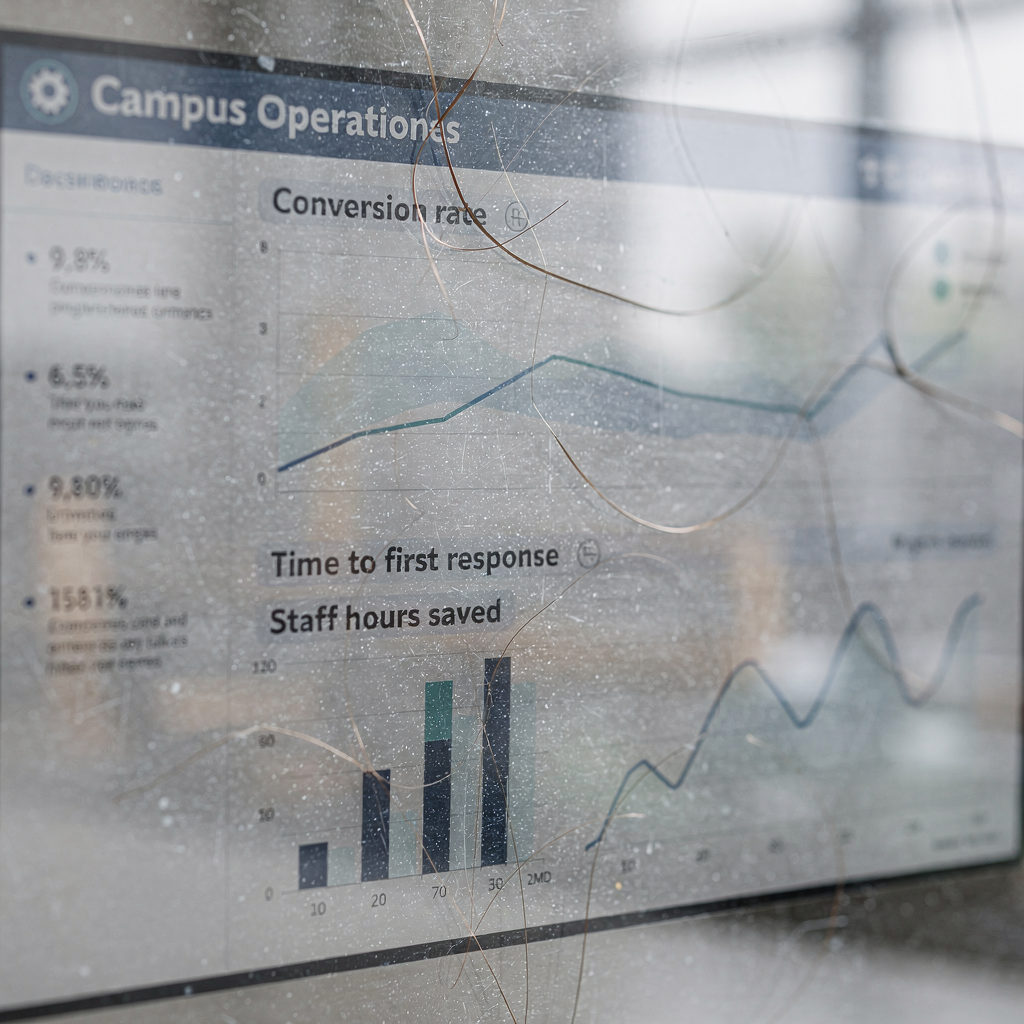
Design matters. Use an AI agent that integrates with existing systems, and thus avoids data silos. Then, connect the agent to the CRM and the student record system so the tool can verify eligibility before routing to an admissions officer. Also, include an escalation path for exceptions so human intervention happens only when required. If your team needs a proven vendor, virtualworkforce.ai offers email lifecycle automation designed to reduce triage time and preserve context across threads, which can help admissions teams reduce handling time while increasing consistency. Finally, measure impact with clear metrics. Track enquiry→application conversion, time‑to‑first‑response, and staff hours saved. These metrics show ROI quickly and support a case for broader AI adoption across campus.
AI agent and chatbots for student support: automating FAQs, onboarding and first‑line help
First, student experience improves when common questions get fast answers. Chatbots provide multilingual, round‑the‑clock answers for routine items, and they can provide instant answers about registration, fees, timetables and campus services. For example, a chatbot can answer financial aid queries, guide students through onboarding, and schedule appointments. Also, chatbots can run onboarding sequences that collect missing documents, send nudge reminders, and confirm orientation sessions. As a result, students receive timely guidance and staff reclaim valuable time for higher‑value work.
Next, choose between scripted FAQs and generative responses. Scripted FAQs offer predictable accuracy for policy and process queries. By contrast, generative AI can craft personalised replies and summarize complex notices, but it requires guardrail policies to ensure accuracy. Therefore, plan an escalation path that moves complex or sensitive conversations to a human team. Also, set a clear persona and tone for the chatbot to match student audiences. For example, use an approachable tone for onboarding, and a formal tone for financial aid or academic appeals.
Design quick wins first. Start with automated appointment booking, FAQ flows for common questions, and targeted nudge messages for missing documents. Then extend the chatbot to support registration and campus services. A small pilot that connects the chatbot to a calendar and the admissions team will show immediate reductions in manual tickets. In addition, monitor for accuracy and integrate consent notices when collecting student data. For email-heavy services, consider linking to automation solutions that handle the full lifecycle of operational email. See how email automation integrates with schedules and rules to improve response quality and reduce manual effort. Finally, measure CSAT, ticket volume, and resolution times to prove value before scaling.

Drowning in emails?
Here’s your way out
Save hours every day as AI Agents label and draft emails directly in Outlook or Gmail, giving your team more time to focus on high-value work.
Use cases in teaching and student success: AI‑powered tutoring, LMS integration and student success teams
First, agents in higher education connect to pedagogy. For example, intelligent tutoring systems and adaptive platforms improve engagement and outcomes in controlled studies that were current in 2024. See research that shows measurable improvements in student engagement and performance with AI‑driven interventions. Next, embed AI into the LMS so the system can provide grade-aware nudges and personalised study plans. Then, set up triggers that alert student success teams when a student falls behind. This approach lets teams intervene proactively and reduce dropout risk.
Use cases include automated tutoring, personalised revision plans, and assessment support. An AI agent can run short, Socratic micro‑sessions, quiz practice, and mock interviews for career services. In addition, agents can summarise lecture notes, and therefore help students manage coursework. For research support, agents can surface papers, extract key points, and assist with citation checks. Also, connect agents to the LMS so they can surface content when students need it most. This helps boost student engagement and supports targeted retention efforts by providing just‑in‑time help.
Integrate with student success teams to scale routine interventions. For example, the agent alerts teams about attendance dips, low quiz scores, and missing assignments. Then, student success teams can prioritise outreach and tailor support. Also, agents can guide students to campus services and career resources. Finally, ensure that faculty and staff retain control. Design the system so human teachers approve escalations and review sensitive recommendations. Such human oversight preserves academic standards while giving students the benefit of AI‑powered, personalised support.
Governance, approval and ethics: policies, privacy and academic integrity for agentic AI
First, governance must keep pace with deployment. Universities must balance innovation with GDPR/privacy, bias mitigation and academic integrity safeguards. For example, recent policy analyses highlight trajectories for institutional AI policy and stress the need for clear consent and audit trails. Second, include an approval checklist for procurement teams. The checklist should cover vendor security, data residency, vendor access controls and human‑in‑the‑loop escalation. Also, require transparency about generative outputs and provenance when agents summarize or compose content.
Next, adopt practical controls. Require vendor documentation on dataset sources and bias mitigation strategies. Then, insist on audit logs so teams can trace decisions and outputs. Also, use regular bias checks and third‑party audits during pilots and after scaling. For agentic AI deployments, define boundaries where the agent acts autonomously and where human approval remains mandatory. This helps avoid unethical uses and preserves academic integrity during assessments and coursework.
Finally, ensure ethical use through training and consent. Train students and staff on acceptable use, and publish simple consent notices when systems collect personal data. Also, set rules for plagiarism detection and references when agents assist with academic research. Above all, make approval processes clear. A procurement approval should include security review, pilot plan, consent framework, and metrics for success. By following this approach, institutions can approve agentic ai systems that protect learners, maintain trust, and allow innovation to proceed responsibly.
Drowning in emails?
Here’s your way out
Save hours every day as AI Agents label and draft emails directly in Outlook or Gmail, giving your team more time to focus on high-value work.
Scaling, automation and measurable impact: nudges, scalable workflows and outcomes
First, scaling requires measurable outcomes and robust tech. Start small with focused pilots. Then, scale successful deployments across departments. Use automated nudges to reduce friction during enrolment and to prompt students to complete steps. For example, nudges can remind applicants to upload transcripts or accept offers. Next, automate workflows that tie the agent to single sign‑on systems and the LMS so the agent can provide real‑time status updates and reduce manual casework.
Measure impact with clear KPIs. Track conversion rate lift, reduced manual tickets, CSAT, retention and time to completion. Also, instrument observability so you can measure agent performance and tune models. Use APIs to integrate with administrative systems and to pass structured data back to registrars. For email-heavy administrative workflows, consider end‑to‑end automation that understands intent, routes messages, and drafts contextually grounded replies. virtualworkforce.ai demonstrates how email lifecycle automation can reduce handling time and increase consistency for operations teams; similar approaches apply to admissions and student services.
Finally, focus on ROI and governance. Before campus‑wide rollout, run a pilot, measure outcomes, then build the case for scaled integration. Make sure to include human oversight in escalation flows and to maintain audit logs. As systems scale, continue to test for bias, accuracy and privacy compliance. In this way, intelligent automation can streamline processes, boost student experience, and free staff to focus on higher‑value advising and teaching tasks.
Frequently asked questions for university leaders: approval, adoption and transformative next steps
First, this section answers common concerns and outlines a roadmap. Start small, measure outcomes, get approval, integrate with LMS and student success teams, then scale. Also, collect pilot metrics to report to governors and prepare a vendor evaluation checklist. Below are the most common questions with concise answers to help university leaders decide next steps.
What is the typical timeline to show impact from AI pilots?
A focused pilot can show measurable improvements within 6–12 weeks. Start with limited scope, monitor conversion, CSAT and ticket volume, and then report outcomes to university leaders for approval.
How do we balance cost versus benefit?
Compare vendor costs to staff hours saved and improved conversions. Also, include softer gains such as faster response times and better student experience when you calculate ROI.
Should we build in‑house or buy from a vendor?
Vendor solutions speed time‑to‑value, while in‑house builds offer custom control. Make the decision based on IT capacity, data governance, and desired speed of deployment.
How do AI agents help student success teams?
Agents can alert student success teams about risk signals and automate routine nudges so staff can focus on personalised outreach. As a result, teams intervene earlier and more effectively.
Do we need to retrain staff for AI adoption?
Yes. Provide practical training on workflows and escalation paths so faculty and staff understand roles and retain control. Also, build simple guides that explain how agents surface priority cases.
What about privacy and data residency?
Include data residency in your approval checklist and require vendors to document their security practices. Also, publish consent notices for students when systems collect personal information.
How does an agent integrate with existing systems like LMS or CRM?
Use APIs and single sign‑on to connect agents to LMS and CRM systems so they can pass structured data and provide real‑time updates. Also, test integrations during pilots to ensure reliability.
Can AI replace human teachers?
No. AI complements human teachers by handling routine tasks and providing personalised support. Human intervention remains essential for assessment, mentorship and complex academic judgement.
What metrics should governors see to approve scaling?
Provide conversion lifts, reduced manual tickets, CSAT, retention improvements and time‑saved per staff member. Also, include audit logs and bias checks as part of governance evidence.
What are the next practical steps to get started?
Start small with one use case, measure outcomes, and prepare an approval packet. For example, pilot email and onboarding automation, then expand into LMS‑linked tutoring and student services.
FAQ
How do AI agents improve university admission processes?
AI agents help by automating triage, capturing leads, and performing eligibility pre‑checks. They provide instant routing and reduce staff time on repetitive tasks while increasing response speed to prospective students.
Can chatbots handle complex student queries?
Chatbots can handle scripted and many routine queries, and they can provide instant answers around the clock for registration, fees and timetables. However, complex or sensitive questions should escalate to human teams to ensure accuracy and care.
Are there proven outcomes from AI in education?
Yes. Controlled studies report improved engagement and learning outcomes from intelligent tutoring and adaptive platforms. For example, academic research from 2024 shows measurable gains in student engagement and performance in controlled studies.
What governance steps should institutions take before deployment?
Develop an approval checklist that covers vendor security, data residency, human oversight and audit logging. Also, include periodic bias checks and consent mechanisms to ensure ethical use.
How quickly can we scale a successful pilot?
After validating results and controls, you can scale within months by reusing integrations and playbooks. Ensure you have observability and API‑based connectors to expand without rebuilding core workflows.
Will AI agents replace student success teams?
No. Agents augment student success teams by automating routine nudges and surfacing at‑risk students. Staff then focus on personalised interventions and high‑impact advising.
What is the role of human oversight in agent workflows?
Human oversight remains crucial for escalation, integrity checks and ethical decisions. Design systems so agents propose actions and humans approve them when necessary to prevent errors.
How do we measure the impact of AI on student enrollment?
Track conversion rate lift, time‑to‑first‑response, CSAT and the volume of manual tickets. Also, correlate nudges and targeted campaigns with acceptance and matriculation figures.
Can AI tools help with academic research?
Yes. Agents can surface literature, summarize findings and assist citation work, which speeds early‑stage research. For proper use, require transparency about dataset provenance and model limitations.
Where should university leaders begin?
Start with a narrow pilot that addresses a clear pain point, collect measurable outcomes, then use that evidence to seek approval for broader rollout. Also, prepare procurement and governance documentation to ensure responsible adoption.
Drowning in emails?
Here’s your way out
Save hours every day as AI Agents label and draft emails directly in Outlook or Gmail, giving your team more time to focus on high-value work.