


ai and the travel industry: why ai travel and ai-powered systems are poised to transform services
AI assistants now handle complex tasks that previously required manual effort. They use natural language processing, machine learning and large language models to read requests, check availability and assemble options. For travel firms, this changes the booking flow. Legacy platforms present lists. Modern systems interpret intent and tailor offers on the fly. First, they extract personal preferences from chat or email. Next, they match suppliers and price points. Finally, they confirm reservations and create a usable itinerary.
Industry data shows the impact. Sites optimised for LLMs saw a massive uplift in visibility and traffic, with a reported 1,700% increase in traffic to U.S. travel and hospitality websites between mid‑2024 and early 2025. Also, nearly half of senior travel‑tech executives now prioritise generative systems as an internal focus, which signals rapid investment in agentic tools and strategy.
For example, Amadeus integrates LLMs to surface personalised options in seconds, which reduces search friction and speeds decisions. A senior executive described this as a strategic priority: “Generative AI is not just a tool but a strategic priority that will redefine how we deliver value internally and to our customers” Amadeus quote. These shifts force travel agencies and tour operators to reassess where they compete.
Virtualworkforce.ai helps operations teams cope with high inbound email volumes by using AI agents to automate the full email lifecycle. This reduces manual work for bookings, confirmations and supplier inquiries, and it speeds replies so customers get instant support. For teams that handle supplier integration, read more about automating logistics and customer correspondence on the site automated logistics correspondence. Overall, travel businesses must act fast to stay competitive.
Real-time booking and inventory: booking, real-time updates and ai agents managing flights and hotels
AI agents manage live inventory across flights and hotels by listening to feeds and applying rules. They pull fares and room rates, then compare availability and present best options. In practice, they handle dynamic pricing, block inventory, and trigger rebooking when disruptions occur. This reduces manual work and helps resolve price mismatches. For example, an AI agent can detect a cancelled flight and immediately propose rebooked flights and hotel nights while notifying a human agent.
Technical needs include reliable APIs, streaming rate feeds and solid supplier connections. Also, systems must reconcile booking links, PNR status and hotel prices so customers see accurate availability. For a blueprint on connecting operational systems and email-driven reservations, virtualworkforce.ai explains how to integrate ERP and workflows for quick, accurate replies ERP email automation for logistics. This connection ensures the AI agent for travel uses grounded data, which reduces errors.

Use cases are practical. For instance, an AI agent can detect an overbooked hotel and automatically propose a nearby lodging with equal or better value. Then it updates the booking and sends booking links to the customer. Another use case is real‑time rate matching where the agent adjusts offers to meet a competitor price while protecting margin. These workflows improve conversion and reduce time to confirm.
Measurable benefits include faster response times, lower rebooking costs and fewer calls to the call centre. Systems that automate rebooking and rate checks can reduce manual interventions significantly and save time. Teams should pilot with limited supplier sets, then scale once the real‑time integration proves reliable. Also, choose vendors with low latency and strong supplier reach to avoid gaps in coverage. For more on how to scale operations without hiring, see this practical guide to scaling logistics operations how to scale logistics operations without hiring.
Drowning in emails?
Here’s your way out
Save hours every day as AI Agents label and draft emails directly in Outlook or Gmail, giving your team more time to focus on high-value work.
Personalised itineraries and assistants: itinerary creation by ai assistant, ai travel agent and chatgpt workflows
AI systems assemble itineraries by combining preference capture with optimisation rules. First, the system asks a few targeted questions. Then it builds a day‑by‑day plan that balances cost, travel time and local highlights. For example, it can create a multi‑stop itinerary that respects budget and connects seamlessly to flights and hotels. This approach helps travellers get personalised recommendations fast.
ChatGPT acts as an effective conversational interface for many teams. A travel assistant can ask a short prompt, refine choices and present options. Then the backend agent books the confirmed items. For product teams, include a micro‑workflow: capture preferences, propose three curated routes, allow edits, and then confirm bookings. This micro‑workflow simplifies trip‑planning and reduces back‑and‑forth.
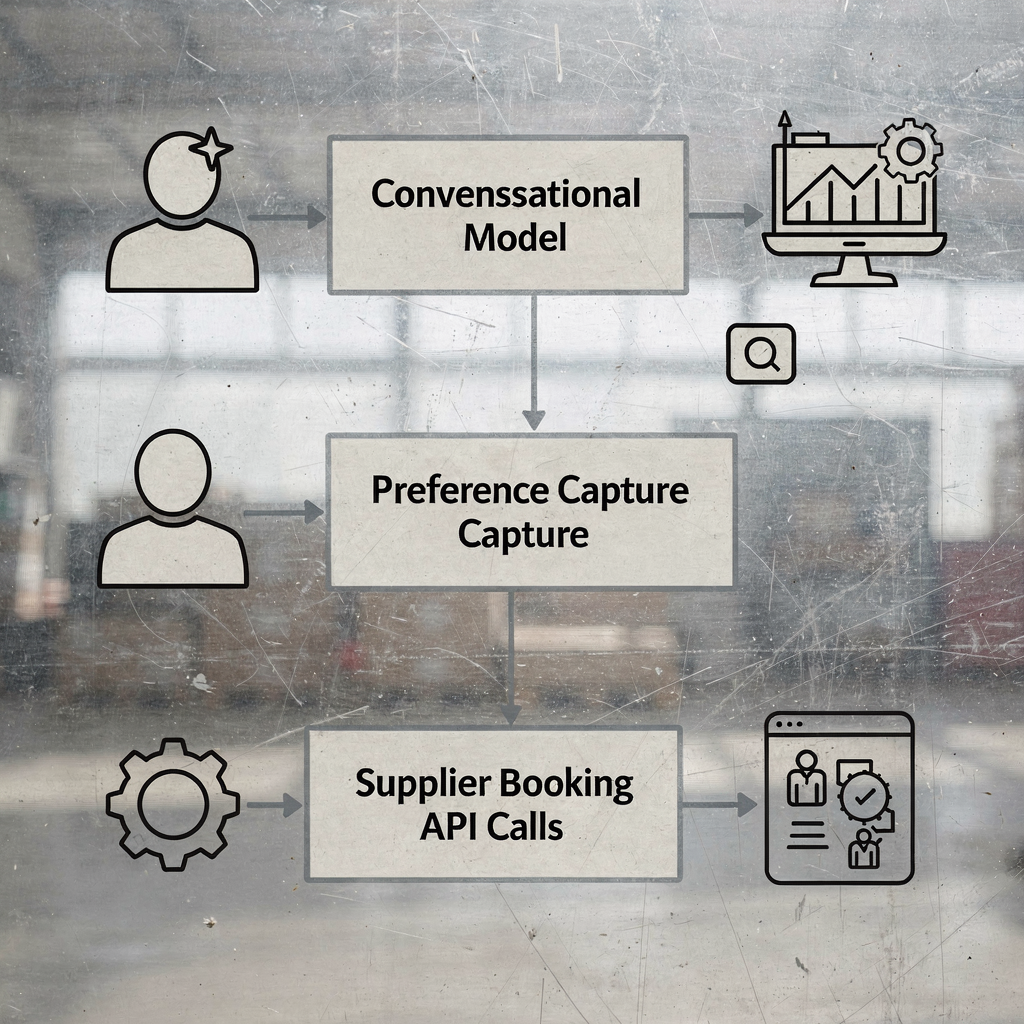
Executives report that AI improves personalisation for about a third of companies and raises customer satisfaction metrics industry survey. For product teams, tailor the chatbot prompts to capture personal preferences, dietary needs and pace. Then use algorithms to balance attractions and downtime. The result: customers get personalised itineraries without heavy staff involvement.
When you build such features, keep a human agent as a safety net. The AI travel agent handles routine choices, and a human steps in for complex exceptions. Also, ensure the system can customize itineraries and include interactive maps and local recommendations. If you need patterns for automating email confirmations that tie to bookings, see virtualworkforce.ai’s guidance on automated logistics correspondence automated logistics correspondence. This makes the final confirmation both accurate and traceable.
Customer engagement and experiences: chatbot-led journeys, mindtrip moments and top ai travel features using ai and google gemini
Chatbots now go beyond simple Q&A. They create conversational journeys that guide travellers from inspiration to booking. These conversational AI systems offer pre‑trip content, local recommendations and moment‑of‑truth upsells. For instance, a bot can propose a curated walking route after a guest checks into a hotel. This creates what marketers call a mindtrip moment: a small, memorable experience that increases loyalty.
Google’s gemini and other LLMs power richer, multimodal suggestions that include images, maps and contextual prompts. For example, a guest asks about nearby cuisine and the system returns an interactive map plus personalised dining options. This leads to faster decisions and more add‑ons. Platforms combine AI-driven insights and supplier data to tailor offers and to provide instant answers.
To measure impact, track engagement rates, NPS and repeat bookings. Also measure time‑to‑resolution and how many inquiries the bot resolves without escalation. Good dashboards show how often the bot helps a customer find flights and hotels and how often it qualifies leads for premium service. Use metrics to refine prompts and to improve multilingual capabilities. For travel planners, a chatbot that can speak multiple languages expands reach quickly.
Top AI travel features now include context‑aware upsells, local event alerts and personalised route maps. They also include instant support for changes and the ability to tailor experiences for groups or solo travellers. Use friendly prompts and keep dialogues short. When a bot cannot help, it should escalate with context so a human agent can step in quickly. This preserves trust and keeps customer satisfaction high.
Drowning in emails?
Here’s your way out
Save hours every day as AI Agents label and draft emails directly in Outlook or Gmail, giving your team more time to focus on high-value work.
Operations, teams and ROI: ai-powered travel tools for travel agent teams and measurable transform in cost and speed
AI tools reduce routine tasks so staff focus on high‑value work. In operations, bots read inbound messages, classify intent and draft correct replies. This saves time, reduces errors and lowers call volumes. Virtualworkforce.ai focuses on automating the full email lifecycle so teams cut handling time per message and maintain traceability. The platform shows how to save time and improve throughput with grounded responses.
Typical ROI levers include automation of common queries, faster PNR updates, and fewer escalations. Generative systems free travel agents to sell and to handle exceptions. Also, firms report experimental adoption rates above 70% for hyper‑personalisation efforts in hospitality, which signals potential gains from broader roll‑outs adoption data. These gains translate into cost per booking reductions and higher agent productivity.
Implement in phases. First, automate high‑volume, low‑risk tasks like reservation confirmations and status checks. Then expand to more complex workflows that combine supplier data and business rules. Train teams on governance and set clear escalation paths. For example, when an AI drafts a reply that needs verification, route it to a human agent with full context attached. This reduces mistakes and protects margins.
Measure results with clear KPIs: response time, resolution rate, conversion lift and agent satisfaction. Use pilots to prove value. If pilots succeed, scale with more integrations and a robust workflow engine. For operations teams that manage logistics emails and supplier communications, see how to automate logistics emails with Google Workspace and virtualworkforce.ai automate logistics emails. This practical work reduces manual work and keeps service consistent.
Risk, selection and scale: choosing top ai travel vendors, evaluating ai travel agent options, gemini compatibility and safe using ai
Choose vendors using clear criteria. Evaluate data security, API coverage, latency, and supplier reach. Also check whether the vendor runs proprietary models or uses third‑party LLMs. Ask about model updates, audit logs and how the system handles cancellations and refunds. These checks reduce operational risk and support compliance.
Risk monitoring matters. Test for bias in recommendations, and validate how the assistant handles price changes and refunds. Set rules for when the system should escalate. For example, price disputes and complex refunds should always route to a human agent. This keeps trust high and prevents mistakes. Also, maintain clear governance so that teams know how to intervene.
Decide whether to build, buy or partner. Small teams often partner for speed. Larger firms may choose to build parts of the stack to retain service margin. Run proof‑of‑value pilots with a limited supplier set, set KPIs and measure conversion, customer satisfaction and cost per booking. Use those pilots to decide on scale. When you select a vendor, confirm compatibility with google gemini or other LLMs if you need multimodal features.
Finally, use a checklist to move from pilot to production: confirm API reliability, verify data grounding, test escalation, and measure agent load after automation. Also ensure the vendor supports multilingual capabilities and interactive maps. If your operations rely on email workflows, virtualworkforce.ai offers end‑to‑end automation that routes, drafts and escalates with full context, which helps teams scale without losing accuracy how to scale logistics operations with AI agents. With careful selection and clear KPIs, teams can safely scale AI‑powered travel operations and deliver better travel experiences.
FAQ
What is an AI assistant for tourism companies?
An AI assistant is a system that uses machine learning and natural language processing to interact with customers and manage bookings. It automates parts of the booking process and can draft replies, propose itineraries and resolve routine inquiries.
How do AI agents handle real-time flight and hotel inventory?
They connect to supplier APIs and streaming feeds to fetch live availability and rates. Then they compare options, apply business rules and update bookings, which reduces manual reconciliation and speeds confirmations.
Can ChatGPT be used for trip planning?
Yes. ChatGPT can act as the conversational layer to capture preferences and present options. Back‑end agents then confirm bookings and produce a final itinerary.
How do AI chatbots improve customer satisfaction?
They provide instant support, answer common inquiries and propose personalised options quickly. This reduces wait times and increases repeat bookings, which boosts customer satisfaction.
What measures reduce risk when using AI in bookings?
Use strong data security, audit logs and clear escalation rules. Also validate outputs, test refunds and cancellation handling, and keep a human agent available for complex cases.
When should a travel firm build versus buy AI solutions?
Build if you need proprietary control and scale. Buy or partner to move faster. Start with pilots to prove value, then expand if the ROI is clear.
How do AI tools help travel agent teams?
They automate routine emails, draft accurate responses and free agents for high‑value work. This reduces manual work and increases productivity.
Are multilingual capabilities important for AI travel assistants?
Yes. Multilingual capabilities expand market reach and improve service for international travellers. They help answer inquiries and support bookings in multiple languages.
What KPIs should teams track for AI pilots?
Track response time, resolution rate, conversion lift, cost per booking and customer satisfaction. These metrics show whether the AI delivers measurable improvements.
How can I get started with AI-powered travel operations?
Run a focused pilot, connect a few suppliers and measure key outcomes. For help automating email-heavy workflows, explore solutions that integrate with ERP and inbox systems so teams can save time and keep accuracy.
Drowning in emails?
Here’s your way out
Save hours every day as AI Agents label and draft emails directly in Outlook or Gmail, giving your team more time to focus on high-value work.