


ai agent in the airline industry: what AI agents do and why they transform the travel industry
Start with a short example. American Airlines has tested an instant rebook flow that lets a passenger choose an alternative without staff, cutting queues and stress during irregular operations. This example shows how a single AI agent can act fast and reduce manual work. An AI agent is autonomous software that makes decisions. It can rebook, update fares, route bags or send flight status updates using data and machine learning. Airlines operate with complex rules. AI agents handle multi-step tasks and free human agent time for complex problems.
Why now? Three forces converge. First, richer data from RFID and other systems gives real-time visibility. Second, compute costs have fallen and models scale. Third, generative AI enables natural conversation and task completion. BCG describes this shift as the “AI-first airline” approach that redesigns workflows around AI. The market context is clear. Accenture found about 84% of travel executives see AI as key to growth. Adoption remains early: only a small share of companies have fully integrated these systems into operations. That gap is an opportunity.
AI agents are not a single product. They range from lightweight chatbots to complex agentic AI that coordinate crew, OPS and ground services. Use cases include instant rebook, dynamic pricing and baggage routing. Airlines need practical pilots and clear metrics. Virtualworkforce.ai helps by automating operational email workflows so ops teams spend less time on triage and more time on exceptions. Try a small pilot, prove impact, then scale. The aim is to transform customer experience and operational efficiency while keeping control of rules and audit logs.
agents are transforming contact center: conversational ai assistant for passengers and traveler support
Contact centers are a top use case for AI agents. Conversational interfaces reduce call volumes and cut wait times. They also provide 24/7 support across channels so an airline customer gets answers fast. Modern chatbots and conversational AI agents can answer questions on flight status, rebook flights after a cancellation, and provide luggage updates. These tools work in natural language and can route complex requests to a human agent when needed.
Airlines report faster response times and better first-contact resolution once conversational layers are deployed. A McKinsey analysis and Accenture research show clear gains in response metrics and containment rates linked to conversational systems. Typical KPIs include average handling time, containment rate and customer satisfaction. For example, a pilot that added an AI assistant for irregular ops cut average handling time and increased CSAT. The assistant provides proactive flight status updates and can rebook passengers on alternative flights within defined fare rules.
Practical use cases include automated irregular-ops messaging, instant rebook flows, bag-tracking enquiries and check-in help. Conversational voice assistants handle common calls, while AI-powered chat resolves web messages. This reduces pressure on agents and improves passenger experience. Virtualworkforce.ai integrates with email and system data to draft grounded replies and route issues, which reduces time per contact and increases consistency across channels. Start with a single channel, measure containment and then expand conversational capability across voice and chat.

Drowning in emails?
Here’s your way out
Save hours every day as AI Agents label and draft emails directly in Outlook or Gmail, giving your team more time to focus on high-value work.
ai travel agents and travel agent functions: passenger self-service, instant rebooking and fare rules
AI travel agents replicate many tasks of a human travel agent. They suggest itineraries, check fare rules, and propose alternatives during disruption. A travel agent typically checks availability, fare conditions and connections. An ai travel agents can do the same automatically and at scale. They surface compliant options and upsell ancillaries where relevant. The system enforces fare rules so proposed options avoid invalid combinations and reduce refund exposure.
A typical three-step passenger flow looks like this: detect a disruption, check fare rules and availability, then present choices for rebook or paid change. This flow lets a passenger self-serve and removes queues at the gate. Self-service rebooking cuts calls and frees agents for complex exceptions. Airlines that pilot self-serve rebook flows report faster resolution and fewer frustrated passengers. One clear benefit is fewer contacts for common tasks like reissue after cancellation.
AI travel agents also support itinerary changes, manage seat and ancillaries, and submit refund requests when the rules allow. They can analyze customer data to offer personalised service and increase ancillary revenue. For operators, automation reduces manual errors and speeds booking changes. The AI assistant drafts accurate messages to passengers grounded in the live system state and fare conditions. For teams that handle many operational emails, virtualworkforce.ai automates the full email lifecycle and reduces handling time per message significantly, so staff prioritise exceptions and high-value tasks.
automation and agentic ai for operations: baggage, delays and airport workflows
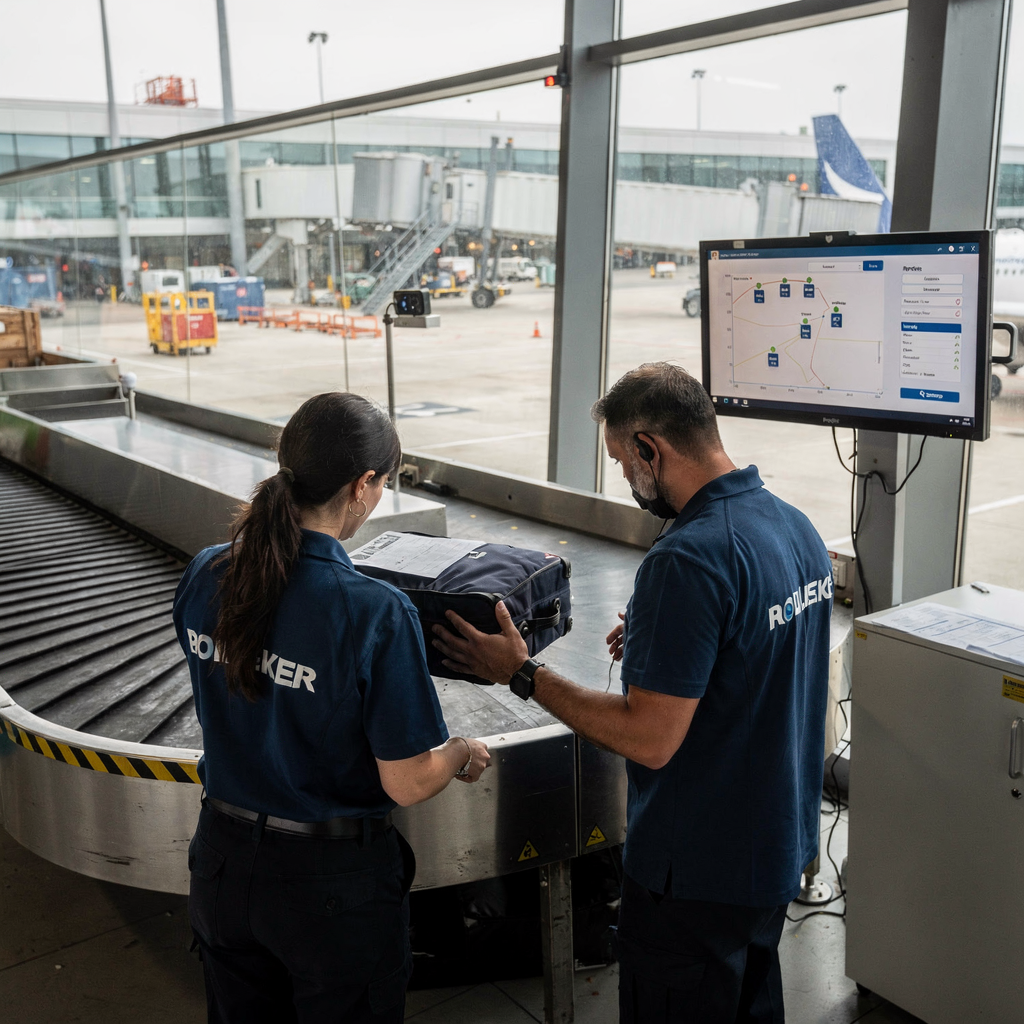
Operations benefit strongly from automation. Baggage tracking using RFID and AI gives near real-time visibility across the airport. Vendors and SITA offer AI tracking and passenger messaging to reduce mishandled items. Delta’s RFID rollout plus analytics is a clear example of measurable reductions in lost baggage and faster recovery. Autonomous tugs and robotic carts move bags and pallets in controlled areas, reducing labour on repetitive tasks and increasing safety.
Agentic AI steps up when coordination across OPS, crew and ground handling is needed. Agentic AI will sequence tasks, allocate ground crews, and propose solutions during disruption. For example, when a delay affects connections, an agentic ai can reassign gates, trigger rebook flows, and update passenger messaging. The agentic approach reduces turnaround times and improves on-time performance. Predictive delay models use weather, traffic and system state to propose mitigations before disruption escalates.
Keep technical detail light and focus on measurable gains. Metrics to watch include mishandled baggage rate, turnaround time and the share of disruptions resolved without manual escalation. For baggage, a reduction in mishandled items and faster delivery improves passenger experience and cuts compensation costs. For email-driven ops, virtualworkforce.ai turns unstructured messages into structured tasks and routes them automatically. This mix of automation and higher-level agents helps airports run smoother and keeps passengers moving.
Drowning in emails?
Here’s your way out
Save hours every day as AI Agents label and draft emails directly in Outlook or Gmail, giving your team more time to focus on high-value work.
ai agent pricing and revenue: dynamic fares, commercial automation and fare rules enforcement
AI agents power real-time pricing decisions. They adjust fares by reacting to competitor prices, demand signals and disruption. Dynamic pricing agents scan market data and update offers within guardrails. That capability helps airlines optimise yield and personalise ancillaries. Analysts note that AI-driven pricing improves revenue management by reacting faster than manual processes and by using competitor data.
Commercial automation includes personalised ancillaries and automated offers at booking and at touchpoints during travel. AI systems can propose upgrades, extra baggage or flexible options based on traveller profile and trip context. Each suggestion follows fare rules so the booking remains valid. Audit logs and rule-based overrides keep pricing compliant and transparent. These safeguards help avoid regulatory issues and protect the airline brand.
Key KPIs are RASK, ancillary revenue per passenger and pricing variance. Airlines must balance revenue gains with fairness. Clear guardrails, audit trails and human review for high-impact changes reduce risk. Use a staged rollout: start with low-risk routes, measure uplift, and expand. The McKinsey view on agentic AI and pricing highlights the need for cohesive AI strategies across commerce and operations to capture full benefit. For teams drowning in transactional messages, virtualworkforce.ai automates repetitive pricing and service emails so revenue teams can act faster and with better data.
rollout, metrics and governance: how agents are transforming service and what airlines must measure
Rollout should be staged and data-driven. Start with a narrow pilot, connect passenger, baggage and ops feeds, then expand to agentic ai workflows. Integrate PAX and baggage feeds, connect CRM and ticketing, and pilot one common use case. Measure baseline metrics and then test. Track customer satisfaction, average handling time, rebook time and mishandled bag rate. Also measure revenue per passenger and cost per contact.
Key metrics include customer satisfaction and NPS, average handling time and containment rate, rebooking time and refund processing speed. For operations, track mishandled baggage rate and turnaround time. For commerce, monitor RASK and ancillary uptake. Build privacy and compliance into the design. Guardrails must prevent bias, protect data and allow straightforward fallbacks to a human agent for exceptions. Use audit logs so every automated decision can be explained.
Start with a six-month roadmap: month 1 connect data feeds, month 2 pilot conversational flows, month 3 add rebook and fare rules automation, month 4 deploy baggage tracking integration, month 5 expand agentic ai coordination, month 6 measure and scale. Vendor selection matters. Choose vendors with domain experience, API readiness and clear SLAs on accuracy. For email-heavy ops, consider solutions such as virtualworkforce.ai that automate the full email lifecycle and ground replies in ERP, TMS and system history. A simple checklist for pilots: define KPIs, secure data feeds, set guardrails, plan fallbacks and measure closely. This approach helps airlines deliver faster, reduce disruption and transform passenger experience while keeping control.
FAQ
What is an AI agent in the airline context?
An AI agent is autonomous software that makes decisions for routine tasks. It can rebook passengers, check fare rules and route baggage updates while keeping humans in the loop for exceptions.
How do AI agents help contact centres?
They reduce call volumes by handling common queries and automating responses. This lowers wait times and improves customer satisfaction while freeing human agents for complex issues.
Can passengers self-serve rebooking with AI?
Yes. Many pilots let passengers choose alternatives without staff intervention. Self-serve rebook flows cut gate queues and reduce calls to the contact centre.
What is agentic AI and how does it differ from simple automation?
Agentic AI coordinates across multiple systems and makes multi-step decisions. Simple automation handles single tasks, while agentic AI sequences tasks across OPS, crew and ground handling.
Will AI replace human agents?
No. AI handles repetitive and data-heavy tasks so human agents can focus on complex exceptions. Human oversight remains critical for high-impact decisions and customer care.
How do AI agents improve baggage handling?
By combining RFID tracking and predictive analytics, AI reduces mishandled baggage and speeds delivery. Passengers receive faster baggage updates and fewer lost items as a result.
What governance should airlines set for AI deployments?
Airlines need audit logs, bias checks, data privacy protections and clear fallbacks to human agents. Regular reviews and SLA-backed vendor commitments ensure safe operation.
How quickly can an airline pilot AI agents?
A focused pilot can run in 2–3 months with connected data feeds and a single use case. A six-month roadmap lets teams expand and measure before scaling.
Do AI pricing agents risk unfair pricing for customers?
Guardrails and rule-based overrides mitigate that risk. Transparent audit trails and human review for major changes keep pricing fair and compliant.
How does virtualworkforce.ai help airlines?
virtualworkforce.ai automates the full email lifecycle for ops teams, routing and resolving messages with data from ERP and TMS. That reduces handling time and keeps teams focused on exceptions.
Drowning in emails?
Here’s your way out
Save hours every day as AI Agents label and draft emails directly in Outlook or Gmail, giving your team more time to focus on high-value work.