


AI concierge: AI assistant for airlines
ai automate booking, check-in and booking confirmations for a seamless traveller experience.
AI will automate routine booking and check-in work and reduce friction at scale. First, conversational flows take over standard queries and then they confirm purchases automatically. For example, a chatbot can handle auto check-in via app, SMS or email so staff answer fewer repetitive calls and passengers start their journey faster. Airlines that deploy automated flows report fewer call‑centre contacts and faster processing, which improves customer trust and reduces cost (CTO Magazine). Next, automated rebooking and instant booking confirmations after schedule changes cut confusion and reduce follow‑ups.
In practice the system performs three steps. First it detects intent from messages. Then it looks up the reservation in reservation systems and PSS. Finally it issues booking confirmations and updates the passenger record. This removes manual triage, reduces errors, and increases booking confirmation accuracy. Airlines often see faster reply times and fewer escalations when automation handles routine flows. The result is a more seamless travel experience and measurable operational efficiency gains.
Case study: A real airline used automated check‑in flows and cut call volume by a large margin while raising on‑time boarding. The flows used simple rules and an AI layer for intent detection to trigger confirmations and seat assignments. They integrated with the PSS to confirm seat maps and to issue boarding passes via mobile apps and email.
Actionable checklist: Map every manual booking and check‑in step to a single automation rule; identify required PSS calls for seat maps and issuance; define success metrics for reduced call volume and booking confirmations; pilot auto check‑in for one route and measure throughput; add fallbacks for cancellations and edge cases.
Drowning in emails?
Here’s your way out
Save hours every day as AI Agents label and draft emails directly in Outlook or Gmail, giving your team more time to focus on high-value work.
ai assistant and conversational chatbot for airline systems with multilingual and llms support.
Enterprise‑grade conversational solutions let airlines scale support across languages and channels. Modern LLMs power natural language understanding and allow a frictionless experience for international travel passengers. For example, a multilingual chatbot can detect intent, fetch flight status and handoff to human ops teams with full conversation history attached. Good systems also include escalation rules so complex issues reach live agents fast. This design preserves context and speeds handoff for baggage or rebooking cases.
You should validate NLU across key languages and test fallback policies. Then configure routing so that the chatbot escalates to airline support for safety‑critical questions. The system must maintain conversation history and passenger information across every channel, like WhatsApp, SMS and mobile apps. In one implementation, Amelia provided a highly conversational alternative for customer support and improved response consistency while keeping a human‑in‑loop for sensitive cases (Cognizant).
Case study: Flyways is an AI platform used by an airline to give personalized flight options and to rebook passengers after disruptions; it connects to ops teams and retains context during handoff (TNMT). The hybrid model raised containment for simple queries while lowering average handling time for escalations.
Actionable checklist: Choose an enterprise‑grade conversational ai vendor; run NLU tests in core languages; set handoff rules and define conversation history retention; test channels like WhatsApp and mobile apps; measure containment rate and time to handoff for escalated tickets.
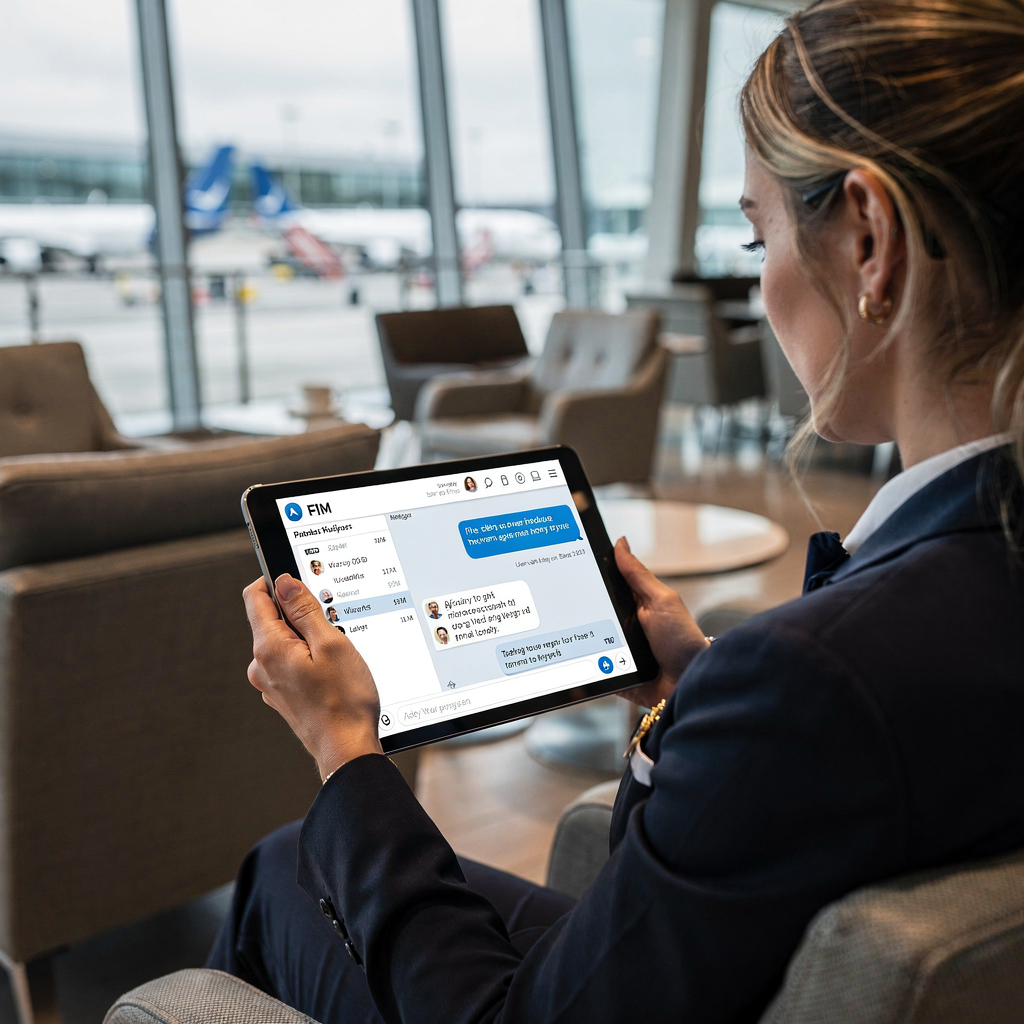
ai-powered assistant and ai agents to optimise workflow, fare management, itinerary and real‑time flight disruptions.
Use AI agents to monitor operations and trigger workflows when disruptions occur. An automated system ingests flight information and then suggests reroutes, reclaims fares, and reassigns crew. For example, when a flight delay appears the assistant can start itinerary changes, issue compensation offers, and create tasks for ground teams. This cuts the knock‑on delay effect and reduces reaccommodation time. The AI models analyse demand and then recommend fares based on forecasting. The outcome is lower cost, faster decisions, and better operational efficiency.
AI also supports fare checks and distribution rules. Systems query live availability and compute alternate routings in seconds. They call the PSS and then update reservation records so agents see a consistent state across airline systems. Real‑time feeds are essential; when the platform lacks quality data decision accuracy drops. The industry sees this pattern clearly: better data drives better outcomes in disruption handling and capacity planning (OAG).
Case study: An airline implemented an ai agents workflow that reduced time to reaccommodate by automating seat swaps and notifying passengers by SMS. The system coordinated gate teams and crew schedules and then logged outcomes to analytics for continuous improvement.
Actionable checklist: Define triggers for flight disruptions; connect to flight status and crew rosters; create automated fare and reroute checks with PSS calls; set escalation rules for human approval; track time to reaccommodate, delay knock‑ons, and on‑time performance.
Drowning in emails?
Here’s your way out
Save hours every day as AI Agents label and draft emails directly in Outlook or Gmail, giving your team more time to focus on high-value work.
ai-powered concierge travel service and chatbot to personalise the traveller journey.
Offer a concierge model to increase ancillaries uptake and to personalise service. An AI concierge can recommend meals, upgrades, and in‑flight entertainment based on past itineraries and passenger profile. Personalisation uses seat history, meal choices, and previous travel behaviour. This boosts conversion on offers and improves perceived value for passengers. For airlines the lift in ancillaries can be significant when recommendations match preferences.
Integrate the travel profile with distribution tools so offers appear at the right moment. Sabre integrations and similar partners let systems read availability and then make immediate offers during booking or at check‑in. Personalisation should respect privacy rules and store only needed passenger information. A practical approach is to map data sources like PAX profile, fare class and previous itineraries, and then use that map to power recommendations. For example, Amelia‑style conversational flows can surface targeted ancillaries, while Flyways style tools can suggest alternate routing when needed (CTO Magazine).
Case study: A carrier used a personalisation engine which increased ancillaries conversion by serving seat and meal offers during mobile check‑in. The system respected opt‑outs and reduced irrelevant messages. It combined historical preferences with live offers to create timely, relevant prompts.
Actionable checklist: Map PAX profile, fare class, and previous itineraries; define consent and privacy controls; connect to distribution partner APIs for real‑time offers; create conversational prompts that suggest ancillaries at key moments; measure uplift in ancillaries conversion and customer experience.
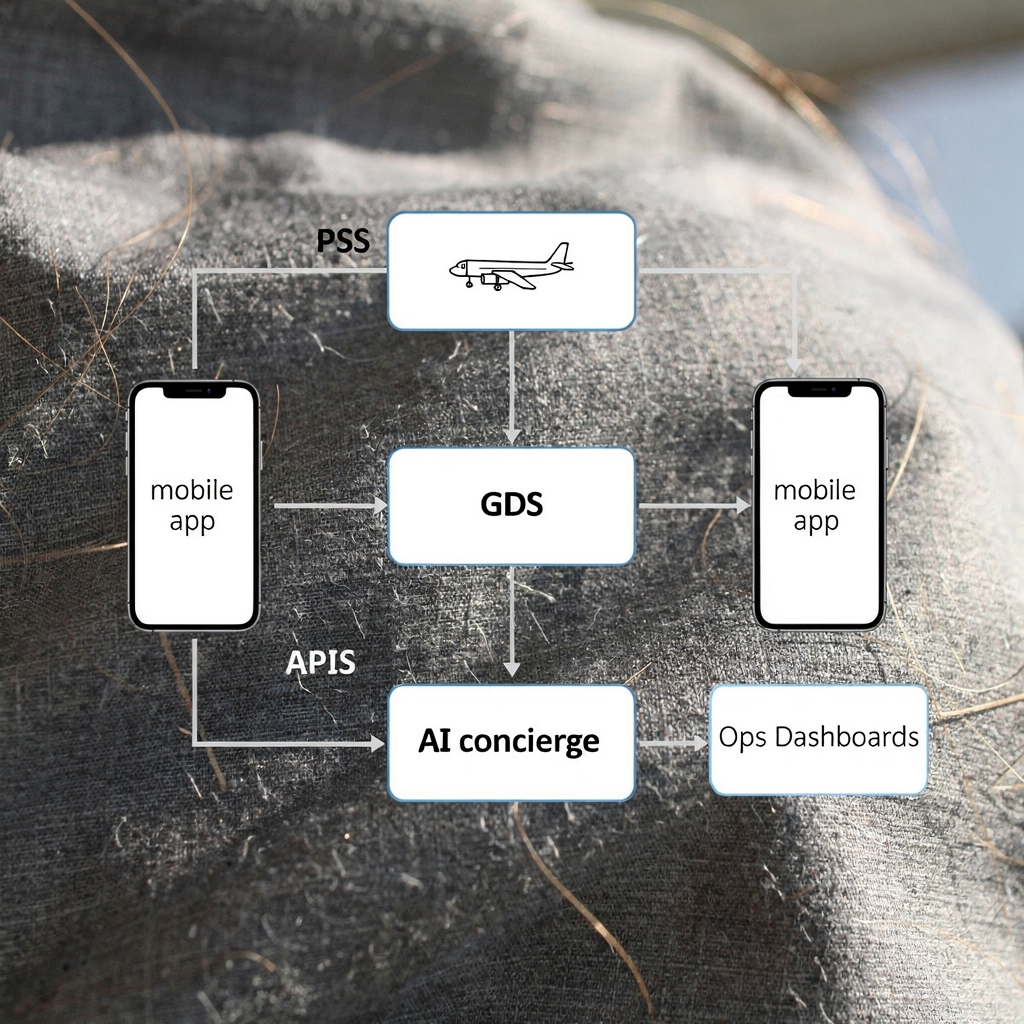
apis, sabre and airline systems for scalable, enterprise-grade conversational ai and booking integrations.
Reliable APIs bridge the AI concierge and core airline systems. You must call the PSS or GDS for live fares, seat maps, and booking confirmations. For example, Sabre provides endpoints for availability, seat assignment and ticketing and acts as a partner for distribution. Use secure, rate‑limited calls and then reconcile state with reservation systems to avoid double bookings. Real‑time system integration reduces errors and improves uptime.
Design the integration to be idempotent and to handle rate limits gracefully. Then add caching for low‑latency queries and fallbacks for long API delays. Test reconciliation flows so that booking confirmations in the AI layer match the PSS and the passenger record. Virtual operations teams often use email automation to keep ops in sync; our platform, virtualworkforce.ai, automates operational email lifecycles so staff spend less time triaging booking and ops messages, and more time on exceptions. See our guidance on automated logistics correspondence for similar integration patterns (virtualworkforce.ai).
Case study: A carrier implemented Sabre API calls to confirm seats and to issue booking confirmations automatically. They added event‑driven updates so the chatbot could push real‑time updates to mobile apps and SMS. The integration reduced manual PSS lookups and sped up passenger notifications.
Actionable checklist: Audit PSS and GDS endpoints needed for booking confirmations; design idempotent APIs and caching; implement rate‑limit handling and reconciliation jobs; secure data with token rotation and least privilege; run end‑to‑end tests for real‑time information flow.
scalable deployment, adapt and KPIs for ai agents in the travel industry.
Plan rollout in small pilots and then scale. Start with a clear pilot scope, select routes or services that see frequent routine contacts, and then measure impact. Market forecasts show large growth in AI solutions for aviation and many travellers plan to use AI for planning, which supports investment decisions (Precedence Research) and (Pros). Use pilots to validate data readiness and to test multilingual NLU and llms. Then expand the rollout and monitor KPIs closely.
Track cost per contact, automated containment rate, time to reaccommodate during flight disruptions, ancillaries conversion, and booking confirmations accuracy. These metrics show ROI and justify scaling. Also monitor uptime and the quality of real‑time information feeds. One practical step is to run a data readiness audit and then create a phased API integration plan. For operational email flows, teams often reduce handling time and increase consistency by automating message routing and replies; our case studies on automating logistics emails show similar gains for ops teams (virtualworkforce.ai).
Case study: A regional airline ran a six‑week pilot focused on mobile check‑in and ancillaries. They tracked automated containment and ancillaries conversion and then expanded to disruption workflows. The pilot proved the concept and reduced manual contacts.
Actionable checklist: Define pilot scope and KPIs; run a data readiness audit; prepare multilingual NLU and llms tests; integrate key APIs and test reconciliation; set human‑in‑loop rules and compliance review; measure and adapt based on KPI trends.
FAQ
What is an AI concierge for airlines?
An AI concierge is a digital assistant that helps passengers with bookings, offers and flight information. It uses AI to personalise service and to automate routine operations.
How does AI automate check-in and booking confirmations?
AI detects passenger intent and then calls reservation systems to confirm seats and issue boarding passes. The system sends booking confirmations by email or SMS and handles follow‑up messages automatically.
Are multilingual chatbots ready for international travel?
Yes, modern systems use llms and validated NLU to support multiple languages. Airlines should test across core languages and set fallback rules for escalation.
Can AI handle real‑time flight disruptions?
AI monitors flight status feeds and triggers workflow updates when disruptions occur. It can suggest reroutes, start reaccommodation and notify passengers proactively.
How do APIs like Sabre fit into an AI concierge?
APIs provide live fares, seat maps and ticketing capabilities that the AI needs to act. Sabre and other GDS/PSS partners supply the authoritative data for confirmations and changes.
What KPIs should airlines track for AI pilots?
Track automated containment rate, cost per contact, time to reaccommodate, ancillaries conversion and booking confirmations accuracy. These metrics show both efficiency and passenger value.
How does privacy affect personalization?
Personalisation must follow consent and data minimisation rules. Airlines should map data sources and limit storage to what is necessary for the travel service.
Can AI reduce call centre volume?
Yes, automation handles routine queries and sends instant confirmations, which lowers call volume. That frees agents for complex cases and improves response quality.
Is human oversight needed with AI agents?
Always. Human‑in‑loop policies ensure safety for refunds, complex itinerary changes and cancellations. The system should escalate when confidence is low.
How do I start a pilot for an airline AI concierge?
Begin with a scoped pilot for check‑in or ancillaries and run a data readiness audit. Then connect key APIs, test multilingual NLU, and measure KPIs to adapt the rollout.
Drowning in emails?
Here’s your way out
Save hours every day as AI Agents label and draft emails directly in Outlook or Gmail, giving your team more time to focus on high-value work.