


airport: How ai assistants lift the passenger experience and help the traveller
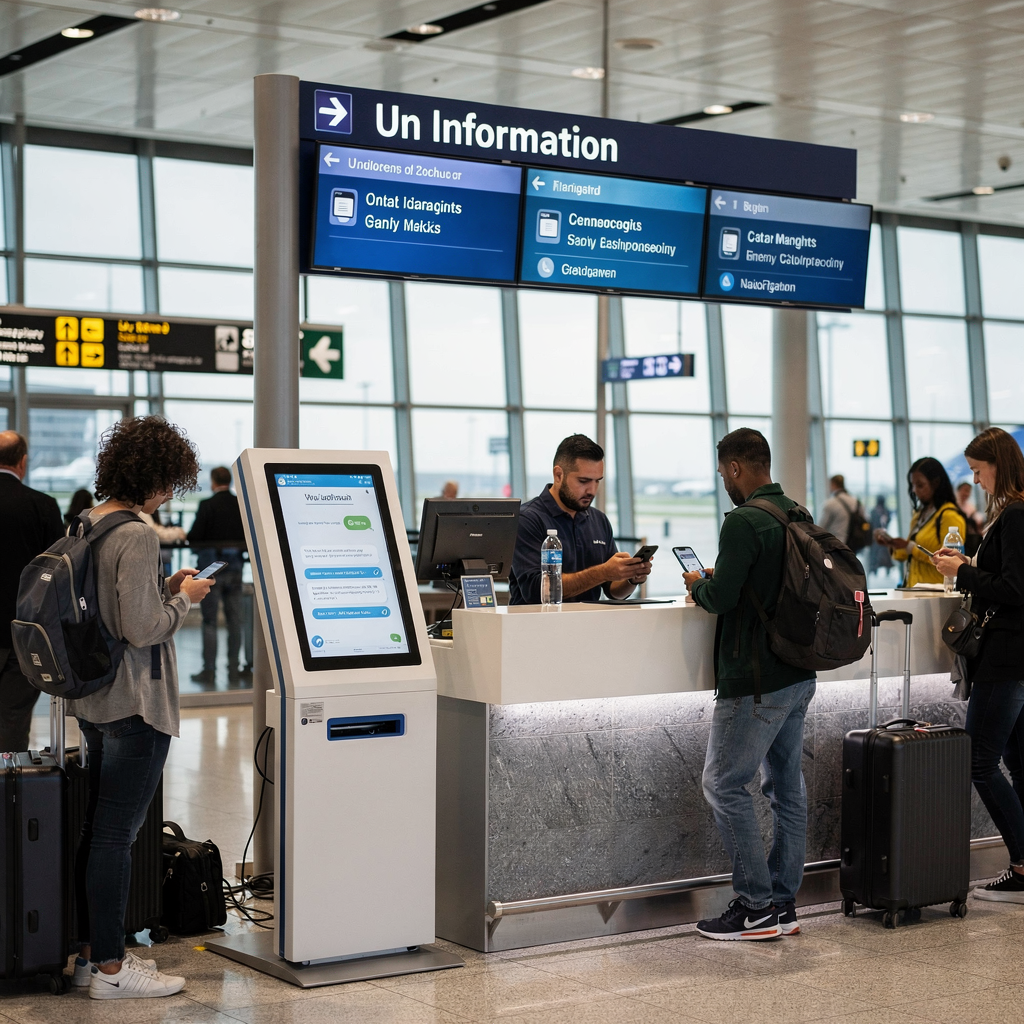
Airports need clear, fast support for every traveller. A virtual assistant in an airport gives instant passenger support. It answers flight queries, points to gates and explains facilities. Also, it offers multilingual help on kiosks, WhatsApp and Facebook Messenger. For example, Melbourne Airport runs an AI platform that combines live feeds for timely answers. The market for AI in aviation is growing fast, which explains investment in these services.
The purpose is simple. Reduce queue time. Improve passenger experience. Provide 24/7 availability. The assistant uses a conversational interface and a short context memory. It sends real-time flight updates and disruption alerts. It also gives personalised recommendations for shops, lounges and transport. Operators measure success with CSAT and average handling time (AHT). Results show lower queue times and higher satisfaction when automated response handles routine issues.
Key features include a persistent chatbot that links to flight information, gate maps and queues. It integrates with resource schedules to suggest optimal routes through the terminal. It can escalate to a human agent when needed. It supports accessibility tools and provides contextual guidance for families and customers with reduced mobility. In domestic and international settings the tool improves wayfinding and passenger support while reducing manual staff load.
Measured benefits are clear. Airports that use AI-powered assistants report faster answers and fewer misdirected travellers. Airlines and airport operators also see fewer missed connections. The assistant helps staff focus on exceptions and safety. For teams that face 100+ inbound operational emails every day, an AI agent can cut handling time and reduce triage. Learn how email automation can free staff time at a practical guide on virtualworkforce.ai. Explore virtual assistants for logistics.
Finally, the assistant links to broader digital transformation work. It supports resilient operations during severe weather and peak events. It reduces the bottleneck at information desks and helps airports scale while keeping service quality high. Airports ready to launch pilots should replicate successful designs such as the Melbourne Airport implementation and test for intent accuracy, accessibility and governance.
ai-powered chatbot and ai platform: real-time bot design, data sources and deployment
Designing an ai-powered chatbot begins with a simple architecture. First, a conversational bot handles queries. Next, an AI platform ingests flight feeds, ADS-B, FLIFO and sensor data. Then, it maps gates, displays maps and keeps flight information up to date. Finally, it exposes APIs for kiosks, WhatsApp, and mobile apps. This layered approach keeps intent accuracy high and reduces false answers.
Data needs are central. Reliable flight feeds and resource schedules matter. Cameras and ground sensors feed status updates. Maintenance manuals and passenger apps provide context. The future of AI in aviation depends on data quality. As one report notes, “The future of AI in aviation hinges on the quality of data fed into these systems.” Data quality matters. Therefore, governance and audit trails are essential.
Prioritise intent accuracy, escalation, multilingual support and accessibility. Train models on diverse phrasing and traveler accents. Use contextual responses and short, clear replies. Include an escalation path to human agents and attach the chat history. Also, set a staged rollout with live A/B testing. This reduces risk and improves metrics fast. For operations teams overwhelmed by email, AI agents that automate the full lifecycle can help; see an example of automated logistics correspondence to learn how to route or resolve requests at scale. Automated logistics correspondence.
Security and privacy risks require careful handling. Protect PII and log access. Run bias testing and keep audit records. Use data minimisation and opt-in consent. For compliance, anonymise telemetry before model training. A staged deployment helps. Start with a single terminal pilot and monitor KPIs. Also, combine machine answers with human review on sensitive queries. That way the system improves without exposing critical data.
Operational teams want fast wins. Prioritise flight status, wayfinding and disruption alerts. Add a robust fallback when the model is uncertain. The design should allow operators to update scripts and rules without redeploying the core model. For teams that want to scale reply automation across systems like ERP and TMS, a no-code connector approach simplifies adoption. See how AI helps freight communications.
Drowning in emails?
Here’s your way out
Save hours every day as AI Agents label and draft emails directly in Outlook or Gmail, giving your team more time to focus on high-value work.
operational: Using real-time analytics and alerts to cut delay and improve airline operations
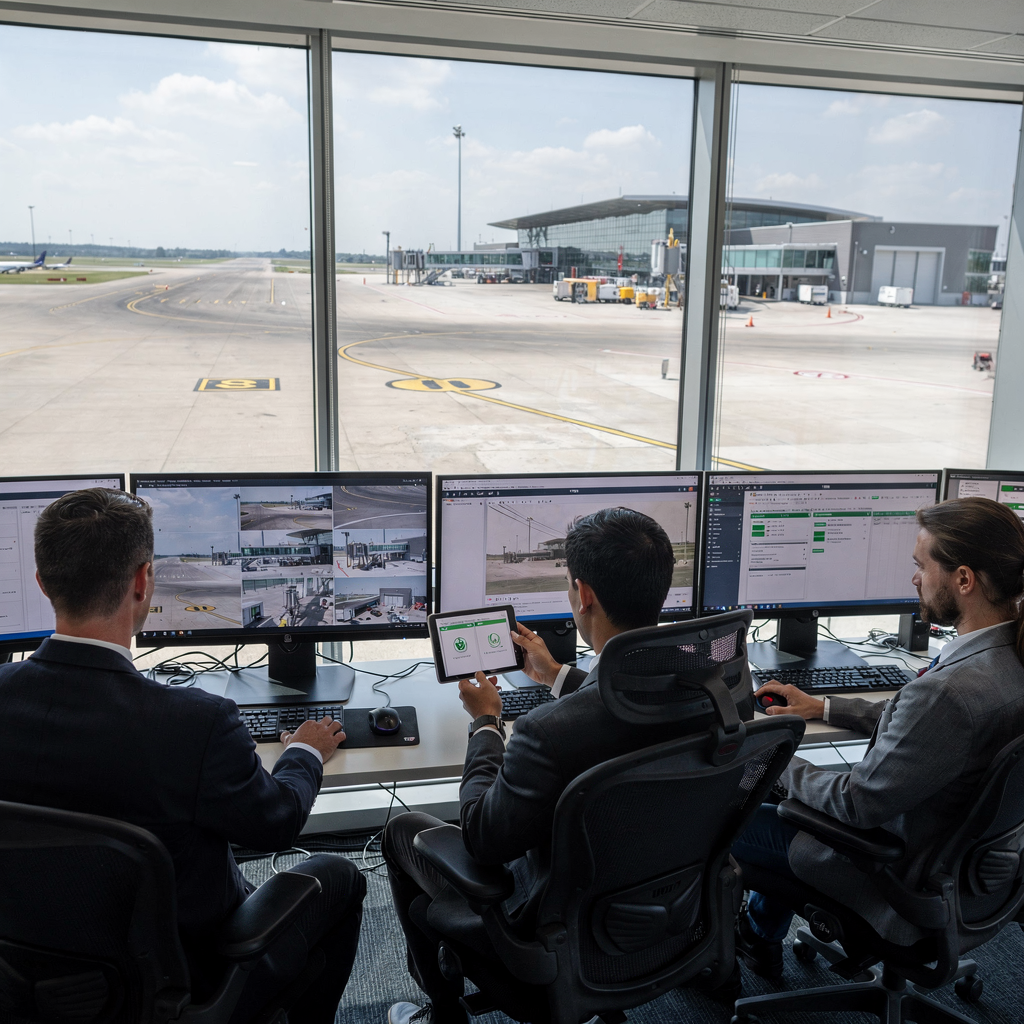
Real-time analytics feed controllers and operational teams with actionable alerts. The assistant watches gate occupancy, staff rosters and flight feeds. When conflicts appear, it sends a concise alert to the right operator. This reduces run-time decisions and helps controllers prioritise tasks. It also limits the human load on air traffic controllers and ground teams. The bot attaches the latest context so responses are faster and accurate.
Use cases include gate conflicts, late turnarounds and automated rebookings. For a delayed inbound, the assistant suggests alternative gates and flags connecting passengers. It then recommends staff reallocation to speed boarding. These alerts improve on-time performance and reduce minutes of delay. Airports that combine machine alerts with human controllers report faster recovery and fewer knock-on delays.
Core metrics here are on-time performance and turnaround time. Also measure minutes of delay prevented and number of automated rebookings. For example, predictive alerts that identify a late turnaround can prevent cascading delay. The assistant reduces communication friction between airline operations and ground staff. It supports decision-making with a clear timeline and next actions.
Implement staged rules and let the assistant escalate to a human when necessary. That preserves safety and control. Give controllers control of thresholds and override options. Also, integrate the assistant with airline operations systems so it can suggest rebooking options automatically. This improves resilience during severe weather and peak demand.
Operators need a simple interface for alerts and analytics. Visual dashboards should show bottlenecks and the expected impact of interventions. Use the assistant to push concise, actionable messages rather than long reports. This keeps staff focused and reduces error. For teams that need to automate repetitive email handling tied to flight changes, an AI agent that drafts and routes replies can cut handling time dramatically. Learn about automating ERP-related emails.
aviation industry readiness: predictive maintenance, disruption reduction and reducing inefficiency
Predictive maintenance is a major area where AI is helping the aviation industry prepare for fewer faults. Studies suggest AI-driven predictive maintenance can reduce unplanned maintenance events by up to 30% according to industry analysis. The assistant surfaces readiness checks and maintenance signals before faults escalate. It fuses sensor telemetry, maintenance logs and usage history to estimate remaining useful life and suggest inspections.
How it works is straightforward. Sensors record vibration, temperature and usage. Maintenance logs record past fixes. The model trained on this data predicts parts at risk. Then, the assistant alerts engineers and suggests spare parts or AOG workflows. This lowers repair costs and improves fleet availability. Airlines see fewer AOG events and more predictable schedules. The business case is clear: lower repair spend, better on-time performance and fewer passenger disruptions.
Integration matters. Tie predictions into airline maintenance systems and ground ops. Ensure readiness checks appear on dashboards and in daily briefings. Use automated emails and routing for urgent requests. That reduces manual triage and speeds response. For operations teams drowning in messages, AI agents that automate email can accelerate the repair workflow and keep context attached to each request. See how to scale logistics operations without hiring in-depth. Scale operations without hiring.
Risks include false positives and data drift. Mitigate by continuous retraining and by keeping human oversight. Also, maintain an audit trail for every recommendation. Improve model inputs and measure outcomes. This builds resilience and trust. As readiness data improves, the assistant will help reduce inefficiency across line maintenance and turn management.
The broader advantage is operational efficiency across the airport and airline systems. AI-driven signals make planning more proactive. Teams can schedule preventive checks during planned downtime and avoid unscheduled work. In this way airports become more resilient, and travellers enjoy a more reliable air travel experience.
Drowning in emails?
Here’s your way out
Save hours every day as AI Agents label and draft emails directly in Outlook or Gmail, giving your team more time to focus on high-value work.
taxi times and ground ops: real-time optimisation to cut fuel burn, delays and controller workload
Optimising taxi times saves fuel, cuts emissions and lowers delays. AI tools suggest smart gating, taxi routing and turnaround monitoring to reduce hold-ups on the airside. Smart-gating systems and computer vision projects have already cut taxi delays and fuel burn. In one example, smart gating saved more than 1.4M gallons for an airline. The assistant recommends optimal gates and taxi paths while forecasting apron congestion.
Actions the assistant can take include recommending an alternate gate, adjusting pushback timing and advising controllers on taxiway congestion. It provides short alerts and predicted hold times. This helps the controller and ground staff coordinate quickly. Also, it offers a clear summary for pilots and ramp crews. By sharing data in real time, teams avoid unnecessary waits and reduce bottleneck effects.
Measure average taxi times and fuel saved. Also track emissions reduced, gate utilisation and ground delay minutes. Use these metrics to justify further investment. The assistant supports staff by reducing repetitive radio calls and by suggesting efficient sequencing. That frees ground crews to focus on safety and service tasks. In turn, airline operations see faster turnarounds and more punctual departures.
Deploy in steps. Start with one apron and limited routes. Monitor outcomes and refine routing logic with human feedback. Include a fallback plan for severe weather and complex operations. Keep pilots and ground controllers in the loop so they trust the recommendations. The system must remain scalable and interpretable to gain long-term acceptance from airport operators and the busiest airport teams.
Finally, combine taxi optimisation with predictive maintenance signals and passenger flow data. That creates a coordinated response across the terminal and apron. The result is fewer minutes lost to inefficiency and a better experience for travellers and crews alike.
benchmark and ai-powered analytics: measuring success for seamless travel and long-term rollout
Set a clear benchmark framework before scaling. Start with core metrics such as CSAT, on-time performance, delay minutes avoided and cost savings. Also measure traveller adoption rates and staff satisfaction. A simple pilot at one terminal provides early signals. Collect three to six months of live data. Then iterate and scale.
Core metrics should include passenger experience and operational efficiency. Track automated rebookings, minutes of delay avoided and the number of escalations. Ensure analytics dashboards show trends and root causes. Also, verify market figures from multiple primary reports before making large investments. The AI in aviation market outlook supports cautious investment. Market analysis helps set expectations.
Design governance and vendor SLAs up front. Include training for staff, documented escalation paths and audit trails. Also, require data in real time feeds and clear ownership for each integration. Make the rollout scalable by using modular connectors and a model retraining plan. For email-heavy operations, automate replies and routing to reduce human workload and speed decisions. See a guide on improving logistics customer service with AI for practical next steps. Improve customer service with AI.
Include a formal benchmark process. Run A/B tests and compare operational metrics across controlled periods. Also, measure resilience during disruptions such as severe weather. Use the assistant to surface readiness checks and to coordinate resources. For broader industry alignment, adopt common data standards and share lessons across the aviation industry. Finally, document outcomes and prepare a full launch plan that includes staff training, governance and continuous improvement. This approach makes it easier to scale from one terminal pilot to a network-wide deployment while keeping operations predictable and passenger journeys seamless.
FAQ
What is an AI assistant for airports?
An AI assistant for airports is a virtual tool that helps passengers and staff with flight information, wayfinding and routine tasks. It uses conversational interfaces to answer queries and to escalate complex issues to humans.
How do AI-powered chatbots improve passenger support?
They provide 24/7 responses, multilingual help and quick updates, which reduce queue times and improve CSAT. They also integrate with live flight feeds so answers remain current.
Can AI reduce maintenance-related delays?
Yes. Predictive maintenance models identify likely faults early and can reduce unplanned maintenance events by around 30% according to industry analysis. This lowers repair costs and supports better fleet availability.
What data does an airport AI platform need?
It needs flight feeds, gate maps, sensor telemetry, CCTV and maintenance logs. High-quality data and governance are essential for accuracy. See the note on why aviation AI depends on data quality for more detail. Data quality guidance
How do airports measure success?
They measure CSAT, on-time performance, minutes of delay avoided and cost savings. They also track adoption rates and staff feedback during pilots.
Are privacy risks a concern with airport AI?
Yes, privacy and PII handling are major concerns. Airports must anonymise data, log access, get consent and keep audit trails to reduce risk.
How does an AI assistant help ground operations and taxi times?
It suggests optimal gates and taxi paths, forecasts congestion and reduces controller workload. That lowers average taxi times and saves fuel, which reduces emissions.
Can AI chatbots handle bookings and rebookings?
Many solutions can suggest or automate rebookings by integrating with airline operations. They reduce delay impacts and speed passenger recoveries when flights change.
What is the best way to pilot an airport AI assistant?
Start with a single terminal pilot, collect three to six months of data, iterate and then scale. Include governance, staff training and vendor SLAs before a full launch.
How does virtualworkforce.ai relate to airport operations?
virtualworkforce.ai automates operational email workflows, which complements AI assistants by cutting triage time and improving response consistency. This helps staff focus on safety and passenger-facing tasks while automated agents handle routine coordination. For examples, see automated logistics correspondence. Automated logistics correspondence
Drowning in emails?
Here’s your way out
Save hours every day as AI Agents label and draft emails directly in Outlook or Gmail, giving your team more time to focus on high-value work.