


How airports can LEVERAGE an AI-powered VIRTUAL ASSISTANT to TRANSFORM passenger experience and STREAMLINE airport service.
Airports face growing volumes of email, messaging and customer contacts. AI offers clear ROI. For example, AI email assistants can cut email handling time by up to 40% and deliver measurable operational savings when implemented across customer care and ops teams AI and Trusted Data: Building Resilient Airline Operations – OAG. Additionally, automation tools have shown 30–50% better response rates during peak travel periods AI and Trusted Data: Building Resilient Airline Operations – OAG. Therefore, airports that deploy an airport virtual assistant and email automation can reduce staff hours and lower customer service costs.
Operational efficiency improves when repetitive, data-dependent emails stop draining skilled staff. virtualworkforce.ai automates the full email lifecycle for ops teams, which typically reduces handling time from ~4.5 minutes to ~1.5 minutes per email. This reduction frees agents to solve complex problems and boosts overall airport operations. Also, deployments have reported a 25% reduction in complaint resolution time and around a 15% improvement in customer satisfaction within the first year The Impact of Airport Service Quality on Passenger Satisfaction.
Costs fall and service quality rises. First, ticketing, baggage and airline coordination emails become automated. Next, routing rules and escalation logic ensure only complex queries reach human agents. Then, templated replies cut repeat contacts and speed up response times. Airports that want to transform their operations should benchmark metrics such as average response time, emails auto-resolved and staff hours reallocated. For additional context on how to scale these systems and the ROI expected, read a practical guide to automating logistics correspondence and email drafting for operations teams automated logistics correspondence.
Real-time updates, CHECK-IN and self-service: how CHATBOTS and virtual assistant functions ENHANCE the passenger journey.
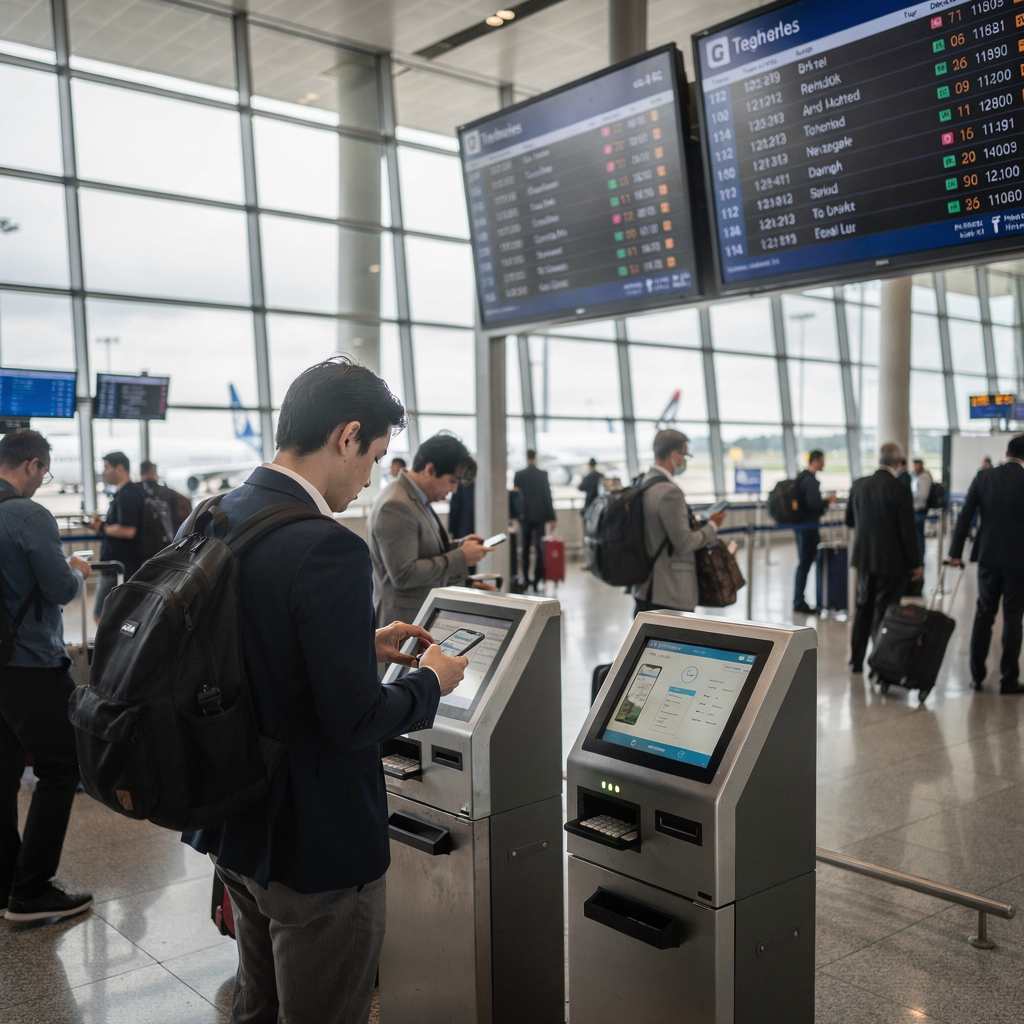
Chatbots and a conversational experience reduce friction at key touchpoints. Real-time flight information cuts confusion, and systems that push flight status and gate updates via mobile apps lower queues. For instance, a chatbot tied to flight information and gate assignments can nudge passengers to check-in earlier, or to use self-service kiosks when lines form. This lowers pressure at counters and improves the airport journey overall.
Also, integrating chatbot flows with mobile applications and kiosks helps passengers complete check-in steps quickly. A chatbot can prompt a traveler to upload boarding passes, to confirm baggage allowances, or to complete an identity check. These automated prompts reduce reliance on front-line staff, and they boost self-service adoption rates. Airports should monitor KPIs like reduction in queue time, speed of first response and self-service adoption rate to measure impact. To learn how email and messaging automation combine with chat tools, explore how to improve logistics customer service with AI how to improve logistics customer service with AI.
When chatbots use natural language processing, they answer booking and flight status queries accurately. They can also hand off to human agents when conversations need deeper context or when a passenger raises a baggage dispute. Importantly, chatbots should connect to real-time data feeds so updates are accurate. Real-time integrations with flight data reduce passenger confusion and queueing substantially; airports that add these feeds report smoother passenger flow and fewer missed flights Airport Experience Research 2024.
Drowning in emails?
Here’s your way out
Save hours every day as AI Agents label and draft emails directly in Outlook or Gmail, giving your team more time to focus on high-value work.
Email assistants and customer support: OPTIMISE communications to REDUCE costs and STREAMLINE internal workflows.
Email remains the largest unstructured workflow in many terminals. AI-driven email assistants handle routine tasks like triage, prioritisation and templated replies. They also attach operational context from ERP and baggage systems to every thread. As a result, airports reduce redundant replies and speed decisions. In surveys, 68% of airport managers reported improved internal communication flow after deploying AI-powered email assistants AI and Trusted Data: Building Resilient Airline Operations – OAG. This improvement shortens decision timelines and lowers customer service costs.
virtualworkforce.ai focuses on automating the full email lifecycle, which includes intent detection, routing, and drafting replies based on system data. Teams typically find that automating routine tasks reduces avoidable errors and clarifies ownership in shared inboxes. Also, connecting email assistants to CRM and baggage handling APIs cuts resolution cycles for lost baggage claims and operational queries. For a step-by-step approach to automating email drafting and integrating ERP data, see our guide to ERP email automation for logistics teams ERP email automation.
To measure value, track average email response time, percent of emails auto-resolved and customer satisfaction. Faster replies reduce repeat contacts and lower overall workload. One airport reported that, after deploying AI-driven email tools, complaint volumes fell and passenger satisfaction rose by about 15% in year one The Impact of Airport Service Quality on Passenger Satisfaction. Guardrails matter. Ensure data privacy and escalate sensitive issues to human teams. Also, maintain audit logs so teams can trace decisions and comply with rules in the aviation industry.
Predictive analytics and AI: PREDICT disruptions, OPTIMISE operations and DELIVER a SEAMLESS airport experience.
Predictive analytics reduce reactive work by forecasting delays and passenger flow. AI models ingest historical data, real-time feeds and weather to forecast peaks and likely disruption points. Then, airports can staff gates proactively and reroute passengers before queues form. Using predictive analytics to plan staffing and gate assignments helps airports keep passengers informed and lowers last-minute rebooking commands.
To build these models, airports should combine flight schedules, historical data and baggage handling logs. Then apply machine learning to identify patterns that precede disruption. Airports that act on these predictions improve operational efficiency and cut the number of frustrated travelers who need direct customer care. Airports should feed predictions into chatbots and email assistants to enable proactive messaging. Doing so helps maintain a seamless experience and keeps passenger satisfaction high.
Additionally, feed predictions into the mobile channel, SMS and WhatsApp to reach passengers wherever they prefer. For example, if a gate assignment changes, automated systems can push an immediate update with contextual information and directions. This proactive approach reduces missed connections and eases gate crowding. To explore practical steps for scaling operations without constant hiring, review guidance on how to scale logistics operations with AI agents and no-code setups how to scale logistics operations with AI agents.

Drowning in emails?
Here’s your way out
Save hours every day as AI Agents label and draft emails directly in Outlook or Gmail, giving your team more time to focus on high-value work.
Implementation, integration and governance: how to LEVERAGE analytics, CONTINUOUS IMPROVEMENT and data privacy for safe AI roll-out.
Implementation starts with secure integrations. First, connect to flight information, baggage and airline systems through APIs. Second, map data sources and set access rules. Third, configure routing logic and escalation paths. This sequence helps protect passenger data and supports human-in-loop reviews for sensitive issues. Also, maintain audit logs for traceability and compliance with regional privacy laws.
Change management matters. Train staff to work with AI assistants, and iterate on reply templates and escalation triggers. Continuous improvement requires A/B testing replies, tracking customer satisfaction and retraining models with logged passenger interactions. Additionally, provide multilingual support for natural language processing so the system can manage queries across languages. For examples of how AI helps with freight and customs communications, review our strategic resources on AI for freight logistics communication AI in freight logistics communication.
Governance must be robust. Define when to escalate, and specify what data the system can surface in responses. Also, include human review for passenger care items like rebooking, refunds and baggage disputes. Keep systems transparent and document decision rules. Finally, measure progress against KPIs, then run continuous improvement cycles to improve response quality and reduce errors. By following these steps, airports can boost operational efficiency while protecting passenger trust and safety.
Case studies and next steps: MELBOURNE AIRPORT, SITA-enabled CHATBOTS and a roadmap to SCALE and OPTIMISE airport service.
Real-world examples show what is possible. Melbourne Airport deployed an LLM-based chatbot to offer 24/7 support and real-time info to travelers. The system handled routine questions, redirected complex queries to staff and improved passenger flow at terminals. For a broader view, SITA-enabled chatbots have been used at major hubs, helping to reduce queries and provide 24/7 coverage at airports like Schiphol, Heathrow and Changi. These deployments demonstrate that combining email assistants, chatbots and predictive analytics delivers measurable gains in passenger satisfaction and operational efficiency Airport Experience Research 2024.
A practical roadmap helps airports scale. Start with a pilot that pairs an email assistant and a basic chatbot for routine queries. Next, integrate real-time data feeds for flight status and gate changes. Then, expand to check-in prompts, baggage handling notifications and self-service flows. After that, add predictive analytics for staffing and resource allocation. Finally, scale across terminals and suppliers, and refine governance and training practices. To understand operational ROI and how to apply email lifecycle automation in logistics and airport contexts, read our ROI guide and implementation resources virtualworkforce.ai ROI guide.
Checklist for rollout: define KPIs, secure integrations, prepare staff handover, plan multilingual and accessibility support, then set a timeline for continuous improvement cycles. A transparent rollout with phased expansion protects passengers and staff while delivering the efficiencies airports need. As artificial intelligence advances, airports that adopt a balanced, human-centred approach will redefine the future of air travel for their passengers and partners across the airport and airline operations landscape AI and Trusted Data: Building Resilient Airline Operations – OAG.
FAQ
What is an airport AI virtual assistant and how does it help?
An airport AI virtual assistant is a system that automates passenger-facing and internal communications using artificial intelligence and natural language processing. It helps by triaging email, answering common queries, and routing complex issues to human teams so staff spend time on higher-value tasks.
How quickly can an airport expect to see ROI from email automation?
Many airports report measurable gains within months, often seeing reduced handling times and fewer repeat contacts. For instance, studies show automation tools can improve response rates by 30–50% during peak periods, which speeds up resolution and lowers contact volumes AI and Trusted Data: Building Resilient Airline Operations – OAG.
Can chatbots reduce queueing at check-in and gates?
Yes. Chatbots that provide real-time flight status and check-in prompts lower the number of people who need face-to-face help. When integrated with self-service kiosks and mobile apps, they boost self-service adoption and reduce queue times.
How do email assistants connect to baggage and airline systems?
Email assistants integrate via APIs to baggage handling, CRM and airline systems to pull contextual information into replies. This connection allows the assistant to draft accurate responses about baggage handling and booking status, reducing manual lookups.
Are there data privacy concerns with airport AI tools?
There are. Airports must implement secure integrations, audit logs and strict access controls to protect passenger data. Also, governance frameworks and human-in-loop processes should handle sensitive decisions to ensure compliance with privacy laws.
What KPIs should airports monitor after deploying an assistant?
Key metrics include average email response time, percent of emails auto-resolved, reduction in queue time, self-service adoption rate and passenger satisfaction scores. Track these KPIs continuously for ongoing improvement.
Do AI assistants support multiple languages?
Yes. Modern conversational AI and natural language processing support multilingual interactions, which is essential for international airports. Multilingual support improves accessibility and reduces friction for diverse traveler experiences.
How do predictive analytics fit into airport operations?
Predictive analytics forecast passenger flow, staffing needs and likely disruptions by analyzing historical data and real-time feeds. These forecasts let airports allocate resources proactively and send timely notifications to affected passengers.
Can virtualworkforce.ai help airports with email automation?
virtualworkforce.ai automates the full email lifecycle for operations teams, grounding replies in ERP, TMS and other operational systems. This reduces manual triage and rework, freeing teams to focus on complex operational tasks.
What are the first steps to pilot an AI assistant at an airport?
Begin with a focused pilot for email triage and a basic chatbot for routine queries. Integrate real-time flight data, define KPIs and run a short feedback loop with staff. Then expand to check-in prompts, baggage notifications and predictive analytics as the system proves value.
Drowning in emails?
Here’s your way out
Save hours every day as AI Agents label and draft emails directly in Outlook or Gmail, giving your team more time to focus on high-value work.