


How AI and AI agent capabilities transform MSPs and managed services
AI is changing how MSPs deliver value. First, AI shifts work from manual triage to fast, data-driven action. Next, AI agent capabilities go beyond scripted automation and into agentic decision-making. For example, a managed service provider’s roadmap may now include agentic AI tools that act with limited autonomy. The IBM “AI Projects to Profits” study reports that “70% of surveyed executives indicate that agentic AI is important to their organization’s future,” which shows why many leaders plan to embed AI into core service offerings 70% of surveyed executives. In addition, Integris notes how “AI agents can be effective partly because of how they use unstructured data,” which is abundant in IT operations and service desks AI agents can be effective.
Historically, MSPs relied on rule-based automation to handle predictable steps. However, AI now supports probabilistic reasoning and continuous learning. As a result, intelligent agents detect patterns, propose fixes, and execute repeatable actions. This change helps managed services move from reactive support to proactive, autonomous service delivery. In practice, MSP teams can deploy AI to monitor alerts, read logs, and open remediation workflows. Then, an AI agent can apply a fix or recommend the next step.
MSPs gain operational efficiency and new product ideas. For instance, an MSP that embeds AI into its service offerings can offer AI services for 24/7 monitoring and faster incident handling. Also, MSPs can package industry-specific AI solutions for verticals such as logistics and finance. Virtualworkforce.ai builds AI agents to automate the full email lifecycle for ops teams, which shows how targeted AI can solve a high-volume, unstructured workflow and boost MTTR metrics (mean time to resolution) for ticket management. In short, embracing AI lets MSPs focus human expertise on complex tasks. Therefore, the age of AI brings both opportunity and responsibility for managed services and managed service providers.
Real use cases: use ai to automate ticket workflow and incident handling
AI shines in ticket management. For example, automatic ticket triage uses AI to label and route requests. Then, an AI agent summarizes incident history, suggests fixes, and can even close simple tickets. Vendors and pilots report faster response times and pattern detection across historical tickets. One industry review shows adoption rates near 41% for organizations investing in agentic automation, which points to rapid uptake in operational use cases 41% of organizations.
Consider a concrete process map. First, an incoming email or alert triggers parsing by an AI tool. Next, the AI assigns urgency and tags by intent. Then, the AI agent consults knowledge management and runbooks to propose a fix. If the fix is routine, the agent can automate the action and close the ticket. If not, the AI compiles context and escalates to an engineer. This flow reduces repetitive tasks and shrinks handoffs. Human oversight stays at critical decision points, such as changes to production or unusual security events. In addition, conversational AI can assist support agents by drafting replies and collecting missing information from the requester.
Real pilots show measurable gains. For example, some teams cut mean time to respond by up to half after deploying AI for triage. Also, pattern detection helps identify issues before they recur, which supports proactive remediation. Use cases include automated incident correlation, suggested patch rollouts, and escalation logic that adapts to SLA rules. For MSPs that manage large fleets of endpoints, AI can reduce noise and highlight the few incidents that need human attention. Finally, agents across ticket systems provide a single pane of context for the engineer, which improves first-contact resolution and customer satisfaction.

Drowning in emails?
Here’s your way out
Save hours every day as AI Agents label and draft emails directly in Outlook or Gmail, giving your team more time to focus on high-value work.
AI-powered tools that unlock productivity for the msp
AI delivers tools that make MSPs more productive. For monitoring, AI watches logs and metrics for anomalies in real-time. For patch management, AI recommends sequencing and tests updates in simulated environments. For security, AI helps with threat detection and incident response. These ai-powered capabilities let a small team cover more ground. Reported outcomes include 30–50% lower operating costs in some deployments and 24/7 automated support that scales without matching headcount growth 30–50% lower operating costs. In practice, MSPs use AI to streamline routine maintenance and free staff to focus on high-value projects.
Cataloguing tools, MSPs should evaluate monitoring platforms, ai chatbots, knowledge management systems, and orchestration engines. A good AI tool combines large language understanding with connectors to managed endpoints and enterprise systems. For operations teams that face heavy email loads, virtualworkforce.ai automates the full email lifecycle, which reduces handling time per message and converts email into structured data that feeds dashboards. In addition, platforms and tools that support zero-code setup make adoption easier for non-technical staff.
To measure impact, track MTTR, tickets per engineer, and first-contact resolution. Also, monitor uptime and SLA compliance. Successful deployments often show improved productivity within weeks, and improved NPS scores after a quarter. Furthermore, MSPs can offer new revenue streams by packaging AI-enabled service desk tiers or industry-specific AI solutions. However, teams must also monitor false-action rates and rollback needs. Therefore, include safety gates and human review for high-risk interventions. Overall, AI-driven automation helps MSPs optimize support, enhance efficiency, and improve service delivery at scale.
Adoption: ai adoption trends and how msps can use ai agents safely
Adoption of AI has reached a critical inflection. Surveys vary, with some reporting 41% to 79% of organizations investing in or using AI agents. For example, one market snapshot found 41% of organizations already invest in agentic tools 41% investing. At the same time, trust lags. The Harvard Business Review survey reported that only about 6% of companies fully trust AI agents to handle critical tasks, and only 20% say infrastructure is fully ready only 6% fully trust AI agents. These numbers mean MSPs must adopt AI responsibly and with clear controls.
Begin with typical early-adopter profiles. Startups and progressive enterprise teams often pilot autonomous agents for non-critical workflows. Next, roll pilots into client-facing services for routine tasks. For safety, use human-in-the-loop checkpoints, clear SLAs, and audit logs. Also, define escalation pathways and error rollback processes. To increase client trust, publish success metrics and offer opt-in toggles for autonomy levels. Additionally, explain governance, data access, and cybersecurity safeguards. For instance, require least-privilege access and full traceability for any automated actions that touch production.
MSPs can also use phased rollouts. First, automate low-risk ticket triage or email summarization. Then, expand to remediation playbooks and scripted patches. Finally, offer AI services for proactive alerts and predictive maintenance. Virtualworkforce.ai focuses on operational email automation, where accuracy and traceability matter. That focus illustrates how a narrow, high-volume use case can build trust and ROI. In short, adopt AI with transparency, measure outcomes, and scale controls. By doing so, MSPs build confidence and increase adoption across client portfolios.
Drowning in emails?
Here’s your way out
Save hours every day as AI Agents label and draft emails directly in Outlook or Gmail, giving your team more time to focus on high-value work.
Implementation: how MSPs automate services and unlock the potential of AI
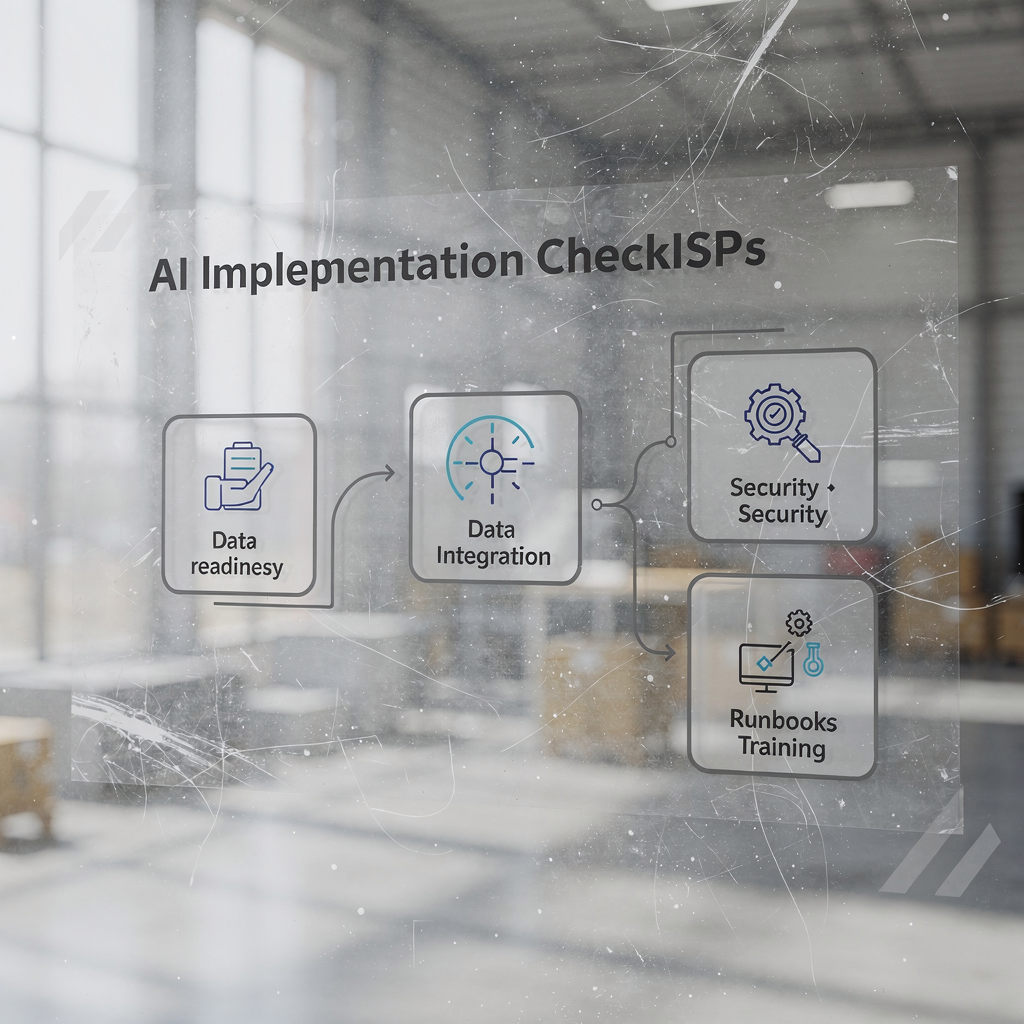
To implement AI, start with data readiness. Clean, labeled logs and ticket histories let AI learn fast. Next, map integration points: monitoring systems, ticketing platforms, ERP, and email. Add runbooks and a single source of truth for documentation. Then, choose platforms and tools that enable secure connectors to managed endpoints. Also, test vendor APIs for reliability. In parallel, align organizational processes and train staff. Successful ai development blends technical work and change management.
Technical checklist: secure data pipelines, identity controls, audit trails, and role-based access. Organizational checklist: vendor selection, training plans, governance boards, and communication plans. For pilots, pick a high-impact workflow such as invoice-related emails or recurring incident types. Measure baseline KPIs and set a clear ROI target. Deploy safely by keeping humans in the loop during the pilot. Use rollback mechanisms for any automated change. This approach helps mitigate risk and eases client acceptance.
Also, prepare for change management. Communicate benefits and new responsibilities. Offer training and hands-on sessions so engineers learn to work with autonomous agents. Use runbooks that describe when agents act and when humans intervene. Finally, plan phased scale-up. After a successful pilot, expand to adjacent services like patch management, inventory management, and automated alerts. Remember to keep security central: review access rights and monitor for anomalous agent behavior. By following these steps MSPs unlock new revenue and deliver consistent, auditable outcomes that improve customer experience and business transformation.
Measuring impact: KPIs, ROI and the productivity gains from ai-powered managed services
Measuring impact starts with clear KPIs. Track cost per ticket, MTTR, SLA compliance, uptime, and client NPS. Also, include reliability metrics such as false-action rates and rollback frequency. Short-term ROI often comes from time saved on repetitive tasks and fewer escalations. Mid-term ROI arrives via reduced headcount growth for the same workload and new revenue from premium AI tiers.
Build a risk-adjusted ROI model. Include initial integration costs, vendor fees, and staff training. Then, estimate savings from fewer manual touches and faster resolution. Case studies show significant efficiency gains when MSPs deploy AI for routing and incident automation. For example, teams that automate email lifecycles may cut handling time from ~4.5 minutes to ~1.5 minutes per message, which compounds into large labor savings when scaled across many users. Use this method to compare scenarios and justify broader deployments.
Also measure qualitative outcomes. Track how AI improves customer communications and reduces repeated escalations. Monitor whether agents prevent issues before they escalate and whether pattern detection highlights systemic problems. Measure knowledge management improvements and time to onboard new engineers. Finally, package results for clients. Offer transparent dashboards that show improved service delivery and operational efficiency. Include change-management notes and guidance on when to use AI agents versus human work. This helps clients buy into autonomous agents and supports a roadmap for expanding ai responsibly across services.
FAQ
What is an AI agent and how does it differ from traditional automation?
An AI agent is a software component that can perceive data, reason, and act with some autonomy. Unlike rule-based automation, an AI agent learns from data and adapts to new patterns, which helps with complex tasks that lack fixed rules.
Can MSPs automate ticket workflows without losing control?
Yes. MSPs can automate ticket workflows with human-in-the-loop controls, clear SLAs, and audit logs. Start with low-risk tasks and expand as trust grows.
How quickly do MSPs see ROI from AI deployments?
Many MSPs see measurable ROI in weeks for targeted pilots, and larger gains within months for expanded deployments. For example, email automation pilots report substantial time savings per message that scale across teams.
Are AI agents safe to deploy for production remediation?
AI agents can be safe when paired with governance, role-based access, and rollback capabilities. Implement staged rollouts and require human approval for high-risk actions.
What KPIs should MSPs track for AI projects?
Track MTTR, cost per ticket, tickets per engineer, uptime, SLA compliance, and client NPS. Also monitor false-action rates and rollback frequency to manage reliability.
How do AI agents improve knowledge management?
AI agents summarize incidents, extract structured data from unstructured sources, and recommend relevant runbooks. This reduces time spent searching and raises first-contact resolution rates.
Can MSPs use AI for security and patch management?
Yes. AI helps with threat detection, prioritizing patches, and recommending sequencing for patch management. However, always include security reviews and staged deployments.
How should MSPs choose AI vendors?
Choose vendors that support secure connectors, offer traceability, and fit your business processes. Evaluate platforms and tools for integration with ticketing, ERP, and email systems.
What are common early use cases for MSPs?
Common use cases include ticket triage, email automation, monitoring alerts, and routine patching. These tasks reduce repetitive tasks and free engineers for complex issues.
How do I decide when to use AI agents versus human agents?
Use AI agents for high-volume, repetitive, and data-dependent tasks, and keep humans on complex tasks that require judgment. Create a checklist that defines risk thresholds and escalation rules to decide case by case.
Drowning in emails?
Here’s your way out
Save hours every day as AI Agents label and draft emails directly in Outlook or Gmail, giving your team more time to focus on high-value work.