


AI and local government: why municipalities are investing now.
Local governments face rising demand and tight budgets. First, AI offers clear ways to modernize municipal processes and improve citizen services. Second, cities report active spending on AI. For example, 66% of 167 cities in an ESI ThoughtLab study say they are investing in AI now, and many plan to increase that spend over the next three years Bydrift gennem AI | Deloitte Global. Also, a late 2024 ICMA survey found almost half of respondents call AI a low priority while fewer than 6% had fully integrated AI into daily operations ICMA-undersøgelsesrapport. Therefore, adoption looks strong but uneven.
So what does that uneven pattern mean for a municipality that wants to modernize? First, start with targeted pilots. Pilots let teams test benefit, risk, and integration work without broad disruption. Next, choose clear metrics. For instance, measure reductions in repetitive enquiries, shorter wait times, and improved resident satisfaction. Then, set boundaries for sensitive processes. Municipal leaders must protect PII and follow EU and local data rules. Also, align pilots to service priorities like permitting or benefits to ensure quick wins. This approach helps municipal leaders both justify investment and manage risk.
Furthermore, public sector teams can reuse lessons from private deployments. For example, operational email automation in the private sector speeds response and reduces manual lookups. Our company, virtualworkforce.ai, applies similar principles when we help teams automate the full email lifecycle; we ground replies in ERP and records so responses stay accurate and traceable. This method maps well to municipal inboxes where many messages require data from multiple systems. For municipalities seeking a clear path, a focused pilot offers a safe start, measurable ROI, and the chance to scale once metrics prove the case.
Chatbot and conversational assistants for municipal services: practical use cases that free staff.
Residents expect quick answers at any hour. An always-on conversational assistant can provide instant replies and guide people to next steps. For many cities, that means automating high-volume enquiries first. Start by mapping the top 30 resident questions. Then, automate the highest-volume items. Typical municipal use cases include permit guidance, bin-day reminders, council meeting schedules, and simple benefits queries. A well-designed AI-powered chatbot can handle those tasks and free municipal staff for complex issues.
Also, chatbots improve accessibility on municipal websites by providing clear language and multilingual support. For example, a conversational bot that answers basic questions can reduce phone volume and shorten hold times. Studies show AI tools help new and lesser-skilled employees perform better by offering real-time support, which increases productivity in municipal teams AI i byer. Therefore, the assistant helps both residents and municipal staff.
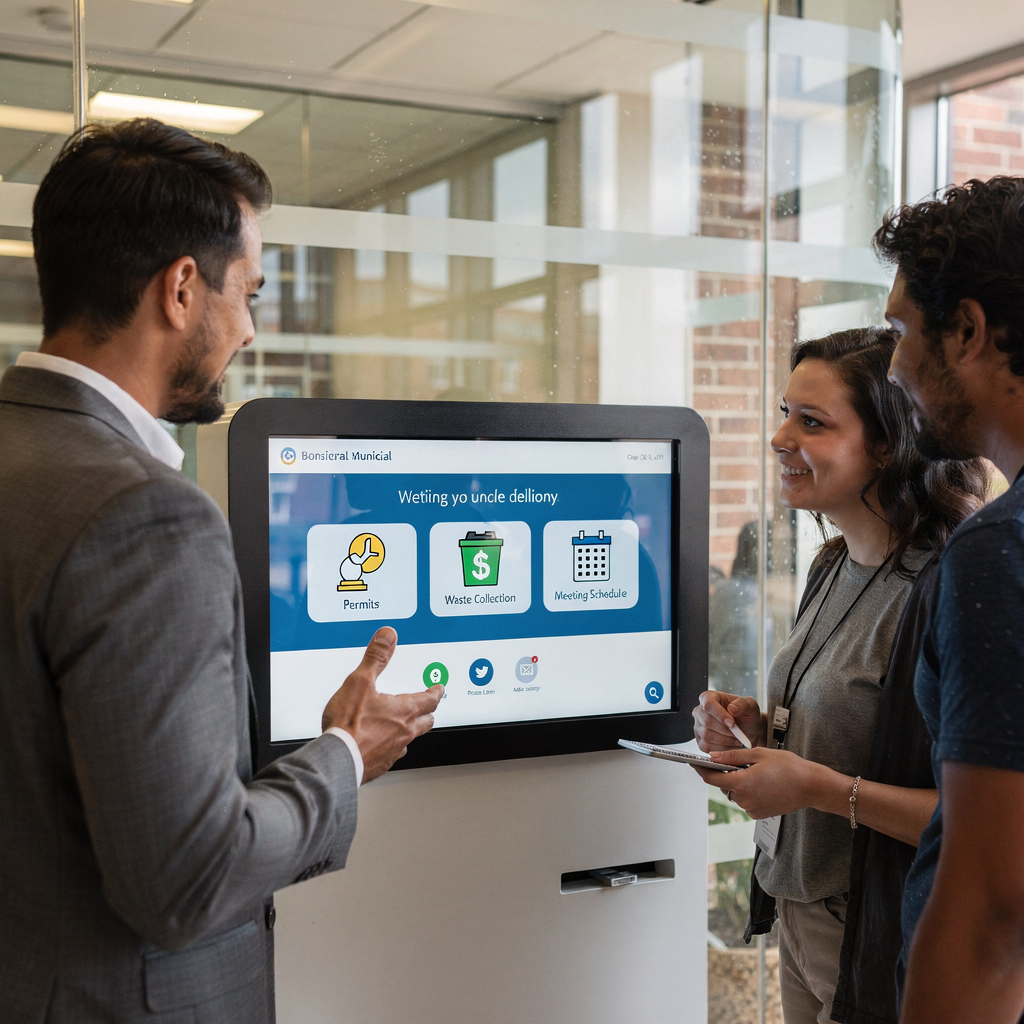
Design matters. First, curate intents from real records and phone logs. Next, build simple scripts for the 10 most common flows. Also, include clear escalation paths so the bot hands off to human staff when questions are complex or legally sensitive. Ask vendors to show municipal examples during a live demo and validate their multilingual and accessibility options. For further detail on operational email and AI agents that automate replies, see a practical reference on how AI can automate logistics correspondence for operational teams automatiseret logistikkorrespondance. Finally, remember to log provenance and keep a “skal-verificeres” list for anything that affects fees or legal status.
Drowning in emails?
Here’s your way out
Save hours every day as AI Agents label and draft emails directly in Outlook or Gmail, giving your team more time to focus on high-value work.
Copilot and smarter municipal operations: automating back‑office work and data‑driven decisions.
Copilot-style assistants can transform municipal operations by taking on administrative tasks and by surfacing trends from data. For example, a Copilot can draft correspondence, summarize lengthy meeting notes, and generate reports from disparate datasets. That saves hours per week for managers. It also reduces manual errors when the assistant pulls structured facts directly from records. Municipal planners gain timely trend signals. Then, they can make decisions faster and with better evidence.
Municipal operations improve most when assistants integrate with existing systems. If you integrate Copilot with CRM, records, and permitting platforms, the assistant can prepare a complete permit summary or draft a resident response in context. Our product focus at virtualworkforce.ai, which automates the full email lifecycle for ops teams, shows how grounding responses in ERP and document histories cuts handling time dramatically. By design, that same grounding helps maintain traceability for audits and compliance. A number of cities are experimenting with Copilot for permit workflows and internal summaries; these pilots often show faster workflows and improved internal communication.
Also, AI can summarize meeting minutes and surface action items automatically. So, teams spend less time reading transcripts and more time acting on findings. For example, the assistant can summarize budgets, then highlight anomalies and suggest follow-up. That speeds up council briefings and reduces prep time. To learn about scaling AI across operational tasks, review approaches used to scale logistics operations without hiring in private sector projects that adapt well to municipal needs sådan opskalerer du logistikoperationer uden at ansætte personale. Overall, Copilot-style helpers let municipal staff focus on judgment and constituents while the assistant handles routine synthesis and drafting.
Also, AI can summarize meeting minutes and surface action items automatically. So, teams spend less time reading transcripts and more time acting on findings. For example, the assistant can summarize budgets, then highlight anomalies and suggest follow-up. That speeds up council briefings and reduces prep time. To learn about scaling AI across operational tasks, review approaches used to scale logistics operations without hiring in private sector projects that adapt well to municipal needs sådan opskalerer du logistikoperationer uden at ansætte personale. Overall, Copilot-style helpers let municipal staff focus on judgment and constituents while the assistant handles routine synthesis and drafting.
Compliance and accuracy: guardrails because AI can be wrong.
Accuracy matters in public service. Large studies find AI assistants can misrepresent facts at worrying rates. For example, testing found assistants misrepresented news 45% of the time in international evaluations Største undersøgelse viser, at AI-assistenter fejlagtigt gengiver nyhedsindhold. Therefore, municipalities must add checks and balances. First, require human review for outputs that affect rights, fees, or legal status. Second, log provenance for every factual claim so auditors can trace sources. Third, enforce encryption and PII handling rules so resident data remains protected.
Operational controls should include a “skal-verificeres” list. Items on that list require human sign-off before publication. Also, set data-minimization rules and retention schedules that follow EU and national laws. For transparency, display a clear disclaimer when content is AI-generated and show the underlying sources. Samantha Shorey, an analyst who studies AI in public administration, observes that “AI tools in state and local government are revolutionizing how information is researched and services are delivered, making municipal archives and data more accessible than ever before” Roosevelt-instituttet. That potential is real, yet accuracy controls remain essential.
In procurement and deployment, ask vendors about model provenance, encryption at rest and in transit, and protections against hallucination. During procurement, request a live demo that shows how the solution logs sources and handles corrections. Also, require privacy impact assessments and clear policies for PII, and include organizational rules for escalation. For an example of how email automation platforms ground replies in source systems, see practical examples of AI for customs and operational emails that highlight traceability AI til tolldokumentations-e-mails. Finally, make compliance a program-level responsibility rather than an afterthought so residents can trust municipal answers.

Drowning in emails?
Here’s your way out
Save hours every day as AI Agents label and draft emails directly in Outlook or Gmail, giving your team more time to focus on high-value work.
Demo, book a demo and roadmap: how to pilot and scale an assistant in your municipality.
Start with a compact pilot. First, define scope that includes three to five tasks. Second, pick clear success metrics such as fewer enquiries, lower average handling time, and positive feedback from residents. Third, define a privacy and data access plan. A typical timeline looks like this: an 8–12 week pilot, then a 3-month evaluation window, and finally a scale or revise decision based on KPIs. Also, request vendors to show municipal use cases in a live demo and to explain compliance features. For procurement, include a “book en demo” option in vendor RFPs so evaluation teams can see the solution in context.
During pilot setup, identify the required integrations. Ask how the assistant will integrate with records, CRM, and document systems. Also, define who in your organization will own the deployment and who will handle ongoing tuning. For email-heavy workflows, consider solutions that automate the full email lifecycle. For example, virtualworkforce.ai builds AI agents that route, resolve, and draft replies while keeping context from ERP and shared inbox threads. That reduces manual lookups and increases consistency across replies. If your municipality receives many operational emails, a no-code setup that IT controls while business teams configure tones and rules helps speed onboarding.
Finally, make scale decisions based on three KPIs: resident satisfaction, time saved per transaction, and reduction in manual errors. Use those metrics to calculate ROI and to prioritize further integrations. Also, include a plan for organizational training and onboarding so municipal staff accept the new assistant. This staged approach lets teams deploy responsibly. It helps municipal leaders modernize service delivery while keeping control over sensitive decisions and ensuring transparency.
Frequently asked questions for staff adopting a conversational assistant: making adoption seamless.
Municipal staff often have practical questions when an assistant arrives. This section answers the most common concerns and outlines adoption steps. It also shows simple playbooks for escalation and short training modules for speedy onboarding. Finally, once accuracy, compliance, and ROI are proven, leaders can evolve from FAQ automation to fully integrated municipal services.
FAQ
What is a conversational assistant and how will it change daily work?
A conversational assistant is an AI tool that answers resident questions and automates routine responses. It will reduce repetitive enquiries so staff can focus on complex issues and higher-value work.
Who owns the data that the assistant uses and creates?
Ownership stays with the municipality under standard procurement agreements unless the vendor explicitly claims otherwise. IT should set data access rules, PII protections, and retention policies before deployment.
How do we ensure answers are accurate and avoid hallucination?
Include provenance logging and a must-verify list that routes sensitive answers to humans. Also, require vendors to demonstrate how they trace sources during a live demo.
How long does a pilot usually take and what are realistic KPIs?
Expect an 8–12 week pilot, then a 3-month evaluation period. Useful KPIs include reduction in enquiries, time saved per transaction, and positive feedback from residents.
What training will municipal staff need?
Training focuses on escalation playbooks and simple configuration tasks. Short modules of one to two hours let municipal staff learn how to review, correct, and annotate assistant responses.
Can the assistant integrate with our records and CRM?
Yes. Choose a solution that can integrate with permitting systems, CRM, and document stores to ground replies. Integration improves accuracy and supports audit trails.
Will the assistant be multilingual and accessible?
Many assistants support multilingual outputs and meet accessibility standards when vendors build in those features. Validate multilingual and accessibility claims during the vendor demo.
What controls protect resident privacy and PII?
Controls include data minimization, encryption, restricted access, and clear retention schedules. Require privacy impact assessments and technical proof of encryption during procurement.
How do we escalate complex or legal questions?
Set an escalation rule that routes flagged queries to designated municipal staff. Use a shared inbox with thread-aware context to make handoffs fast and accurate.
What are the next steps after a successful pilot?
After success, scale tasks in waves, integrate more systems, and refine the assistant with resident feedback. Use measured KPIs to guide the roadmap and to demonstrate ROI to decision makers.
Drowning in emails?
Here’s your way out
Save hours every day as AI Agents label and draft emails directly in Outlook or Gmail, giving your team more time to focus on high-value work.