


ai
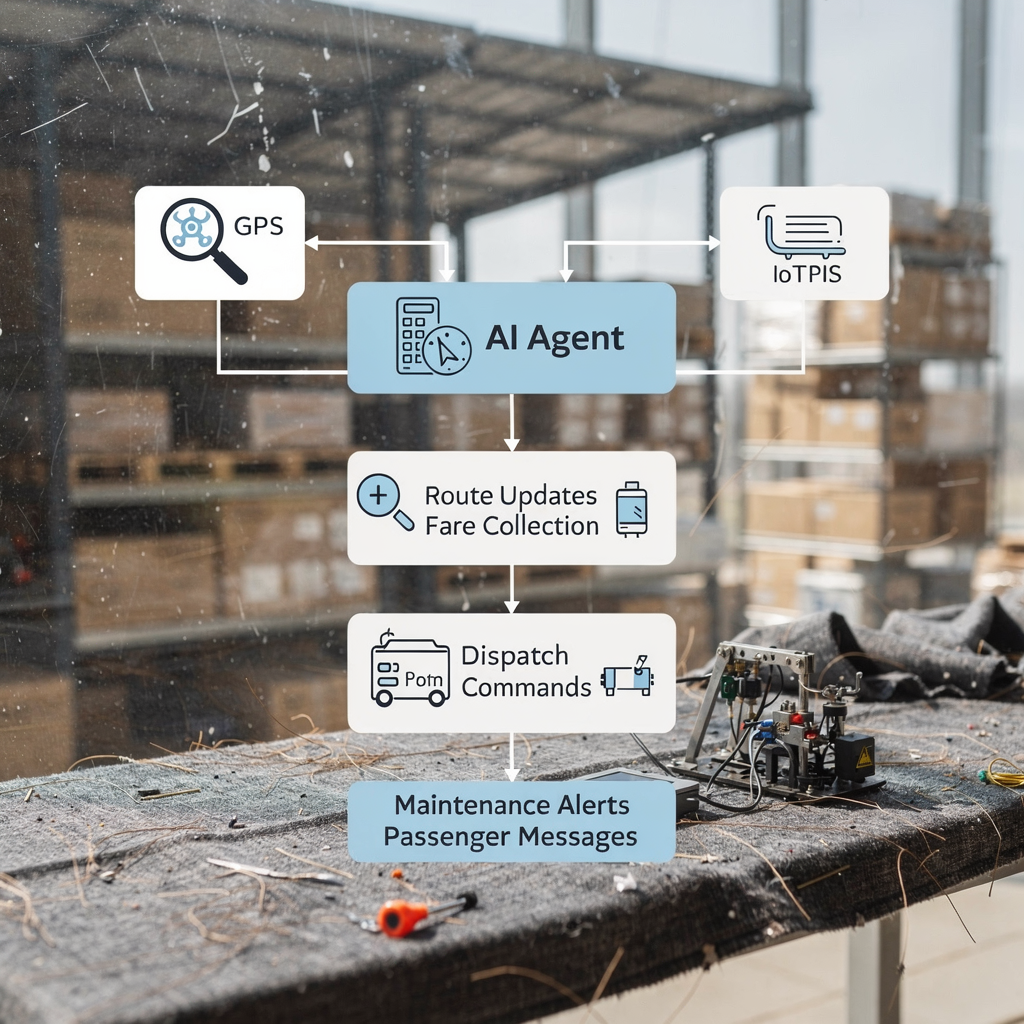
AI agents now sit at the heart of modern public transport operations. In plain terms, an AI agent is an autonomous software process that ingests data, reasons about it, and takes or recommends actions. These intelligent agents link inputs such as GPS tracking, ridership data and iot sensors to outputs like adjusted timetables, dispatch orders and passenger messages. They run on agentic platforms and integrate with back‑office systems, ticketing, and vehicle telematics.
First, define where these systems sit in a transit stack. At the bottom sits data: GPS, fare collection systems, traffic patterns and vehicle diagnostics. Next, a processing layer holds data lakes, analytics and agent platforms. Then, an action layer connects to vehicle controls, mobile apps and passenger communication channels. This simple architecture shows how inputs → agent → actions move from sensing to delivery. For a visual reference, see the architecture diagram below.
Second, list the main areas where AI agents act. They support route planning and dispatch. They handle customer service through chatbots and digital concierges. They monitor fleet health for predictive maintenance. They also optimise routes and resource allocation across a transit network. The market shows traction: the global market for AI in traffic and transport was about USD 20.6bn in 2024, with software making roughly 42% of the agentic transport market that year. This gives context to why transit organisations invest in platforms and software solutions.
Third, give a short example. Singapore’s SBS Transit deployed SiLViA, an AI‑powered digital concierge that improves accessibility and real‑time passenger support; the project shows how AI can enhance the experience of public transport users (SiLViA case study). For operational teams, AI also saves time. One report notes that transit planners saved up to 60% of their time on data processing when using AI tools (route planning study). That frees planners to focus on service design and network design, not routine data work.
Finally, note the role of the platform. An AI platform must support real‑time data, historical analytics and model deployment. It must provide explainability and governance. Operators should ensure low latency, clear SLAs and integration with ERP and other enterprise systems. For teams that deal with high email volume and operational messages, tools such as virtualworkforce.ai show how AI agents can automate repetitive communication workflows and push structured data into operational systems (automated logistics correspondence). This reduces manual triage and speeds responses for complex transport services.
transform
AI transforms how a transit system reacts in real time. It enables dynamic routing, demand‑response services and congestion response. In practice, AI systems read live feeds, compute options, and push changes to drivers, signal controllers or mobile apps. This reduces delays, smooths vehicle flows and helps match supply to demand.
On a system level, AI improves scheduling accuracy by up to about 25%, which helps operators do more with the same fleet and cut operational costs (scheduling accuracy stat). At the same time, predictive models detect faults early and can reduce unexpected breakdowns by roughly 30% (predictive maintenance study). The combined effect raises on‑time performance and passenger satisfaction, and lowers emissions by about 10–15% in simulation studies when AI coordinates routing and vehicle usage (emissions study).
For example, an AI agent can reroute a bus to avoid a road closure. It can coordinate with traffic signals to prioritise a late service. It can also shift vehicles between routes when demand spikes near an event. These actions reduce wait times, improve vehicle occupancy and smooth headways. Pilots of on‑demand dispatch show average waits as low as three minutes and sizeable jumps in occupancy when vehicles run based on demand rather than fixed timetables. One study combining agent‑based modelling and BiLSTM forecasting reported up to 20% better demand prediction, which makes real‑time matching more effective (demand forecasting study).
There are trade‑offs. AI needs reliable real‑time data. Latency in feeds or fragmented systems can reduce benefits. Governance matters too. Operators must set safety thresholds and human oversight for critical decisions. For those reasons, integration of AI needs clear SLAs, standards for data retention and protocols for human‑in‑the‑loop actions. In short, AI can transform public transportation operations, but it requires careful design and resilient data streams to work well.
Drowning in emails?
Here’s your way out
Save hours every day as AI Agents label and draft emails directly in Outlook or Gmail, giving your team more time to focus on high-value work.
use cases
This chapter lays out three clear use cases: route optimisation, on‑demand dispatch, and bus operations. Each use case shows how AI agents apply analytics and optimisation to real problems. The descriptions include practical data inputs and models used.
Route optimisation. AI improves network design and schedules by analysing ridership data, demand patterns and traffic patterns. Planners use optimisation algorithms, sometimes provided by vendors such as Optibus, to produce efficient timetables and to adjust routes and schedules for peaks and troughs. These tools can reduce dead‑miles and better match vehicle capacity to demand. For public transport operators, route optimisation helps with resource allocation and can enable new bus lines or adjust a fixed-route during off‑peak periods. The standard inputs are historical ridership, GPS tracking, timetable constraints and forecasted events.
On‑demand dispatch. Systems that run based on demand match passengers to vehicles dynamically. Pilots inspired by MARTA Reach show how multimodal on‑demand pilots can increase pick‑ups, lower average waits and raise occupancy. Typical pilots report waits around three minutes in well‑run trials. The stack includes mobile apps, real‑time data, dynamic matching algorithms and policies for pooled rides and paratransit rides. Operators should measure average wait, vehicle occupancy and cost per ride.
Bus operations. AI helps reduce dwell times, assist drivers and predict arrival times. An AI agent uses gps tracking, door sensors and passenger counts to suggest hold or skip decisions at stops. It can recommend driver coaching based on performance data. These agent uses reduce delay propagation and often cut trip times by a measurable amount. For example, some dispatch pilots report trip time reductions near 30% in specific corridors.
Models and inputs. Typical AI models combine forecasting (LSTM or BiLSTM), optimisation solvers and decision‑making agents. The inputs include ticketing data, event calendars, traffic feeds and vehicle health telemetry. To run a pilot, operators need a checklist: data readiness, API endpoints, an ai platform to deploy models, monitoring dashboards and a safety‑first rollback plan. Also consider passenger communication channels and mobile apps for real‑time passenger updates and personalised suggestions.
Operators that want to trial these ideas can start small. Virtualworkforce.ai helps with automating the high‑volume operational emails that come from on‑demand services and multimodal pilots, reducing manual handling and improving response speed (how to scale with AI agents). See the short checklist below to evaluate a pilot.
Pilot checklist (short)
- Define KPIs: wait times, occupancy, cost per km.
- Confirm data feeds: gps tracking, ridership data, traffic patterns.
- Select models: forecasting + optimisation hybrid.
- Plan passenger communication: mobile apps and passenger communication channels.
- Set governance: human oversight, safety thresholds, rollback.
ai agents automate
AI agents automate routine but high‑value tasks in operations. They perform predictive maintenance, schedule crews, and make dispatch decisions. In doing so, they reduce manual effort and lower operational costs. For example, Random Forest and similar ML models find subtle fault patterns in vehicle telemetry and alert teams before a failure. Studies show that predictive maintenance can lead to about 30% fewer sudden breakdowns, which boosts availability and lowers unscheduled downtime (predictive maintenance stat).
Automation use cases include:
- Fault detection and alerts from engine and brake sensors.
- Maintenance scheduling that minimises service disruption.
- Automated dispatch that reroutes vehicles or reassigns drivers in real time.
Implementation notes matter. Fleets must fit vehicles with appropriate sensors and ensure data retention policies cover training needs. Teams should define anomaly thresholds and keep a human‑in‑the‑loop for safety‑critical decisions. Start with a small fleet or corridor. Prove savings in MTBF and unscheduled downtime. Then scale while ensuring interoperability across vendor systems.
Key KPIs to track include mean time between failures (MTBF), unscheduled downtime, maintenance cost per vehicle and on‑time performance. A practical how‑to: run a 6‑month pilot, instrument 20 vehicles, compare MTBF and maintenance costs to a control group, and document workflow changes. If results meet targets, expand the pilot and connect the maintenance scheduler to your ERP or asset management system. Systems like virtualworkforce.ai can help by automating the operational emails that maintenance teams exchange, creating structured work orders and pushing them into maintenance systems (ERP email automation for logistics).
Finally, include explainability. Maintenance teams must understand why an alert appears. Provide feature‑level explanations from the algorithm and a clear escalation path. This keeps trust high and helps technicians accept AI recommendations. Overall, AI agents automate repetitive decisions, free staff for higher‑value work and make service delivery more predictable.
Drowning in emails?
Here’s your way out
Save hours every day as AI Agents label and draft emails directly in Outlook or Gmail, giving your team more time to focus on high-value work.
transit software
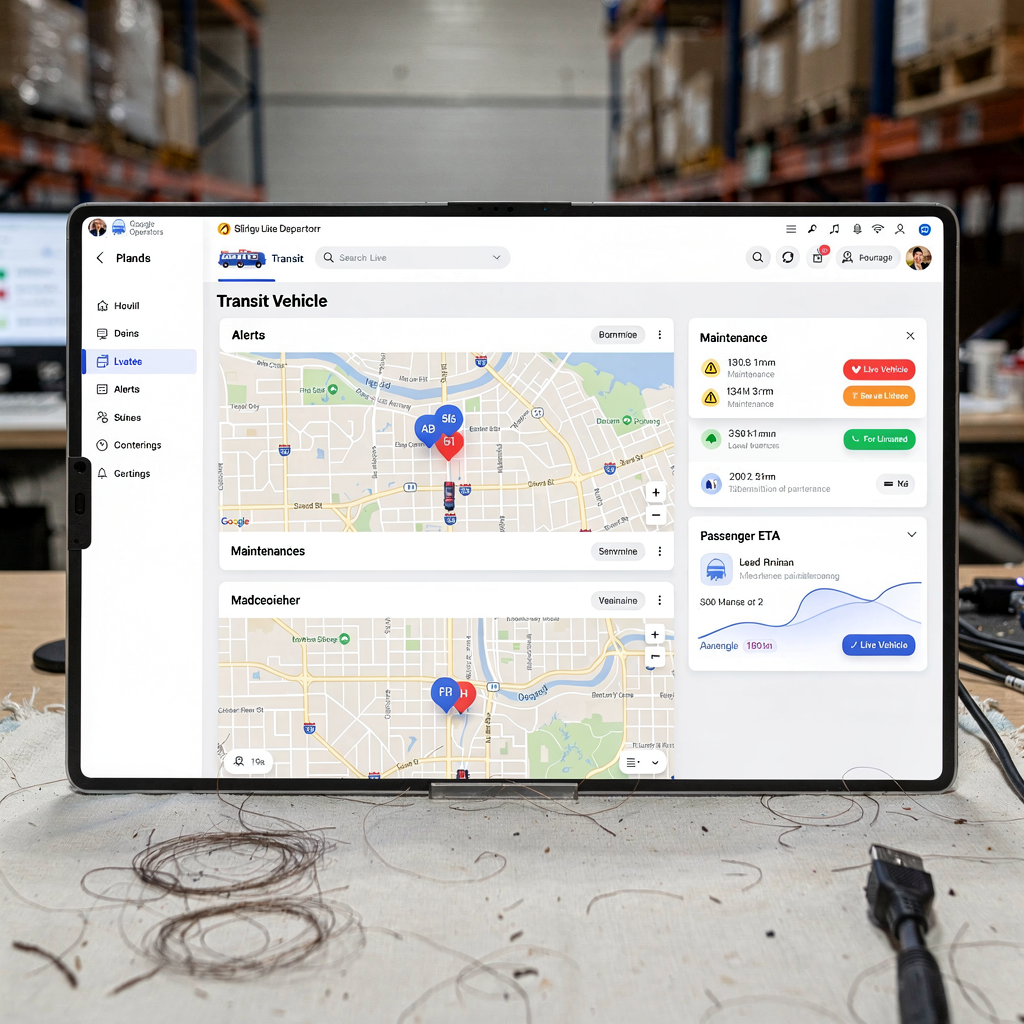
The software layer is where data meets passengers. Transit software must handle real‑time streams and historical analytics. It must present clear UX in mobile apps and operator dashboards. Good platforms also provide APIs so systems can integrate seamlessly with ticketing and fleet management.
Transit software drives most of the AI value in transport because it connects models to action. The software share of the AI transport market was about 42% in 2024, reflecting the need for platforms that host models, manage data and serve passengers. Platforms must support real‑time data and batch analytics, while offering explainability and strong governance. Choose a vendor with clear SLAs for latency and uptime. Also insist on exportable logs and data retention policies for audits.
Passenger benefits include reduced wait times, clearer ETAs and personalised travel suggestions. The UI layer also improves accessibility. SBS Transit’s SiLViA shows how an ai-powered digital concierge can help passengers with limited mobility through speech recognition and instant assistance (SiLViA). On the operations side, transit software must handle schedule adjustments, fare collection system data and integration with traffic control. This lets operators adjust routes and dispatch messages in real time, improving overall transit operations and passenger satisfaction.
Governance and procurement are critical. Operators should avoid vendor lock‑in, insist on open APIs and test explainability for critical decisions. A procurement checklist should include SLA for latency, data ownership terms, model audit capabilities and proof of ability to integrate with legacy systems. For teams evaluating software, consider whether the platform supports an ai platform for deploying intelligent agents and whether it can ingest real-time data from GPS, fare collection systems and sensors.
Practical note: software is not just code. It is a combination of data pipelines, model management, user experience and governance. If your organisation needs help automating operational messages between teams and external partners, explore tools that automate the full email lifecycle for ops teams to speed approvals and reduce errors (virtual assistant for logistics). That often translates into faster incident response and better passenger communication.
ai agent
This final chapter summarises the benefits, gives an ROI view and lists barriers to scale. It also offers next steps and a practical roadmap for operators. AI agents deliver measurable gains across scheduling, maintenance and customer experience.
Measurable benefits and KPIs
- Scheduling accuracy: +25% in published studies, which reduces idle time and improves resource allocation (scheduling stat).
- Demand forecasting: up to +20% improvement using hybrid models, aiding vehicle deployment and reducing overcrowding (demand study).
- Emissions: simulations show about −10–15% when AI coordinates vehicles and routes (emissions simulation).
- Maintenance downtime: roughly −30% fewer sudden breakdowns with predictive maintenance (maintenance stat).
- Planner time savings: up to 60% less time on data processing, enabling better transit planning and network design (planner time stat).
Estimate ROI levers. Higher scheduling accuracy reduces vehicle hours and lowers fuel. Better demand forecasting increases fare revenue per vehicle. Fewer breakdowns lower towing and overtime. Faster passenger responses improve satisfaction and can support ridership recovery. When modeling ROI, include software licensing, integration costs and staff change management.
Barriers and mitigations
- Data quality and fragmentation. Mitigate with middleware and APIs.
- Skills gap. Train staff and hire data engineers.
- Regulation and privacy. Use aggregation, consent and strong governance.
- Vendor lock‑in. Specify open standards in procurement.
Next steps for operators
- Run a 6–12 month pilot with clear KPIs for wait times, MTBF and operational costs.
- Document data needs and ensure real‑time data feeds.
- Plan human oversight and a scaling pathway tied to measured savings.
Practical roadmap: pilot, measure, scale. Discover how AI agents can transform public transportation by starting with a small, measurable project. If your ops team faces heavy email loads or needs automated operational correspondence, consider solutions that automate the full email lifecycle and connect to ERP and maintenance systems (automate emails with Google Workspace). That reduces manual triage and improves the speed of incident response. Finally, design governance and explainability into every deployment so operators, technicians and passengers trust the system. With the right approach, AI agents enable transit agencies to run more responsive, sustainable and user‑friendly transport services.
FAQ
What exactly is an AI agent in public transportation?
An AI agent is an autonomous software process that ingests data, reasons about it and takes or recommends actions. It links inputs such as GPS tracking, traffic patterns and vehicle diagnostics to outputs like adjusted timetables, dispatch orders and passenger messages.
How do AI agents reduce wait times for passengers?
AI agents improve matching between supply and demand and enable dynamic routing and on‑demand dispatch. By forecasting demand and adjusting routes in real time, they reduce delays and typically reduce average wait times in pilots.
Are there measurable gains from pilot projects?
Yes. Studies report scheduling accuracy gains of around 25% and planner time savings up to 60% when AI tools handle data processing. Predictive maintenance studies show roughly 30% fewer sudden breakdowns, improving fleet reliability.
What data do operators need for an AI pilot?
Essential data includes GPS tracking, ridership data, vehicle telemetry, event calendars and historic timetables. Real‑time data feeds and APIs are crucial for effective operation during a pilot.
How do AI agents affect emissions?
When AI coordinates routing and vehicle use, simulations suggest emissions can fall by about 10–15%. This happens through reduced idling, better route selection and fewer unnecessary trips.
Can AI agents handle customer service tasks?
Yes. AI‑powered digital concierges like SiLViA provide instant, accessible support and improve passenger communication. AI can answer queries, give ETAs and assist passengers with accessibility needs.
What are the main barriers to scaling AI in transit?
Barriers include fragmented legacy systems, data quality, privacy concerns and a skills gap. Operators mitigate these with middleware, strong governance, staff training and incremental pilots with clear KPIs.
How should a transit agency start a pilot?
Start with a small, measurable project lasting six to twelve months. Define KPIs such as wait times, MTBF and operational costs. Provide real‑time data feeds, set human oversight and plan for integration with existing systems.
How does predictive maintenance work in practice?
Predictive maintenance uses models like Random Forests to detect anomalies in vehicle telemetry and predict faults before they cause breakdowns. Teams then schedule repairs during planned downtime, reducing unscheduled failures.
How do I choose transit software and avoid vendor lock‑in?
Choose platforms with open APIs, clear SLAs, explainability for models and exportable logs. Require data ownership clauses in procurement and test integration with legacy systems before committing to a large rollout.
Drowning in emails?
Here’s your way out
Save hours every day as AI Agents label and draft emails directly in Outlook or Gmail, giving your team more time to focus on high-value work.