


AI és logisztika: hogyan tud egy AI ügynök automatizálni logisztikai műveleteket, hogy elkezdjen értéket teremteni
Az AI asszisztensek és AI ügynökök olyan szoftverlények, amelyek értelmezik az adatokat, döntéseket hoznak és a csapatok helyett cselekszenek. Bejövő üzeneteket olvasnak, kinyerik a rekordokat a TMS-ből vagy ERP-ből, majd vagy megoldanak egy feladatot, vagy átadják azt egy emberi ügyintézőnek. Csomag- és fuvarozócégek számára egy AI ügynök csökkentheti a kézi munkát, csökkentheti az útvonaltervezési hibákat és automatizálhatja az állapotfrissítéseket, így a csapatok a magasabb értékű kivételekre koncentrálhatnak. Például egy DHL vezető azt jelentette: „Az AI asszisztensek bevezetése nemcsak működési hatékonyságunkat javította, hanem lehetővé tette számunkra, hogy kiváló ügyfélélményt nyújtsunk, rövid időn belül háromszoros megtérülést elérve” AI asszisztensek bevezetése a logisztikában – 3x-os ROI út. Hasonlóképpen nagy fuvarozók, mint a FedEx, UPS és Maersk is jelentős nyereségekről számolnak be az automatizálásból és az analitikából.
Gyakorlatban egy AI asszisztens először csökkenti az ismétlődő feladatok mennyiségét, amelyeket a logisztikai csapatoknak kezelniük kell. Ezután ellenőrzi a címeket és hibákat jelez a feladás előtt, ami csökkenti a sikertelen kézbesítési kísérleteket. Majd konzisztens válaszokat készít az ügyfélszolgálat számára, és strukturált frissítéseket tol be a rendszerekbe. Ennek eredményeként a munkaerőköltségek csökkennek és javul a kézbesítési pontosság. Sok telepítésnél a kezelési idő jelentősen csökken. Saját platformunk, a virtualworkforce.ai, az e-mailekre nagyban támaszkodó munkafolyamatokra összpontosít. Automatizálja a triázst, az adatkeresést, az útvonalazást és a válaszok vázlatkészítését Outlookban és Gmailben. Ennek eredményeként a csapatok gyakran csökkentik az egy e-mailre fordított kezelési időt kb. 4,5 percről kb. 1,5 percre, miközben növelik a következetességet és a válaszadási sebességet.
Ahhoz, hogy elkezdjen értéket teremteni, építsen egy minimálisan életképes AI asszisztenst, amely három dolgot teljesít: megérti a szándékot, ellenőrzi az adatokat, és szabályok alapján cselekszik vagy továbbít embernek. Ezután mérjen egyszerű KPI-okat: költség kézbesítésenként, átlagos kezelési idő és korai ROI-idővonal. Kövesse továbbá a sikertelen kézbesítések arányát és az első válaszidőt az ügyfélszolgálatnál. Végül iteráljon. Világos KPI-okkal és egy körülhatárolt pilot programmal gyorsan bizonyíthatja az értéket és skálázhatja a szélesebb logisztikai műveletekre.
Delivery and optimize: real-time route optimisation and parcel sorting to improve accuracy and reduce costs
AI can optimize routes and parcel sorting to reduce time, fuel and failed deliveries. AI systems ingest traffic, weather and historical performance and then reroute vehicles in real-time to avoid delays. For example, FarEye describes systems that analyze traffic and weather to improve last-mile delivery reliability The Role of AI in Improving Last Mile Delivery. In addition, smart parcel sorting systems use multi-level zone codes to speed throughput and reduce errors. Cainiao’s use of AI-enhanced zone coding shows how sorting accuracy and speed can scale up with automation Cainiao Enhances the Parcel Sorting Efficiency Through AI.
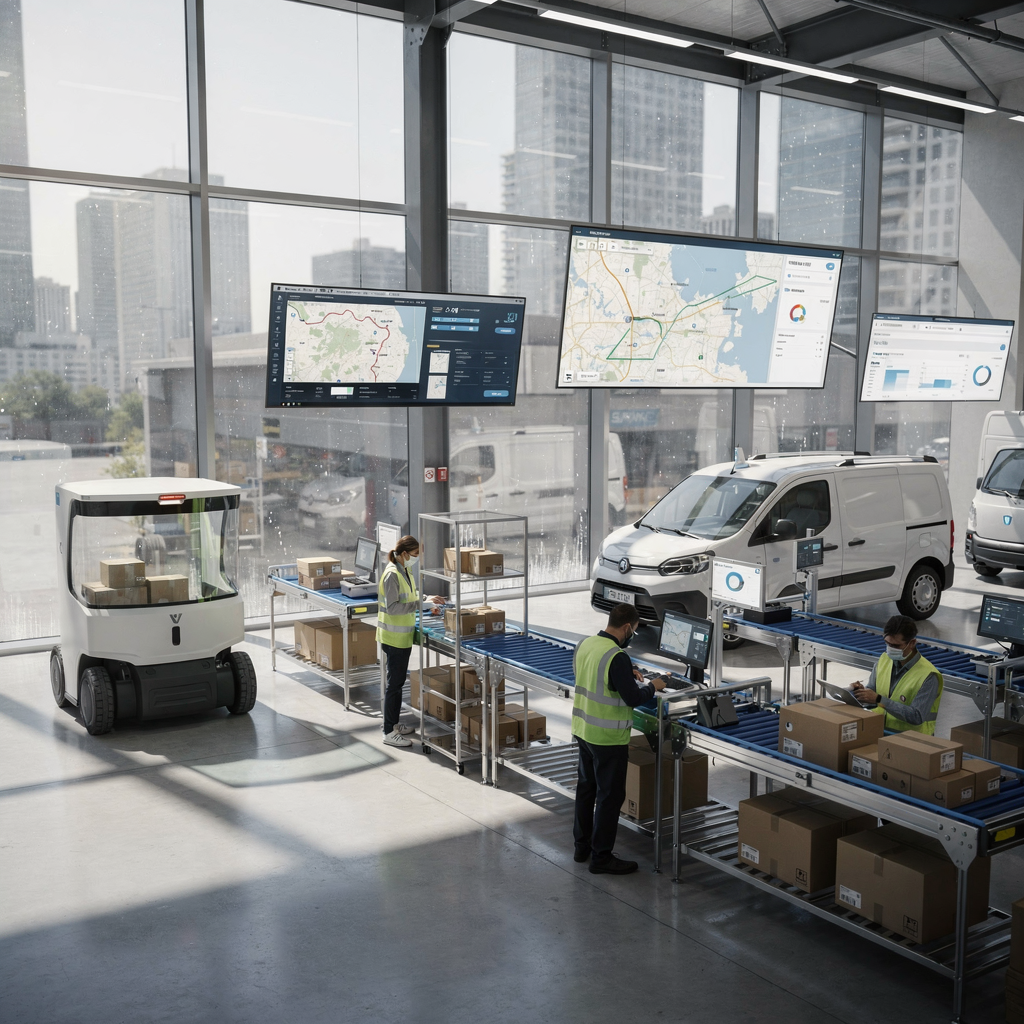
Address quality causes many failed attempts. Industry sources note address issues drive roughly a quarter of failed deliveries, and some firms report up to around 40% when data is poor. To fight this, validate addresses before dispatch using programmatic checks and fuzzy matching. Next, enrich with geo-coordinates to enable accurate stops. Then, feed that data to route models that optimize for distance, time windows and driver constraints. As a result, you can expect measurable reductions in fuel use and missed deliveries. Typical early pilots report double-digit percentage fuel savings and significant drops in failed first-attempts.
Looking ahead, automation extends into aerial and ground robotics. For instance, the cargo drone market is forecast to grow to about $17.9 billion by 2030, which highlights automation trends across the delivery sector AI in logistics – statistics & facts. To operationalise these gains, implement address validation checks in your dispatch workflow, run A/B tests of route models, and monitor delivery performance and fuel metrics in a dashboard. Finally, ensure your systems can reroute using real-time data so drivers and customers receive accurate ETAs and notification updates.
Drowning in emails?
Here’s your way out
Save hours every day as AI Agents label and draft emails directly in Outlook or Gmail, giving your team more time to focus on high-value work.
AI-powered chatbots and ai-powered agents: handle inquiry and post-purchase interactions to deliver faster response times
AI-powered chatbots and ai-powered agents can own high-volume, predictable customer contact and free human agents for complex cases. They handle tracking requests, status changes, rebookings and returns across SMS, email and chat. For many carriers, automating these post-purchase interactions shortens response times and increases customer satisfaction. However, firms must manage risks: generative chatbots can provide incorrect answers or surface private data if they are not properly grounded in operational systems When Chatbots Go Wrong: The New Risk Landscape in AI Customer Service. Therefore, design safeguards and escalation paths.
Start with clear ownership. Let chatbots answer order tracking, provide shipment status and propose simple rebookings. Then escalate to a human agent for exceptions like damaged goods, complex returns or disputed charges. Provide the bot with structured access to ERP, TMS and WMS so replies stay accurate. For email-heavy inboxes, tools like virtualworkforce.ai automatically draft and route responses based on intent and urgency, and they attach context for humans when escalation is required automatizált e-mail vázlatkészítés logisztikához.
Design interaction flows and SLA rules that match your service model. For example, set first response targets under 30 minutes for automated channels and 2 hours for escalations. Track first response time, resolution rate and NPS uplift. Also measure how many inquiries the bot resolves without human help. To ensure consistent support, create templates and a prompt library so the bot uses approved tone and factual content. Finally, include multilingual capability to support global e-commerce customers. By automating routine tasks, you improve customer experience while reducing inbound calls and support tickets.
Real-time insights and automation: ai-driven operational efficiency across pickup, delivery and wider logistics operations
Real-time insights let teams act faster and cut waste across pickup, sorting and last-mile tasks. AI models use real-time data to predict delays and set dynamic ETAs. They also score driver performance, automate dispatching and prioritise high-value parcels. For example, tools that combine real-time analytics with automated dispatch can reduce dwell time and increase utilisation. Consequently, operational efficiency improves and teams can proactively resolve issues before they escalate.
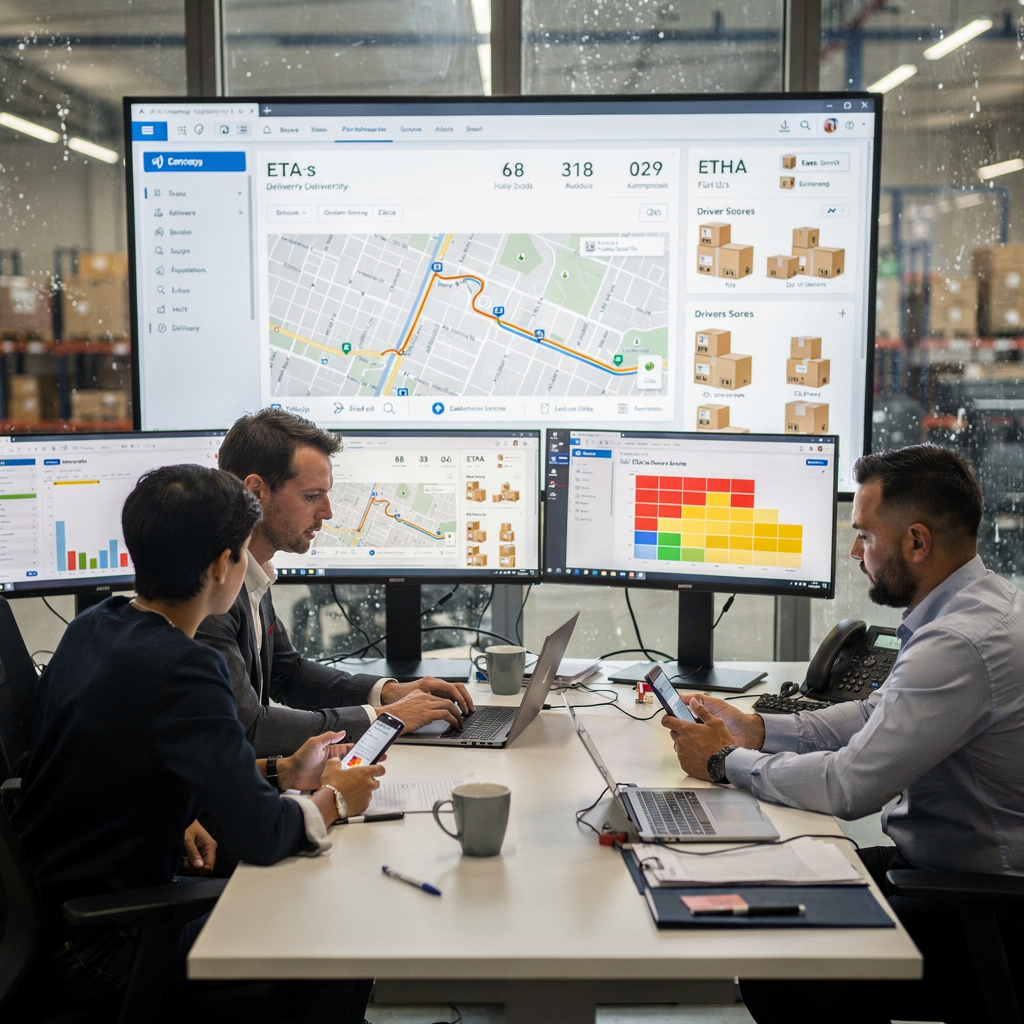
Start by instrumenting pickup and delivery flows with sensors and status changes. Feed those events into a dashboard so planners see bottlenecks and can act. Key metrics include on-time delivery percentage, dwell time at hubs, utilisation of fleet and average pickup-to-delivery lead time. Also track delivery schedules adherence and delivery performance for priority lanes. Use AI to automate tasks like prioritising loads, recommending reassignments and sending notification prompts to customers when delays occur.
Automation should not be binary. Instead, automate where rules are stable and metrics show consistent benefits. For the rest, provide decision support. For instance, automate dispatch for standard routes but give planners a predictive view for complex shipments. In addition, integrate driver scoring into incentives and training to improve consistent outcomes. Finally, use real-time insights to create detailed reports that drive continuous improvement across the supply chain. This holistic approach raises overall efficiency and gives teams the information they need to resolve issues before customers notice disruptions.
Drowning in emails?
Here’s your way out
Save hours every day as AI Agents label and draft emails directly in Outlook or Gmail, giving your team more time to focus on high-value work.
Integration and disruption: how AI integration with legacy systems creates competitive advantage and can handle complex workflows
Integrating AI with TMS, WMS, CRM and carrier APIs can create a durable competitive edge. Use APIs, event streams and middleware to connect systems without replacing them. Data quality matters more than fancy models. For example, poor address data drives a high share of failed attempts, so invest in validation and enrichment early. Also be mindful of regulatory rules like GDPR when you map data flows and access controls. A phased integration plan reduces disruption and preserves continuity.
In practice, start with a lightweight integration that solves a high-impact problem. For example, connect your shared inbox to an AI logistics assistant to tag and route critical emails. Next, extend to back-end systems so the AI agent can fetch invoices, shipment histories and proof-of-delivery. Our platform helps by grounding replies in ERP, TMS, WMS and SharePoint data, which reduces errors and accelerates onboarding automatizált logisztikai levelezés. Also, enforce audit trails and governance so all actions remain traceable.
Manage disruption with a clear rollout plan. Phase one should include sandbox testing and a pilot region. Phase two scales integrations and trains staff. Phase three retires manual checkpoints where confidence and metrics justify it. Use a risk checklist that covers data quality, access controls, escalation logic and fallback to phone support when automation cannot handle a case. When done well, integration reduces touchpoints, lowers operational costs and improves the delivery experience. Ultimately, firms that integrate AI with legacy systems achieve faster responses, more accurate answers and a measurable competitive advantage in the logistics sector.
Start delivering value: pilot checklist, KPIs, prompts for user experience and frequently asked questions to improve customer satisfaction
To start delivering value quickly, run a focused pilot. Limit scope to one region, a single route or a high-volume customer lane. Expect the first savings within months. Track simple KPIs to prove value: cost per parcel, failed delivery rate, average handling time, first response time and CSAT. Early pilots that control complexity and focus on data readiness typically show tangible gains fast.
Use this 10-point pilot checklist: 1) confirm data readiness and address validation; 2) connect key sources (TMS, ERP, shared inbox); 3) define the routing model for the pilot; 4) deploy chatbot scripts and email templates; 5) set escalation paths to human agents; 6) instrument real-time dashboards; 7) set KPI targets and reporting cadence; 8) run A/B tests for routes and messages; 9) train staff on the new workflow; 10) review compliance and privacy rules. For help automating email lifecycles in logistics operations, see guidance on how to scale logistics operations without hiring hogyan bővítsük a logisztikai műveleteket munkaerő felvétel nélkül.
Design prompts for chatbot and email scenarios to surface when to escalate. For example, „Order tracking: provide ETA and last known status; if status is exception, escalate to human with shipment history.” Also include templates for returns and rebookings so the bot proposes valid options. Measure prompt performance by resolution rate and the number of times a human agent intervenes. Finally, prepare a short FAQ for stakeholders that covers costs, timelines, integration effort and how AI improves customer satisfaction and the delivery experience. With clear metrics and disciplined pilots, teams can validate ROI and expand to wider operations.
FAQ
What is an AI assistant in parcel logistics?
An AI assistant is software that automates routine operational tasks, such as triaging emails, validating addresses and drafting replies. It connects to TMS, ERP and other systems to provide accurate, context-aware answers and to reduce manual workload.
How fast can a pilot start delivering value?
Mature pilots typically show savings within months, not years, when scope is tight and data is ready. Early wins appear in reduced handling time, fewer failed deliveries and faster customer responses.
Which KPIs should we track first?
Begin with cost per parcel, average handling time, failed delivery rate and first response time. Also monitor CSAT and on-time delivery percentage to capture customer-facing improvements.
How do AI agents handle incorrect address data?
AI agents validate addresses using programmatic checks and fuzzy matching and can enrich records with geocoordinates. They flag high-risk addresses before dispatch and reduce failed first-attempts.
When should a chatbot escalate to a human agent?
Escalate when the inquiry is an exception, when the customer requests a disputed claim, or when the bot cannot verify data from connected systems. Clear SLA rules should govern escalation to ensure quick human follow-up.
Can AI integrate with my existing TMS and WMS?
Yes. Integration patterns use APIs, event streams and middleware to connect without replacing legacy systems. A phased approach reduces disruption and keeps critical workflows running.
What risks should we watch for with generative chatbots?
Generative chatbots may hallucinate or expose sensitive data if not properly grounded. Mitigation includes grounding responses in live operational data, strict access controls and clear escalation logic.
How do we measure improvements in customer satisfaction?
Track CSAT, Net Promoter Score and NPS uplift alongside resolution rate and first response time. Combine quantitative metrics with qualitative feedback from surveys to validate improvements.
Do AI solutions support multilingual customers?
Many AI platforms support multilingual interactions and can provide consistent support in multiple languages. This capability improves the post-purchase experience for global e-commerce customers.
What is the minimum scope for a successful pilot?
Start with a single region, route or customer lane that has reliable data and measurable volume. Keep objectives narrow so you can test hypotheses, measure KPIs and iterate quickly.
Drowning in emails?
Here’s your way out
Save hours every day as AI Agents label and draft emails directly in Outlook or Gmail, giving your team more time to focus on high-value work.