


Why ai and artificial intelligence are central to modern manufacturing and digital transformation
AI now plays a central role in modern manufacturing and in broader digital transformation efforts. First, AI assistants, generative AI and AI agents form parts of a unified strategy that helps factories become more resilient. Also, leaders set measurable goals such as higher efficiency, improved uptime and better quality to track transformation. For example, 72% of shop‑floor workers already use AI regularly, which shows rapid adoption across the sector 72% of manufacturing workers use AI. Next, manufacturers invested more than $10 billion in industrial AI solutions in 2024, which reflects large-scale commitment to technology-driven change $10 billion investment in 2024. Then, industry research highlights how AI helps scale knowledge and expertise across teams, which reduces dependence on a few subject‑matter experts “scale knowledge and expertise across the enterprise”.
Also, this chapter defines the scope. It covers AI assistant tools, generative AI capabilities and agentic AI that can act autonomously for defined tasks. Additionally, it explains how these elements form an internal AI backbone that connects MES, historians and ERP data. Next, it lists market drivers: labor shortages, cost pressure, complex supply chains and demand for higher asset availability. Then, we outline how AI shifts knowledge management on the shop floor by turning tacit expertise into searchable, repeatable guidance. Moreover, we describe measurable KPIs: reduced report time, higher OEE, fewer quality escapes and lower mean time to repair.
Also, practical considerations matter. First, data readiness determines speed of deployment. Second, governance prevents biased decisions and preserves enterprise-grade security. Finally, technology choices influence whether you deploy at the edge or in cloud. If you want a focused example of how AI helps operational email and logistics workflows, see the end-to-end automation examples at virtualworkforce.ai that reduce handling time per message and keep information connected across systems end-to-end email automation.
How an ai assistant and ai agents use operational data to generate reports and keep employees informed
An AI assistant can read multiple operational systems and then summarize status in plain language. First, the assistant ingests sensor feeds, MES logs and CMMS records. Next, it runs natural language parsing and then answers natural language queries from frontline teams. For example, a conversational AI assistant can convert historian spikes into a prioritized maintenance alert and then create a short shift report. Also, the assistant can generate reports that show root-cause indicators, trending KPIs and recommended actions. This workflow reduces time-consuming manual reporting and helps frontline workers take action quickly.
Also, assistants connect to different data sources such as PLC telemetry, MES throughput and ERP parts lists. Then, they merge that data to create contextual alerts that a connected worker can act on. For instance, an AI agent may detect bearing temperature drift, correlate it to recent tool changes and then raise a maintenance ticket. Next, the system can route that ticket to the right support team and attach a recommended troubleshooting guide. Also, this capability lets production supervisors keep employees informed with concise, actionable messages. The assistant provides a single source of truth and instant access to the right documents.
Also, measure outcomes. For example, track time to insight, reduction in manual reporting hours and the share of alerts that avoid false positives. Next, companies often integrate assistants with ticketing and CMMS to close the loop. Additionally, virtualworkforce.ai shows how automating operational messages and email reduces triage time and preserves context across shared inboxes. See their guidance on how to scale logistics operations without hiring for a concrete example of email and operations integration scale logistics operations without hiring. 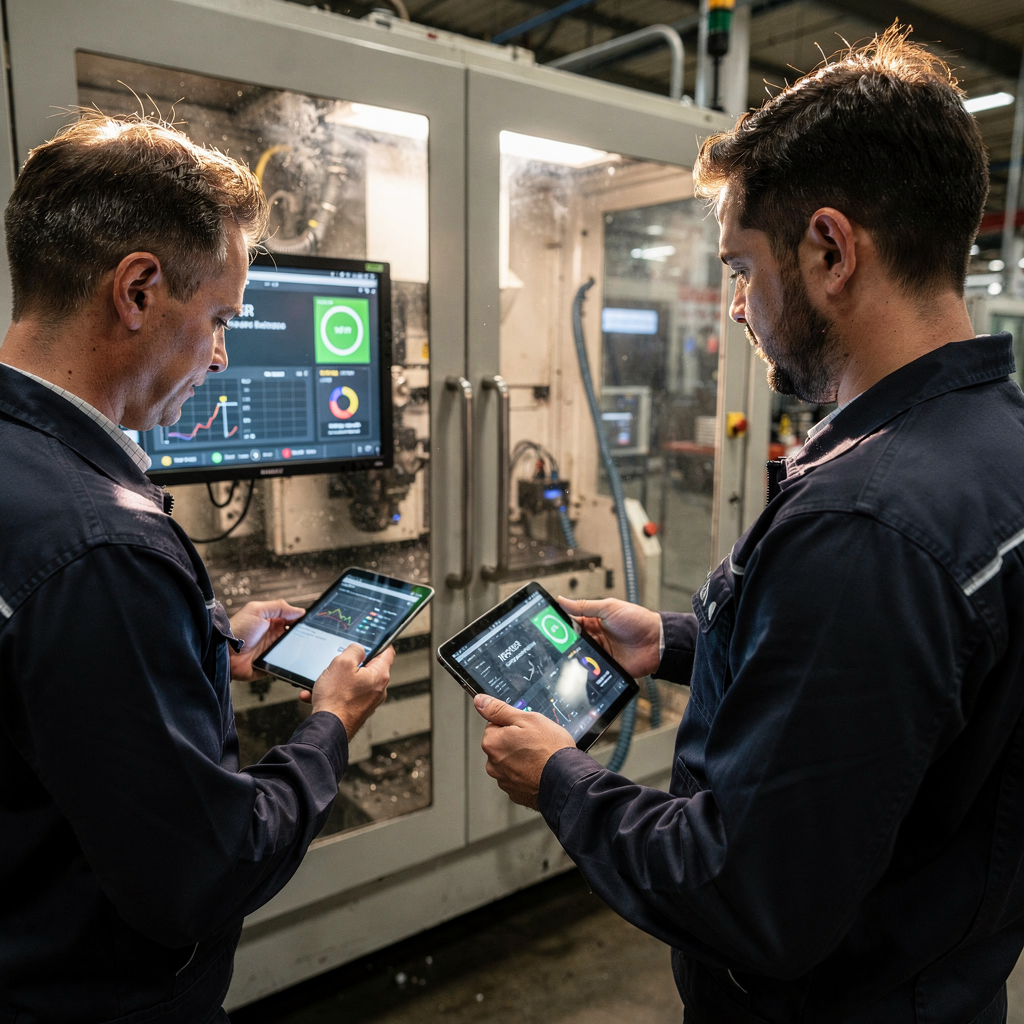
Drowning in emails?
Here’s your way out
Save hours every day as AI Agents label and draft emails directly in Outlook or Gmail, giving your team more time to focus on high-value work.
The power of generative ai and generative ai-powered tools to automate tasks, build an ai and improve productivity
Generative AI now provides fast ways to automate time-consuming content and design tasks. First, generative AI helps draft procedures, update SOPs and produce troubleshooting guides that match real incidents. Also, it can create code snippets for PLCs, or generate CNC toolpaths that engineers then validate. For instance, toolpath optimization that once took hours can often be reduced to minutes with a genAI assistant that proposes and simulates alternatives. This shows clear gains in productivity and quality.
Also, you can build an AI for a domain by following pragmatic steps. First, collect labeled incidents, CAD notes, shift logs and historical failure records as core data sources. Next, apply supervised fine-tuning on generative AI models and then add domain-specific guardrails. Additionally, set up feedback loops so frontline teams can annotate outputs and correct errors. Also, governance should include version control, audit trails and enterprise-grade security for sensitive technical data. Then, use role-based policies to limit who can change SOP drafts and who can approve updates. This approach balances speed with safety and helps teams maintain trust.
Also, agentic AI can automate routine triage and route exceptions to humans. Then, AI-powered assistants reduce repetitive tasks like drafting maintenance emails or summarizing long incident logs. Also, companies often see rapid wins that justify broader rollout. For example, manufacturers cut repetitive review cycles and reduce human error by using AI-powered automated drafting and validation. Also, virtualworkforce.ai demonstrates how AI agents automate the full lifecycle of operational email, saving minutes per message and improving consistency; read more on automating logistics correspondence to see the impact in an operational context automating logistics correspondence.
Practical use cases and ai solutions that integrate with ai platform to minimize downtime and transform industrial operations
Predictive maintenance, run-rate optimisation and quality inspection top the list of practical use cases. First, predictive maintenance uses historian data and sensor streams to predict asset failure and to schedule repairs. Next, run‑rate optimisation adjusts production lines to meet fluctuating demand and production schedules. Also, visual inspection powered by AI detects defects faster than manual checks and flags anomalies for human review. Then, staffing optimisation and incident triage help balance labour and equipment availability. Each case reduces unplanned downtime and lowers operational risk.
Also, integration matters. You must integrate with PLCs, SCADA, MES, and historians. Then, choose whether to run models at the edge for low latency or in the cloud for scale. Also, APIs and secure connectors let AI systems push events into ERP or pull BOM details. For systems using APIs, design for retry logic and observability. Additionally, consider how the ai platform will manage model updates and feature flags so teams can roll back changes safely. Also, track MTTR, MTBF and percentage of unplanned downtime as core KPIs to measure results and to minimize downtime.
Also, watch for risks. Data bias and label errors can skew predictions. For evidence, InData Labs warns that biased training data may distort outcomes if left unchecked AI model bias risks. Then, mitigate risk by auditing datasets, using diverse labels and by running shadow tests before full deployment. Also, link AI alerts to human-reviewed troubleshooting guides to avoid blind automation. For related logistics applications that require tight data grounding, read how virtualworkforce.ai connects emails to ERP and WMS for accurate routing and resolution ERP email automation. 
Drowning in emails?
Here’s your way out
Save hours every day as AI Agents label and draft emails directly in Outlook or Gmail, giving your team more time to focus on high-value work.
How ai-powered systems help workforce development, capture tribal knowledge and support continuous improvement
AI augments teams and helps with reskilling. First, AI-powered assistants capture tribal knowledge from senior technicians by turning incident reports and repair notes into structured guidance. Next, a knowledge assistant can present step-by-step troubleshooting guides to new employees during onboarding. Also, this reduces ramp time and preserves expertise when veteran staff retire. Then, organizations can use closed-loop feedback so technicians rate AI suggestions and improve future responses. This fuels continuous improvement and makes the learning cycle faster.
Also, AI helps workforce management by automating repetitive communications and by surfacing the right job assignments. For frontline teams, a connected worker experience provides instant access to SOPs, parts lists and checklists. Additionally, AI-driven coaching tools suggest micro-lessons based on observed errors and on frequent maintenance calls. Also, this raises baseline skills and helps teams work faster with fewer mistakes. Importantly, Deloitte frames AI assistants as collaborators that “empower workers to make better decisions faster,” which echoes the way AI supports rather than replaces industrial work Deloitte on AI assistants.
Also, capture of tribal knowledge uses conversational interfaces and searchable archives. New employees can ask natural language questions and get contextual answers that reference actual incidents. Also, internal AI indexes documents and tags lessons so teams can find solutions without lengthy searches. Additionally, maintain governance to prevent knowledge drift and to ensure that AI suggestions remain accurate. Also, the feedback loop from human corrections supports retraining of generative AI models over time and sustains continuous improvement.
Steps to integrate ai manufacturing systems, choose ai platform and measure benefits of ai to reduce downtime and accelerate digital transformation
First, pick a pilot that targets a high‑value pain point such as recurrent machine failures or time-consuming reporting. Next, run a data readiness audit to evaluate historians, MES and ERP quality. Also, assess whether your ai platform can query operational data and support natural language features. Then, ensure the platform provides observability, role-based access and an audit trail. Also, include enterprise-grade security in vendor selection to protect IP and operational data. For vendor examples in logistics-centered workflows, see guidance on automating logistics emails with Google Workspace and virtualworkforce.ai automate logistics emails.
Also, set a phased rollout plan. First phase should validate signal quality and model accuracy. Next phase expands the domain and then integrates APIs to push work into ERP, TMS or WMS. Also, include change management and training so frontline workers accept the system. Then, measure ROI using baseline KPIs such as production throughput, downtime, report time and labor hours. Also, set phased targets and review results weekly at first, then monthly as confidence grows. Additionally, monitor model drift and schedule retraining intervals. This keeps AI recommendations trustworthy.
Also, remember integration choices affect latency and costs. Edge inference reduces response time for safety-critical use. Cloud deployments scale for cross-plant analytics. Also, ensure APIs support transactional workflows so the assistant can create tickets or update production schedules automatically. Finally, use governance to ensure the benefits of AI are realised and sustained, and to maintain competitiveness as the manufacturing industry adopts more AI-driven tooling.
FAQ
What is an AI assistant for manufacturing?
An AI assistant for manufacturing is a software agent that helps shop floor and operations teams by interpreting data and generating actionable guidance. It can summarize sensor trends, propose maintenance actions and draft reports so teams save time and reduce errors.
How do AI agents use operational data?
AI agents ingest data from PLCs, MES, CMMS and historians to correlate events and detect anomalies. Then they produce alerts, generate reports and route tasks so staff can act faster and with more context.
Can generative AI create SOPs and troubleshooting guides?
Yes. Generative AI models can draft procedures, update SOPs and outline troubleshooting guides based on historical incidents and labeled examples. Human reviewers should validate those drafts before they become official to reduce risk.
Will AI replace frontline workers?
No. AI typically augments frontline workers by handling repetitive tasks and by providing instant access to knowledge. It supports reskilling and improves workforce efficiency rather than wholesale replacement.
How does AI minimize downtime?
AI minimizes downtime by predicting failures, prioritizing maintenance and recommending corrective actions in context. Metrics like MTTR and MTBF show the impact as teams act on AI-generated alerts.
What integration points are essential for an ai platform?
Essential integration points include PLCs, SCADA, MES, ERP and historians. APIs help the platform push tickets and pull BOM or production schedules to keep decisions grounded in current operations.
How do I measure the benefits of AI?
Measure benefits with baseline KPIs such as throughput, unplanned downtime, report time and labor hours per shift. Also, track adoption, accuracy of alerts and time-to-insight for continuous improvement.
What about data bias and model governance?
Data bias can skew predictions and produce poor recommendations. Implement auditing, diverse labeling and shadow testing. Also, maintain retraining schedules and human-in-the-loop checks to ensure safe outcomes.
Can AI help capture tribal knowledge?
Yes. AI can transcribe and structure experienced technicians’ notes into searchable knowledge and interactive guides. This preserves expertise and helps new employees ramp up faster.
How do I start a pilot project?
Start with a narrow, high-impact problem such as repetitive reporting or a frequent failure mode. Run a data readiness audit, choose an ai platform that supports APIs and natural language, and define clear KPIs for the pilot.
Drowning in emails?
Here’s your way out
Save hours every day as AI Agents label and draft emails directly in Outlook or Gmail, giving your team more time to focus on high-value work.