


ai agent: Define what an ai agent is and how ai agents work in a retail distribution centre
An AI agent is an autonomous or semi-autonomous software component that senses, plans and acts in an environment. In a retail distribution centre an AI agent senses data from WMS, POS, IoT sensors and ERP feeds. Then it uses models to plan pick lists, routing and replenishment. Finally it executes actions by sending commands to robotics, updating databases and creating work items for human teams. The feedback loop closes when the AI agent evaluates outcomes and refines its models. As a result, these systems can enhance throughput and reduce errors.
AI agents range by level of autonomy. Some act as decision support tools that suggest actions to a human operator. Others act autonomously and complete tasks without human intervention. Human oversight remains important, however, especially for exceptions and safety checks. In practice many leading retailer pilot projects start with semi-autonomous modes and then scale to autonomous workflows once KPIs prove stable. Research shows that over 64% of large retailers have integrated AI tools, which signals readiness for agent deployment (AI21 Labs). Therefore, a staged approach reduces risk and speeds adoption.
Core functions of an AI agent in a distribution centre include perception, planning, execution and learning. Perception ingests real-time telemetry from scanners, conveyors and cameras. Planning optimizes sequences and resources. Execution triggers robotic pickers, slotting updates or email notifications. Learning tunes the models using outcomes and returns. Additionally, agents analyze historical demand and live sales to reduce stockouts. For broader operations such as logistics correspondence, companies often use AI agents to automate emails and supplier messages; see an example of logistics email automation with virtualworkforce.ai for practical guidance logistics email drafting AI.
Because AI agent behavior depends on data quality, integration matters. Fragmented data raises the chance of incorrect actions. Therefore teams implement robust APIs, data lakes and governance. In short, an AI agent can optimize task allocation, reduce manual triage, and enable faster decision-making across the warehouse. When properly governed it becomes a reliable partner for operations and gives the retailer measurable improvements in speed and accuracy.
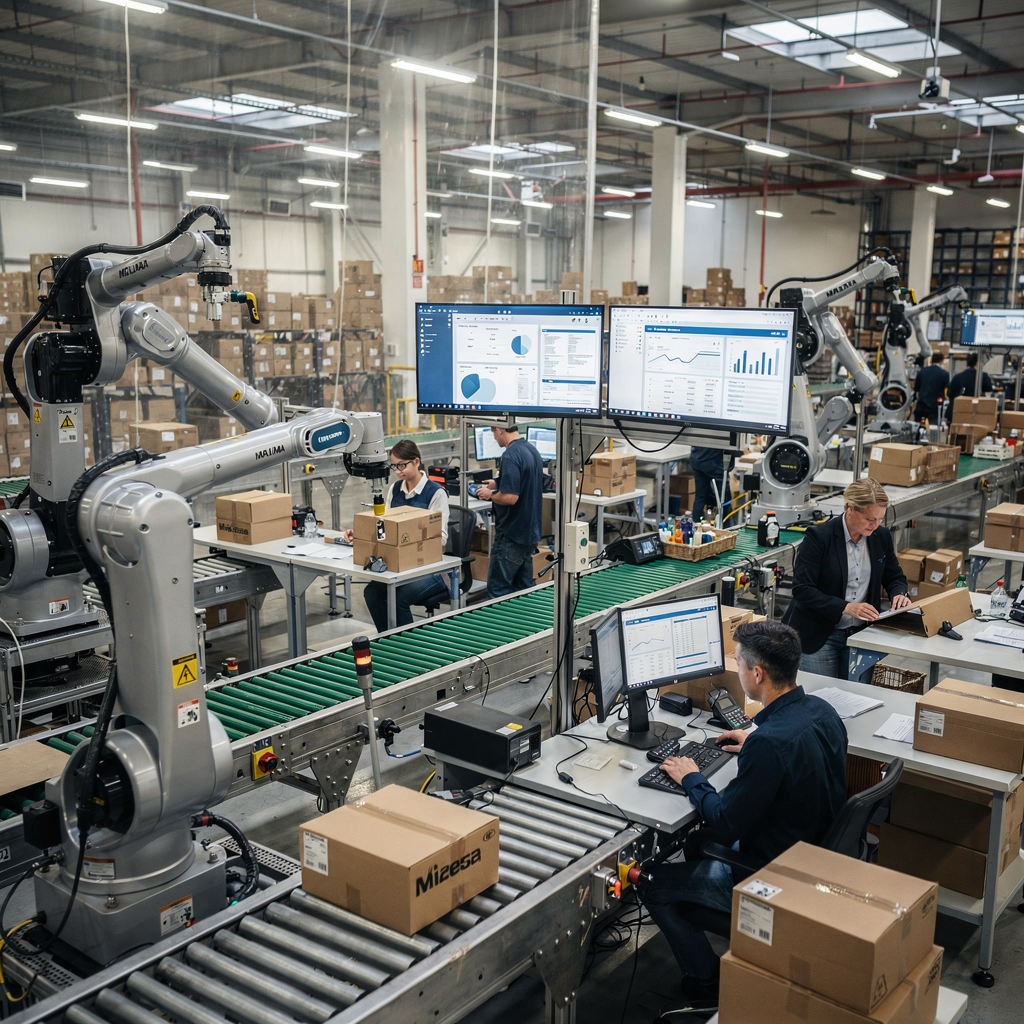
ai agents in retail and retail ai agent: Improve INVENTORY accuracy and speed up order fulfilment
AI agents in retail provide real-time visibility into stock levels and automate replenishment decisions. They connect POS signals, CRM demand indicators and warehouse sensors to produce actionable forecasts. This improves inventory accuracy and shortens the time from order to shipment. For instance, industry analysis reports inventory accuracy gains near 35% and logistics cost reductions around 15% when AI-driven practices are applied (OneReach). These improvements reduce stockouts and overstock while enabling faster order fulfilment.
Practically, a retail AI agent will read live sales and compare them to safety stock. Then it will issue replenishment requests to suppliers or transfers between stores. Because the agent operates in real-time, it can also re-prioritize pick waves and update pick routes every few minutes. This dynamic slotting and pick sequencing boosts throughput. Many retailers see order processing speedups of 40–60% in targeted processes when they implement these methods. Agents could push warnings to human teams when exceptions appear. Agents deliver clear, traceable actions that support SLA compliance and customer satisfaction.
AI agents analyze demand signals from CRM and POS data to spot trends early. Consequently, the retailer makes fewer forecasting errors and reduces lost sales. Using generative AI techniques can further improve exception handling and reply drafting for operational messages. For teams that want to implement ai for logistics correspondence, automated email workflows can reduce triage time significantly; learn how to automate logistics emails with Google Workspace and virtualworkforce.ai for an applied example automate logistics emails.
Overall, a retail AI agent helps the retailer optimize stock levels and ensures the right products reach the right orders fast. It supports inventory management and fulfillment with real-time alerts and continuous learning. As retail industry leaders scale these capabilities they gain a competitive advantage in delivery speed and consistency.
Drowning in emails?
Here’s your way out
Save hours every day as AI Agents label and draft emails directly in Outlook or Gmail, giving your team more time to focus on high-value work.
retailer, retail industry and use cases: Concrete USE CASES for distribution centres (picking, packing, dock scheduling, predictive maintenance)
Distribution centres host many high-impact use cases where AI agents improve outcomes quickly. Top use cases include robotic picking, smart dock scheduling, predictive maintenance, dynamic prioritisation and automated returns handling. Each of these areas can enhance throughput, reduce costs and improve customer experience. For example, robotic picking drives faster throughput and fewer errors. Smart dock scheduling cuts truck wait times and idle labor. Predictive maintenance reduces unplanned downtime, and dynamic prioritisation keeps high-value orders moving.
Robotic picking can raise throughput significantly. When combined with AI-powered pick sequencing the centre optimizes travel time and reduces cycle time. In packing, AI agents can suggest the right box size and packing method to reduce shipping costs. Dock scheduling is an obvious win; an AI agent coordinates carrier ETAs with dock availability and staffing so trucks spend less time waiting. Studies of similar optimizations report logistics cost reductions and improved service levels.
Predictive maintenance uses sensor telemetry and ML models to foresee equipment failures. Consequently, the retailer schedules repairs before downtime occurs. This approach lowers maintenance costs and prevents missed orders. Agents act across shift boundaries to allocate technicians and reroute work. Moreover, dynamic prioritisation systems adjust order queues to protect SLAs during peaks. These systems use sales data and order attributes to make decisions in seconds.
Other use cases extend to returns processing, exception triage and supplier coordination. For communication-heavy workflows, AI agents can autonomously draft and route operational emails to suppliers and carriers, freeing human agents for complex tasks. For concrete examples on how AI agents scale logistics communication without hiring, see this guide on scaling logistics operations with AI agents how to scale logistics operations. Altogether, these use cases help the retailer cut costs, speed deliveries and boost customer satisfaction.
supply chain, ai-driven and autonomous ai: Extend agents across the supply chain for resilience and cost saving
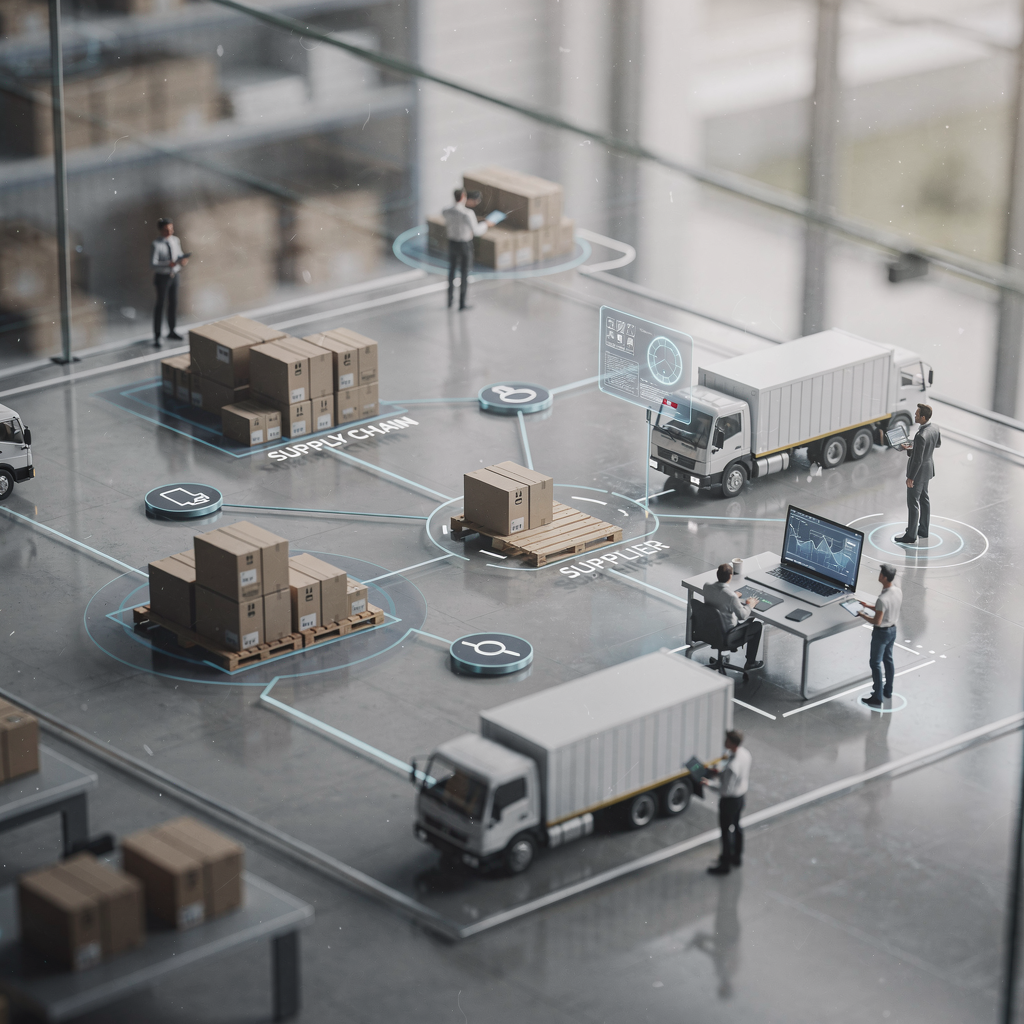
AI agents extend beyond a single DC to coordinate suppliers, carriers and multiple warehouses. When agents share forecasts and capacity signals across nodes they can optimize inventory and transportation globally. For instance, agents could reroute shipments, select alternate suppliers or adjust order cadence when disruptions occur. These capabilities enhance supply chain resilience and reduce the cost of emergency sourcing. Reported savings from ai-driven procurement and logistics span roughly 5–20% depending on scope and maturity.
Agentic AI and autonomous AI decisioning allow systems to act without constant human supervision. An autonomous agent might automatically rebook freight, change carriers and update customers when a delay appears. The agent uses predictive analytics and live sales inputs to choose the least disruptive option. This reduces manual coordination and keeps customer expectations aligned with reality. As McKinsey notes, agentic commerce is reshaping how agents interact with consumers and merchants (McKinsey).
End-to-end agents can also support demand sensing. Using live sales and supplier telemetry, they update forecasts and balances in real-time. This prevent stock imbalances and reduce excess inventory. Furthermore, when agents act across partners they create a single view of capacity and risk. That view helps retailers prioritize shipments and protects critical assortments. Agents could even negotiate carrier options or propose contingency sourcing to keep flows moving.
Finally, for retailers facing heavy email and document workloads, agentic ai solutions automate much of the coordination. For example, virtualworkforce.ai automates the full email lifecycle for ops teams so messages no longer block supply chain actions. This reduces manual delay and keeps logistics decisions flowing.
Drowning in emails?
Here’s your way out
Save hours every day as AI Agents label and draft emails directly in Outlook or Gmail, giving your team more time to focus on high-value work.
automate, automation and powered by ai: Technology stack, integration and practical rollout steps
To implement AI agents in a distribution centre you need a clear technology stack. Core components include a data lake, APIs to WMS/TMS/ERP, edge compute for real-time control, robotics middleware, and ML models for prediction and planning. Integration points must feed telemetry and event streams into the agent. Then the agent can make optimized choices and execute commands. Many teams also add conversational layers for exception handling and dashboards for human oversight.
Practical rollout follows a pilot-then-scale pattern. First, pilot an AI agent on a single process—such as pick sequencing or dock scheduling. Measure baseline KPIs and validate a small set of rules. Next, expand the pilot across shifts and additional SKUs. Finally, integrate the agent with adjacent systems and other DCs to unlock cross-network benefits. This approach limits risk and produces measurable ROI early.
Common barriers include fragmented data and disconnected systems. In fact, about 40% of retail AI projects fail to meet planned ROI when these gaps persist (Kore.ai). Therefore, strong integration, data governance and change management are essential. Also, teams should implement model monitoring, safety checks and human-in-the-loop flows so agents act safely and reliably.
For communication-heavy tasks, use AI-powered email workflows to remove manual triage. virtualworkforce.ai shows how to connect ERP, WMS and TMS to route and resolve operational emails. This example highlights how AI agents reduce handling time and improve traceability; read more about virtual assistant logistics to explore operational applications virtual assistant for logistics. Overall, a well-architected stack lets the retailer automate repeatable tasks while keeping humans in control of exceptions.
retail ai, ai agents work and autonomous ai: Measurement, governance and future outlook for AI agents in distribution centres
Measurement matters. Track KPIs such as inventory accuracy, fill rate, cycle time, cost per order and downtime. Regularly audit model performance and bias. Use A/B tests to compare agentic decisions against human choices. Governance should include model monitoring, safety checks and human oversight. Human operators should be able to pause agent actions and review the decision trail. This approach preserves trust and supports compliance.
Agents evolve as they learn from outcomes. Leading retailers adopt pilot agents and then scale once the models prove robust. Agents help by automating routine tasks and escalating only when human intervention is needed. They learn from returns, customer inquiries and exception handling to improve future choices. Over time agents act more autonomously and handle more of the operational load.
Looking forward, generative AI will augment these systems by creating context-rich replies and crafting workflows from human language. For operational teams overwhelmed by email, AI agents that automate the full lifecycle of messages deliver measurable gains. virtualworkforce.ai, for example, reduces email handling time and increases consistency by grounding replies in ERP and WMS data; this helps operations focus on high-value problems virtualworkforce.ai ROI for logistics.
Strategic recommendations for retailers include: implement ai incrementally, integrate data sources, focus pilots on high-impact workflows and enforce governance. These steps enhance operational efficiency and create a sustainable path to autonomous AI. As agents mature they will increasingly make decisions, optimize network flows and boost customer satisfaction. In short, intelligent systems will move from assistants to teammates that deliver measurable business value.
FAQ
What is an AI agent in a distribution centre?
An AI agent is a software component that senses environment data, plans tasks and acts by executing commands or prompting humans. It helps automating workflows like picking, replenishment and dock scheduling while keeping a feedback loop to learn from outcomes.
How do AI agents improve inventory accuracy?
AI agents ingest POS and WMS signals and reconcile stock continuously, which reduces discrepancies. As a result, companies have reported inventory accuracy improvements near 35% when AI is applied (OneReach).
Are AI agents safe to act autonomously?
Yes, when they include governance, safety checks and human oversight. Teams typically start with semi-autonomous modes and add safeguards so agents escalate exceptions for human intervention.
Which use cases deliver the fastest ROI?
High-impact use cases include robotic picking, smart dock scheduling, predictive maintenance and email automation for operations. These tend to improve throughput, cut wait time and reduce manual work, delivering measurable ROI quickly.
How do I start a pilot for AI agents?
Start with a single DC process such as pick sequencing or dock scheduling. Define KPIs and baseline metrics, then run a controlled pilot and expand once outcomes meet targets. For email-heavy logistics teams consider tools that automate operational correspondence to reduce triage time automated logistics correspondence.
Can AI agents coordinate suppliers and carriers?
Yes. Agents can share capacity and demand signals to reroute shipments, select alternate suppliers and balance loads across warehouses. This end-to-end coordination supports a resilient supply chain and cost savings.
What technology components are required?
Key components include data lakes, APIs to ERP/WMS/TMS, edge compute, ML models and robotics middleware. Secure integrations and model monitoring complete the stack for reliable agent operations.
Do AI agents replace human workers?
AI agents automate routine, repetitive tasks and free human agents for complex decisions. They are designed to act autonomously on standard flows while escalating unusual cases for human oversight.
How do AI agents handle email and communications?
Specialised AI agents can understand intent, fetch grounded data from ERP and WMS, draft replies and route or resolve messages automatically. This reduces handling time and prevents lost context in shared inboxes.
What metrics should retailers track?
Track inventory accuracy, fill rate, cycle time, cost per order and downtime to quantify impact. Also monitor model performance, escalation rates and customer satisfaction to ensure long-term value.
Drowning in emails?
Here’s your way out
Save hours every day as AI Agents label and draft emails directly in Outlook or Gmail, giving your team more time to focus on high-value work.