


ai email assistant for pharma explains what ai-powered tools do and why compliance matters in the pharmaceutical industry
AI in regulated healthcare operations is no longer hypothetical. AI can classify incoming email by intent, suggest draft text, populate approved template fields, and integrate with CRM so messages link to customer records. An AI assistant for pharma often provides automated drafting, suggestions, template population and CRM integration for regulated correspondence. These capabilities reduce manual work. They also help teams maintain a single source of truth for product information and safety updates.
Regulatory context affects every step. Systems that create, modify or store regulated content must meet FDA 21 CFR Part 11 and EMA expectations for eTMF and audit readiness. Therefore, AI designs must produce trustworthy records and an audit trail. Inspectors expect records that show who made edits, when approvals occurred, and why a change was allowed. That means an audit trail must be immutable and searchable.
Adoption signals show momentum. Industry reports indicate many leaders pilot generative AI in life sciences; some studies report that over 70% of leading companies are exploring generative AI use cases til deres drift og kommunikation. Other analyses document research collaborations across major firms der fremhæver fokus på AI-kompetencer. Physicians expect smooth digital channels, so AI email tools can improve stakeholder experience when they follow strict governance og brugervenlighedsguidelines.
Designing for compliance means explicit controls. Approved templates and versioned content must exist. Human reviewers must sign off on promotional and medical content. Finally, AI components should be documented, validated, and subject to change control so the pharmaceutical industry can show inspection readiness.
automation and email automation streamline the inbox and workflow to automate email drafting and reduce manual work
Automation removes repetitive tasks so teams can focus on complex issues. AI can route inbound messages by intent, auto-suggest draft replies, and escalate when needed. The typical gains are notable: studies show reduced response times by up to 50% when teams deploy AI email capabilities i sundhedssektoren. That translates into faster answers for HCPs and patients, and lower handling time for staff.
Workflow design matters. First, classify incoming messages to create triage queues. Next, let the AI suggest content from approved templates and recent case history. Then, attach the message thread and relevant records to a case so humans can review with full context. Finally, log each decision and who approved it. This pattern keeps compliant hand-offs clear. It also reduces manual data entry and prevents dropped email threads.
Practical rules make automation safe. Keep a human-in-the-loop for safety, pharmacovigilance and regulatory matters. Use escalation paths that notify medical reviewers and brand teams. Track escalation frequency as a KPI to refine rules. Also, maintain approved templates with taggable fields so AI can personalise without inventing new claims. For logistics-focused operations that need AI-driven drafting and operational grounding, teams often review specialized deployments such as virtual assistant logistics and ERP email automation examples to compare approaches and readiness for inbox-udfordringer i logistikstil.

Drowning in emails?
Here’s your way out
Save hours every day as AI Agents label and draft emails directly in Outlook or Gmail, giving your team more time to focus on high-value work.
An ai assistant can draft compliant templates, integrate with CRM for email management and support targeted email marketing
An AI assistant can generate draft emails from pre-approved building blocks. Use approved templates to ensure content stays compliant. Templates should be versioned and tagged. Tags define which fields need reviewer input, which fields can be auto-populated, and which fields remain locked. This preserves control while enabling teams to draft emails faster and maintain traceability.
Integrate to retain context. When AI integrates with CRM, every exchange links to the correct account and campaign history. This helps create a searchable source of truth and reduces duplicate work. Make sure retention policies for email content match CRM rules. Also, synchronise approvals so an approved template in the CRM is the same one the assistant uses in the email client.
Keep marketing and medical separate. Set clear approval controls for pharma marketing and medical information. Promotional email campaigns must go through commercial approvals, while non-promotional medical information follows a different path. Build separate workflows that enforce these rules automatically. That approach helps teams comply with industry regulations and reduces compliance exceptions during reviews.
For teams that need operational examples, tools like our automated logistics correspondence and logistics email drafting AI writeups offer insight into integrating data sources and business rules for regulated messaging. Consider reading a practical guide on ERP-connected email automation to see how grounding drafts in operational systems reduces errors and manual lookup time ERP e-mail-automatisering for logistik.
compliant operations need audit trails, real-time monitoring and strong data security to meet pharma compliance
Compliant systems must record every action. An audit trail should capture creation, edits, approvals, timestamps and user IDs. The trail must be immutable. Inspectors often request readable logs that show who authorised content and when. That is why teams keep an audit trail that links message versions to approvals and to the source documents used to craft replies.
Real-time monitoring helps detect issues early. Use dashboards that show throughput, approval bottlenecks, and spikes in inbound volume. Real-time alerts notify reviewers when a safety-related term appears, or when escalation rates exceed thresholds. That allows teams to step in before a chain of replies goes off-script.
Security cannot be an afterthought. Enforce encryption in transit and at rest. Protect patient data and HCP identifiers with role-based access. Follow GDPR and local privacy rules. Use SOC 2 controls and proven vendor security when possible. Also, reduce data risk by minimising retained sensitive content and by segregating promotional lists from medical inquiry logs.
System validation must cover AI components. Document validation activities, keep change control logs, and run periodic audits to prove the model behaves within approved boundaries. For practical deployment patterns and validation steps, operations teams often adapt governance from analogous logistics implementations that integrate system validation with operational controls se automatiseret logistikkorrespondance.
Drowning in emails?
Here’s your way out
Save hours every day as AI Agents label and draft emails directly in Outlook or Gmail, giving your team more time to focus on high-value work.
ai-driven tools that integrate with existing systems boost team collaboration, productivity and deliver measurable analytics
When AI integrates with backend systems, teams gain context and speed. Shared inboxes become coordinated workspaces. AI labels threads, surfaces relevant records, and attaches context to a case. This reduces rework and clarifies ownership. Teams can then focus on high-value review and decision-making.
Collaboration features improve through comment threads, triage queues and approval workflows. Medical reviewers, legal and brand teams see the same context. They can comment inline and approve drafts without leaving the email client. That improves team collaboration and reduces hand-off errors.
Measure productivity to justify scale. Track KPIs such as turnaround time, template reuse rates, escalation frequency, and compliance exceptions. These metrics show measurable improvements and highlight training needs. For example, many operational teams report reduced handling time per message when they deploy AI agents that ground replies in ERP and document stores. If you want to compare tooling approaches, take a look at case studies that discuss how to scale logistics operations without hiring and how AI can reduce repetitive lookup work hvordan du opskalerer logistikoperationer uden at ansætte personale.
Analytics also guard quality. Use logs to detect model drift, recurring questions, and gaps in templates. Feed those insights back to update prompt libraries, template tags, and guardrails. This cycle makes the system more accurate and more compliant over time.
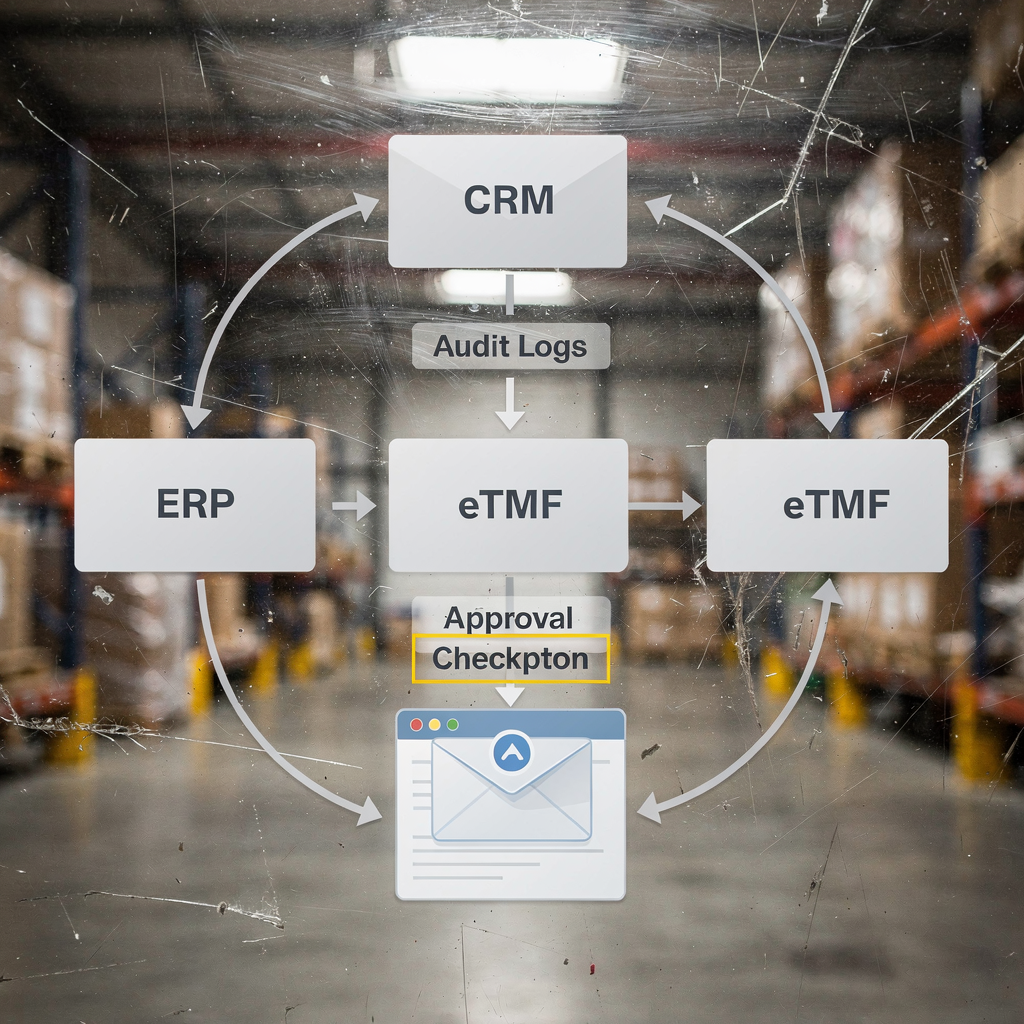
use ai in life sciences: a practical use case shows ai to streamline inbox work, create better email and demonstrate compliant, ai-powered email outcomes
Use case: a medical information team receives a steady stream of clinical questions, safety reports and product inquiries. An AI agent classifies each inbound email and auto-populates case fields. It drafts responses using approved templates, flags safety keywords, and routes complex cases to pharmacovigilance specialists. The team then reviews suggested replies and approves them. The result is faster, consistent replies with full traceability.
Governance is concrete. Keep model provenance records, versioned prompt libraries, and a defined human review rate. Conduct periodic audits to confirm the assistant follows approved templates and that the audit trail captures every approval. Capture metrics such as response times, escalation rates, and compliance exceptions. Some studies show response-time reductions around 50% with AI-assisted workflows i apoteks- og sundhedsindstillinger.
Rollout steps are clear. Run a narrow pilot, validate outputs, integrate with CRM and eTMF, train users, monitor analytics, and scale only after controls are proven. For teams looking to integrate AI with operational sources such as ERP, WMS or SharePoint, virtualworkforce.ai documents zero-code setup and full control patterns that accelerate onboarding and reduce manual data entry bedste praksis for operationel integration. This approach helps teams draft emails faster, reduce email volume impact, and create auditable records that comply with regulators.
FAQ
What is an AI email assistant and how does it differ from standard email automation?
An AI email assistant uses machine learning to understand message intent, suggest draft replies, and populate approved templates automatically. Unlike rule-based email automation, this assistant adapts to varied inquiries, can ground replies in operational data, and suggests relevant documents while preserving audit logs.
Can an AI assistant ensure compliance with FDA and EMA requirements?
Yes, when designed correctly. Systems must include an immutable audit trail, documented validation, role-based access and change control. That combination allows teams to comply with FDA 21 CFR Part 11 and EMA eTMF expectations and to demonstrate inspection readiness.
How does CRM integration improve email management?
CRM integration links each message to customer records and campaign history, creating a single source of truth. It also synchronises templates, approvals, and retention rules so replies remain consistent and auditable across systems.
What security measures protect patient data in AI deployments?
Deployments should use encryption in transit and at rest, role-based access controls, and data minimisation for sensitive fields. Teams also often use SOC 2–aligned vendors and follow GDPR and local privacy mandates to secure patient data.
How do teams keep promotional and medical communications separate?
Build distinct approval workflows and templates for pharma marketing and medical information. The assistant should route promotional drafts through commercial approvals and medical replies through medical review, ensuring each path follows its compliance controls.
How quickly can AI reduce response times for medical enquiries?
Deployments that combine classification, approved templates and human-in-the-loop review often see response times fall by up to half. That improvement depends on integration depth and the maturity of templates and governance.
What kinds of audit logs should a compliant system keep?
Logs should record creation, edits, approvals, timestamps and user IDs and link to source documents. The audit trail must be searchable, immutable and exportable for inspections.
How do you validate an AI model used in regulated correspondence?
Validation includes documenting performance tests, defining acceptable error rates, maintaining model provenance, and running change-control procedures when models update. Regular audits and sample reviews help prove ongoing compliance.
Is human review always required when using AI for pharma emails?
Human review is required for safety, regulatory and promotional content and whenever the AI flags uncertainty. For routine, low-risk inquiries, supervised automation can reduce human work while preserving oversight.
Where can I find examples of operational integrations used with AI email agents?
Operational examples that show how assistants connect to ERP, WMS and CRM are available in vendor case studies and integration guides. For practical patterns and deployment steps, see documentation on virtual assistant logistics and automated logistics correspondence which describe real integrations and onboarding approaches virtuel assistent logistik, automatiseret logistikkorrespondance, and guidance on scaling operations without hiring sådan opskalerer du logistikoperationer uden at ansætte personale.
Drowning in emails?
Here’s your way out
Save hours every day as AI Agents label and draft emails directly in Outlook or Gmail, giving your team more time to focus on high-value work.