


Deploying an ai agent to automate sorting and enhance recycling workflow
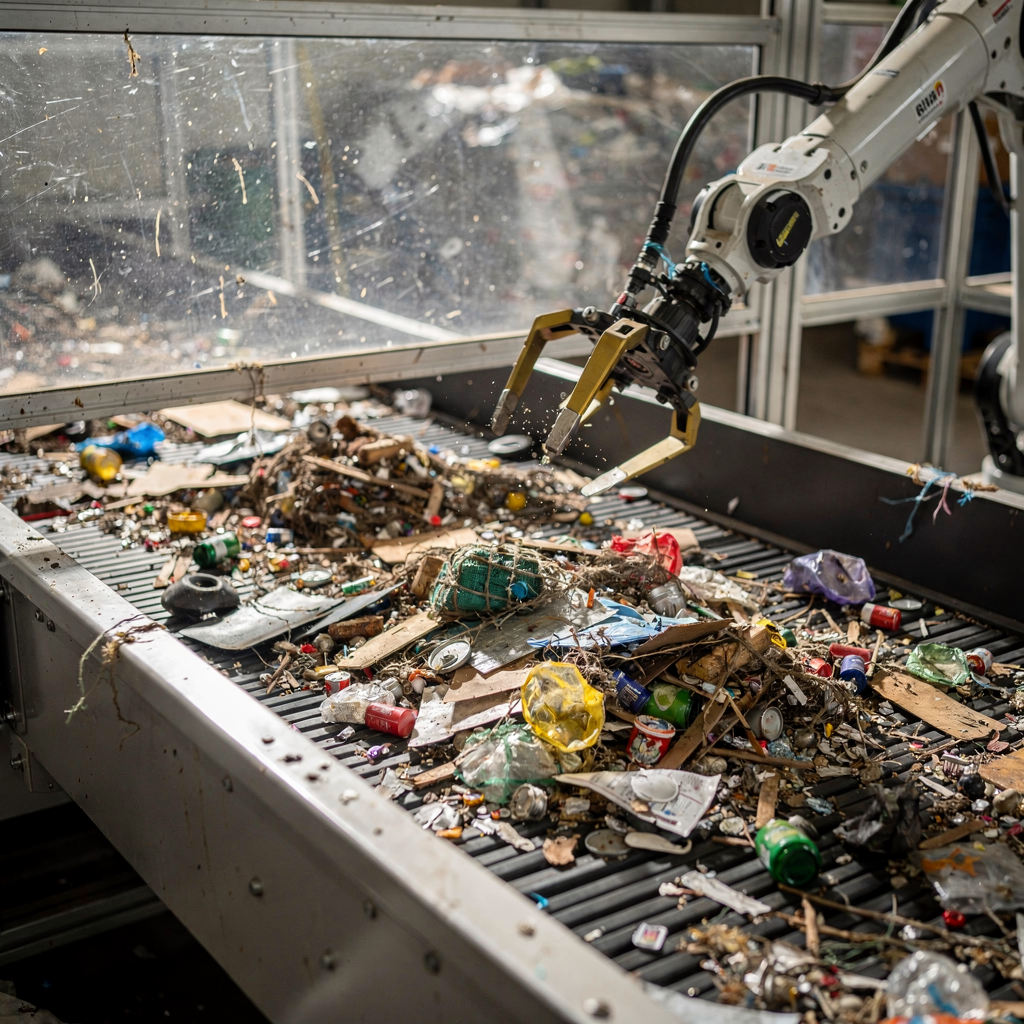
Deploying an AI agent on a Material Recovery Facility (MRF) floor begins with a clear goal: automate manual work and enhance recycling quality. First, teams map the conveyor flow. Next, they gather labelled images and sensor logs. Then, a model trains to classify items and to sort them into lanes. An AI agent integrates computer vision and robotic pickers to identify and physically separate plastic, metal and paper. Real pilots show clear gains. For example, AMP Robotics and ZenRobotics report classification accuracy often above 85–90% in trials, which reduces contamination and boosts recovered material value Integrating artificial intelligence for sustainable waste management.
To deploy, follow stepwise tasks: collect labelled images, train models with machine learning algorithms, integrate with pick-and-place hardware, run A/B tests, and measure contamination rate and throughput. Key metrics include sorting accuracy, tonnes per hour, contamination percentage and return on investment in months to payback. A quick win is to retrofit a single station to separate plastic and metal. That station can cut manual sorting costs, raise recyclate quality and improve resale price. Also, pairing an AI agent with existing PLCs and cameras keeps downtime low.
Operationally, the integration of AI must link to broader systems so that MRFs can monitor fill levels and track material flows. Our own experience at virtualworkforce.ai shows that automating email and operational workflows for logistics teams reduces time spent on repetitive tasks. Likewise, an AI agent on the line reduces time lost to manual triage. For successful scaling, define KPIs and apply human-in-the-loop controls. Finally, use test periods to measure whether the new station meets targets for sorting accuracy and tonnage. This process helps recycling teams demonstrate value to waste management companies and to procurement teams who fund automation.
Using ai-powered vision for material waste identification and optimization
Computer vision combined with NIR and hyperspectral SENSORs can identify hard-to-distinguish items. AI-powered vision improves classification of mixed plastics and composites. For instance, studies indicate AI-enhanced processes can improve sorting accuracy by about 30%, raising purity for downstream processors AI‐driven circular economy optimization in waste management. By combining image frames with weight and density readings, systems decide whether to send an item to reprocess, to a recovery stream, or to disposal.
Data fusion is central. AI agents analyze data from optical cameras, NIR, and scale output. This multi-sensor fusion guides decisions that optimize yield and resale value. The result is higher material purity, improved recovery rate and better downstream resale price. To measure success, track purity, recovery rate and revenue per tonne. Additionally, when recycling facilities add spectral sensors, they can separate plastics that look identical but have different polymer chemistry.
Practically, teams should create a labelled dataset that includes different types of waste and edge cases such as dirty or crumpled items. That training set feeds custom AI models that outperform generic models because they reflect local waste generation patterns. A careful integration of AI ensures the plant minimizes contamination, reduces material waste, and supports circular economy models. For more technical guidelines on combining vision with operational systems, explore vendor case studies and peer-reviewed reviews that show energy and carbon benefits Artificial intelligence for waste management in smart cities: a review.
Drowning in emails?
Here’s your way out
Save hours every day as AI Agents label and draft emails directly in Outlook or Gmail, giving your team more time to focus on high-value work.
Real-time agents use and ai agent in minutes for dynamic waste management
Real-time agents run at the line or at the edge to adjust to shifting input mixes. An AI agent in minutes can retune sorting rules when the feedstock changes. For seasonal shifts, for example, edge models detect composition changes and trigger short retrains. This reduces downtime and keeps throughput stable. Edge deployments lower latency and preserve local data privacy, while cloud retraining supports larger model updates.
Agents use lightweight models to spot drift and to flag anomalies. They monitor metrics such as throughput, contamination spikes and material purity. When a shift occurs, models can update parameters within minutes rather than hours. This real-time capability cuts manual rework and keeps conveyor lines running. It also helps plants monitor fill levels at intermediate hoppers and predict maintenance windows.
Because these deployments run near the hardware, they align with smart waste management practices and with internet of things architectures. Real-time data flows from cameras and sensors into agentic controllers that adapt actuator timing and picker velocity. The approach helps companies manage waste materials more responsively, minimizing rejects and reducing fuel consumption by cutting reprocessing runs. For teams that want to test this quickly, a focused pilot can show how a local agent improves contamination rate and maintains material purity while minimizing manual interventions.
Agentic ai, custom ai and ai-powered automation to enhance sustainability outcomes
Agentic AI brings autonomous decision-making to logistics, maintenance scheduling and priority setting on the line. Agentic ai can plan routes, schedule maintenance and shift sorting priorities to maximise circularity. However, these functions need governance. You should require audit logs, human override and clear KPIs to avoid unintended actions. Custom AI models, trained on site data, often outperform one-size-fits-all systems because they capture unique waste generation patterns.
AI-powered automation that coordinates collection routing with MRF priorities improves end-to-end resource recovery. Implemented ai-driven workflows can push high-value streams to processors that accept specific feedstocks. That kind of orchestration supports circular economy models and enhancing resource efficiency. Industry estimates project recovery rate gains of roughly 20–25% with combined optimization and automation AI for Sustainable Recycling: Efficient Model Optimization for Waste ….
To keep outcomes measurable, tie models to sustainability metrics such as reduced landfill tonnage and lower carbon emissions. Use a balanced scorecard that includes material purity, revenue from recyclates and lifecycle carbon. Agents handle dynamic prioritization but must log decisions so auditors can trace actions from collection to processing. For teams moving beyond pilots, custom ai is essential. It helps plants minimize contamination and supports reuse programs by identifying items suitable for refurbishment or resale.
Drowning in emails?
Here’s your way out
Save hours every day as AI Agents label and draft emails directly in Outlook or Gmail, giving your team more time to focus on high-value work.
How agents help reduce material waste and cut operational costs through automation
Agents help by automating repetitive tasks, by improving throughput and by reducing contamination. Many adopters report operational cost reductions of at least 15% from lower labour and higher throughput Integrating artificial intelligence for sustainable waste management. Automated pick-and-place saves time, while AI decision layers choose the best recovery pathway to maximize revenue. Financial KPIs should include cost per tonne processed, revenue from recovered materials, and maintenance costs for automated kit.
Material waste drops when systems accurately sort and when processors receive cleaner bales. Better sorting diverts more tonnage from landfill and increases usable recyclate. To manage risk, monitor for model drift, contamination spikes and maintenance bottlenecks. Operational efficiency improves when data pipelines feed both edge agents and central analytics.
For companies in the waste management industry, a stepwise pilot helps validate benefits. Start with a single stream, such as mixed plastic or OCC. Collect labelled data, run A/B tests and measure contamination reduction and revenue uplift. In parallel, ensure integration of AI with ERP and logistics so recovered materials move quickly to buyers. That approach reflects how virtualworkforce.ai connects operational data to automation: link systems, measure outcomes, and scale proven workflows without heavy IT lift. The outcome is a more circular workflow from production to disposal and a measurable reduction in material waste and in fuel use for reprocessing.
Workflow optimisation: ai agent, ai-powered tools and optimization for scalable recycling
An end-to-end approach connects collection routing, MRF sorting and market matching so agents optimize the whole workflow. Start with a pilot that measures accuracy, throughput and cost. Then iterate models and deploy standardized data pipelines across sites. The implementation plan should include human oversight and a rollback path.
AI systems that link field data—such as fill levels and composition estimates—with MRF controls enable dynamic scheduling. For example, routing decisions can change based on which plants have capacity for certain waste types. That kind of optimization reduces empty miles and lowers emissions. When organizations coordinate collection with processing priorities, they support circular economy targets and improve resale outcomes. This whole-chain view optimizes resource use and helps companies meet sustainability goals.
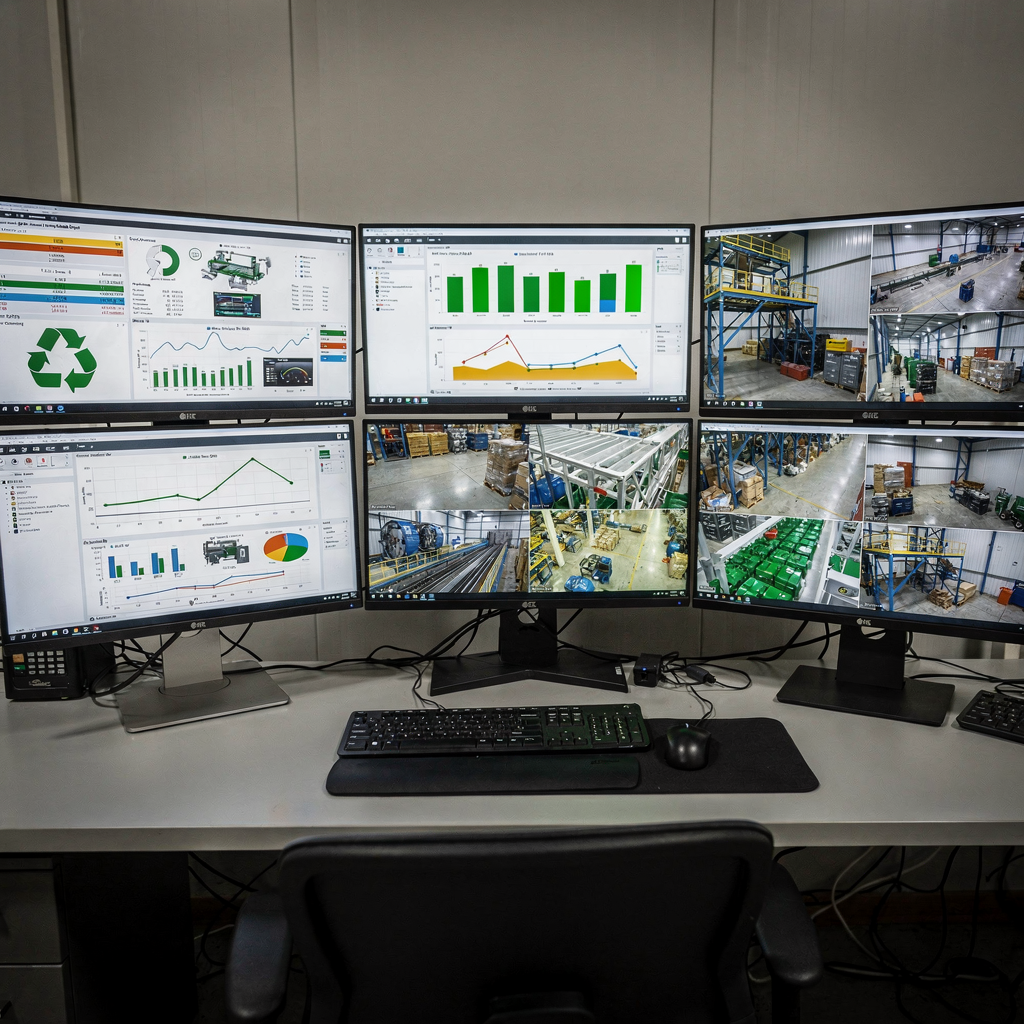
Scale facts show rapid interest from investors. The global AI agent market is expected to grow fast, reflecting broader adoption across sectors 150+ AI Agent Statistics [2026]. To scale successfully, document what worked in the pilot, standardize data labeling, and deploy custom ai models that reflect local waste streams. Also, ensure your rollout includes training for operations staff and dashboards that show effective waste diversion and revenue per tonne. Finally, measure long-term impact on waste sent to landfills, on carbon emissions and on profitability so stakeholders can track progress against sustainability metrics.
FAQ
What is an AI agent in recycling?
An AI agent is software that automates decisions on the plant floor and in logistics. It can classify items, trigger robotic pickers, and route materials to the best recovery pathway.
How quickly can an ai agent be deployed?
Deployment time varies by scope. A focused pilot on one station can run in weeks to months, while full-scale rollouts take longer and require data pipelines and hardware integration.
Can AI reduce contamination in recycling?
Yes. Studies show improved sorting accuracy and lower contamination rates when AI and sensor fusion are used AI‐driven circular economy optimization. Cleaner bales fetch higher resale prices and reduce landfill tonnage.
Do I need custom models or will generic AI work?
Custom AI usually performs better because it reflects local waste generation patterns and specific equipment. Custom ai models that train on site data reduce errors and improve material recovery.
What are key KPIs for AI-driven recycling?
Track sorting accuracy, tonnes per hour, contamination percentage, cost per tonne and revenue from recovered materials. Also track sustainability metrics like waste sent to landfills and carbon emissions.
Are edge or cloud deployments better?
Edge deployments deliver low latency for real-time control and better privacy, while cloud supports heavier retraining and fleet-level analytics. Many systems combine both approaches.
How do sensors improve identification?
NIR and hyperspectral sensors augment camera images to distinguish polymers and composites. That data, combined with scale and density readings, helps choose the correct recovery route.
Can AI help with collection routing?
Yes. Agents can schedule routes based on fill levels and plant capacity. This optimization reduces fuel use and empty miles, improving overall efficiency and sustainability.
What governance is required for agentic AI?
Implement audit logs, human override, and clear KPIs. Governance prevents unintended autonomous actions and keeps operations accountable and transparent.
How should a company start with AI in recycling?
Run a focused pilot on a single material stream, collect labelled data, define KPIs, and plan human-in-the-loop controls before scaling. This phased approach reduces risk and proves ROI.
Drowning in emails?
Here’s your way out
Save hours every day as AI Agents label and draft emails directly in Outlook or Gmail, giving your team more time to focus on high-value work.