


ai in waste management: how automation and automate systems streamline collection and sorting
AI is the use of algorithms and models that perceive, decide, and act on waste flows. First, AI gives firms a way to automate repetitive tasks and improve accuracy. For example, image classifiers now achieve sorting accuracy up to 99.95%. Also, route optimization pilots have cut fuel use by roughly 20–30% in real deployments, so fleets use less diesel and spend less time idling. Next, AI models for wastewater treatment predict pollutant removal with R² values between 0.64 and 1.00, which improves process control and reduces rework (study).
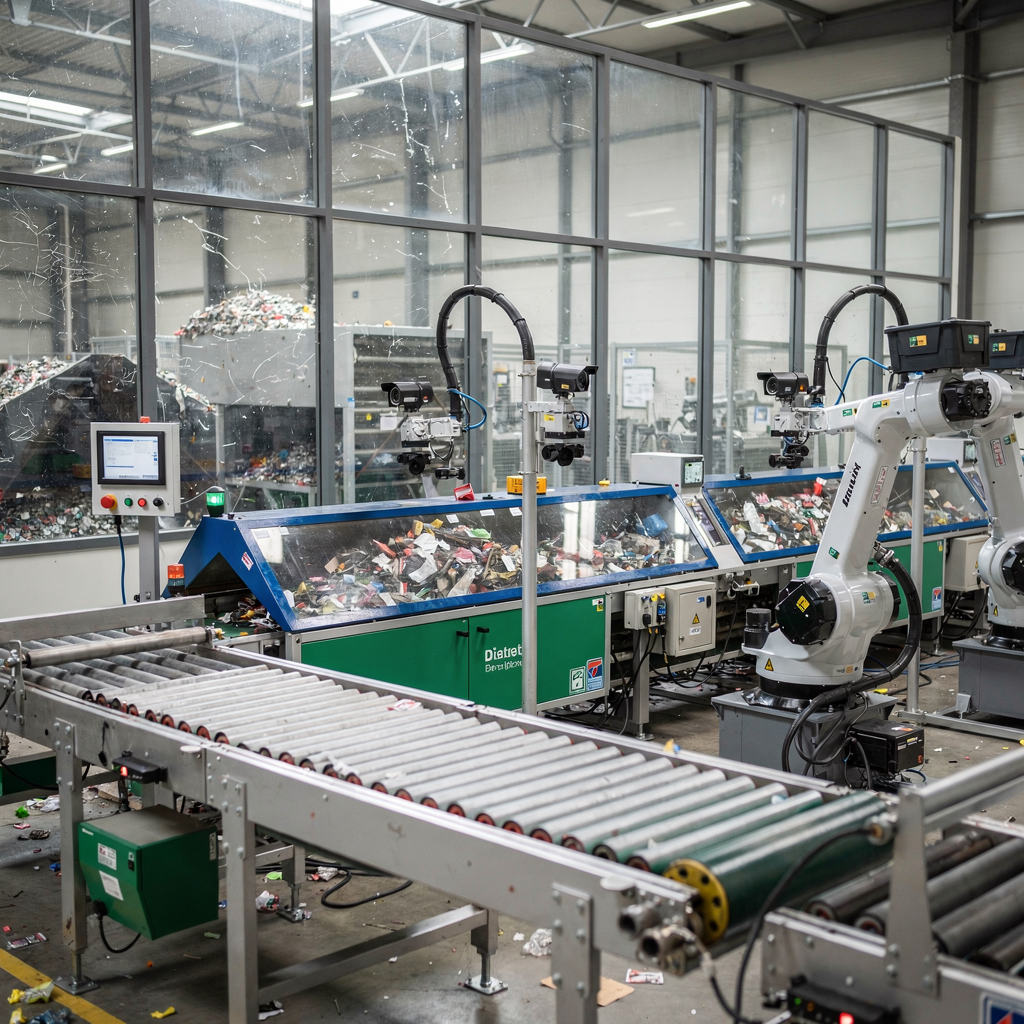
In practice, industrial sorting lines pair convolutional neural networks with sensor fusion. Companies like companies like amp robotics deploy cameras, near‑infrared sensors, and air jets to sort different types of waste at speed. These AI systems reduce contamination in recycling streams and increase recycling rates. Meanwhile, bin sensors and telematics feed AI agents that enable dynamic collection. The result is fewer unnecessary trips and lower operational costs. Also, AI supports verification of materials as they move through plants, which improves quality control and circular economy outcomes (research).
Automation in waste management often begins with small pilots. First, operators fit a camera or sensor. Then, an AI model classifies the item or computes fill levels in real-time. Next, collection schedules adjust automatically and haulers get shorter, safer routes. This kind of intelligent automation makes it easier to manage waste at scale while minimizing environmental impact. For teams that handle a lot of email and paperwork, virtualworkforce.ai shows how AI agents can automate responses and free up ops teams to focus on field performance and safety and compliance.
use cases: ai agent and ai agents for waste management that drive waste reduction
Explore how AI agents can drive measurable waste reduction across operations. First, image-based sorting increases material recovery. For example, AI-driven cameras and classifiers lower contamination and raise recycling yield on conveyor belts. Second, bin-level sensors with dynamic collection reduce truck mileage by avoiding empty stops. Third, predictive maintenance for compactors and conveyors cuts downtime, reduces repair bills, and improves throughput. Fourth, AI for wastewater process control helps plants meet effluent limits and remove pollutants more consistently (study). Fifth, landfill monitoring using remote sensing and anomaly detection reduces illegal dumping and tracks waste sent to landfills more accurately.
Each use case maps to a clear metric. For instance, contamination reductions translate to higher recycling rates and lower processing costs. Also, dynamic collection shows up as fewer truck trips, which lowers emissions and reducing fuel consumption. A case study of route optimization showed up to 30% operational efficiency gains when AI combined with IoT and graph analytics (research). In addition, AI-powered sorting systems have reported accuracy from 72.8% to 99.95% in published work, which helps plants recover more high-value materials (review).
Practical deployments also improve service. A single ai agent can send overflow alerts, route an extra pickup, and update a customer. That reduces missed pickups and raises satisfaction. In one approach, companies deploy a small bot to triage inbound messages, match complaints to pick-up records, and alert crews—this mirrors how virtualworkforce.ai automates operational email to streamline workflows for logistics and field teams. Together, these ai waste management examples show how waste management companies can convert data into tangible waste reduction and better circular economy outcomes.
Drowning in emails?
Here’s your way out
Save hours every day as AI Agents label and draft emails directly in Outlook or Gmail, giving your team more time to focus on high-value work.
optimize collection and disposal: route planning, predictive maintenance and smarter disposal decisions
AI models optimize collection and disposal by combining fill levels, traffic, and telematics. First, route planning uses bin fill data and live traffic to prioritize stops. Second, predictive maintenance forecasts component wear and schedules repairs before breakdowns occur. Third, disposal optimization selects the best treatment or recycling stream for a load based on material quality and price signals. These steps reduce costs and emissions while improving service.
Real implementations show concrete benefits. Pilot programs that used fill-level sensors and route optimization cut fuel consumption and mileage by 20–30% in many cases (research). Also, integrating AI with IoT and graph-theoretic methods can raise operational efficiency by about 30% when systems coordinate fleet and plant tasks (study). A simple before/after example helps illustrate: if a fleet ran 1,000 miles per day before optimization, a 25% reduction saves 250 miles daily and cuts fuel and management costs accordingly. That metric drives ROI.
Predictive maintenance matters because downtime is expensive. AI that predicts failures reduces repair time and parts inventory. Also, smarter disposal choices keep recyclable streams clean and push more material into circular economy loops. For firms that want to integrate AI systems, starting with a specific workflow—like dynamic routes or compactor health—lets teams measure benefits quickly. For email-heavy operations, an ai assistant can automate routine coordination with haulers and recycling partners. This reduces time spent on coordination and helps teams refine processes faster. Overall, combining route optimization, predictive maintenance, and disposal rules lets waste haulers and plants improve operational efficiency while minimizing environmental impact.
integrate systems: data-driven platforms, custom ai, multi-agent setups and how to deploy
To implement AI at scale you must integrate data and systems. Begin with a data-driven architecture that connects sensors, cameras, GPS, and legacy management systems. Next, choose edge vs cloud processing depending on latency and bandwidth needs. Also, decide between custom ai and off-the-shelf models. Custom AI fits unique streams, while packaged ai systems speed time to value. Multi-agent approaches let agents coordinate fleet routing with plant sorting. These agents coordinate via a shared data layer and simple rules. For complex operations, agentic ai supports distributed decision making across sites.
Minimum data to start includes fill levels, GPS traces, camera images, and equipment logs. Also, you should collect historical collection schedules and basic billing data. Data and analytics pipelines must handle cleaning, labeling, and storage. Watch out for pitfalls: legacy systems often use proprietary formats and poor timestamps. This creates friction. Also, training datasets suffer from imbalance; models can overfit when rare waste types are underrepresented. Mitigate this with synthetic augmentation and targeted labeling.
Deployment steps usually follow a proven pattern: pilot, measure, refine, scale. A pilot with a single route or sorting line works well. Then, add more sites and push models to edge devices for real-time inference. Governance matters. Set access controls, audit logs, and verification procedures for model outputs. For teams that field a lot of operational email, virtualworkforce.ai offers no-code setup to integrate ERP and TMS data with automated responses. This reduces manual triage and keeps human teams focused on exceptions. Finally, choose partners who understand both waste management automation and the supply chain for fast, compliant rollouts.

Drowning in emails?
Here’s your way out
Save hours every day as AI Agents label and draft emails directly in Outlook or Gmail, giving your team more time to focus on high-value work.
ai agent in minutes: build a bot, deploy fast and ai agents improve customer outcomes
This short playbook shows how to assemble an ai agent in minutes for a focused problem. First, pick a high-value, low-risk task. Good examples are overflow alerts, missed pickup notifications, or an automated sorting classifier for a specific material. Second, collect a modest dataset—hundreds of images or a few weeks of bin fill history. Third, train a lightweight model and wrap it in a bot that sends alerts or creates tasks. Fourth, deploy and measure KPIs for 6–8 weeks. That sequence is simple and fast.
Start small and iterate. For overflow alerts, a bot that watches fill levels and sends an SMS or email can reduce missed pickups quickly. For sorting, a classifier that tags jam-prone items and flags verification samples works well. These pilots prove value and make it easier to scale. After a successful pilot, refine thresholds, extend agents to more routes, and automate dispatch. An ai agent can also draft customer replies or escalation notes. In operations teams that handle many emails, an ai assistant automates routing, drafts replies, and reduces handling time. virtualworkforce.ai showcases how a bot can cut email handling from 4.5 to 1.5 minutes per message, which frees staff to act on exceptions and improves response speed.
Measure outcomes carefully. Track pickup adherence, complaint volume, cost per collection, and recycling rates. Use a control group if possible. After 6–8 weeks you should see fewer complaints, lower management costs, and clearer documentation for safety and compliance. Then, decide whether to deploy systemwide. With this low-risk approach, specialized ai and custom ai models prove their ROI before heavy investment. Firms that follow this playbook refine their models, improve workflow, and scale confidently while keeping verification and governance in place.
automation in waste management at scale: economics, regulation and future directions for ai agents for waste management
Scaling automation in waste management requires attention to economics, policy, and technology. Economically, AI adoption in environmental applications is expected to grow at a CAGR above 20% through 2026, which signals expanding market interest and vendor maturity (market data). Case studies report operational improvements that boost profitability, and AI-powered sorting saves processing costs by recovering higher-value streams. Also, combining AI with IoT can improve operational efficiency near 30% in some settings (research). These gains justify investment.
Regulatory and reporting requirements also shape deployments. Firms must track waste generation, safe disposal, and recycling rates to meet circular economy targets. Reporting standards demand transparent logs and verification for material claims. Therefore, integrate traceability early. Data and analytics platforms should create auditable trails for regulator reviews. Safety and compliance must be baked into models, and continuous monitoring must flag anomalies.
Future directions include tighter AI-IoT-graph integration, continuous learning systems that adapt to evolving waste streams, and more multi-agent coordination across fleets and plants. Advanced AI will support smarter supply chain decisions—for example, routing a load to the highest-value processor in real-time. Agentic AI that coordinates sorting, routing, and billing will reduce errors and lower management costs. To begin, shortlist three steps: run a focused pilot, create a data strategy, and select a partner with domain experience. If your ops team struggles with inbox overload, consider a partner like virtualworkforce.ai to automate operational email and free staff to act on field insights. These steps let companies transform waste management while improving operational efficiency and minimizing environmental impact.
FAQ
What is an AI agent in waste management?
An AI agent is an autonomous software component that collects data, makes decisions, and triggers actions in waste operations. It can monitor fill levels, schedule pickups, or classify materials to streamline processes and reduce waste.
How quickly can I deploy an ai agent in minutes?
You can deploy a simple alert or classification bot in a few weeks with a focused pilot. Measure KPIs over 6–8 weeks to prove value and then scale gradually.
Do AI systems actually improve recycling rates?
Yes. Image-based sorting and sensor fusion have been shown to increase material recovery and reduce contamination, with accuracy reported as high as 99.95% in research (source). This improves recycling rates and lowers processing costs.
Can AI reduce fuel consumption for collection fleets?
Yes. Route optimization pilots and dynamic collection based on fill levels typically reduce mileage and reducing fuel consumption by about 20–30% in published deployments (study). This lowers costs and emissions.
What data do I need to start?
Begin with fill levels, GPS traces, camera images, and equipment logs. Also gather historical schedules and billing data to train models and measure outcomes.
How do I avoid model overfitting and data imbalance?
Use augmentation, targeted labeling of rare waste types, and validation on held-out sites. Also, run small pilots and refine models with new data to improve generalization.
How do AI agents improve customer service?
AI agents automate alerts, draft replies, and route emails, which reduces missed pickups and complaint resolution time. For teams drowning in messages, an ai assistant can streamline correspondence and offer consistent guidance.
Are there regulatory concerns with AI in waste?
Yes. Reporting, traceability, and verification requirements demand auditable systems. Plan governance, logs, and verification workflows to meet reporting needs and circular economy targets.
Which partners should I consider for pilots?
Look for vendors with both domain experience and technical depth. Partners that bridge operations, data integration, and edge inference help you scale. For email and ops automation, consider vendors that integrate ERP and TMS data.
What are the next steps to scale automation in waste management?
Run a focused pilot, build a data strategy, and select a partner to help refine models and deploy safely at scale. These steps reduce risk and demonstrate ROI before larger rollouts.
Drowning in emails?
Here’s your way out
Save hours every day as AI Agents label and draft emails directly in Outlook or Gmail, giving your team more time to focus on high-value work.