


ai in field service — what an AI assistant does for field operations
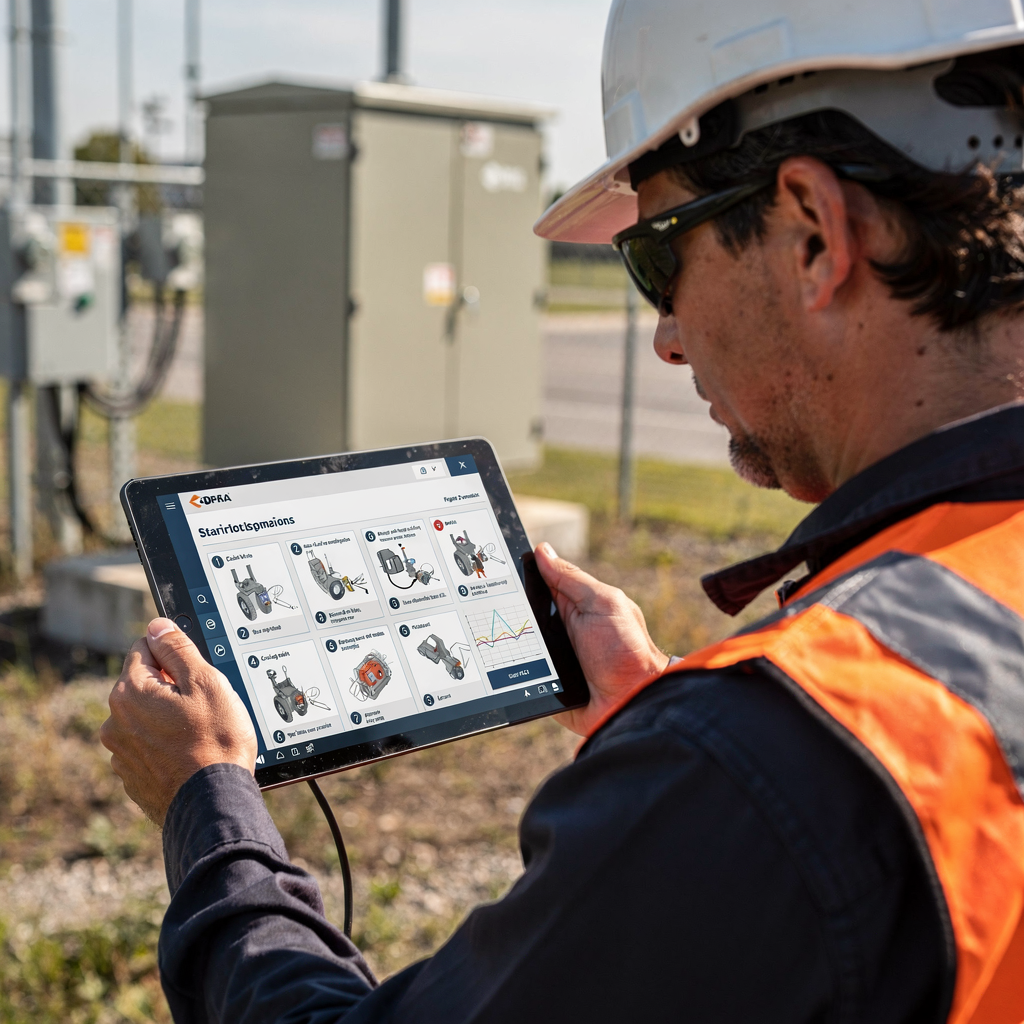
First, define an AI assistant in the context of field work. An AI assistant is a mobile virtual assistant or on-device model that helps TECHNICIANS run jobs faster and with fewer mistakes. It can be a chatbot, an AI agent, or an embedded model that sits inside FIELD SERVICE MANAGEMENT apps. Second, the core role is clear: the assistant offers step-by-step fixes, live diagnostics, and quick access to past manuals and service records so that technicians get the right job done on a single visit. Technicians get step-by-step fixes and live diagnostics on their device, reducing repeat visits.
Next, list the key capabilities. The AI assistant will troubleshoot in REAL-TIME, guide repair steps with checklists, convert voice to text for job notes, and suggest parts from past records. It can surface images, CAD overlays, and augmented reality hints for complex repairs. For example, a junior TECHNICIAN receives a guided repair sequence and a parts checklist while a senior provides remote verification. This raises first-time fix rates and saves travel time.
Also, show quick use cases. First-time fix support matters for customer satisfaction and cost. On-site diagnostics let technicians run tests with AI-driven fault trees. Augmented reality overlays help with wiring and alignment tasks. Service teams benefit because the AI reduces ambiguity and standardises steps across FIELD SERVICE TEAMS. At the same time, AI helps preserve institutional KNOWLEDGE MANAGEMENT by turning tacit knowledge into repeatable steps.
Finally, cite adoption to add authority. Many high-performing FIELD SERVICE companies now use AI; roughly 80% adoption among top performers highlights why the trend matters. If you want a practical view of how an AI assistant fits into logistics and operations email flows, see this guide on a virtual assistant for logistics for more context (virtual assistant for logistics). Together, these capabilities mean AI improves FIELD SERVICE work by equipping technicians in the field with immediate, contextual help so they finish jobs faster and with fewer return visits.
field service management — how AI optimises scheduling, dispatch and service history
First, AI changes how FIELD SERVICE MANAGEMENT handles daily planning. Intelligent scheduling matches skills to tasks, minimises travel and dynamically reassigns jobs when delays occur. For dispatchers, that means less manual triage and faster responses. For firms that adopt AI, the result often shows in KPIs: reduced mean time to repair and higher first-time fix rates. In practice, AI assigns the right TECHNICIAN for the right job, at the right time. This reduces wasted visits and ensures the right job fit for complex tasks.
Next, explain the role of service history. Past SERVICE RECORDS and ticket data let AI suggest likely causes and needed parts. This speeds diagnosis and boosts job completion. Because AI draws on historical patterns, it can flag recurring faults and alert inventory planners to parts demand. As a result, route optimisation and reduced TRAVEL TIME lower fuel and downtime costs. In addition, teams see throughput gains: AI-powered customer agents can handle about 13.8% more inquiries per hour, which shows how automation raises capacity across channels.
Also, underline economic impact. Investment in AI pays off across operations. Microsoft found that every dollar spent on AI generates roughly $4.90 in economic value, which supports pilots that target MTTR or FTF as their KPI. Field service managers who run a focused 90-day pilot often measure clear before/after gains in scheduling time, FTF rate and travel cost.
Finally, practical links help teams move faster. For example, operations that need automated logistics correspondence can learn from email automation approaches (automated logistics correspondence). In short, AI in FIELD SERVICE MANAGEMENT streamlines planning, uses service history to speed troubleshooting, and optimises routes so service delivery is faster and more reliable.
Drowning in emails?
Here’s your way out
Save hours every day as AI Agents label and draft emails directly in Outlook or Gmail, giving your team more time to focus on high-value work.
field service technicians and ai agents — real-time support, training and workload balance
First, AI agents give field service technicians live help. They provide fault trees, predictive suggestions and a parts checklist as the TECHNICIAN works. This real-time advice reduces guesswork and improves service quality. In practice, an AI agent can surface the most likely causes from past SERVICE HISTORY and suggest the tools and spares to carry. Thus, junior staff learn fast and senior staff scale their expertise.
Second, training and coaching happen on the job. Microlearning prompts, quick SOP reminders and interactive troubleshooting let technicians build skill while billing time. For a new TECHNICIAN, a guided sequence with photos and decision points cuts training hours. A typical vignette: a junior resolves a tricky HVAC call with an AI-guided troubleshooting flow, then uploads a short clip that becomes a knowledge snippet for others. This tight loop boosts knowledge management and improves service quality.
Also, AI balances workload. Predictive job-time estimates let planners avoid overload and reduce overtime. When AI predicts longer-than-expected tasks, dispatch can reassign the right technician or add buffer time. This prevents rushes and keeps morale steady. However, accuracy is not perfect. Studies show that AI assistant responses sometimes contain issues, so human oversight remains essential; teams should validate AI outputs before final actions (study on AI assistant issues).
Finally, tie to tools and automation. Field service leaders who want to see how AI integrates with email and ops workflows can explore work on scaling logistics with AI agents (how to scale logistics operations with AI agents). In short, AI agents empower field technicians with immediate guidance, enable continuous learning, and help predict workloads so teams deliver safer, faster and more consistent service.
optimize field operations — streamline workflows, parts inventory and compliance
First, AI optimises core operational flows. It automates parts forecasting, prioritises stock, and reduces stockouts. Predictive maintenance drives better spare parts planning and fewer emergency orders. For medium to large field service businesses, this cuts downtime and lowers replacement costs. At the same time, automated allocation uses service history and demand signals to place parts where they are most likely needed.
Second, inventory management becomes smarter. AI analyses past tickets, identifies recurring component failures and triggers replenishment before stockouts happen. This process improves job completion and reduces repeat visits. Service software that links ERP and FSM ensures a single source of truth, so planners see real-time stock levels. For teams that want to integrate email-triggered parts requests, automation examples show how to convert emails into structured requests and push them to ERP (ERP email automation for logistics).
Also, compliance and audit trails improve. AI generates standardised job notes, creates searchable audit trails, and enforces SOPs during handovers. This reduces human error and supports safer sign-offs. For regulated environments, automated documentation makes inspections easier. In addition, structured service data supports analytics that optimise service workflows and resource allocation.
Finally, the ROI case is strong. With fewer emergency parts orders and fewer repeat visits, teams save cost and time. Microsoft’s economic multiplier supports investment in predictive systems (economic impact of AI). As a practical tip, integrate AI with ERP/CRM and your FIELD SERVICE MANAGEMENT SOFTWARE to keep one authoritative dataset. Doing so helps service organisations streamline operations, ensure compliance and deliver better service experience overall.

Drowning in emails?
Here’s your way out
Save hours every day as AI Agents label and draft emails directly in Outlook or Gmail, giving your team more time to focus on high-value work.
generative ai in field service management — automating reports, knowledge and customer communication
First, generative AI automates paperwork. It converts voice and short notes into structured job reports and customer summaries. This saves technicians time and ensures consistent records. For instance, AI can draft a job completion report from voice notes and checklist data, then present it for a quick review. This reduces admin and improves job completion accuracy.
Second, generative AI powers knowledge management. It searches manuals, previous tickets and repair logs to provide concise steps to troubleshoot. Generative AI models can summarise long service history so technicians get the most relevant guidance. However, teams must guard against hallucinations. Always verify generated outputs and use human review for safety‑critical content.
Also, customer communication improves. AI drafts ETA notices, follow-ups and friendly job summaries that keep customers informed. This improves customer experience and supports boosting customer satisfaction after the visit. AI agents can streamline replies that are grounded in operational data, so messages remain accurate. For email automation tied to operations, see strategies to automate logistics emails with Google Workspace and virtualworkforce.ai (automate logistics emails with Google Workspace).
Finally, implementation requires guardrails. Use prompt templates, human-in-the-loop checks and confidence thresholds to reduce errors. For best outcomes, combine generative AI with deterministic data pulls so templates draw from ERP, FSM and inventory sources. In short, generative AI reduces admin, improves knowledge search, and keeps customers informed while ensuring outputs are checked and traceable.
future of field service — best practices for service teams to streamline field service operations
First, adopt AI in phases. Start with a small pilot that targets a single KPI such as FTF or MTTR. Measure baseline performance, run the pilot for 90 days, then compare results. This phased approach helps FIELD SERVICE LEADERS validate ROI before wider rollout. It also ensures teams learn and adapt without disruption.
Second, enforce governance and data security. Secure data pipelines, privacy compliance and role-based access keep customer and operational data safe. Establish monitoring for model drift and set accuracy checks. Human oversight remains essential because AI is not flawless and can produce errors; incorporate human review for critical decisions.
Also, invest in integration and training. Connect AI systems to ERP, FSM and CRM so you maintain a single source of truth. Train technicians and dispatchers to interpret AI suggestions and to verify parts recommendations. Offer microlearning modules so new processes stick. For service organisations overwhelmed by email and ops workflows, using AI agents that automate operational email can free time for core service delivery (improve logistics customer service with AI).
Finally, follow these quick best practices checklist. First, start small with a pilot tied to cost or satisfaction metrics. Second, integrate AI with existing FSM and ERP. Third, enforce human‑in‑the‑loop checks and security rules. Fourth, measure FTF, MTTR and CSAT and iterate. Fifth, scale proven patterns across regions. Doing so helps FIELD SERVICE TEAMS capture the power of AI while managing risk. In sum, the future of field service depends on pragmatic pilots, solid governance, and continuous measurement so teams can save time, improve service and deliver exceptional service at scale.
FAQ
What is an AI assistant for field service?
An AI assistant for field service is a mobile virtual assistant or on-device model that supports technicians with diagnostics, guided steps and documentation. It helps automate routine tasks and provides contextual information to speed repairs and improve job completion.
How does AI improve first-time fix rates?
AI analyses past service records and suggests the most likely fixes and required parts before the technician arrives. This preparation reduces guesswork and repeat visits, which directly improves first-time fix rates.
Are AI agents reliable for real-time troubleshooting?
AI provides valuable real-time suggestions, but it is not flawless. Teams should use AI as a decision support tool and keep human oversight in place to verify actions for safety-critical repairs.
Can generative AI write my job reports?
Yes. Generative AI can draft structured job reports and customer summaries from voice notes and checklists. However, always include a human review step to confirm accuracy and to avoid incorrect or misleading text.
How do I start a pilot for AI in field service?
Begin with a 90-day pilot focused on one KPI such as FTF or MTTR. Measure baseline metrics, implement AI for a subset of jobs, and compare performance at the end. Use a secure, integrated setup with clear governance.
Will AI replace field technicians?
No. AI supports and empowers technicians rather than replacing them. It automates routine tasks, reduces admin and provides decision support so technicians can focus on complex repairs and customer interactions.
How does AI help with inventory management?
AI predicts parts demand using past tickets and recurring fault patterns, which reduces stockouts and emergency orders. Integrating AI with ERP and FSM yields a single source of truth for planners.
What are common risks when adopting AI?
Common risks include inaccurate outputs, integration complexity and data security concerns. Mitigate these with human-in-the-loop validation, secure data pipelines and phased rollouts.
How can operations teams automate emails related to field work?
Operations teams can use AI agents that classify intent, draft replies, and push structured data into ERP and FSM systems. For examples tailored to logistics and operations email flows, see virtualworkforce.ai resources on automated logistics correspondence.
Which KPIs should I track during an AI rollout?
Track first-time fix rate (FTF), mean time to repair (MTTR), service quality and customer satisfaction. Also monitor handling time for operational emails and the accuracy of AI suggestions to ensure steady improvements.
Drowning in emails?
Here’s your way out
Save hours every day as AI Agents label and draft emails directly in Outlook or Gmail, giving your team more time to focus on high-value work.