


underwrite faster: ai-powered assistant to automate submission triage and loss run extraction
Underwriters face an inbox that drains time. Daily they must read, classify and route dozens of submissions. AI can compress these routines, and underwrite more cases in less time. First, an ai-powered assistant labels incoming emails by intent, customer and urgency. Then it extracts named fields, and finally it routes the case to the right team or individual. This reduces hand-offs, and it helps underwriters focus on risk rather than admin.
Automation can meaningfully shorten turnaround. For example, platforms that centralise submissions and routing report substantial reductions in routing delays and faster handling; some vendors show routing improvements that cut processing time by roughly thirty percentGoodData Underwriting Insights. Also, firms investing in analytics report higher underwriting profitability and throughput gains when they integrate automated triage across channelsMcKinsey. As a result, teams can underwrite more business, and they can spend more time pricing and counselling brokers.
Practical example: a central portal receives 1,000 underwriting submissions. An assistant identifies 600 as complete, 300 as needing documents, and 100 as complex. The assistant routes the 600 to a standard queue, the 300 trigger automated requests, and the 100 go to senior underwriters. Consequently, expected turnaround falls. Moreover, centralisation concentrates work for underwriters on higher-value risks, which helps underwrite more profitably. This mirrors how virtualworkforce.ai automates the email lifecycle for operations so teams reduce handling time and restore context across threads; see the virtual assistant overview for similar mail automation patternsvirtual assistant logistics.
Chapter deliverable: step-by-step flow and savings. Step 1: inbound capture and labelling. Step 2: field extraction into a structured format. Step 3: routing by appetite and capacity. Step 4: automated missing information requests. Step 5: underwriter review and bind. For every 1,000 submissions this flow can roughly halve triage time and raise throughput several-fold, depending on existing inefficiencies. Finally, follow a guideline-driven rollout so the assistant aligns with existing underwriting guidelines and audit requirements.
ai agent for underwriters: extract loss runs, flag missing info and boost accuracy
Underwriters often pause a quote while they chase claims history and clarifications. An ai agent can extract relevant fields, and it can flag missing information that blocks a quote. Modern OCR plus NLP rapidly parse attachments, and they convert unstructured claims text into a structured format for downstream analysis. Vendors report extraction speeds far faster than manual review, which helps underwrite with better context and less delayScienceSoft on AI underwriting.
Start with a confidence threshold. If the agent reads a claims table with high confidence, it populates the policy record automatically. If confidence falls below a rule, the message goes to human review. This balance eliminates careless errors and maintains auditability. Also, automated request templates speed follow-up. For example, an automated email might request missing limits, claim dates and reserve breakdowns. Use templated language, then require human sign-off when the request includes coverage changes or unusual exposures.
Operational rules matter. Set gates for escalation, and record why an item escalated. Include verification steps for broker contacts using phone or email verification. This reduces risk of misrouting and supports compliance. An effective approach uses three levels: auto-resolve, assist-and-verify, and escalate-to-underwriter. The assistant streamlines common replies, and it can draft precise conditional wording so the underwriter only finalises the decision. In practice, machine learning models can extract most fields automatically while preserving the underwriter’s final judgement.
Template example (deliverable): an automated request for missing information. “Please provide a completed ACORD form, claims detail for the last five years, and loss severity breakdown by year. If available, attach policy limits and deductibles.” Use this template when the ai assistant for underwriting detects a gap. Also include rules to decide when to escalate: missing claim dates, inconsistent totals, or a claims count above a threshold should trigger human review. This approach helps underwrite faster while preserving precision and a clear audit trail.
Drowning in emails?
Here’s your way out
Save hours every day as AI Agents label and draft emails directly in Outlook or Gmail, giving your team more time to focus on high-value work.
ai in the underwriting process: structure inbox, streamline routing and underwriter workload
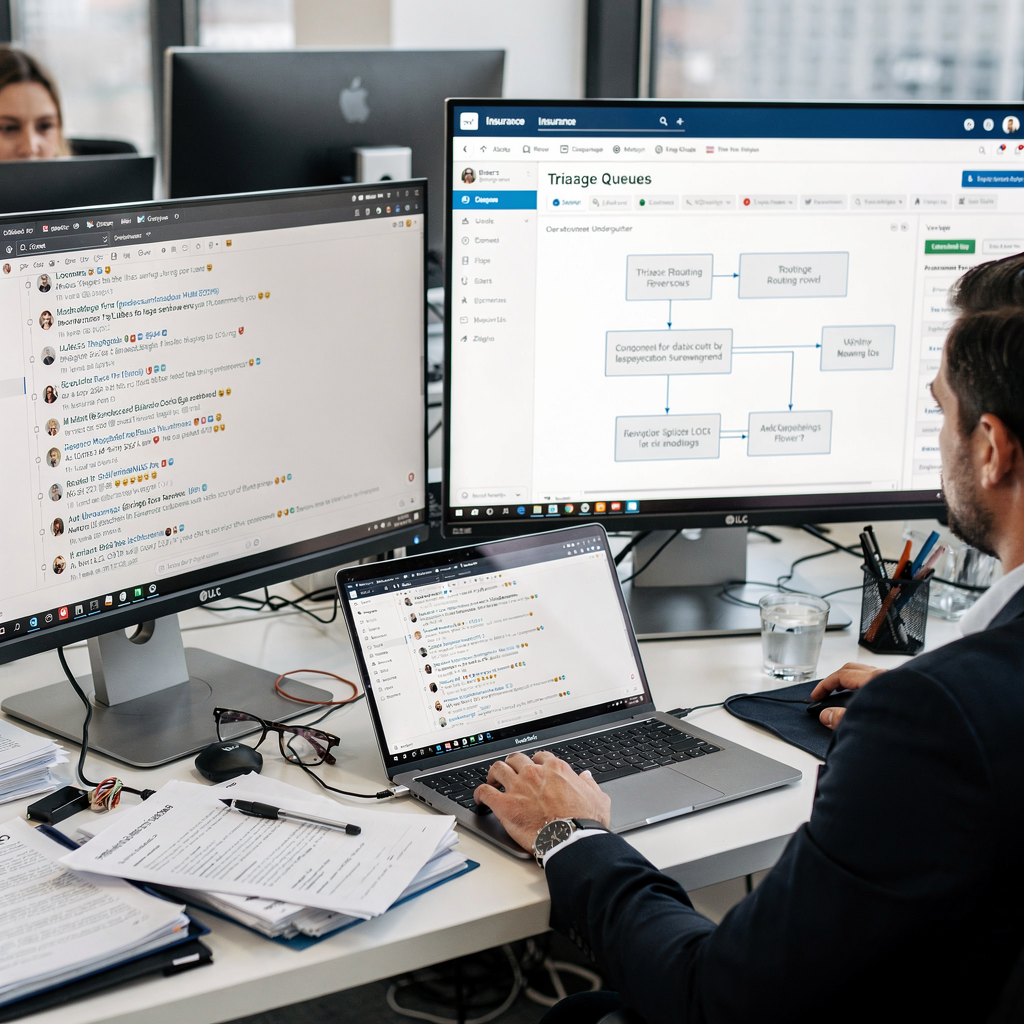
AI restructures the inbox into actionable queues. Rather than a single shared mailbox, the assistant creates triage lanes, priority stacks and case cards. Each card contains extracted fields, a confidence score and context links to prior exchanges. Underwriters see a concise profile and the recommended next action. This reduces context switching, and it helps underwrite with consistent data.
Classification models tag messages by appetite, exposure and urgency. Routing rules then match cases to the right underwriter by specialty and team capacity. Also, feedback loops let underwriters correct labels, which retrains the models over time. This reduces re-assignment and supports continuous improvement. Many insurers investing in data and analytics do this to improve underwriting performanceMcKinsey.
Implementation checklist (deliverable): integrate the assistant with mail servers, add connectors to policy and claims systems, map appetite rules, and define audit fields for each action. Next, set up an approval gate for automated replies that would materially change terms. Then, run a small pilot, measure time-to-quote and complete-first-pass rate, and refine rules. virtualworkforce.ai shows how to integrate email drafting and data grounding with operational systems; see guidance on automated email drafting for logistics teams that applies equally to insurersemail drafting AI.
Practical safeguards include logging all decisions for audit and compliance, and maintaining an easy override for underwriters. The system should also include verification steps for broker contact details and a way to push structured data back into the policy administration system to replace manual data entry. Ultimately, this structure reduces avoidable error and helps underwriter productivity while preserving control.
underwriting analysis and risk assessment: how ai improves pricing and decision speed
Linking extracted submission data to analytics speeds underwriting analysis and pricing. When historical claims and exposures are in structured fields, models can pre-score risk and suggest pricing bands. This frees the underwriter to focus on judgement tasks and exceptions. Carriers that embed analytics into underwriting workflows often report better results. For instance, advanced analytics capabilities correlate with superior operating results and improved profitability in the marketMcKinsey.
Start by combining three data sources: the submission payload, claims history and external datasets. Then compute a pre-score and surface the most relevant drivers. Also include an explanation layer so underwriters understand why a score appeared. This maintains trust, and it helps underwrite with clarity. For higher-value risks, the platform should propose a recommended pricing range and show comparable placements. That way the underwriter can adjust margins and conditions quickly.
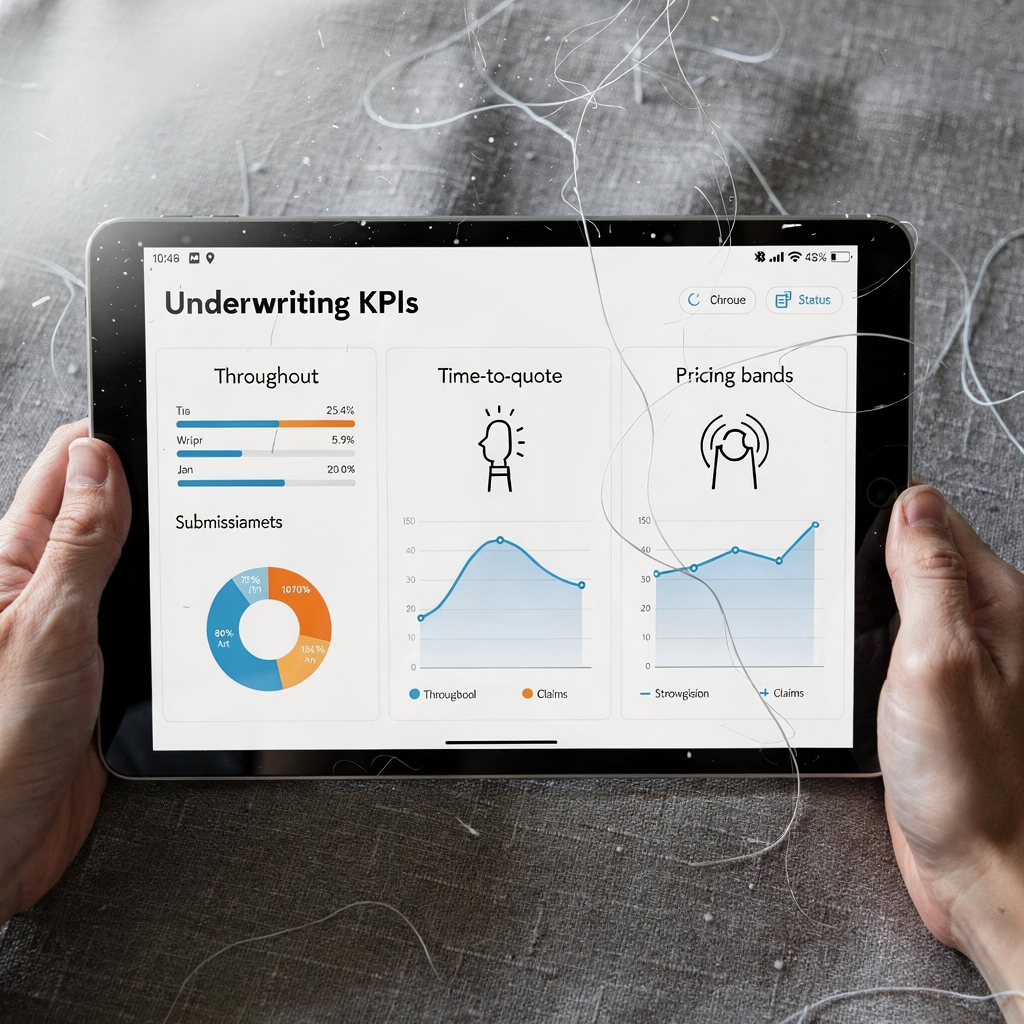
Key KPIs to measure impact (deliverable): turnaround times, submission throughput, complete-first-pass rate, loss-run extraction accuracy and hit-rate on priced submissions. Tracking these KPIs shows whether the assistant improves decision-making and profitability. In practice, an insurer that ties extracted fields to pricing engines can reduce back-and-forth with brokers, and it can accelerate binds. Use an audit trail that records who adjusted a price and why, and keep workflows that require human sign-off for material changes to terms or pricing.
Finally, combine machine learning signals with underwriting experience. As Benjamin Walker at Munich Re emphasises, AI complements experience and will not replace itMunich Re. Thus a human-centred deployment improves adoption and ensures models reflect commercial judgement as well as data patterns.
Drowning in emails?
Here’s your way out
Save hours every day as AI Agents label and draft emails directly in Outlook or Gmail, giving your team more time to focus on high-value work.
assistant and generative ai: automate templates, responses and complex underwriting questions
Generative AI can draft broker responses, conditional binders and answers to underwriting questions. Use generative ai carefully, and always align output to firm rules. Templates reduce variability, and approval gates prevent risky language from reaching the broker. Also log all generated text for audit and compliance so teams can review historic drafts when needed.
Practical controls include a library of approved clauses, mandatory human sign-off for material quotes, and prompts that draw only on grounded operational data. This prevents hallucination, and it keeps the assistant within underwriting guidelines. Keep an approval workflow where the assistant suggests text and the underwriter edits and approves. That way automation speeds routine replies, and underwriters maintain final judgement.
Efficiency gains are clear. Automated replies cut back-and-forth, and they let underwriters spend time on nuanced risk conversations. The assistant streamlines routine administrative tasks, drafts ACORD forms and pre-populates policy wording. Use machine learning models to suggest context-aware phrasing, and require the underwriter to confirm any language that impacts coverage or pricing. This balance preserves precision, and it reduces repetitive tasks that previously relied on manual templates.
Governance checklist (deliverable): define approved templates, set prompt controls, create approval gates for quotes, maintain compliance records, and keep an audit log of all generated messages. Also ensure staff can adapt templates to special cases and that model outputs remain tethered to verified data. These steps let teams tailor the assistant to their playbook while safeguarding compliance and brand voice.
insight, key underwriting metrics and structure to boost adoption by underwriters
Adoption hinges on clear insights and a pragmatic change plan. Provide dashboards that show savings and explain model suggestions. Include KPIs such as submission throughput, time-to-quote, complete-first-pass rate, loss-run extraction accuracy and escalation rate. These metrics prove value and help underwrite teams see tangible benefits. For additional reading on scaling operations with AI agents, review guidance on scaling logistics operations with AI agents that maps well to insurance pilotsscaling operations with AI agents.
Start small with a 90-day pilot (deliverable). Phase 1: integrate mail and policy systems and deploy in a single business unit. Phase 2: measure baseline KPIs and validate extraction accuracy. Phase 3: expand routing rules and add pricing suggestions. Use training sessions and regular feedback loops to refine the models. Also appoint champions among underwriters to drive trust and to ensure the assistant reflects real underwriting practice. Finally, measure ROI by comparing time saved per email and reduced manual data entry against pilot costs. See our case studies on automated correspondence to learn how email automation reduced handling time in operations teamsautomated logistics correspondence.
Checklist to encourage adoption: provide clear guideline documents, run short hands-on sessions, log every decision for audit, and show early wins such as faster turnaround and fewer errors. Deploy with IT governance, and allow business teams to customise routing and tone without prompt engineering. With this approach the assistant helps underwrite faster, and it supports a smoother shift from manual processes to an auditable, data-driven workflow.
FAQ
What is an AI email assistant for underwriters?
An AI email assistant analyses inbound messages, extracts key fields and suggests next actions. It can auto-route submissions, draft responses and populate policy systems to reduce manual work.
How much time can automation save on submission triage?
Time savings vary by firm, but centralised routing and automation can cut significant processing time. For example, industry reports show routing improvements that reduce processing time by around thirty percent in some deploymentsGoodData Underwriting Insights.
Can an ai agent read attachments like claims summaries?
Yes. Modern OCR and NLP can parse attachments and extract structured fields. However, setting confidence thresholds and human review gates keeps accuracy high and prevents false positives.
How does the assistant flag missing information?
The assistant compares extracted fields to required templates and then triggers an automated request when items are absent. Rules define when to escalate to a human underwriter.
Will generative ai replace underwriters?
No. Generative AI helps draft replies and templates, but experienced underwriters remain essential for judgement and exceptions. Industry leaders stress that AI complements human expertiseMunich Re.
How do I measure success in a pilot?
Track KPIs such as submission throughput, time-to-quote and complete-first-pass rate. Also monitor extraction accuracy and escalation rate to ensure quality and ROI.
What compliance safeguards should we add?
Keep an audit trail, require human sign-off for material language, and store generated drafts for review. These steps preserve accountability and regulatory compliance.
Can the assistant integrate with existing policy systems?
Yes. Most deployments connect to policy administration, claims and document stores so the assistant can ground replies in verified data and reduce manual data entry.
How do underwriters adapt to the new workflow?
Start with a small pilot, assign champions and run training sessions. Collect feedback, refine models, and surface quick wins to build trust and momentum.
Where can I learn more about implementation?
See vendor guides on email automation and operations. For practical examples of end-to-end email automation in operations, review virtualworkforce.ai resources on ERP email automation which explain integration and ROI approachesERP email automation.
Drowning in emails?
Here’s your way out
Save hours every day as AI Agents label and draft emails directly in Outlook or Gmail, giving your team more time to focus on high-value work.