


How ai assistants augment an advisor’s workflow: overview and key data points
AI assistants change the day-to-day work of an advisor in clear ways. First, they automate routine research and note-taking so teams can focus on higher-value tasks. For example, many firms use an AI tool to summarize earnings calls, highlight sentiment analysis from news, and generate draft notes for client meetings. According to Citi, firms deploy these systems for research support, predictive analytics, and trade idea screening AI in Investment Management – Citi. In addition, industry surveys show that 53% of financial services executives report AI agents in production, and nearly 80% of wealth management users rely on generative AI for writing and meeting prep.
Second, quick wins are measurable. Teams save time on research, standardize meeting notes, and respond to client requests faster. A single adviser can save time on followup emails and reporting by automating summaries, which helps to save time across the team. virtualworkforce.ai automates email workflows that would otherwise stall client service, cutting handling time and reducing errors; this operational approach pairs well with broader AI workflows used by advisers. Third, copilots act as active helpers during meetings and research sessions. A copilot pulls real-time financial data, highlights correlations, and suggests investment opportunities that match a client’s risk profile.
Finally, the impact on client relationships is strong. Advisors can personalize outreach, tailor proposals, and send clear answers faster. With workflow automation and AI-powered assistants integrated into CRM systems, teams can improve productivity and client service at once. For more on automating operational communication that supports advisory teams, see our guide to automating logistics emails with Google Workspace and virtualworkforce.ai automate logistics emails with Google Workspace. Overall, these capabilities shift time from tasks to strategy, and they help advisors make more informed decisions every day.
Choosing an ai platform and platform options for wealth management and financial services: integrate market data and portfolio insights
Choosing an ai platform begins with defining the data and integration needs for wealth management teams. Cloud-native vendor platforms, in-house builds, and hybrid solutions each have pros and cons. Cloud vendors provide scalable compute, managed security and fast deployment. In-house builds offer deep customization and tighter control over proprietary models. Hybrid solutions combine both approaches to balance speed and customization. Citi stresses the value of embedding AI into wealth platforms so that tools sit inside the adviser workflow and pull market data seamlessly AI in Investment Management – Citi. For many teams, an ai platform that supports both model training and secure deployment is essential.
Market-data integration matters. Real-time feeds, reference data, pricing and news must flow into models without friction. You should map feeds for equities, fixed income and alternative sources, and test latency under load. The checklist for selection should include latency, scalability, vendor openness, SLAs, and data lineage. Choose technologies that offer clear auditability and support for regulatory filing and reporting. Firms that plan to integrate vendor models also need provenance and versioning so they can explain outputs to compliance teams and the SEC when required.
When comparing options, weigh the cost of development against time-to-value. Some vendors provide out-of-the-box ai-powered widgets for client reporting and scenario analysis. Others let you embed custom models into adviser UIs. If your firm uses third-party systems like ERP or account platforms, validate connectors early. For practical examples of how automation of operational messages supports advisory functions, review our piece on automated logistics correspondence automated logistics correspondence. In short, select a platform that can integrate market data, scale with your book, and align with the firm’s risk controls so advisers can generate reliable insight rapidly.

Drowning in emails?
Here’s your way out
Save hours every day as AI Agents label and draft emails directly in Outlook or Gmail, giving your team more time to focus on high-value work.
Deploying an ai tool and copilot for portfolio management: generate insight while keeping trust and compliance central
Deploying an ai tool as a copilot for portfolio management demands a balance between automation and oversight. Define use cases that provide immediate value, such as portfolio attribution, scenario analysis and a chat assistant that answers adviser queries on holdings. An effective copilot pulls market data, computes attribution, and surfaces actionable trade ideas. It can also suggest rebalancing actions based on pre-set rules and risk limits. Keep the adviser in the loop by design so human judgment remains central to final investment decisions.
Risk controls are non-negotiable. Model explainability, auditability and supervisory review must be built into each deployment. FINRA notes common regulatory concerns around algorithmic outputs and client-facing advice; firms should maintain human-in-the-loop gating for any recommendations that affect client holdings AI Applications in the Securities Industry | FINRA.org. Implement audit trails that log model inputs, versions, and decisions so teams can reconstruct an output if required. Ensure the model layer records data lineage for every decision; this provides the transparency needed for compliance reviews and sec engagements.
Trust measures should include provenance of data, model versioning and clear escalation paths when the copilot cannot provide reliable answers. For client-facing features, label ai-powered responses and offer an explicit opt-out. Use supervised testing to measure precision and to validate that outputs align with the firm’s investment policy. In addition, keep a small set of human reviewers to validate edge-case recommendations before they reach clients. These practical steps help the adviser team adopt AI tools confidently while preserving regulatory safety and the quality of client interactions.
Business case, adoption and best ai practices for financial advisor teams
Building a business case starts with measurable pilots. Focus on labour savings, faster decision cycles and improved client retention. McKinsey highlights that while 80% of companies report using the latest generation of AI, the same percentage still struggle to unlock material value; therefore run pilots that define ROI and narrow the scope to measurable KPIs Beyond the Hype – McKinsey. Track metrics such as time to prepare client reports, number of followup emails handled automatically, and improvement in response times. Use these to quantify productivity gains and to prioritize further investment.
An adoption playbook should start with a small adviser cohort, then expand based on success. Train users on prompts, model limits and when to escalate. Encourage advisers to use the copilot for draft client communications, but require final review. This approach reduces errors and helps to align the tool with real advisory practice. For day-to-day email automation tasks that support client interactions and operational efficiency, explore how virtualworkforce.ai reduces manual handling while improving consistency how to scale logistics operations with AI agents.
Best AI practices include limiting scope initially, using secure sandboxes for testing, and monitoring model drift. Perform vendor due diligence and insist on clear SLAs and security certifications such as SOC 2. Adopt change-control processes for model deployment and require a compliance sign-off before any client-facing release. Finally, collect adviser feedback regularly and iterate. This helps the team tailor the tool to unique needs, and it increases adoption without sacrificing quality or regulatory alignment.
Drowning in emails?
Here’s your way out
Save hours every day as AI Agents label and draft emails directly in Outlook or Gmail, giving your team more time to focus on high-value work.
How to seamlessly integrate ai platform components and operationalise data points across systems
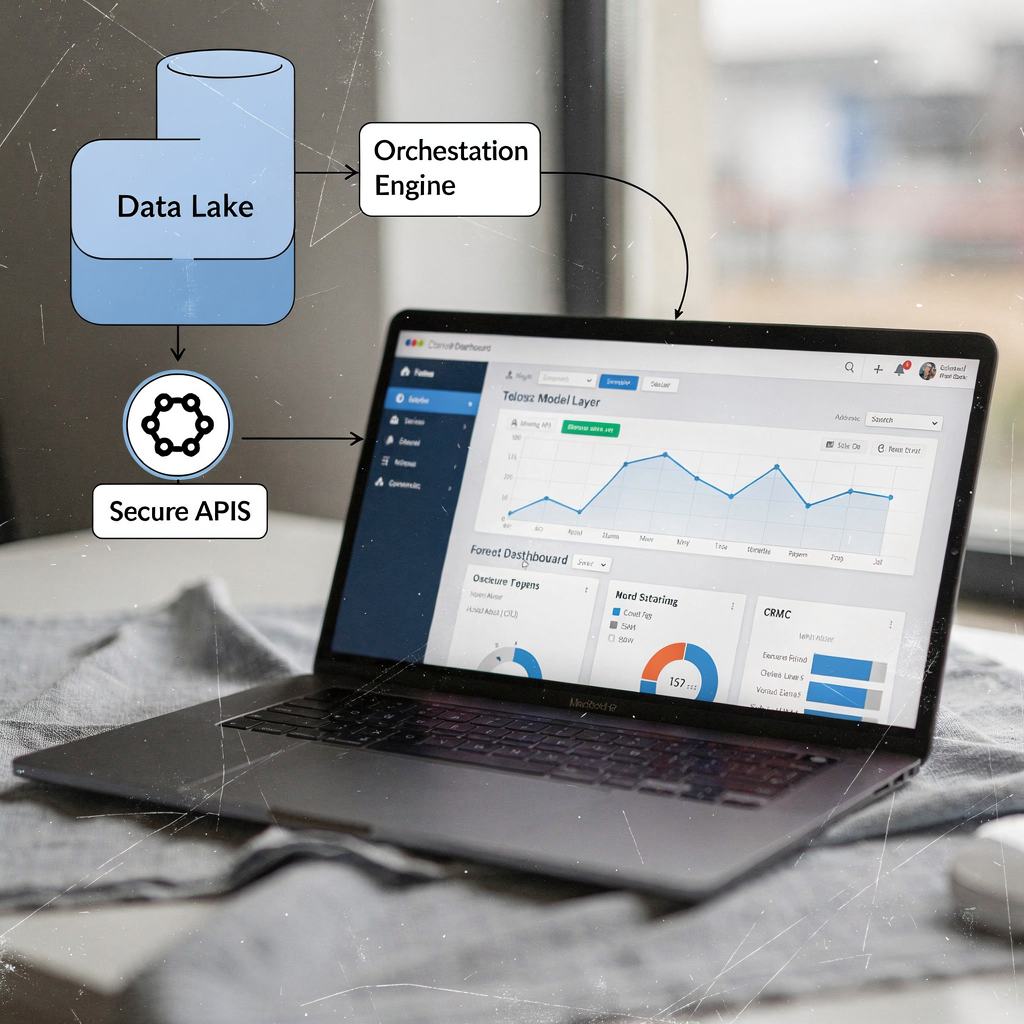
Integration requires disciplined mapping of data flows and APIs. Start by mapping source systems that feed financial data: pricing, reference, custodial and CRM. Normalise data points into a canonical schema so models can consume consistent inputs. Set an ingestion cadence that supports real-time needs for trading and slower cadences for reporting. Secure APIs should connect the model layer to order and account systems so that advisers see actionable recommendations and can execute directly from the UI.
Operational controls must include monitoring, back-testing, reconciliation and failover paths. Monitor model performance and data quality in production, and trigger alerts when drift or anomalies occur. Reconcile model outputs to source systems daily to ensure accountability and to maintain auditability for compliance. Design a failover plan so that if real-time feeds fail, the system falls back to a cached snapshot to maintain adviser continuity.
An example architecture follows a straightforward pattern: data lake → model layer → orchestration → adviser UI / CRM. The data lake stores normalized financial data and historical outputs. The model layer runs batch and real-time models, including LLMS for natural language summarization. Orchestration manages jobs and routes outputs to adviser dashboards or chatbots. For teams that need end-to-end email and operational message handling tied to trades or confirmations, automated logistics correspondence solutions demonstrate how structured data from emails can feed systems downstream automated logistics correspondence. By embedding these components, firms can streamline operations, improve precision in reporting, and accelerate decision-making while keeping systems secure and compliant.
Roadmap to augment teams and scale: compliance, trust, governance and next steps for investment and portfolio teams
A practical roadmap starts with governance pillars: policy, model risk management, compliance sign-offs and change control. Establish a model inventory and categorize models by risk. Require compliance approval for any model that produces client-facing output. Make auditability a default feature so teams can reconstruct decisions for any audit or SEC inquiry. Build a cross-functional council that includes legal, compliance, IT and the advisory desk to align deployment priorities and to manage regulatory questions.
Scale in stages: pilot → expand to pockets of scale → enterprise roll‑out with continuous monitoring. Choose 1–2 pilot use cases like research summarisation or client reporting. Assign an executive sponsor and define success metrics tied to productivity and client outcomes. Use these pilots to prove value and to refine controls before broader deployment. Ensure each stage includes training, a documented playbook, and a decision tree for escalation.
Practical next steps include selecting an ai investment assistant for initial trials, defining KPIs for save time and improved client service, and agreeing a compliance checklist for filing and oversight. Also, consider how to implement vendor integrations with providers such as AWS for compute and secure storage. Finally, focus on transparency and clear answers to client queries; this helps to align the technology with the firm’s advisory mission. With governance in place, teams can reliably augment human expertise, accelerate workflows and empower advisers to make informed decisions that shape future investment strategies.
FAQ
What is an AI assistant for investment teams?
An AI assistant is a software agent that automates research, drafting and routine workflows that advisors perform every day. It can summarize financial data, draft client messages, and suggest portfolio actions while keeping human review as the final step.
How quickly can a team deploy an ai tool?
Deployment time varies with scope. A sandboxed pilot for research summarisation can launch in weeks, while a full client-facing copilot tied to order systems may take months due to integration and compliance work.
Are AI outputs auditable for regulatory reviews?
Yes, with the right controls. Logging inputs, model versions and outputs creates auditability so compliance teams can reconstruct decisions. FINRA guidance highlights the need for transparency in client-facing models AI Applications in the Securities Industry | FINRA.org.
What quick wins should firms target first?
Start with research summarisation, automated followup emails and client reporting. These use cases save time, standardize notes, and improve client service. They also offer measurable productivity improvements so you can justify further investment.
How do I choose between a vendor platform and an in-house build?
Choose a vendor for speed and pre-built integrations; choose an in-house build for proprietary models and tighter control. Hybrid approaches let you scale quickly while protecting core intellectual property.
Can advisors rely on AI for investment decisions?
AI should augment, not replace, human judgment. Use models to surface insights and to accelerate analysis, but keep advisers as the final decision-makers to ensure outputs align with client risk profiles.
How do AI systems handle market data?
They ingest real-time and reference feeds, normalize them, and pass them to models for analysis. Proper integration and latency testing are essential to maintain precision and to support trading and reporting needs.
What governance is required for scaling AI?
Implement model risk management, compliance sign-offs, version control and clear escalation paths. A cross-functional governance body should review deployments and audit trails regularly.
How do I measure ROI on AI projects?
Define KPIs such as hours saved, faster report turnaround, increased client retention and fewer manual errors. Start with pilots that produce measurable outputs and scale when those metrics improve.
Where can I learn more about automating operational communication?
For firms that want to reduce email friction and improve operational replies, virtualworkforce.ai documents real-world use cases and integration guides. See examples of email automation and scaling operations with AI agents automate logistics emails with Google Workspace and our guidance on scaling operations how to scale logistics operations with AI agents.
Drowning in emails?
Here’s your way out
Save hours every day as AI Agents label and draft emails directly in Outlook or Gmail, giving your team more time to focus on high-value work.