


ai agent in corporate training — agentic ai for learning and development and the workforce
An AI agent is autonomous software that perceives, plans and acts to support learners and trainers. It shifts tools into digital teammates, and that shift matters for corporate training. Agentic AI changes how organizations design learning and development by moving from static courses to adaptive, ongoing coaching. For example, agents analyze learner patterns and deliver personalized learning paths that reinforce key concepts and improve knowledge retention. Also, agents enable real-time nudges and on‑the‑job practice so new hires ramp faster and teams deliver personalized feedback during onboarding.
Evidence of rapid adoption is clear. According to a 2025 report, roughly 81% of organizations are already using or planning AI agents, showing momentum for AI in L&D. At the same time, a Salesforce survey found that 77% of workers are open to trusting autonomous agents if humans remain involved, which underscores the practical need for human oversight. McKinsey captures the learning loop precisely: “An AI agent is perceiving reality based on its training. It then decides, applies judgment, and executes something. And that execution then feeds back into its learning loop” (McKinsey).
Impact shows up in several places. AI agents improve personalized learning and shorten time-to-competence through real-time coaching and tailored learning paths. They can increase engagement levels by providing unique learning activities and instant feedback. They also reduce training costs for courses that require frequent refreshers or compliance refreshers such as corporate compliance. In operations-heavy environments, autonomous software handles repetitive queries and frees subject matter experts for complex mentoring. For instance, virtualworkforce.ai automates the full email lifecycle for ops teams so learning leads and trainers can focus on program design rather than triage. In short, AI across learning functions helps L&D scale with quality, not just headcount.
ai-powered training programs and ai-powered tools — measurable gains and ROI
AI-powered training programs combine adaptive content, assessment engines and automated coaching to boost completion rates and learning outcomes. Platforms report notable lifts in completion and engagement, sometimes up to 4.5× in case studies, and many firms show multi‑dollar returns on typical AI learning investments. To capture value, training teams must track measurable metrics and tie them to business outcomes.
Key metrics include completion rate, training completion time, time‑to‑competence, performance lift, cost per learner and ROI. Also, track engagement levels across cohorts and how agents analyze interaction patterns to recommend learning paths. To attribute gains to AI, run A/B tests, use cohort baselines and collect performance data before and after agent interventions. For example, compare time-to-productivity for new hires who had agent-enabled onboarding against a matched control group. This approach helps isolate the effect of AI-generated prompts and coaching from other changes.
Practical metrics make ROI visible. Link completion rates to revenue per employee, error reduction, or customer satisfaction so execs can see clear business value. Also, track how agents enable retention by reinforcing key concepts through spaced practice, which increases knowledge retention. If your team wants an operations example of measurable ROI, study virtualworkforce.ai’s logistics ROI case studies at the virtualworkforce.ai ROI page to understand time-savings and cost reductions in email-driven business operations (virtualworkforce.ai ROI logistics).
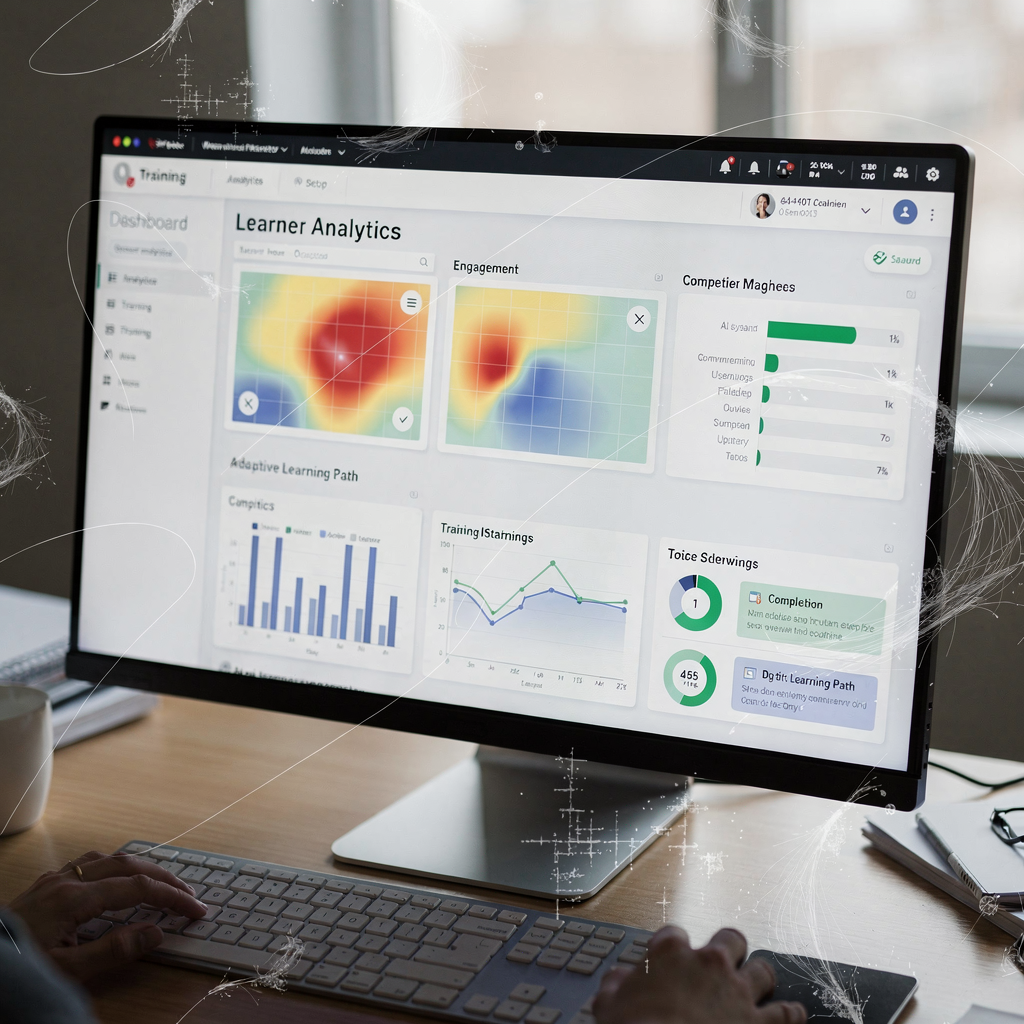
Remember to align learning metrics with business goals. If the aim is to upskill sales teams, measure conversion lift and shorter ramp times. If the aim is better compliance training, measure error reduction and audit pass rates. Finally, ensure your tracking includes agent-level signals like how often an AI agent can generate feedback or how often ai agents complete an assessment sequence for a learner. These signals help quantify the value of ai-powered tools and support stronger budget cases for scale.
Drowning in emails?
Here’s your way out
Save hours every day as AI Agents label and draft emails directly in Outlook or Gmail, giving your team more time to focus on high-value work.
workflow automation and ai-powered workflows — automate admin, scale training and reduce friction
AI-powered workflows help training teams automate enrolment, reminders, assessments and compliance reporting so trainers can focus on coaching. When you automate routine tasks, teams spend less time on administrative work and more time on high-impact learning design. For example, an agent to automate email triage and scheduling can remove manual bottlenecks from onboarding and recurring upskilling cycles. In logistics and operations, automating email-driven training triggers links learning to real business events so training is timely and relevant.
Where AI helps most is in flow. Agents enable in-flow coaching through prompts embedded inside workflows, and they track completion and assessment scores automatically. This reduces friction in learner journeys and scales support without linear hiring. Small teams can serve many more learners when agents handle reminders, grading and basic Q&A. Still, expect micro‑productivity gains to create new bottlenecks unless you plan for them, a point supported by recent productivity analysis.
Risk control matters. Map workflows end-to-end before you automate them. Also, keep audit trails for corporate compliance and define escalation paths when agents hit ambiguous cases. Integration with internal systems is essential; connect LMS, HRIS and content repositories so agents can pull learner records and track progress reliably. For operations teams that rely on email and documents, companies can automate logistics emails with Google Workspace and virtualworkforce.ai to keep training tied to live business transactions (automate logistics emails with Google Workspace).
Finally, design workflows to streamline handoffs to human coaches. Agents should surface cases requiring domain experts and preserve context so coaches can intervene quickly. This design keeps teams to focus on the complex coaching tasks that machines cannot yet handle. By doing so, training firms scale while preserving quality and auditability.
build ai agents and agent training — training data, enterprise-grade models and leading ai to deploy
Build AI agents on solid foundations: high-quality training data, clear task specifications and enterprise-grade models. Agent training starts with labeled examples, data lineage, and rules for how agents behave. Document labeling rules and curate training data so the agent’s behavior aligns with legal and learning standards. Use large language models and toolchains to power decision-making, but ground outputs in trusted sources and versioned content.
Decide whether to build or buy. Many teams begin by prototyping with free open frameworks for rapid experimentation. Then they move to enterprise solutions when they need enterprise-grade security, SLAs and robust apis. Consider platforms such as creAI or enterprise offerings that support multi-agent architectures and deployment to internal systems. Also, evaluate how the platform supports no-code configuration versus requiring writing code, which affects how quickly learning leads or domain experts can iterate.
To deploy effectively, follow a checklist. Ensure API readiness, access control, monitoring and clear fallback paths when agents fail. Also, define feedback loops for continuous agent training and include agent training logs that track mistakes and corrections. For production, prefer enterprise‑grade models and toolchains that include enterprise-grade security and compliance features. If you need to build custom connectors, choose vendors with strong integration support so agents can pull data from LMS, HR systems and content repositories without manual work.
Practical notes: treat training data as a product. Curate content, tag it for learning objectives, and build evaluation sets for periodic audits. Use multi-agent setups for complex workflows where one agent tracks progress and another personalizes content. Finally, remember that an AI agent can generate assessments, practice scenarios and individualized feedback, but you must validate those outputs with domain experts before broad rollout.
Drowning in emails?
Here’s your way out
Save hours every day as AI Agents label and draft emails directly in Outlook or Gmail, giving your team more time to focus on high-value work.
use ai and powerful ai agents safely — trust, ethics, human oversight and measurable safeguards
Safety and trust are essential when powerful ai agents touch learning and assessment. Keep humans in the loop. The Salesforce study explicitly notes that “human involvement will be key” to ensure responsible agent behaviour (Salesforce). Also, design explainability, consent flows and bias checks into deployment plans. Agents move decisions forward quickly, but teams must establish safety protocols and clear escalation paths when agents make uncertain calls.
AI agents aren’t flawless. Early benchmarks show limits in expert‑level reasoning and domain nuance. Therefore, position agents to augment subject-matter experts, not replace them. Require domain experts to review new content, and set approval gates for high‑stakes assessments. Also, run periodic audits and maintain logs that show how agents reached decisions. These logs help with corporate compliance and with resolving disputes.
Set measurable safety KPIs. Track error rates, false positives in assessments, and how often agents escalate to humans. These metrics make governance tangible. Also, train agents to provide citations or source links when they produce instructional material, and mandate human sign-off for ai-generated certification materials. Use a mix of automated checks and spot reviews by domain experts to maintain quality.
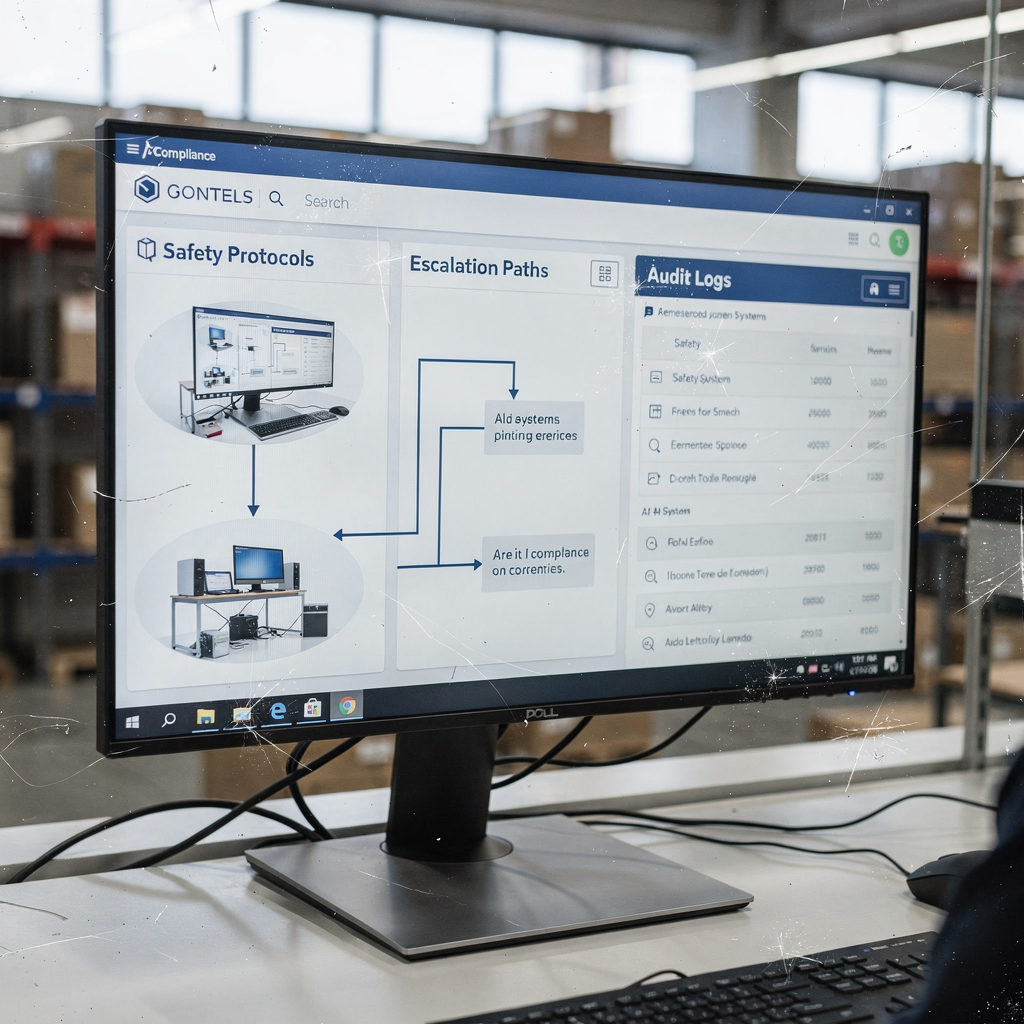
Finally, implement role-based access and enterprise governance. Keep a named human owner for each agent and require periodic retraining. These steps ensure that training remains ethical, effective and aligned with company values.
free, deploy and enterprise — cost, scaling strategy and enterprise rollout for training companies
Cost choices shape your rollout. Free tools work well for rapid prototyping. Yet enterprise deployments need security, SLAs, and paid models. Budget for integration, model hosting, monitoring and training data curation. Plan for incremental investment: pilot first, then scale after you prove measurable outcomes.
Begin with a tight pilot. Pick one high-impact program, such as onboarding or compliance training, and deploy an AI agent to support it. Measure completion rates, time-to-competence and performance lift. Use those results to build a business case that ties outcomes to revenue or error reduction. For example, you can compare onboarding cohorts to see how training completion and ramp time change when agents deliver personalized learning paths. Use pilot learnings to iterate quickly and then expand to broader programs.
Scaling requires a playbook. Standardize connectors to internal systems, document deployment patterns, and automate monitoring. Also, decide between build custom solutions and buying enterprise platforms. If you need end-to-end email-driven learning triggers or email-based coaching, virtualworkforce.ai shows how automation reduces handling time and ties learning into live business operations. See tactical examples on scaling logistics operations without hiring for operationally-driven training use cases (how to scale logistics operations with AI agents).
Keep outcomes front and center. Show business value through reduced training costs, faster upskill cycles and improved retention. Also, predict future skills needs and align continuous learning programs to those forecasts. Finally, ensure enterprise readiness: include enterprise-grade security, integration with HR systems, and clear SLAs for support. This approach helps training companies move from pilot experiments to sustainable enterprise AI that supports continuous learning and real business results.
FAQ
What is an AI agent in corporate training?
An AI agent is autonomous software that perceives context, plans actions, and executes tasks to assist learners and trainers. It acts like a digital teammate, delivering personalized learning, real-time coaching and administrative support.
How do AI agents improve onboarding for new hires?
AI agents personalize onboarding by mapping learning paths and delivering timely reminders and practice tasks. They also track progress and alert trainers when human intervention is needed, which shortens ramp time and improves training completion.
What metrics should I track to measure ROI?
Track completion rates, time-to-competence, performance lift and cost per learner. Also link those learning metrics to business outcomes like revenue, error reduction or retention to show clear ROI.
Can training companies automate admin tasks safely?
Yes. You can automate enrollment, reminders, assessments and reporting while preserving audit trails and escalation paths. Implement enterprise governance, role-based access and logs to meet corporate compliance needs.
Should we build ai agents or buy a platform?
Start with a prototype using free tools to validate use cases and then evaluate enterprise platforms for production. Consider integration, enterprise-grade security and vendor support before you deploy at scale.
How do AI agents handle sensitive learning data?
Enterprise deployments should include data lineage, encryption and access controls. Also, document labeling rules and maintain training data governance to ensure privacy and compliance.
Are AI agents accurate enough for assessments?
AI agents can automate assessments and grading, but they still make mistakes in expert-level reasoning. Use human review for high-stakes evaluations and keep agents to augment, not replace, domain experts.
How do we prevent bias in agent outputs?
Perform bias checks on training data and run regular audits of agent decisions. Include diverse domain experts in labeling and require explainability so humans can validate outputs.
What are common pitfalls when scaling AI for training?
Pitfalls include over-automating without mapping workflows, lacking integration with internal systems, and failing to monitor agent performance. Plan for new bottlenecks and ensure clear escalation paths.
How quickly can we expect results from an AI pilot?
Pilots often show measurable gains within weeks for metrics like completion and engagement. Use pilot data to iterate, then expand programs based on proven business value and measurable outcomes.
Drowning in emails?
Here’s your way out
Save hours every day as AI Agents label and draft emails directly in Outlook or Gmail, giving your team more time to focus on high-value work.