


ai agent and chatbots transform guest experience in luxury hospitality
AI agent technologies now shape how a hotel greets and serves guests. AI agents include chatbots, voice assistants, recommendation engines and AI concierge services that answer questions, book services and remember preferences. They handle 24/7 multilingual enquiries, they free hotel staff for high‑touch service, and they power personalized recommendations. Also, AI handles routine tasks so people can focus on bespoke moments. For example, Hilton reported its AI chatbot cut response time by about 40% which improved response consistency and speed Resultaten van Hiltons chatbot. Additionally, studies find that more than 60% of luxury travellers prefer AI‑powered services for routine queries because they value speed and accuracy studie over voorkeuren van luxe reizigers.
AI agents are reshaping touchpoints across the guest journey. First, chatbots answer pre-arrival inquiries on the hotel website and social channels. Then, voice assistants in suites manage room controls and amenity requests. Next, personalization engines suggest dining options and spa times based on past stays and stated preferences. Also, AI supports multilingual support without adding headcount, improving service for international guests. In addition, AI-powered systems log requests and close loops with housekeeping, maintenance and the front desk. For instance, chatbots that follow rigid scripts are giving way to conversational models that use large language models and natural language understanding to resolve complex questions. Consequently, hotels see measurable time savings while guest satisfaction rises. Agents help hotels keep high standards and consistency even during peak season.
Finally, hoteliers must design AI deployments to protect guest data and preserve brand voice. For example, virtualworkforce.ai automatiseert e-mails en back‑office workflows zodat hoteloperatieteams sneller en nauwkeuriger reageren, terwijl ze controle en auditsporen behouden. Therefore, AI agent adoption can elevate the hotel experience and streamline tasks, while allowing staff to focus on more complex guest interactions and the human details that define luxury.
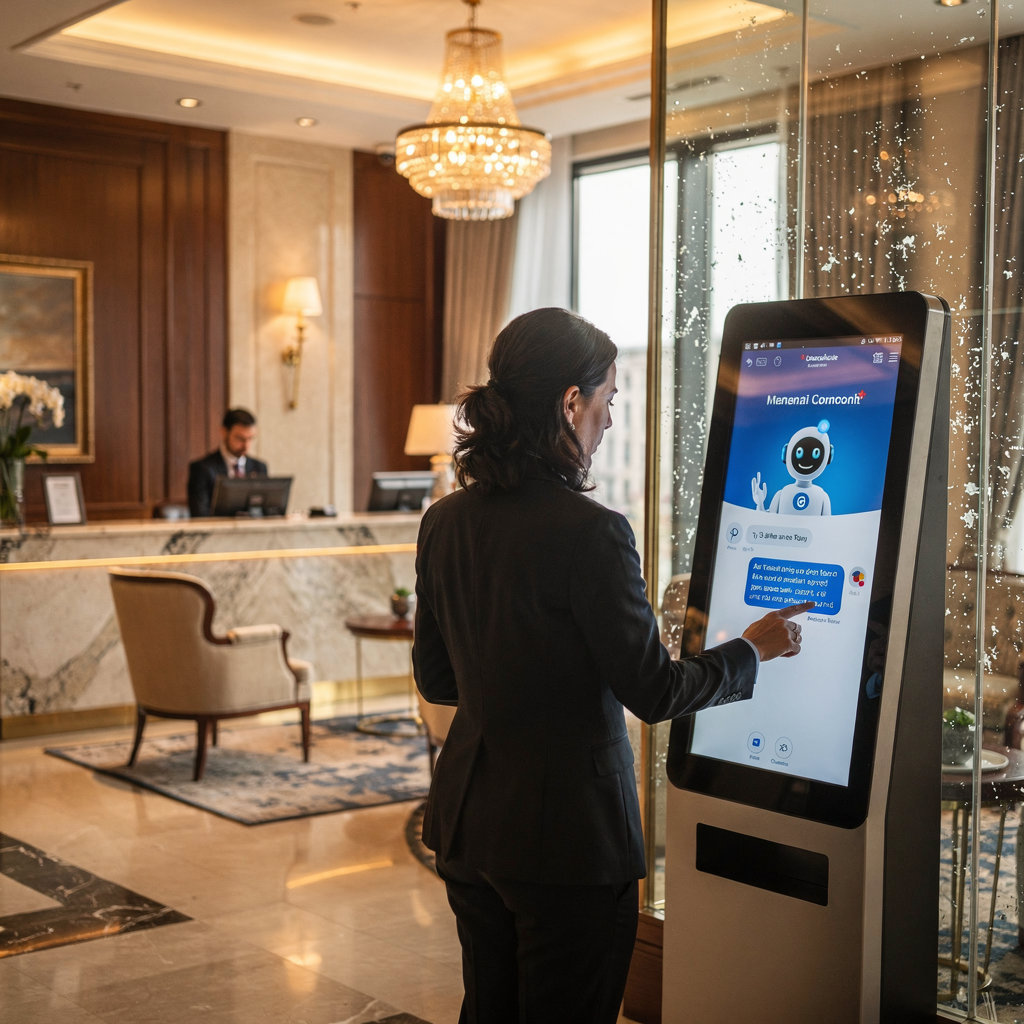
How agents work to automate hotel operations, pricing and real-time service
AI agent workflows connect conversational layers to core hotel systems to automate tasking and decisioning. First, an AI agent receives a guest inquiry via chat, WhatsApp, or the hotel app. Then, it parses intent with natural language processing and consults the PMS and CRM. Next, it triggers actions via API to housekeeping, point‑of‑sale, and management systems. This integration pattern—chatbot → PMS → housekeeping tasking → guest confirmation—reduces manual handoffs and improves accuracy. Also, the loop supports real‑time updates so teams know when a room is cleaned or when an amenity was delivered. As a result, hotels reduce errors and speed responses.
Moreover, AI agents automate check-in and check-out flows, handle room‑service requests, and push upsell prompts at the right moment. They also influence dynamic pricing by feeding demand signals and booking patterns into revenue management loops. For example, AI-driven pricing engines adjust rates based on occupancy, competitor pricing and local events to maximize RevPAR. Furthermore, hotels reporting AI adoption have seen measurable efficiency gains. In fact, hotels that use AI agents have recorded up to a 30% increase in direct bookings, which supports better margin control 30% toename in directe boekingen. The system also shortens response times; Hilton’s chatbot example showed about a 40% response‑time reduction Hiltons snelheidswinst.
Technically, integrations rely on secure APIs, tokenized credentials and middleware that orchestrates calls to the PMS, CRS, POS, and housekeeping management systems. Also, AI systems log every transaction for audit and analytics. These records feed analytics dashboards that track KPIs such as response time, upsell conversion and operational load. For teams that manage high email volume or repetitive operational messages, virtualworkforce.ai automatiseert de volledige e‑maillevenscyclus, waardoor de verwerkingstijd daalt van ~4,5 minuten naar ~1,5 minuut per e‑mail en gestructureerde gegevens terugplaatst in ERP‑ en PMS‑achtige systemen. Therefore, AI integration produces measurable outcomes across hotel operations, pricing and real‑time service workflows.
Drowning in emails?
Here’s your way out
Save hours every day as AI Agents label and draft emails directly in Outlook or Gmail, giving your team more time to focus on high-value work.
ai-driven booking, ai app channels and direct revenue for hospitality businesses
AI agent adoption produces clear revenue effects. First, AI channels reduce friction during booking and increase direct bookings. For example, the 2025 State of Hotel Guest Technology Report found hotels using AI agents saw up to a 30% increase in direct bookings rapport over 30% stijging. Also, AI apps and chatbots recover abandoned bookings by sending contextual nudges and tailored offers through the hotel app, email and WhatsApp. As such, conversion rates rise and OTA dependency falls. This shift improves margins and strengthens the hotel’s relationship with guests.
Second, personalization engines inside the AI app create cross‑sell and upsell opportunities. For instance, targeted offers for suite upgrades, spa appointments or dining experiences convert more when timed correctly and based on guest history. Analytics show that personalization raises upsell take‑rates and increases ancillary revenue. Furthermore, AI uses booking patterns and demand signals to recommend rate plans and packages that appeal to high‑value guests. Consequently, hotels capture a larger share of direct revenue while tailoring offers to each guest journey.
Third, app channels enable one‑click services and push notifications that surface premium amenities right before arrival and during stays. Also, they power loyalty prompts that remind guests of earned benefits and eligible upgrades. In practice, the hotel app plus an AI agent reduces friction and speeds transactions. For operations and back‑office teams dealing with high message volumes, virtualworkforce.ai biedt geautomatiseerd e‑mailopstellen en routering, wat hotels helpt transactionele berichten en bevestigingsstromen op schaal te beheren. Finally, hotels and resorts that coordinate AI agents, robust app channels and CRM integrations convert more searches into direct bookings, improving both top line and lifetime value.
agentic ai and ai tools personalise stays, anticipate guest expectations and introduce new ai features
Agentic AI shifts personalization from suggestions to autonomous action on behalf of the guest. Today, personalization engines compile guest profiles from past stays, preferences and stated requests. Then, they deliver contextual recommendations—spa times, dining tables, local experiences—before the guest asks. In the near future, agentic ai may make selections and schedule services with guest consent. This moves the experience from reactive to proactive. Also, agents identify patterns and predict guest expectations so hotels can prepare amenities in advance.
AI tools use secure guest data to build models that respect consent and privacy. For example, personalization must follow GDPR, use data minimisation and store consent records. Additionally, models should operate on anonymized segments for analytics while preserving personal data for active reservations. Hotels that adopt agentic AI should publish clear consent flows and options to opt out. This approach preserves trust while enabling tailored service.
Practical examples include an AI concierge that books a preferred massage ahead of arrival or an agent that pre-orders dietary‑specific meals. Also, predictive recommendations increase upsell conversion when they match timing and intent. Agents analyze guest history so suggestions feel bespoke and timely. For hotel operations, agentic ai reduces manual rework and speeds confirmations. Importantly, hoteliers must monitor model behaviour and define guardrails for autonomous actions. virtualworkforce.ai laat zien hoe automatisering strak kan worden bestuurd: IT koppelt gegevensbronnen en definieert toegang terwijl bedrijfsteams toon en escalatielogica instellen. Finally, new AI features will expand intelligent systems that act with permission, boosting guest satisfaction and operational efficiency across the hospitality landscape.
Drowning in emails?
Here’s your way out
Save hours every day as AI Agents label and draft emails directly in Outlook or Gmail, giving your team more time to focus on high-value work.
hospitality industry metrics, benefits and challenges (privacy, visibility, pricing pressure)
Hotels must measure the right metrics to assess AI impact. Key KPIs include direct bookings uplift, response time reduction, NPS and guest satisfaction, upsell revenue, and error rate. For instance, hotels that implemented AI agents reported up to a 30% increase in direct bookings and a 40% reduction in response time direct bookings uplift response time gains. Also, tracking housekeeping turnaround and task completion shows operational throughput improvements. Analytics dashboards can tie agentic actions to revenue per available room and ancillary spend.
Benefits include faster response to guest inquiries and more consistent service quality. Also, automation cuts manual work and reduces avoidable errors in reservations and guest requests. Agents represent continuity when staff change shifts or when remote teams support global operations. However, challenges remain. Privacy concerns rank high; a 2021 study found perceived risks with AI voice assistants can hurt loyalty if not handled properly study on AI voice assistant risks. Additionally, smaller hotels risk losing visibility because large chains dominate structured data sources used by AI systems PwC on agentic commerce. Pricing pressure can also intensify as dynamic pricing spreads rapidly across channels.
To manage risk, hotels should adopt data governance, transparency and strong encryption. Also, apply data minimisation and audit trails for guest data. Governance steps include explicit consent capture, role‑based access, and regular model audits. For distribution, hotels should optimise their structured data and invest in direct channels to avoid being outranked by larger brands. Finally, recommended operational steps include pilot tests, closed‑loop measurement and cross‑functional teams. These steps help hotels balance benefits and risks while they reshape hotel operations.
future of hospitality and frequently asked questions for hoteliers adopting ai agent solutions
The future of hospitality will blend human service and intelligent systems. AI agents are transforming where and how guests interact with hotels and resorts. Also, agentic ai will offer more autonomous actions while requiring clear consent and guardrails. Hotels that integrate AI systems carefully will see improved guest satisfaction and lower operational cost. For hoteliers, the roadmap often starts with a pilot, then scales modules that show clear ROI. Additionally, staff reskilling helps teams to use AI for higher‑value interactions.
Vendor selection should prioritise interoperability, data grounding and governance. For example, check whether a partner can integrate with your PMS, CRM and management systems. Also, ensure the vendor supports audit logging and controls so the hotel can enforce brand and privacy policies. A realistic ROI timeline often spans 6–18 months depending on scope and integration complexity. In fact, many operations see payback by automating email and routine workflows that previously consumed time and caused errors. virtualworkforce.ai automatiseert de volledige e‑maillevenscyclus zodat operatieteams de verwerkingstijd verminderen en consistentie verbeteren; dat model is relevant voor hotelbackofficeteams met hoge berichtvolumes.
Action checklist: pilot a single use case, measure KPIs, secure guest consent, train staff and then scale. Also, invest in analytics so the hotel can optimise offers and pricing with real‑time inputs. Finally, maintain privacy and transparency as you expand agent capabilities. By following a structured plan, hotels can reshape hotel operations while preserving the human touch that defines luxury hospitality.
FAQ
What is an AI agent in the context of a hotel?
An AI agent is a software system that can handle guest interactions, automate tasks and connect to hotel systems. It uses conversational interfaces, analytics and integrations to simplify routine work while improving response speed and accuracy.
How quickly can a hotel see ROI from AI agent deployments?
Typical ROI timelines range from six to eighteen months depending on scope and integration depth. Smaller pilots often show early gains in response time and email handling which compound as automation scales.
Will AI replace hotel staff?
No. AI augments hotel staff and automates repetitive tasks so people can focus on high‑touch service. Staff reskilling enables teams to use AI for complex guest interactions and creative problem solving.
How do AI agents protect guest data and privacy?
Protection requires encryption, consent capture, access controls and regular audits. Hotels should apply data minimisation and publish clear privacy notices to maintain trust and comply with regulations like GDPR.
Can AI agents increase direct bookings?
Yes. Hotels using AI agents have recorded up to a 30% increase in direct bookings according to industry reports gerapporteerde stijging. Personalised offers, abandoned booking recovery and conversational nudges drive this improvement.
How do AI agents integrate with a hotel’s PMS and CRM?
Integration uses secure APIs and middleware to read and write data between systems. AI agents query the PMS for reservation status, update housekeeping tasks and log guest preferences in the CRM to keep records consistent.
What KPIs should a hotel track for AI projects?
Track direct bookings uplift, response time, NPS/guest satisfaction, upsell revenue and error reduction. Also, monitor housekeeping turnaround and the volume of automated email resolutions to evaluate operational impact.
Are smaller hotels disadvantaged by AI-driven search and visibility?
Smaller hotels can face visibility challenges because larger chains dominate structured data feeds. However, improving direct channels, optimising structured data and leveraging targeted AI apps can help level the playing field.
How should hotels choose an AI vendor?
Choose vendors that prioritise interoperability, data grounding and governance. Also, evaluate real integrations with PMS and CRM, evidence of measurable outcomes, and the ability to control tone and escalation logic.
What is the first step for a hotelier wanting to adopt AI agents?
Start with a focused pilot that solves a clear operational pain point such as guest inquiries or email automation. Then measure KPI improvements, refine governance and scale the solution while training staff to work alongside AI.
Drowning in emails?
Here’s your way out
Save hours every day as AI Agents label and draft emails directly in Outlook or Gmail, giving your team more time to focus on high-value work.