


ai in hospitality: how an ai agent and ai voice improve booking and guest experience
AI transforms how resorts handle phone traffic and guest inquiries. Also, AI answers calls at any hour. In practice, an ai phone agent can take bookings, confirm payment, and process cancellation requests without human hold times. Next, AI provides instant answers from a resort knowledge base so callers hear accurate policies and room availability. For example, Resorts World Las Vegas has used conversational AI to manage large call volumes and automate routine requests, proving scale and reliability in resort settings The future of agentic commerce for travel – PwC. Also, resorts gain faster response times. Also, they reduce staff load and cut repetitive tasks that hurt morale.
AI phone agent systems use speech-to-text, text-to-speech, and natural language understanding to handle diverse accents and urgent queries. Then, when a complex issue appears, the system hands the call to a human concierge with context. That handoff improves customer experience and lowers error rates. Also, real-time data on room availability lets the agent present accurate options and upsell relevant add-on services like spa or late checkout. Resorts that capture direct bookings see higher revenue per reservation; Triptease reports direct bookings facilitated by AI tools generate about 60% higher revenue per reservation versus OTAs DBS Dallas Key Learnings Report v1 – Triptease. Therefore, using an ai phone agent helps both guest satisfaction and the bottom line.
Also, virtualworkforce.ai helps operations teams automate repetitive messages and preserve context across long phone-to-email threads. For resorts seeking to streamline guest communication and to better route requests, see our guide on how to improve logistics customer service with AI for practical tips improve logistics customer service with AI. Finally, smaller boutique and large resort brands both benefit. Also, this approach supports boutique hotel setups and multi-property operations. In short, AI and ai voice deliver faster, consistent, and measurable booking experiences for the hospitality industry.
features of ai and ai-driven automation for booking and guest experience
Core features of AI for resorts focus on quick, accurate, and scalable responses. First, natural language understanding powers conversational interfaces and lets an ai chatbot interpret varied speech patterns. Also, speech-to-text and text-to-speech reduce friction on phone channels. Next, the system connects to property management systems to show room availability in real-time and to update booking flows instantly. Then, multilingual support extends service to international guests. Also, a knowledge base provides instant answers to common hotel reservations and policy queries.
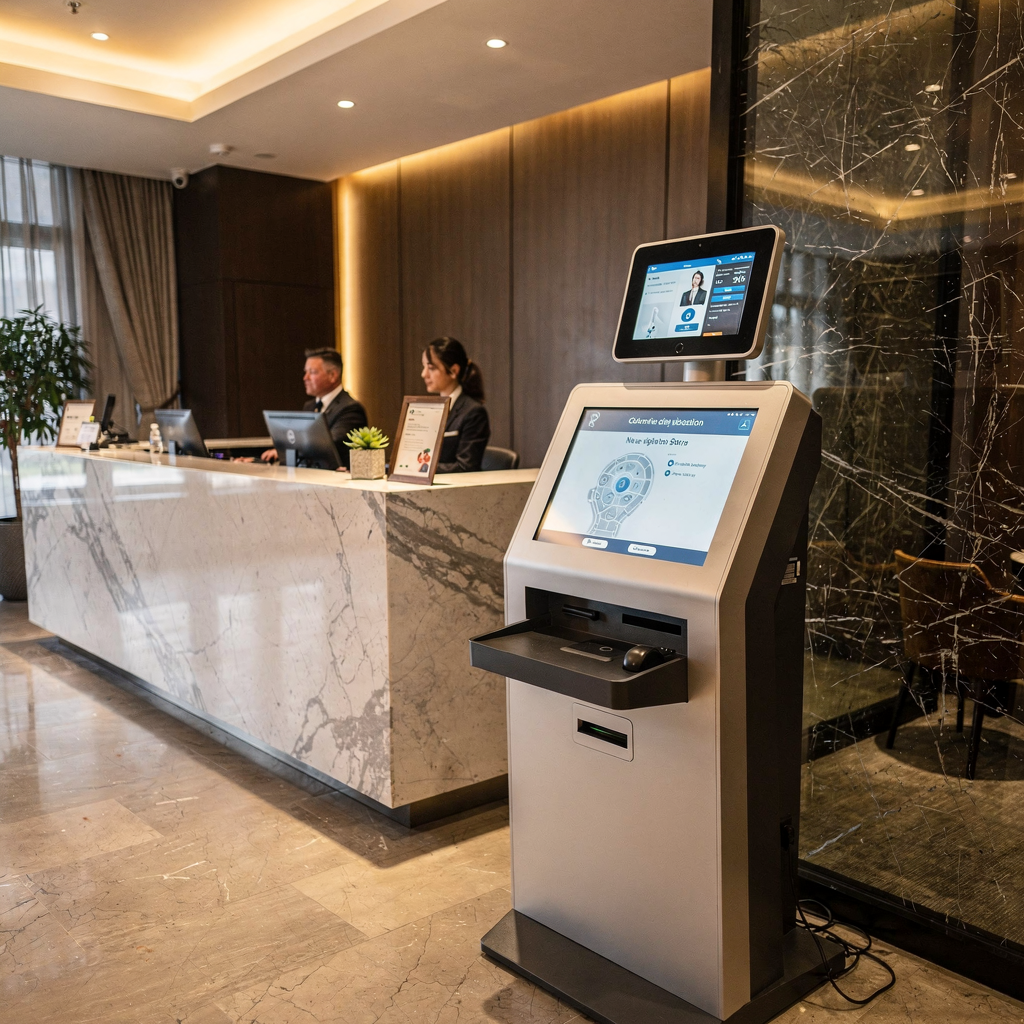
Other features include upsell suggestion logic that offers spa packages and late checkout at the right moment. Also, intelligent automation can replace legacy IVR menus and guide callers through secure checkout and payment tokenization. Metrics matter. Track call deflection rate, booking conversion, average revenue per booking, and resolution time. For hotels and resorts, direct bookings often yield higher revenue than OTA channels, which makes tracking conversion essential. Also, agents report that an ai-driven upsell routine lifts ancillary revenue and repeat bookings.
Use cases require careful integration. APIs connect to CRM and PMS systems so the ai platform reads booking history and past interactions. Also, retrieval-augmented generation with large language models can present tailored offers while preserving brand voice. In addition, analytics dashboards show how many calls automated, and how many required human handoffs. For technical teams, integrating apis for calendar and payment gateways is standard. Also, for vacation rental property collections, adapters to cleaning calendars and multi-property calendars are essential to avoid overbooking. Finally, include audit trails so teams can review conversations and ensure compliance with security measures.
Drowning in emails?
Here’s your way out
Save hours every day as AI Agents label and draft emails directly in Outlook or Gmail, giving your team more time to focus on high-value work.
deploying ai and deploy: integrating AI phone agents with CRM, PMS and vacation rental systems
To deploy an ai phone agent, map call flows before any code is written. First, document intents such as new booking, modify reservation, cancellation, and inquiry about amenities. Also, define fallback rules and thresholds for human escalation. Next, integrate the ai platform with CRM and PMS so booking history and loyalty data inform recommendations. Also, link payment gateways to allow secure checkout and tokenized payments over the phone. Then, test with real calls to validate accuracy and accent handling.
Integration points typically include CRM, a property management system, calendar/availability APIs, and the payment gateway. Also, connect housekeeping and cleaning calendars for vacation rental and multi-unit properties so the agent can avoid double-booking. For resorts, sync loyalty data so the concierge experience is personalized. Also, map where the agent should push structured data back into existing systems. For teams that already use operational automation, our platform demonstrates how to reduce handling time and to create structured replies and logs; learn how virtualworkforce.ai scales operations without hiring in related logistics contexts how to scale logistics operations with AI agents.
Next, train the system on resort-specific terms like spa, late checkout, room availability, and cancellation policies so the ai handles reservation tasks reliably. Also, include brand voice guidelines so automated messages match the sales team tone. Then, set up monitoring for call deflection rate and conversion. Finally, run a pilot with limited traffic. Also, ensure the ai remembers past interactions and keeps context across multi-step bookings. That memory reduces repeat questions and speeds time to pay. In short, thoughtful integration and staged deployment make the difference when you deploy AI in hospitality.
real-world examples: ai hotel and voice agents in resorts — case studies and outcomes
Several resort brands and hotel groups report measurable wins after adding voice agents. For example, conversational systems have automated a large share of routine calls and freed staff to focus on personalized guest services. Also, AI-backed phone agents reduce average handling time and improve guest satisfaction metrics. One study shows that AI travel tools can create useful itineraries and streamline booking workflows for nearly two years, which illustrates how mature tools already support travel planning Do These 4 AI Travel Tools Really Make Booking Easier? – AFAR. Also, industry reporting highlights Caribbean destinations adopting AI to tailor services and lift visitor satisfaction How AI May Influence Caribbean Tourism – TravelAge West.
Operational outcomes to monitor include calls handled, percent of calls automated, engagement counts, and revenue per direct booking. For example, Triptease data shows direct bookings facilitated by AI tools can generate roughly $519 versus $320 per OTA booking, a sizable uplift Triptease report. Also, Red Sea Global combines AI with IoT sensors to optimize irrigation and energy, showing how AI supports sustainable resort operations while keeping luxury standards Red Sea Global Combines Luxury Travel with Sustainable …. These real-world examples show both revenue and operational benefits.
Case studies also highlight that voice agents handle seasonal spikes well. Also, they scale regionally and support multilingual guest support. For teams concerned about integration, consider the audit and traceability features you need before launch. Also, train models on past booking history and guest preferences to avoid errors. Finally, measure guest satisfaction and repeat bookings as key KPIs to evaluate success. For background on automating logistics correspondence and structured replies, see how similar approaches reduce manual work in operations automated logistics correspondence.
Drowning in emails?
Here’s your way out
Save hours every day as AI Agents label and draft emails directly in Outlook or Gmail, giving your team more time to focus on high-value work.
personalize travel planning: ai-driven personalized travel and end-to-end guest experiences
AI helps personalize travel planning by combining profile data, past interactions, and real-time data like weather and room availability. Also, agents are transforming discovery by recommending family-friendly beach resorts or specific activities based on guest interests. Next, an ai chatbot can suggest packages, upsell a spa treatment, or offer an add-on airport transfer at checkout. Also, AI tailors recommendations using booking history and loyalty tiers to increase relevance.

The end-to-end flow covers discovery, phone booking, pre-arrival upsell, in-stay support, and post-stay follow-up. Also, the agent can remind guests about late checkout options, handle a cancellation, or coordinate a transfer. With retrieval-augmented systems and large language models, the ai-powered travel companion can craft tailored itineraries that combine flights and hotels and local activities. Also, personalization increases ancillary spend, which boosts total revenue per reservation.
AI personalizes at scale without linear staffing increases. Also, it remembers past interactions and uses that memory to improve future offers. The result is better guest satisfaction and higher repeat bookings. For teams interested in using AI for operational email and data grounding, virtualworkforce.ai automates email workflows to complement voice channels and preserve context across channels ERP email automation and integration. Also, agents can operate as a travel companion that suggests next steps during the stay, and that hands off to a human for bespoke concierge requests. Finally, measure personalization impact by tracking ancillary uptake, conversion on bespoke offers, and repeat bookings. This approach turns AI into a revenue and experience multiplier for the travel business.
frequently asked questions and faqs: security measures, customer experience and ROI when deploying ai
Q&A about security, performance, and return on investment often determines stakeholder buy-in. Also, teams ask about data privacy, payment safety, and human handovers. Below, the most common frequently asked questions are addressed with practical answers and policy pointers.
How does AI protect guest data and meet EU and GDPR rules?
AI systems must encrypt data in transit and at rest, and they should support consented data retention and audit logs. Also, tokenized payments and strict access controls ensure payment security while keeping guest information compliant with GDPR.
Will the system handle different accents and languages?
Modern speech models include multilingual support and accent training, which improves recognition across demographics. Also, fallback routing ensures calls go to multilingual staff when the model falls below a confidence threshold.
How do I guarantee a smooth handover to a human agent?
Set intent thresholds and capture full context at transfer time so the human receives conversation history and booking details. Also, define escalation rules in your CRM and PMS integrations to make handoffs seamless.
What security measures protect phone payments and checkout?
Use tokenized payment gateways and PCI-compliant flows, and log transactions for audit while masking sensitive details. Also, store only minimal required data and rotate keys regularly.
How do I measure ROI when deploying AI?
Track staff hours saved, increases in direct-booking revenue, booking conversion, and average revenue per booking. Also, consider reduced call volumes and higher guest satisfaction as part of the financial case.
Can AI handle cancellations and changes to reservations?
Yes. The agent can process cancellation requests, apply policy rules, and issue refunds or credits per your settings. Also, maintain clear audit trails to meet compliance and customer-service standards.
How does AI maintain brand voice during guest communication?
Configure tone and templates in the ai platform so messages align with your brand voice and sales team guidelines. Also, monitor transcripts and use periodic audits to refine messaging.
Will the AI integrate with our CRM and PMS?
Integration is standard via apis to sync booking history, loyalty data, and room availability in real-time. Also, connect housekeeping calendars for vacation rental and multi-property operations to keep availability accurate.
How do we handle error cases and incorrect answers?
Implement fallback intents and human review for low-confidence responses, and build a continuous improvement loop using corrected examples. Also, keep an audit trail for every exchange to analyze and fix recurring issues.
What initial steps should we take when deploying AI in hospitality?
Map booking flows, define intents, run a small pilot, and then scale while tracking conversion and guest satisfaction metrics. Also, involve IT and operations early for secure apis and for end to end integration with existing systems.
Drowning in emails?
Here’s your way out
Save hours every day as AI Agents label and draft emails directly in Outlook or Gmail, giving your team more time to focus on high-value work.