


ai in hospitality: why AI assistants matter for booking and guest experience
AI is reshaping how hotels and resorts interact with travelers. Today, about 87% of hospitality businesses already use AI, and roughly 92% plan to increase AI investment. These figures show a clear shift across the sector toward automated guest communication and smarter booking flows. Also, AI reduces response times, delivers 24/7 support, and drives measurable guest satisfaction gains; for example, multilingual voice pilots at large groups raised scores and impressed managers (Marriott multilingual pilots).
Hotels and resorts deploy AI in many forms. A hotel chatbot or an ai chatbot can run booking checks. A conversational AI powers natural booking dialogues. A voice AI or ai voice module answers calls and in-room prompts. Together, these tools lower wait times and let staff focus on higher‑value interactions. The net effect includes faster check-ins, fewer missed inquiries, and improved operational efficiency. For leaders, that means cost control and a clearer path to higher direct booking rates.
For hoteliers who want real benefits, pick use cases that drive revenue and cut repetitive work. An ai assistant that automates routine email replies and reservation confirmations will reduce manual effort. At the same time, an ai platform that links to property management systems gives accurate availability and prevents double bookings. If you want a practical example, our team at virtualworkforce.ai helps operations teams automate end‑to‑end email workflows so staff spend less time triaging and more time delivering hospitality.
To track success, monitor conversion rate, response time, and guest satisfaction. Also, keep an eye on commission reductions as direct booking rises. Finally, iterate quickly: small pilots, clear metrics, and fast feedback cycles let you scale proven automation across multiple properties. The rise of AI will not stop; acting now helps protect margins and improves the guest journey.
assistant for booking: automate reservations, boost direct booking and ai reservation
Convert lookers into bookers by using conversational AI that runs 24/7. A hotel chatbot can answer rate questions, check availability, and guide a visitor through payment. Also, an ai reservation assistant can present personalized offers and upsells at key moments. These flows reduce abandonment and raise direct booking share versus third‑party channels.
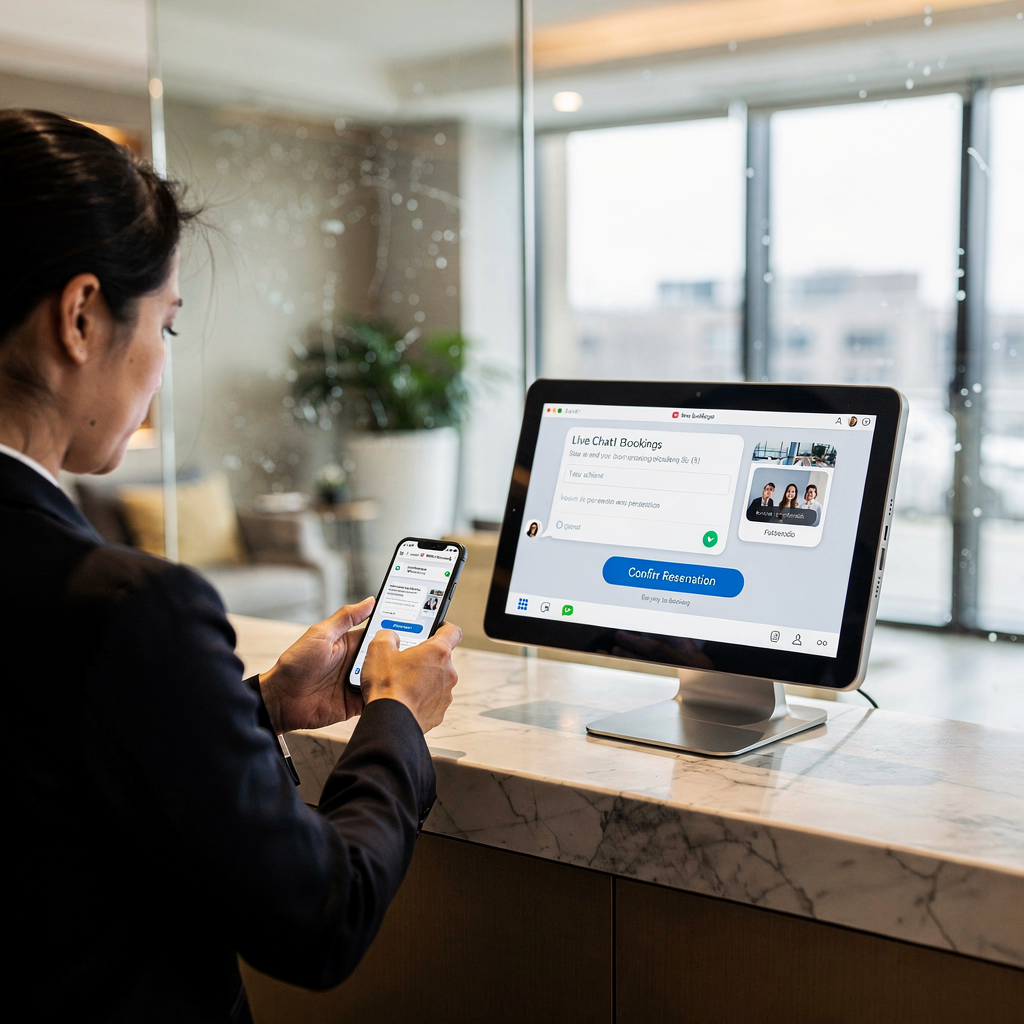
Operational benefits are easy to measure. Track conversion rate, abandonment, revenue per booking, and OTA commission saved. Also, track reservation handling time and the percentage of bookings handled without human touch. AI automates form fills, validates payment, and issues confirmations. An ai reservation flow can also trigger housekeeping and F&B teams automatically after confirmation, keeping back‑of‑house teams aligned.
Use features like instant rate checks, personalized promotional codes, and secure payment authorization. Real‑time availability from booking engines and the property management system must feed the AI so offers are accurate. Otherwise, you risk overbooking. For payment flows, integrate tokenized gateways so the AI can confirm a charge and send a final receipt. Many hotels that adopt these patterns see a clear lift in direct booking while also reducing call center load.
Beyond conversion, AI helps with post‑booking engagement. Send pre‑stay messages that confirm arrival preferences. Suggest upgrades, airport transfers, and curated local experiences. These messages drive ancillary spend and improve the guest journey. For teams focused on scale, automation here is key. If you want a practical ops example, read how email automation and operational AI reduce manual handling and speed replies at scale on our guide to automated logistics correspondence. That same pattern helps hotel teams automate repetitive booking emails and confirmations.
Drowning in emails?
Here’s your way out
Save hours every day as AI Agents label and draft emails directly in Outlook or Gmail, giving your team more time to focus on high-value work.
guest experience: personalise service with virtual assistant, voice ai and multilingual support
Personalization now moves from aspiration to standard practice. AI reads guest profiles and past stays to personalize offers. Also, it triggers targeted pre‑stay messages that ask about room preferences and arrival times. Small touches raise guest satisfaction and build loyalty.
A virtual assistant can handle pre‑stay planning, in‑stay requests, and post‑stay follow up. For example, guests text a request, the AI uses guest profile data to offer a tailored upgrade, and the AI arranges fulfillment with the team. This approach reduces friction and keeps service consistent. Voice assistants in rooms let guests control lighting, order room service, or ask for a late check‑out. Voice AI that supports multiple languages breaks communication barriers and helps international travelers feel welcomed. Trials at major groups showed improved guest satisfaction scores after deploying multilingual voice tech (Marriott pilots).
Good UX matters. Keep scripts short, let the AI escalate when intent is unclear, and make privacy‑safe personalization the default. Data minimization and guest consent are essential. Also, track which messages convert to upsells and which create friction. Use that feedback to refine language and timing. When AI automates routine tasks, staff to focus on complex, human‑centric service that increases loyalty.
AI also supports concierge services and local recommendations. Integrate third‑party APIs for experiences and transport, then let the AI suggest options based on past behaviour. The result is a personalized experience that feels curated rather than generic. If you are evaluating technology to automate guest processes and email workflows, consider how virtual workforce solutions connect operational systems to automate replies and confirmations. Our platform, for example, grounds responses in ERP and booking records so replies remain accurate and traceable; see our page on virtual assistant logistics for similar operational patterns applied to service teams.
hotel tech: integrating ai agent with PMS, CRS, channel manager and revenue systems for seamless operation
Integration is the foundation of reliable automation. An AI agent must exchange two‑way data with property management systems, central reservation systems, booking engines, CRMs, and revenue management tools. Without that real‑time data, availability and rate suggestions will be wrong. Therefore, prioritize secure APIs and robust synchronization.
Technical priorities include real‑time inventory, secure payment flows, consented guest profiles, and audit trails for automated actions. AI systems should log every automated outbound message, every reservation change, and every payment authorization. Audit trails help with dispute resolution and regulatory compliance. Also, secure tokenization keeps guest payment data safe while letting AI confirm charges smoothly.
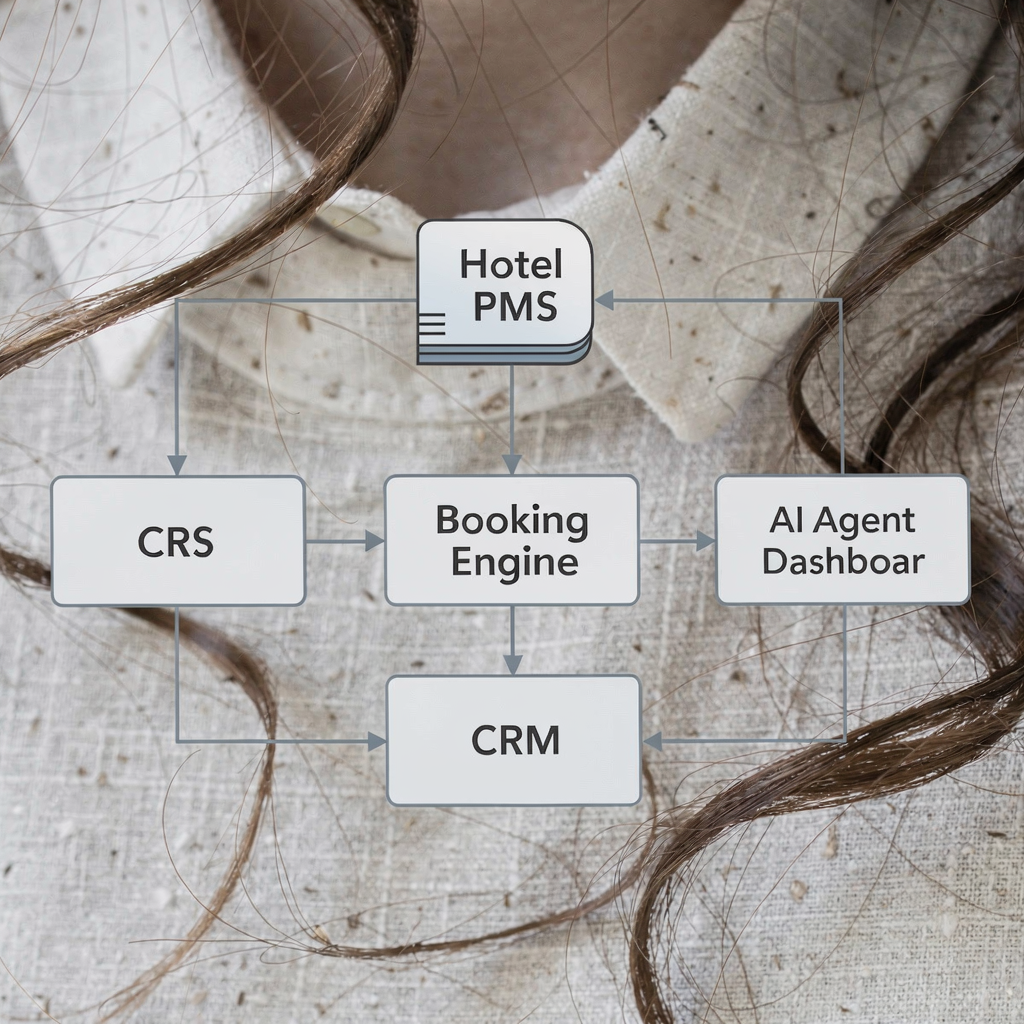
KPIs here are concrete. Measure resolution time, automation rate, net direct bookings, and negative escalations. Also, track revenue per available room uplift tied to AI upsells. A good ai platform will expose these metrics and let ops teams refine rules. For property teams deploying AI, focus on preventing overbooking and maintaining data integrity. Additionally, ensure consented cross‑property profiles so repeat guests receive consistent service.
Integration reduces manual reconciliation work and speeds guest services. For examples of how AI automates email and operational tasks end‑to‑end, see our guide on how to scale logistics operations with AI agents. The same architectural patterns that automate logistics emails help hotels connect booking events with internal teams and third‑party partners. In short, the right integrations make an AI agent reliable and trustworthy.
Drowning in emails?
Here’s your way out
Save hours every day as AI Agents label and draft emails directly in Outlook or Gmail, giving your team more time to focus on high-value work.
implementing ai solution: selecting the right ai, costs, compliance and a hotelier action checklist
Selecting the right AI starts with use cases. Prioritize reservation automation, guest messaging, and payment confirmations. Evaluate vendors for conversational AI quality, ai voice capabilities, and proven hotel workflows. Ask for customer references from hotels using similar setups. A useful benchmark is vendor success in handling high volumes of operational emails and reservation inquiries without loss of accuracy.
Vendor selection must also check for agentic AI features versus simple scripted bots. Look for advanced AI that can call APIs, update PMS records, and escalate when rules fail. Also, require clear SLAs for human takeover when complex issues arise. For teams that manage heavy email workloads, our product virtualworkforce.ai automates the full email lifecycle and reduces handling time dramatically by grounding replies in operational systems. That capability translates well to hotel reservations and guest services where data accuracy matters.
Budget for integration work, training, and phased rollout. Costs vary by scope, but typical pilots run for 8–12 weeks and then expand. Track ROI by measuring booking conversion lift, saved staff time, and improved guest satisfaction. Also, adhere to GDPR and local privacy laws. Implement consent capture for personalized messages and use data minimization practices. For compliance, ensure logs and audit trails exist for automated actions.
Practical hotelier steps: (1) define KPIs for reservation automation and guest messaging; (2) run a scoped pilot on a high‑traffic channel; (3) validate integrations with PMS and booking engines; (4) train staff on escalation rules; (5) measure and expand. Remember that implementing AI is as much about process change as technology. Oracle notes that executives see AI improving efficiency and reducing staff costs when implemented correctly (Oracle perspective).
hospitality industry outlook: rise of ai virtual assistants, ai agent trends and the future of hotel operations by 2026
The hospitality industry will continue to adopt AI rapidly. Analysts forecast strong growth in adoption and capability, and NetSuite projects robust expansion in the AI market for hotels (AI in hospitality outlook). As a result, more hotels will embed AI across booking, guest services, and back‑office operations to protect margins and boost direct booking.
Leading hotels will deploy all‑in‑one AI platforms that unify guest messaging, payments, and operations. Agentic AI capabilities will let bots take ownership of multi‑step tasks while escalating only when needed. Also, generative AI will help compose contextual replies, and advanced AI will generate tailored offers based on historical booking and guest journey signals. Canary AI-style surveys show a majority of professionals expect significant positive impact from AI tools (Canary Technologies study).
What should hoteliers do now? Start small with reservation automation and pre‑stay messaging pilots. Measure direct booking lift and guest satisfaction. Then expand integrations to revenue management and housekeeping. Use scalable AI that automates routine tasks so staff can focus on human service. If you want a technical illustration of how automated operations scale, our resources on scaling operations with AI agents provide useful patterns and ROI examples (virtualworkforce.ai ROI guide).
By 2026, expect voice assistants in rooms to be ubiquitous, multilingual AI to support global guests, and AI systems to coordinate cross‑department workflows. Hotels using AI well will reduce costs, raise guest satisfaction, and increase direct booking. Acting now with focused pilots will position properties to benefit from the rise of AI across the industry.
FAQ
What is an AI assistant for hospitality?
An AI assistant is a software agent that handles guest interactions, booking flows, and routine back‑office tasks. It uses natural language, integrations, and business rules to automate replies, make reservations, and escalate complex issues to staff.
How does AI improve booking conversion?
AI answers questions instantly, offers personalized options, and automates payment and confirmation steps. This reduces abandonment and increases the chance a visitor completes a direct booking rather than using an OTA.
Can AI handle multilingual guest communication?
Yes. Modern voice AI and text models support multiple languages and can translate in real time. Pilots at major groups show higher guest satisfaction when multilingual support is available (source).
How do I integrate AI with my PMS and booking engines?
Use APIs and secure two‑way data flows so the AI can read availability and write confirmed reservations. Ensure the AI logs actions and uses tokenized payments to avoid exposing sensitive data.
What KPIs should I track for an AI booking pilot?
Track conversion rate, abandonment, automation rate, average handling time, and revenue per booking. Also monitor guest satisfaction and negative escalations to know when to adjust rules.
Is email automation relevant to hotel operations?
Absolutely. Many reservation and operational workflows use email. Automating the email lifecycle reduces manual triage and speeds replies. For an operations-focused example, see how email automation scales operational teams at virtualworkforce.ai (example).
What compliance issues should hoteliers consider?
Follow GDPR and local privacy rules, capture consent for personalized messages, and practice data minimization. Keep audit trails for automated actions to support disputes and regulatory reviews.
How soon will AI pay back investment?
Small pilots often show measurable ROI within months through saved staff time and higher direct booking. Typical pilots run 8–12 weeks, then expand as integrations prove reliable.
What is the difference between a hotel chatbot and an ai reservation assistant?
A hotel chatbot offers conversational responses on web or messaging channels. An ai reservation assistant goes further by checking rates, authorizing payments, and confirming bookings through integrated systems.
How do I choose the right AI vendor for my hotel?
Evaluate vendor experience with hotels and operations, check integrations with property management systems, and ask for references. Also, require clear SLAs for human takeover and proof of secure payment handling.
Drowning in emails?
Here’s your way out
Save hours every day as AI Agents label and draft emails directly in Outlook or Gmail, giving your team more time to focus on high-value work.