


AI in hospitality: how an AI assistant elevates guest experience at a resort
Fact: 78% of travellers say generative AI makes trip planning more helpful, which shows rising trust in AI tools for travel and stays Phocuswright (2025). This matters for a resort that wants to enhance guest personalisation and speed of service. An AI assistant acts like a virtual concierge. It answers questions, books services, and suggests activities. It works 24/7 and it can deliver personalised suggestions in real-time. As a result, wait times drop and guest satisfaction can rise.
Start with a clear purpose. Define the AI assistant role. Will it handle spa booking, dining reservations, in-room requests, and local tips? Next, connect the AI to your PMS and CRM for profile data and stay history. Then, script fallbacks and escalation to your front desk team. Use natural language models that understand context and guest tone. For resorts, personalise is essential. Offer tailored room amenities, dietary-aware dining suggestions, and activity bundles. These details create memorable guest experience and increase repeat visits. Research links show that AI-enabled personalisation drives higher satisfaction and loyalty in hospitality settings (Impact of AI-enabled service attributes, 2025).
Example: a family arrives at a coastal resort. The AI assistant recognises the lead guest’s earlier note about a dairy allergy. It suggests a chef-curated menu for the first-night dinner and books a kids’ beach activity for the morning. The family receives a message confirming both. The front desk only handles a brief check-in. The family feels known and valued. That small shift improves the whole guest journey and reduces routine calls to staff.
Case studies from hotel chains show faster interactions and improved operational efficiency after chatbot rollouts. For example, Hilton documented faster guest interactions after implementing conversational systems (Hilton case example). To pilot, choose a limited service scope, measure ticket volume and CSAT, then scale. CTA: request a demo or run a pilot to measure CSAT lift and time saved. For more on integrating AI into operations and reducing manual email load, see our resource on scaling operations without hiring how to scale logistics operations with AI agents.
Booking and direct booking: automate AAi reservation flows to increase direct booking rates
Fact: properties that add targeted AI messaging report conversion uplifts typically between 15–30% and some see up to ~50% in direct traffic. Use AI reservation flows to capture that lift. Build conversational AI flows that mirror a human booking agent. Let the AI guide rate options, upsells, add-ons, and flexible cancellation terms. Integrate those flows with your booking engine and your CRM so the offer matches past stays and guest preferences.
How it works. First, use an AI chatbot on your website and in messaging channels. Next, connect the bot to the booking engine and to the payment gateway so it can commit a reservation. Then, leverage dynamic pricing rules from your hotel management system to present timely offers. Finally, add personalised upsells such as late checkout, room upgrades, and F&B credits. This approach reduces OTA dependence and helps increase direct.
Conversion metrics matter. Track view-to-book, chat-to-book, and average booking value. Typical funnels show a 20% lift in chat-assisted bookings. You can also see a 10–25% rise in ancillary revenue when the AI suggests bundled offers at the right time. Make sure the AI respects GDPR and consent for messaging. Use real-time inventory checks to avoid overbooking.
Checklist to optimise the booking funnel: – Reduce friction: pre-fill guest details using CRM and cookie data. – Offer real‑time room availability and rates. – Link CRM to show loyalty perks and targeted discounts. – Present clear payment flows and confirmations. – Test messaging prompts and A/B different upsell offers.
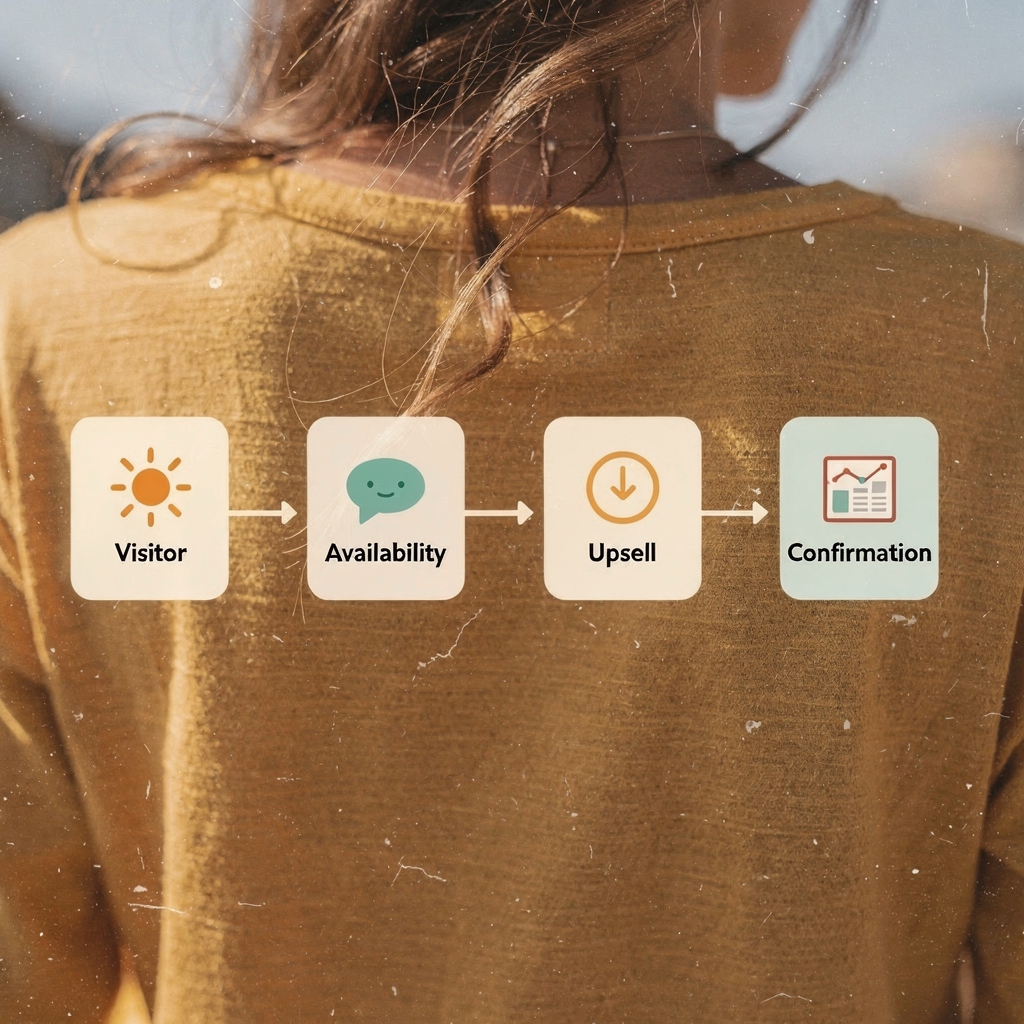
A simple funnel diagram suggestion: Visitor → AI chat prompt → Availability & rate shown → Add-ons & upsell → Payment → Confirmation. Place an internal link to our guide on best tools for communications and automation if you want to see examples from logistics and operations that translate well to booking flows best tools for logistics communication. CTA: run an AI reservation pilot for one channel and measure increase in direct booking and conversion rate.
Drowning in emails?
Here’s your way out
Save hours every day as AI Agents label and draft emails directly in Outlook or Gmail, giving your team more time to focus on high-value work.
Omnichannel hotel tech: use omnichannel AI solutions (WhatsApp, voice AI, in‑room AI voice assistant) for seamless guest messaging
Fact: omnichannel messaging cuts missed requests and drives ancillary revenue when channels sync. Use omnichannel AI to keep conversations continuous across app, SMS, WhatsApp, and in‑room devices. Start by mapping communication channels and rules. Pre-arrival messages should confirm arrival details and collect preferences. In-stay messages should handle requests, upsells, and local recommendations. Post-stay messages should request feedback and offer return discounts. Tie all messages to a single conversation history inside your CRM so agents see context.
Prioritise channels. Web chat and app messages work best for on-site engagements. WhatsApp handles quick guest requests and works well for international travellers; ensure you have opt-in consent and follow GDPR rules. Voice AI and in-room AI voice assistant options reduce missed calls and allow hands-free requests, for example for turndown service or extra towels. Use conversational AI technology that supports natural language and multilingual replies. This ensures the guest communication feels local and helpful.
Implementation notes: – Define channel rules for pre-arrival, in-stay and post-stay. – Add multilingual models so staff can support many guests. – Ensure consent checks for WhatsApp and SMS before sending offers. – Log every interaction to the PMS and CRM to maintain service continuity.
Channel matrix example and priority order: app chat > WhatsApp > in-room voice > SMS > email. Choose your communication platform to keep the thread visible to the front desk staff and to the operations teams that manage housekeeping and F&B. For integrations between messaging and backend systems see our piece on virtual assistants for logistics that shows how AI can link messages to ERP and other data sources virtual assistant logistics. CTA: demo a unified guest messaging platform to test WhatsApp and voice AI in a controlled pilot.
Front desk, hotelier support and automation: hotel AI, virtual assistant and CRM integration to automate routine tasks
Fact: AI chatbots cut routine enquiries substantially, freeing staff for high-value work and lowering operational cost in pilots by up to ~30%. To replicate that, integrate an AI virtual assistant with PMS, CRM and POS. The goal is to reduce repetitive tasks and shift staff time to personal guest touchpoints. Start small: automate FAQs, simple service requests and standard hotel reservations. Then scale to more complex workflows such as billing queries or group booking triage.
Practical steps. First, map common guest inquiries and the time they take. Second, connect the AI to your PMS for room data and to the CRM for guest profiles. Third, set clear escalation paths so the front desk and the hotelier can take over when needed. Fourth, use structured data outputs so the system updates housekeeping and F&B teams automatically. This reduces handoffs, prevents lost context, and improves consistency of replies. virtualworkforce.ai specialises in automating email lifecycles in operations, which translates well to hotel inboxes where shared threads and manual lookups cause delays. See our guide on automating logistics emails for ideas on automating property messages automated logistics correspondence.
Tech notes. Ensure your AI agents authenticate with existing systems and that you keep an audit trail for any automated action. Use human override rules for billing, guest complaints and loyalty disputes. Train the AI using natural language examples from your property. this lowers error rates and improves response tone. A phased implementation timeline looks like: pilot → validate accuracy and guest satisfaction → extend to multiple properties → full scale with analytics and governance. Pilot metrics should include reduced workload for the front desk, shorter wait times, improved guest satisfaction and fewer manual emails. CTA: run a pilot to measure handling time per request and overall cost savings.
Drowning in emails?
Here’s your way out
Save hours every day as AI Agents label and draft emails directly in Outlook or Gmail, giving your team more time to focus on high-value work.
Integration and all‑in‑one AI virtual systems: how independent hotels and leading hotels deploy AI solutions
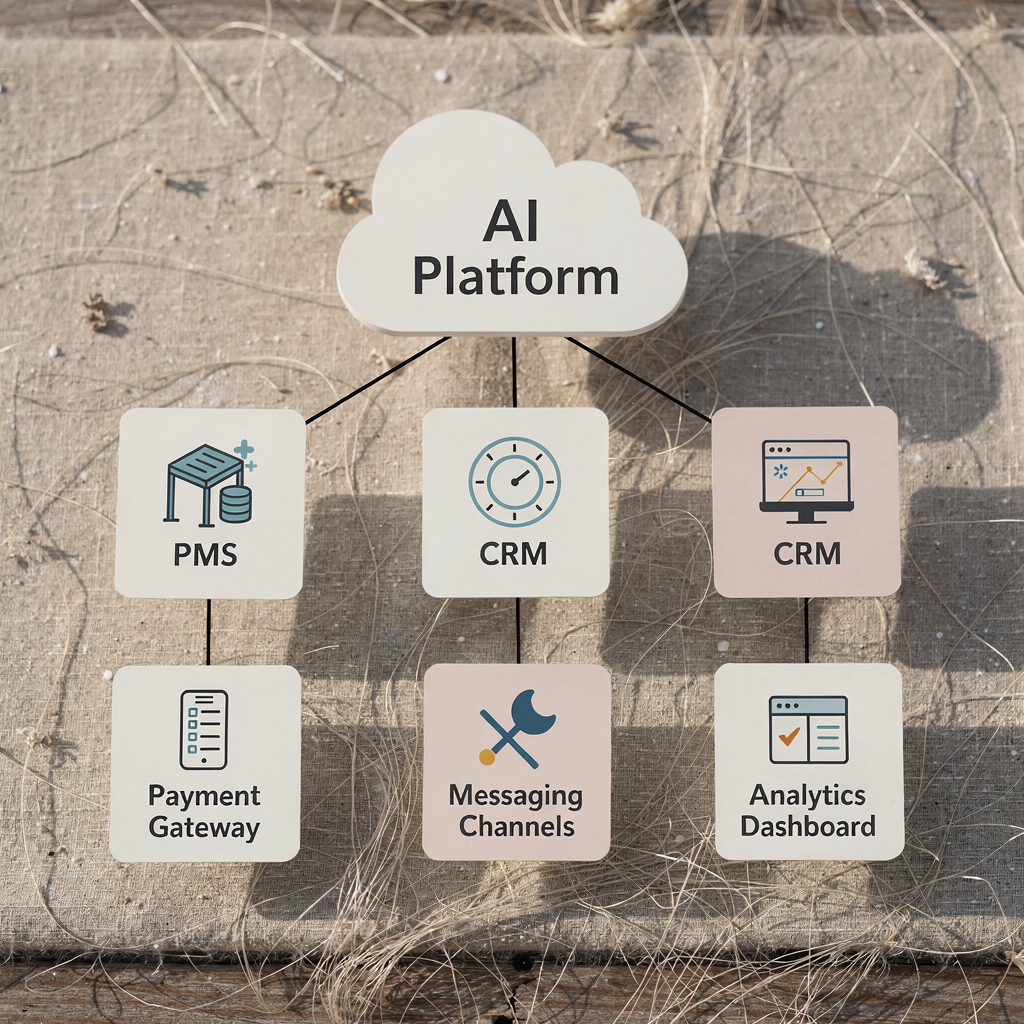
Fact: hotels that choose secure APIs and analytics see clearer ROI from AI. Choose an all-in-one AI platform that integrates with PMS, CRS, CRM and payment providers. For independent hotels, prioritise simplicity and scalability. For leading hotels, choose multilingual support, advanced analytics and data residency options. Compare cloud vs on‑prem deployments based on your IT policies and privacy needs.
Vendor selection checklist: – Secure, documented APIs for integration with existing systems. – Support for PMS connections and single sign-on. – Multilingual capability for guest messaging. – Clear privacy and data residency policies. – Analytics dashboard that shows direct booking lift, response time and CSAT.
Metrics to track. Monitor increase direct bookings and conversion rates, response time to guest inquiries, guest satisfaction scores and revenue per available room for booked upsells. Track automation rate and reduction in staff workload. For example, measuring the lift in direct booking and ancillary revenue will show the real business case. Also measure how many interactions the AI handles before escalation to human agents. Use those KPIs to calculate payback and ROI.
Comparison points: cloud solutions scale easily and reduce maintenance; on‑prem gives more control over data residency. Independent hotels often favour SaaS offerings for speed of deployment. Leading hotels typically require enterprise features, integration with a hotel management system and advanced governance. Choose a hotel chatbot or an ai voice assistant that supports natural language processing and that can be trained on property-specific dialogues. For a practical look at how AI reduces email and manual triage, review our ROI discussion for automating operations and shared inboxes virtualworkforce.ai ROI for logistics. CTA: use the integration checklist above and request a security and integration demo to validate connectivity with your PMS and CRM.
FAQs and frequently asked questions: best AI practices, multilingual support and guest satisfaction concerns
Fact: guests worry about privacy and losing human contact, so transparency and consent are essential. Below are concise Q&A items that address common concerns and best practices for AI in hospitality. The answers recommend balanced approaches that keep humans in the loop and maintain service quality.
What are the best AI use cases for hotels?
Short answer: front-desk chats, booking support, FAQ handling, upsells and in-room voice requests. These tasks free staff for personalised service and improve response times.
How does AI protect guest privacy?
Use consented messaging, data minimisation and clear data-residency choices. Also keep an audit log for any automated action and provide an opt-out option.
Will AI depersonalise guest services?
No if you combine AI with human oversight. Use AI to handle routine items, and let staff focus on emotional, high-touch moments that require human judgment.
Can AI handle multilingual guests?
Yes. Choose multilingual models and test them on real guest messages. Use fallback routing to trained staff when language models lack confidence.
How accurate is voice AI in noisy hotel environments?
Voice AI performs well with noise-robust models and good in-room microphones. Test in your properties and have staff review low-confidence requests before actioning.
Will AI replace hotel jobs?
AI reduces repetitive tasks and shifts roles toward guest engagement and experience design. Train staff on oversight and use the time saved for revenue-generating activities.
What metrics should I track first?
Track response time, conversion from chat to booking, guest satisfaction and automation rate. Also watch ancillary revenue from upsells and reductions in manual email handling.
How do I integrate AI with my PMS and CRM?
Prioritise secure APIs and token-based authentication, then map data fields like guest profile and stay history. Pilot with a single property to validate mapping and data flows.
What is the best AI chatbot option?
Choose a conversational AI that supports natural language processing and ties to your booking engine and CRM. Look for vendors with proven hotel tech experience and compliance features.
How do I handle regulatory compliance across countries?
Follow local data privacy rules and use data residency options when required. Keep consent records and provide clear policies to guests about automated interactions.
FAQ
What is an AI assistant for resorts?
An AI assistant is a conversational system that helps guests with requests, bookings and local information. It integrates with hotel systems to speed replies and reduce staff workload.
How does AI improve guest experience?
AI personalises recommendations, handles routine inquiries quickly, and offers 24/7 support. This reduces wait times and helps staff focus on bespoke guest services.
Can AI increase direct booking?
Yes. AI reservation flows and targeted messaging can raise direct booking rates by improving conversion and by presenting timely offers. Track conversion metrics to measure impact.
Which channels should hotels use for guest messaging?
Use app chat, WhatsApp, in-room voice and SMS as a priority. Ensure all channels feed into a single conversation history so agents keep context.
How do I keep humans in the loop?
Define escalation rules, hands-off thresholds and human override for sensitive cases. Monitor automated replies and audit accuracy regularly.
Are there integration risks with existing systems?
Integration risks exist if APIs are insecure or poorly documented. Mitigate by piloting, using staged access and requiring vendor security certificates.
What about multilingual support?
Choose multilingual models and test them on common guest phrases. Use staff for low-confidence responses and continuously retrain the model.
How quickly do hotels see ROI?
Some pilots show measurable savings and conversion uplifts within weeks, while full ROI depends on scale and the services automated. Track direct booking lift and staff time saved.
Can AI handle hotel reservations end-to-end?
With proper integration to booking engines and payment gateways, AI can handle many hotel reservations end-to-end. Always include verification steps and fraud checks.
Where can I learn more about automating hotel operations?
Explore vendor resources and technical guides that show integrations with PMS, CRM and ERP systems. For ideas on automating email workflows and operational messages, see our resources on automated logistics correspondence and related ROI studies automated logistics correspondence and virtualworkforce.ai ROI for logistics.
Drowning in emails?
Here’s your way out
Save hours every day as AI Agents label and draft emails directly in Outlook or Gmail, giving your team more time to focus on high-value work.