


AI assistants in hotel sales: AI-driven chatbots and conversational AI that boost direct booking and guest experiences
AI assistants for hotel teams are software agents that handle routine guest and corporate interactions, and they include chatbots, virtual agents and conversational ai tools that run on a website or messaging channel. First, they answer common questions quickly. Next, they capture leads on the hotel website and qualify them using simple rules and data. Then, they offer tailored packages that match a guest’s profile. Finally, they hand over promising leads to a human seller if negotiation or complex contract work is needed. This flow—lead capture → AI qualification → tailored offer → booking assistant hands over to sales—keeps response times low and increases conversion.
For hoteliers and revenue teams the business case is clear. AI reduces response time, keeps staff focused on high-value work, and provides 24/7 availability so that an interested traveler never waits. For example, hotels using AI reported conversion uplifts of up to 20% from AI-driven engagement, according to a recent industry summary How Hotels Use AI Agents to Increase Direct Bookings. Also, 68% of hospitality companies expect AI to significantly improve guest experiences, which ties directly to sales and loyalty How AI is redefining the modern hotel guest journey.
Target readers for this piece include hoteliers, revenue managers and hotel sales teams who want concrete steps to deploy an ai booking assistant and boost direct booking performance. In practice, a hotel chatbot on the booking engine captures an inquiry, classifies intent, and then suggests an upsell or promo. If the lead is corporate or group sales, the bot routes the conversation to the right human. Meanwhile, smaller properties can rely on automated replies to keep availability accurate and to capture direct revenue that would otherwise go to OTAs. For deeper ops automation, see how virtualworkforce.ai automates email lifecycles and boosts response consistency automated logistics correspondence.
Also, when you choose a booking assistant built specifically for hospitality, you preserve the personal touch while increasing booking velocity. For instance, an ai-powered booking assistant can pre-fill guest profiles, confirm rates, and close bookings, so hotel staff can focus on relationship work and more complex negotiations. Therefore, hotels and resorts that add a bot and a clear escalation path see better conversion and higher guest satisfaction.
How an AI booking assistant integrates with hotel systems: real-time AI reservation, PMS and CRM integration
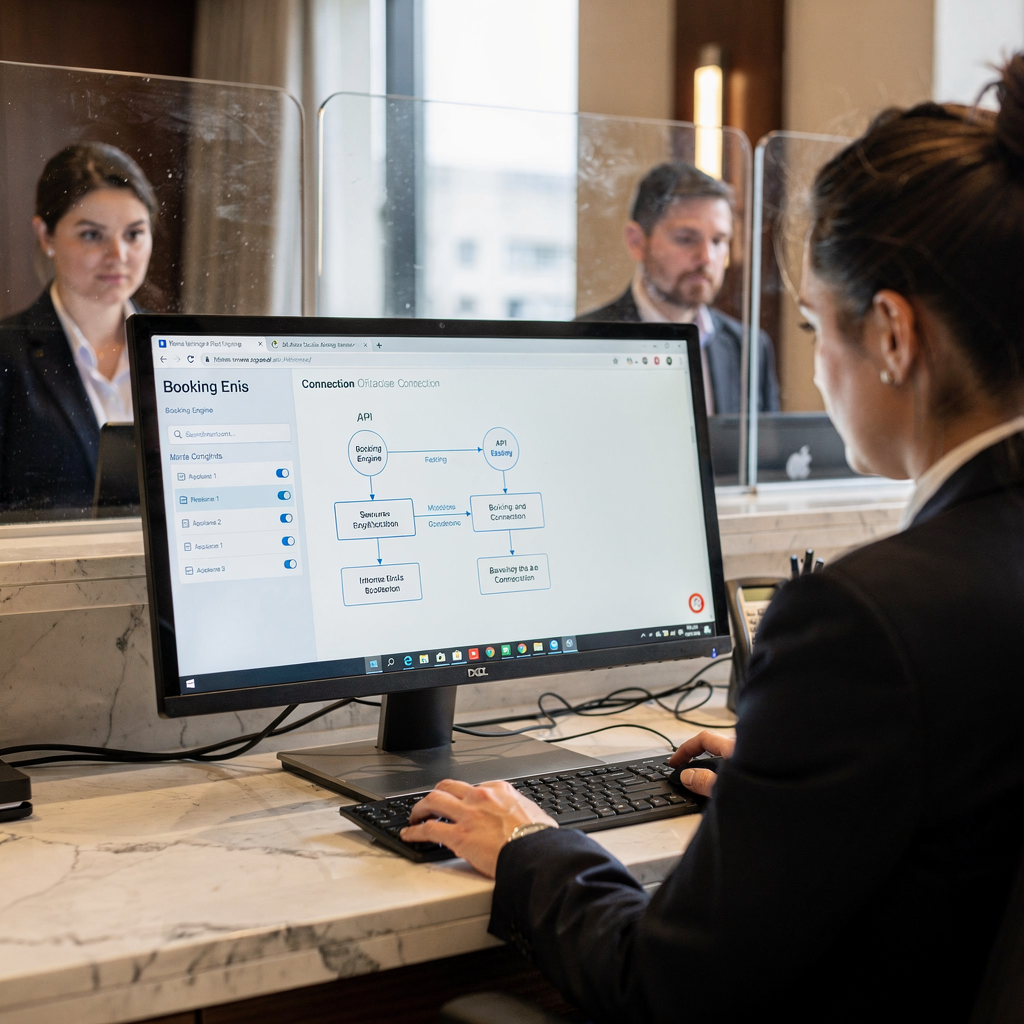
Integration between an ai reservation tool and core hotel systems is essential. First, the hotel website widget or booking engine must exchange data with the property management system (PMS), the channel manager and the CRM. Next, the payment stack needs secure tokenised flows so guests can complete a transaction without friction. Real-time sync avoids double-bookings and keeps rates accurate, and so a real-time link between the booking engine and PMS is non-negotiable. For a global view, hotels using ai rely on API-based connections that update availability and guest profiles instantly.
In practice, the ai reservation and booking assistant auto-fills guest data, applies relevant upsells, validates a rate and completes the direct booking. Also, the assistant writes structured records back to the CRM and the PMS so sales and operations teams see the same information. For enterprise or a hotel group, this reduces manual reconciliation, increases direct bookings and reduces error-prone copy-paste. For an operations-focused example, virtualworkforce.ai shows how data-grounded AI can draft and route accurate replies by pulling from ERP and other systems ERP email automation for logistics, which is a similar pattern in hotel operations.
Best-practice checklist for integration includes API-based connection, data mapping, GDPR/compliance, clear fallbacks to human staff and monitoring for edge-case rates or blocked dates. Also, maintain an audit trail for every ai reservation step so customer disputes and chargebacks are easier to handle. Practical KPIs to track include direct booking rate, time-to-confirmation and cancellation rate, and teams should set thresholds and alerts for sudden swings. Finally, consider a phased rollout: pilot the booking assistant on low-risk rate plans, measure uplift, and then expand to group sales and promotions.
Drowning in emails?
Here’s your way out
Save hours every day as AI Agents label and draft emails directly in Outlook or Gmail, giving your team more time to focus on high-value work.
Conversational AI for guest communication: hotel chatbot, hotel voice and voice AI handling FAQs around the clock
Conversational channels matter because guests use many platforms to ask a question. Web chat, messaging apps, SMS, email and hotel voice systems can all deliver fast answers. A hotel chatbot answers FAQs, while voice ai supports phone calls and IVR paths. Together, they provide omnichannel service that operates around the clock. For example, a hotel voice system can confirm an early check-in request, while a web chat resolves rate questions and captures card details for a direct booking. This breadth reduces the load on the front desk and improves guest satisfaction.
Use-cases include pre-stay FAQs, group enquiries, contract clarifications, special requests and post-stay feedback. Also, bots can handle simple service requests such as extra towels, and they can escalate maintenance or guest service incidents to hotel staff with full context. UX rules should prioritise short responses, clear escalation to a person, and preservation of context across communication channels so the guest does not repeat details. Conversational design must be friendly, precise and rule-aware so the assistant hands off seamlessly when nuance or trust matters.
Measurable outcomes include fewer inbound emails, faster quote turnaround and higher conversion on time-sensitive offers. For hotels and resorts, an AI chatbot designed to surface the right offer at the right time can capture revenue that would otherwise be lost to indirect channels. In addition, integrating with your inbox and CRM means the assistant writes structured records and reduces manual triage; teams see fewer handoffs and a clear history. For teams managing many messages, virtualworkforce.ai demonstrates thread-aware memory that reduces repeated lookups and raises response quality how to improve logistics customer service with AI.
Transforming hospitality operations: freeing hotel staff and hoteliers to focus on high-value selling and guest experiences
AI helps hotels automate routine admin so hotel staff can focus on complex negotiations and relationship building. For example, sales teams spend less time qualifying leads, and hotel managers can reallocate hours to upselling and corporate accounts. Studies show that automating common email and inquiry tasks cuts handling time dramatically; teams often reduce manual handling time and increase capacity for personalised outreach. For ops-heavy teams, using ai agents to automate repetitive email workflows leads to faster responses and fewer errors, which helps hotel operations run smoothly and keeps guests happy.
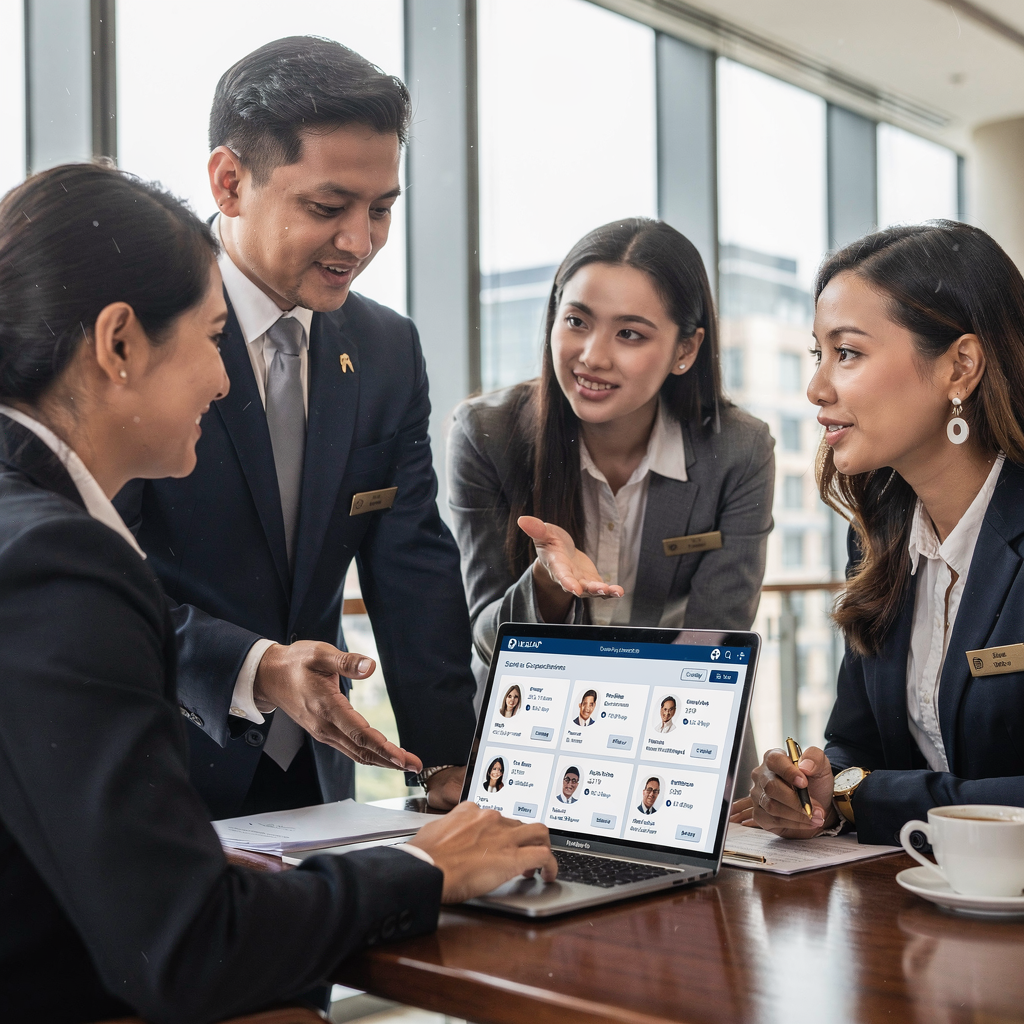
Also, cultural guidance matters. Position AI as a colleague, not as a replacement. Train staff on handover points, reporting, and how to review AI-generated proposals. This approach helps hotel staff accept automation and use it to boost performance. For example, a sales manager can set rules so the assistant routes an RFP to the right account executive, and then the person completes the negotiation. This keeps human judgment where nuance matters, while the assistant handles scale.
Numbers illustrate the benefit. When email automation reduces handling time from ~4.5 minutes to ~1.5 minutes per message, teams free hours per employee each week to pursue high-value work. Therefore, hotels that adopt automation see improved morale and better customer experience because staff focus on personalization and problem-solving. Also, focus on more complex tasks after AI handles routine work, and make sure systems report metrics so leaders can track wins. For operational playbooks, internal teams can review automated threads and iterate on tone and escalation rules, which improves service quality over time.
Drowning in emails?
Here’s your way out
Save hours every day as AI Agents label and draft emails directly in Outlook or Gmail, giving your team more time to focus on high-value work.
AI agents and sales performance: ai-driven metrics, conversion uplifts and managing customer trust
AI agents in hotel sales produce measurable uplifts and clearer metrics. Reported conversion increases of up to ~20% come from ai-driven engagement that catches guests when they are ready to book How Hotels Use AI Agents to Increase Direct Bookings. Also, a 2025 study found that 68% of hospitality companies expect AI to improve guest experiences, which connects to higher repeat bookings and referrals How AI is redefining the modern hotel guest journey. At the same time, 32% of consumers say AI enhances service quality and personalizes interactions, which supports trust when teams use AI transparently Embracing AI in Hospitality Without Losing the Human Touch.
However, trust and risk remain important. Privacy concerns and perceived impersonality can harm loyalty if hotels do not disclose AI use, offer opt-outs and keep escalation paths clear. To mitigate risk, publish a short notice on the hotel website about communication with AI, store consent logs, and keep human review for sensitive requests. Sales metrics to monitor include lead-to-booking conversion, average booking value, repeat-booker rate and NPS after AI interactions. Also, track time-to-quote and the ratio of bot-handled to human-handled wins.
Practical CTAs include promotional codes via chat, tailored group proposals, and automated follow-up cadences that nudge undecided guests. For a quote on efficiency, an industry analyst noted, “By freeing sales staff from routine administrative duties, AI allows them to focus on strategic selling and nurturing high-value relationships, ultimately driving revenue growth” How AI Automation Frees You to Focus on Guests. Thus, combining transparency, measurement and clear escalation gives hotels the best chance to increase direct bookings and protect brand trust. Finally, hotels should compare tools and choose a best ai setup that aligns with their tech stack and service values.
Integration, compliance and adoption: an all-in-one platform approach for independent hotels — communication with AI and why every hotel needs an assistant in 2026
Independent hotels benefit from an all-in-one platform that bundles the booking engine, messaging, CRM and ai reservation capabilities. An integrated approach reduces connector work, shortens time-to-value and limits the number of vendors to manage. For independent hotels, a single platform that offers omnichannel service and a booking assistant can centralise guest communication and therefore streamline operations. Also, such a platform reduces the risk of data silos and keeps a consistent tone across channels.
Compliance must be part of the plan. Ensure GDPR and local privacy rules are respected, keep consent records, log all AI interactions and maintain audit trails for sales and refunds. For payment flows, use PCI-compliant tokenisation. Next, include fallbacks and human review in sensitive cases such as contract negotiations or dispute resolution. This approach balances efficiency with trust and keeps hotel managers comfortable with new ai tools.
Adoption roadmap: pilot with a single property or a specific use-case such as pre-stay FAQs, measure uplift in direct bookings and time savings, iterate and then scale across sites. Also, train hotel staff on handover points and set reporting cadences so managers can see progress. For teams that handle many email threads and operational messages, consider end-to-end email automation to reduce triage; virtualworkforce.ai specialises in automating the full email lifecycle so operations teams regain time and consistency how to scale logistics operations with AI agents.
Finally, every hotel needs a clear plan because adopting AI without governance risks reputation and guest satisfaction. Therefore, start small, monitor KPIs like direct bookings and guest satisfaction, and keep human staff in the loop so AI handles the routine and hotel staff handle nuance. As the hotel industry moves into 2026, the right hotel will use ai reservation assistants, integrated systems and strong compliance to increase direct bookings and direct revenue while maintaining a personalised experience for guests.
FAQ
What is an AI booking assistant and how does it help hotels?
An AI booking assistant is a software tool that automates lead capture, qualification and parts of the reservation path. It helps hotels by reducing response times, increasing direct bookings and freeing staff to focus on high-value tasks.
Can an AI chatbot handle group sales and complex contract enquiries?
Yes, a chatbot can handle initial qualification for group sales, collect requirements and generate tailored proposals. However, complex negotiations should escalate to human hotel staff to finalise terms and ensure accuracy.
How does an AI reservation system avoid overbooking?
By integrating the booking engine with PMS and channel manager through real-time APIs, the system synchronises availability and rates. This real-time synchronization prevents double-bookings and keeps inventory accurate.
Are guests comfortable interacting with AI at hotels?
Many guests appreciate fast answers, and 32% of consumers say AI enhances service quality when used correctly. Still, transparency and opt-outs matter, so hotels should disclose AI use and offer easy escalation to a person.
What KPIs should hotel managers track after adding AI?
Track direct booking rate, time-to-confirmation, cancellation rate, lead-to-booking conversion and NPS post-interaction. These metrics show both revenue impact and guest satisfaction.
How do independent hotels benefit from an all-in-one platform?
Independent hotels benefit from reduced integration overhead, centralised guest communication and simplified compliance. An all-in-one platform makes it easier to deploy an assistant and measure outcomes before scaling.
Is compliance with data protection laws difficult when using AI?
Compliance requires clear consent flows, audit trails and secure payment handling, but it is manageable. Choose solutions that log consent, keep communication records and support GDPR and local regulations.
How should hotel staff be trained to work with AI?
Train staff on escalation points, review of AI outputs and how to interpret AI-suggested offers. Position AI as a colleague and provide reporting so teams can refine tone and rules over time.
Can AI increase direct revenue for hotels?
Yes, AI tools that capture and convert leads can boost direct revenue by increasing direct bookings and reducing reliance on OTAs. The Hotel Tech Report and industry case studies report conversion uplifts linked to AI engagement.
Where can I learn more about automating hotel communications and email workflows?
Explore resources that show end-to-end email and messaging automation for operational teams; for example, virtualworkforce.ai offers examples of automating email lifecycles to improve speed and consistency. Also, check integration guides and best-practice checklists before deployment.
Drowning in emails?
Here’s your way out
Save hours every day as AI Agents label and draft emails directly in Outlook or Gmail, giving your team more time to focus on high-value work.