


ai agent and conversational ai: what they do in hotel restaurants
AI agents sit at the intersection of operations and guest interactions. First, AI agent or conversational AI can act as a front desk for a restaurant, and also as a back office helper. For example, a voice AI can automate reservations and routine calls, so staff answer only the complex cases. Case studies report high automation rates and large ROI when voice systems handle phone answering How AI Automation Frees You to Focus on Guests. In hotels, conversational AI appears across the guest journey. Before arrival, AI handles reservation questions, confirms dietary notes, and suggests add‑ons. On property, AI agents handle room service prompts, menu clarifications, and multilingual greetings. After the stay, AI follows up on satisfaction and loyalty incentives. For many hotels, this creates faster replies and higher conversion for direct bookings.
Architecture is layered. A natural language understanding layer parses intent. Next, a decision layer applies business rules and guest history. Then, a connector layer links to PMS, POS, CRM and phone systems. This allows real-time reads and writes when permitted. Handover to human staff is clear and immediate. If the AI cannot confirm a special request, it routes to a human with context and suggested replies. This prevents awkward transfers and reduces errors.
Multilingual capability is essential. Systems that support multiple languages handle international guests with ease. This matters for hotels serving international guests. For phone workflows, a short demo script shows how this works in practice. Example script: “Hello, this is the Sunset Hotel restaurant. Do you have a reservation? What time and party size? Any dietary needs?” The AI confirms the reservation, logs the party size, and asks for a phone number. If the caller requests a private room or allergen detail, the assistant routes the inquiry to human staff with full context.
Finally, operators must choose systems that match their brand voice. For those who want deeper automation across email and bookings, our team uses AI to turn repetitive messages into structured data and to automate the full email lifecycle, which reduces handling times and keeps context in shared inboxes. For practical guidance on pilot design, see how to scale operations with AI agents how to scale operations with AI agents.
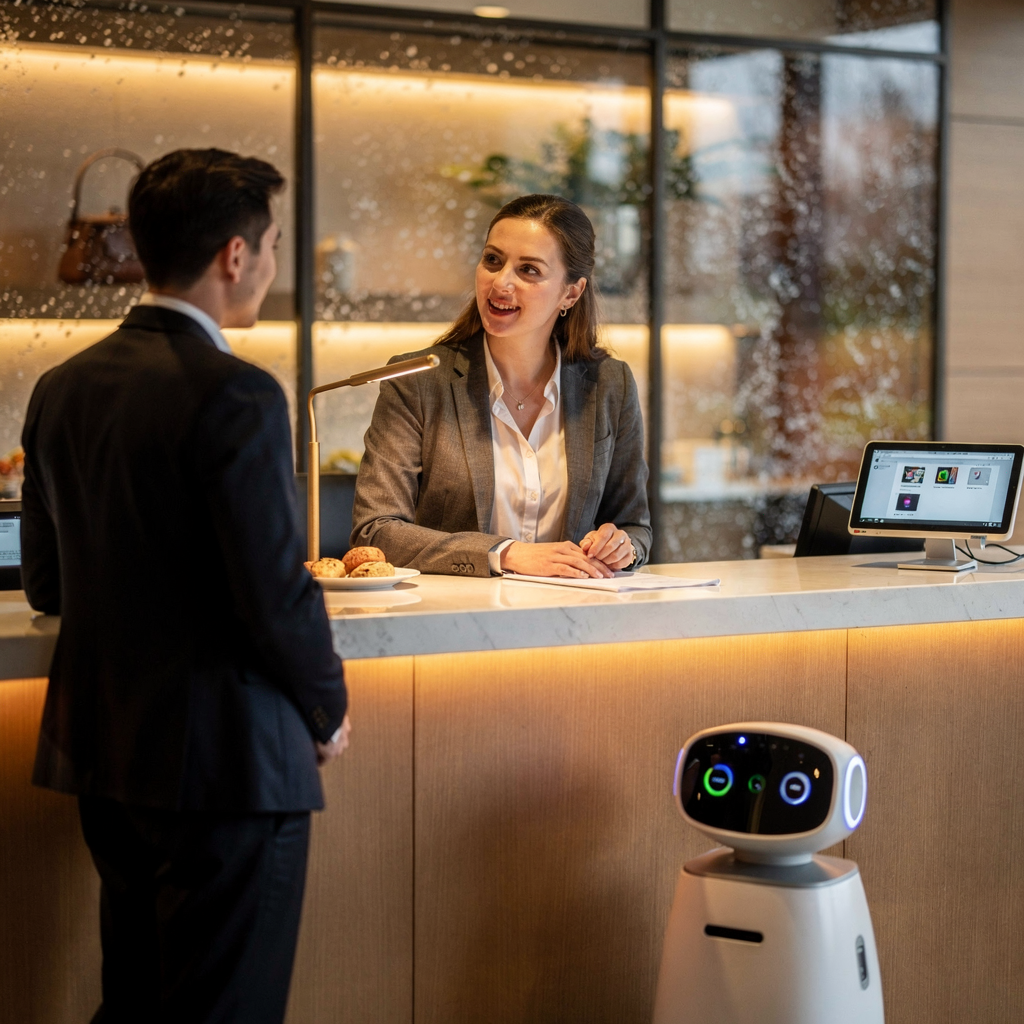
use cases: ai agents for restaurants handling booking and faqs
Use cases are straightforward and practical. Restaurants using AI agents handle reservations and FAQs, and they free up staff to serve tables. AI systems automate confirmation calls, manage table allocation, and answer menu questions. For bookings, an AI can check availability, place a hold, and confirm a reservation by SMS or email. When callers ask about menu items or allergens, chatbots reply instantly and route complex dietary requests to culinary staff. These agents also upsell specials and timed tasting menus, which lifts average check size.
Concrete examples matter. Many deployments reduce order and reservation processing time by about 25% How AI Automation Frees You to Focus on Guests. In broader hospitality research, AI implementations have improved service performance by up to 30% in certain areas Can AI improve hotel service performance? A systematic review. For routine faq handling, some hotels automate large shares of queries, and this lowers call volume and shortens response times. This also helps teams manage busy Friday night rushes and peak call times without extra hires.
Practical flows look like this. A phone answering solution confirms time, party size, and special requests. Then, the AI writes the booking into the reservation system and sends a confirmation message. If a caller asks for a specific table or wheelchair access, the AI flags it and routes the request to human staff. Another flow shows a chatbot suggesting menu items based on guest history, and then routing complex pairing requests to a sommelier. These agents that handle routine messages help restaurants reduce errors and reduce operational costs. To explore how automated correspondence can triage and draft responses across email and systems, see automated logistics correspondence for a methodical example automated logistics correspondence.
Drowning in emails?
Here’s your way out
Save hours every day as AI Agents label and draft emails directly in Outlook or Gmail, giving your team more time to focus on high-value work.
guest experience and guest data: ai phone, direct bookings and roi
Guest outcomes improve when AI answers quickly and accurately. Faster answers mean fewer missed reservations, and therefore more direct bookings. One case study shows dramatic annual ROI after deploying a restaurant voice AI, and hotels report higher booking conversion when the AI personalizes suggestions. Hotels that use guest data to suggest menu items based on past behavior drive loyalty and repeat visits. Data use must be explicit and consented, and it should respect privacy rules.
Guest data is the engine for personalization. By reading guest history, preferences, and past orders, AI agents suggest relevant dishes and pairings. This personalization raises spend per cover and encourages loyalty. Surveys indicate a 20% increase in customer satisfaction where conversational agents personalize service and answers Artificial intelligence’s impact on hospitality. For ROI, teams measure revenue from direct bookings, call containment rate, and reduction in no-shows. These simple KPIs show the value of an ai phone and the savings from fewer manual confirmations.
Operationally, the AI improves follow-up and reduces no-shows by confirming and reminding guests. This approach reduces labor costs and improves service quality. When you compare time saved to the cost of a system, many teams report strong returns. For an ROI example and measurement framework, see our logistics ROI page which explains how to attribute saved time to revenue gains virtualworkforce.ai ROI for logistics. Use clear metrics: containment rate, conversion to confirmed booking, and uplift in average spend per guest.
hospitality operations: ai agents for hospitality, existing restaurant systems and restaurant operators
Operational gains come from tight integration and good pilot design. AI agents for hospitality read bookings, update the POS, and alert kitchen staff when menu changes occur. This reduces manual handoffs and shortens kitchen prep times. For restaurant operators, the key integration points are PMS, POS, CRM and the telephone system. When connectors work well, AI can write reservations and update guest profiles seamlessly. Integration with existing restaurant systems prevents duplicate work and keeps data consistent.
Staff roles change but do not disappear. Human staff remain essential for service and guest recovery. AI frees staff to focus on in-person service and upselling. For operators planning a pilot, try a 4–8 week test during peak hours. Run the pilot on a busy Friday night and compare calls handled, confirmed bookings, and time saved per call. Set escalation rules, and train staff on how to review AI suggestions. Expected labour savings vary, but teams often reallocate hours from phones to floor service, improving guest satisfaction and table turnover.
For deeper system integration, ensure APIs are secure and permissions are scoped. If your existing restaurant technology is older, plan for middleware or batch updates. Our company helps operations teams automate email workflows and data lookups across ERP and shared systems. That same approach applies to hotel operations where structured data and thread-aware memory reduce repeated questions and speed resolution. For ideas on improving customer service with automation and templates, see how to improve customer service with AI improve customer service with AI.
Drowning in emails?
Here’s your way out
Save hours every day as AI Agents label and draft emails directly in Outlook or Gmail, giving your team more time to focus on high-value work.
data protection and integration: agentic ai, bias and system limits for hospitality businesses
Risk management must be explicit. Many hospitality businesses still use outdated architectures that block real-time sharing with intelligent systems, and that slows deployment Artificial intelligence agents and agentic systems in hospitality and tourism. To protect guests, implement consent flows and retention policies that meet data protection laws. Use secure APIs and minimal data models for reservations to limit exposure. Daily logs and audit trails help teams trace decisions and meet compliance demands.
Agentic AI and bias are real topics. Research calls for bias auditing frameworks for tourism contexts The effects of generative AI on consumers in tourism. Bias can show up in recommendations if guest history is sparse or skewed. Guardrails include transparent prompts, fairness checks, and human review points. Also, keep escalation rules simple so human staff take over when needed.
Technically, keep integrations modular. Use tokenized access to PMS and POS. Limit data retention to what is necessary for the stay. Test for security, and run privacy impact assessments before scaling. Finally, comply with industry standards and with local data protection law. A simple practical step is to encrypt identifiers and track consent per marketing channel. This protects guest data and supports repeat visits without exposing private details.
frequently asked questions and faqs: choosing the best ai and conversational solutions for restaurants using conversational systems
Operators ask many questions when choosing AI. Which ai solutions match the restaurant’s tone? Which ai tools support phone workflows? Which vendors offer strong integration and support? Use a buying checklist that prioritizes accuracy on natural language understanding, phone‑first capability, integration ease, and vendor support. Also require clear SLAs for escalation and data handling.
For trials, run a small pilot and measure containment rate, booking conversion, and guest satisfaction. Train staff and define escalation paths. Match your brand’s tone in replies and make sure responses align with policies. Pick vendors that let you edit templates and that provide analytics on calls and bookings. If you want practical templates for operational email and booking replies, our virtual assistant approach shows how to automate the full lifecycle of messages while keeping full audit trails. Learn more about virtual assistant options for logistics and apply similar principles to reservations virtual assistant logistics.
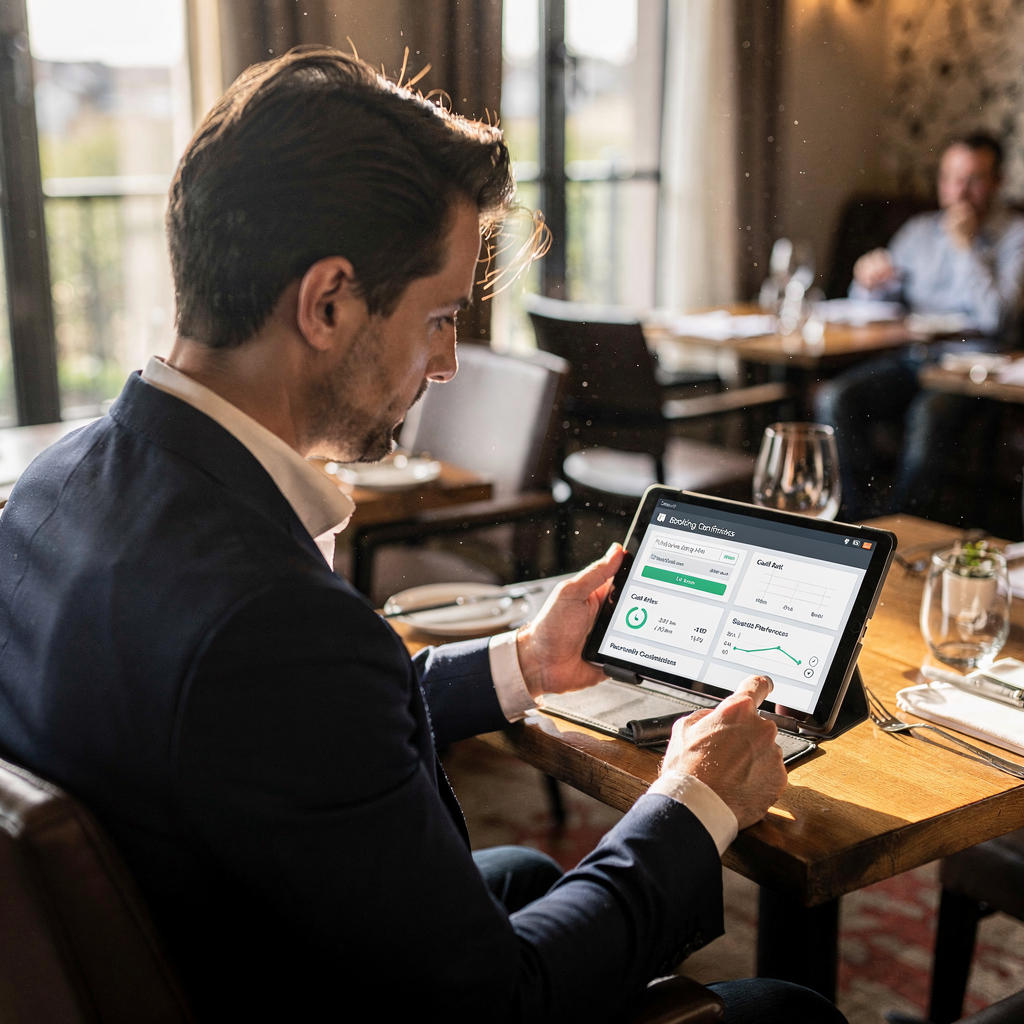
Next steps: run a 4–8 week pilot focused on bookings. Track containment rate and conversion. Scale with a data‑protection review. Finally, keep staff involved and use AI to support human staff rather than replace them. This balanced approach helps restaurants handle orders and reservations, reduce operational costs, and meet guest expectations while protecting guest data.
FAQ
Will AI take our jobs?
AI will shift job duties rather than replace all roles. Human staff will focus more on in‑person service and complex customer recovery. AI handles routine tasks so teams spend time on higher‑value work.
How accurate are booking confirmations?
Accuracy varies by vendor and integration quality. When AI reads the live reservation system and confirms via SMS or email, accuracy is high; however human review remains critical for edge cases.
How do we handle complex requests?
Design escalation rules so complex requests reach human staff with full context. The AI should attach guest history and suggested responses to speed resolution.
What languages are supported?
Support depends on the platform and model used. Many systems cover multiple languages and provide basic multilingual handling for common phrases and reservation details.
How is guest data stored and who owns it?
Ownership and storage depend on vendor contracts and local law. Ensure contracts specify data retention, encryption, and that guest consent is recorded. Also run privacy impact assessments before launch.
Will our brand voice be preserved?
Yes, if the vendor allows tone configuration and editable templates. Ask for a proof of concept to confirm responses match your brand voice and service standards.
What performance metrics should we track?
Track containment rate, booking conversion, call handling time, and guest satisfaction. Also monitor no‑show rates and revenue per cover to measure ROI.
How long does implementation take?
Timelines vary. A pilot can launch in 4–8 weeks for phone and chat, assuming API access to PMS and POS. Legacy systems may require middleware and extend timelines.
How do we test for bias in recommendations?
Run regular audits of recommendation outputs and compare across guest segments. Include human review of samples and log decisions for traceability.
What are simple first steps for pilots?
Start with reservations and routine FAQs during peak hours. Define escalation rules, train staff, and measure containment and conversion. Then expand to upsells and personalized offers once metrics are stable.
Drowning in emails?
Here’s your way out
Save hours every day as AI Agents label and draft emails directly in Outlook or Gmail, giving your team more time to focus on high-value work.