


AI & voice AI: turn every call into a booking — never miss customer inquiries
First, AI answers the phone when humans cannot. Second, it turns missed rings into revenue. Voice AI platforms answer phones 24/7 and cut missed calls to near zero, so restaurants capture more bookings and reduce lost sales. For example, some vendors report measurable revenue uplift when calls are handled automatically; early reports show a large share of searches now use voice-driven discovery and ordering systems (58% of restaurant searches use AI and voice assistants). This matters because every missed call can be a lost guest.
How conversational voice differs from classic IVR is simple. Classic IVR forces a caller through rigid menus. Conversational AI lets callers speak naturally. As a result, conversion rises and spam calls fall. Voice AI listens, understands, and maps intent to a reservation, to POS availability, or to a staff notification. Vendors such as PolyAI, Loman and Slang demonstrate that a voice AI platform can answer every call and manage complex flows with real-time context (AI agents power chatbots and voice ordering). This replaces legacy IVR while improving the guest experience.
Operators who want to never miss a call should measure two simple outcomes: calls answered and bookings captured. Track how many phone orders or reservations the system creates, and compare that to prior no-answer rates. In one example, a restaurant group saw automated reservations worth roughly £140,000 per month after deployment; that shows the scale of impact when AI answers quickly and accurately (case examples for voice ordering). To get started, restaurant owners should define goals, set simple handover rules, and test peak call times first.
Finally, remember that the goal is to turn every call into value. Use an AI to ensure a warm greeting, confirm availability, and book the guest. Then, sync the booking to your POS and booking systems. If you want more on operational setup and staffing impact, see a practical operations link that explains how to scale without hiring (how to scale operations without hiring). This step closes the loop between calls and covers, and helps restaurants go live with confidence. In short, AI and voice AI let teams answer every call, even during peak hours, and never miss customer inquiries.
ai assistant and ai phone in hospitality: enhancing customer guest experience for restaurant operators
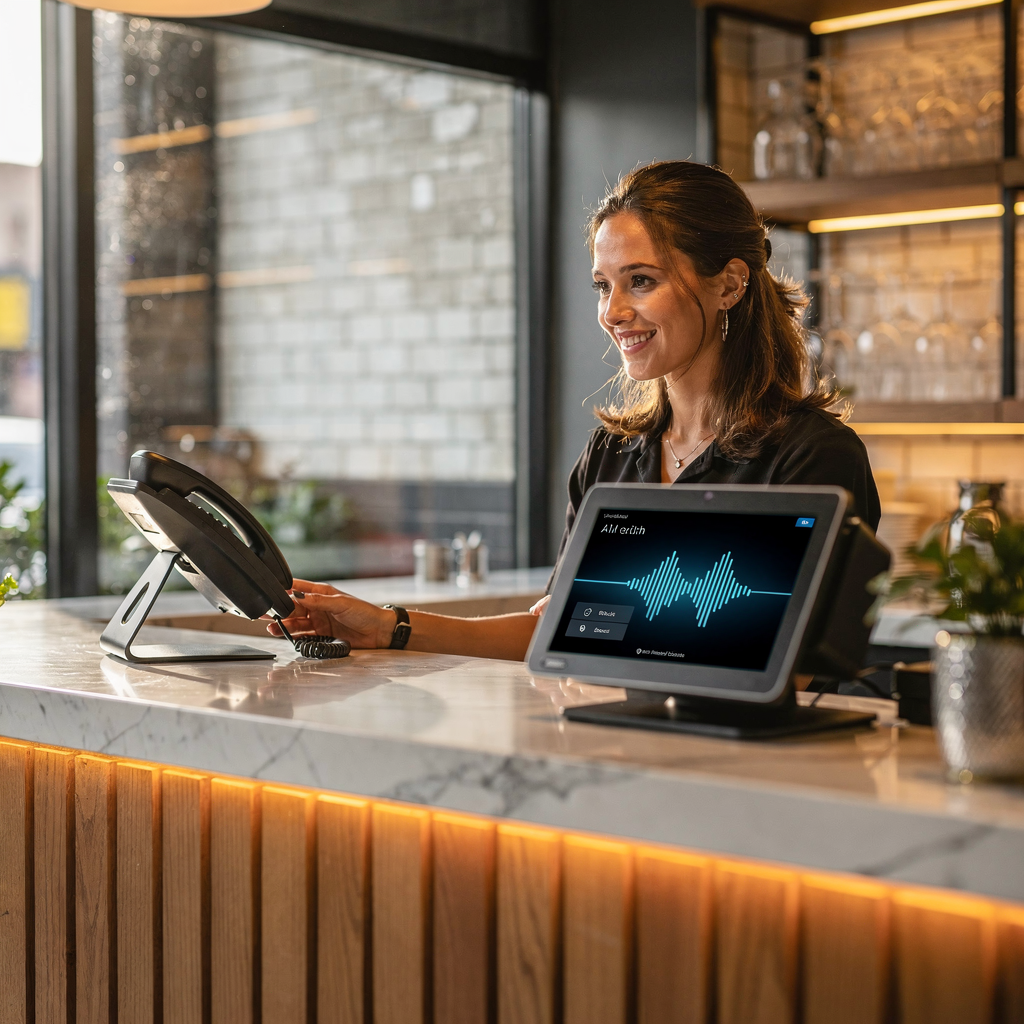
AI in a restaurant acts like a tireless staff member. It answers phones, confirms a reservation, and handles routine questions. Hospitality teams see faster speed and better consistency. When callers get a quick reply, customer satisfaction rises. In fact, integrating voice-first systems reduces wait times and boosts overall customer satisfaction in many deployments (AI improves customer experience by collecting data from multiple sources). That improves repeat visits and loyalty.
Day-to-day, an AI phone handles booking updates, cancellations, and simple FAQs. It can also confirm dietary needs, log guest preferences, and flag VIPs for the host. Because the system runs 24/7, restaurant staff gain uninterrupted time to focus on floor service. This reduces manual work and creates time for staff to serve guests. Staff feel less pressure when the phone stops ringing every few minutes during peak hours.
Typical call flows include greeting, intent capture, availability check, booking confirmation, and optional upsell. The AI handles common customer questions about opening hours, menu items, and parking. It also routes complex requests to a human. This blend of automation and human handover protects guest experience and staff morale. Operators report that when calls are answered quickly and correctly, customer satisfaction improves and complaints fall.
For restaurant management, the value lies in consistent service quality and reduced ambiguity in shared inboxes. If your team struggles with repetitive email workflows or booking emails, there are ways to automate replies and routing that mirror what voice AI does for phone calls; learn how automated email systems reduce handling time and improve response consistency (improve customer service with AI). Together, voice and email AI free up time for staff to focus on providing exceptional floor service and enhancing the guest experience.
Drowning in emails?
Here’s your way out
Save hours every day as AI Agents label and draft emails directly in Outlook or Gmail, giving your team more time to focus on high-value work.
voice assistant and restaurant voice ai: how restaurants using voice AI handle reservations and inquiry
Restaurants using voice AI often connect the system to OpenTable, Yelp, or custom booking stacks. That link lets the AI check availability, confirm a reservation, and update the central calendar. Case studies show strong results. For instance, a restaurant group automated high-volume bookings and reported meaningful revenue capture. Olga’s Kitchen used immediate pickup on the first ring and reported higher conversion and fewer missed opportunities. These stories illustrate how AI handles real-world volumes with consistent quality (voice ordering revolution).
Voice assistants such as Google Duplex demonstrated that conversational agents can sound natural and complete a reservation call. Modern voice AI improves on that by integrating with POS systems and loyalty data, letting the system suggest menu items, note preferences, and personalize offers. When voice AI connects to your POS and reservation systems, it can modify bookings, upsell dishes, and log notes for future visits. This is how ai voice can add both convenience and incremental revenue.
Mini case study: Big Table Group. The group automated reservations and reported roughly £140,000 per month in captured bookings after rolling out the solution. That outcome depended on deep integration and tuned conversational scripts. Mini case study: Olga’s Kitchen. By picking up immediately and confirming orders on the first ring, Olga’s Kitchen reduced drop-off and improved guest loyalty. These two examples show the practical upside when restaurants go live with a tested voice AI platform.
Below is a short sample transcript that shows tone and scope. Caller: “Hi, do you have a table for four tonight at seven?” AI: “Yes, we have a table at seven. May I have a name and any seating preference?” Caller: “Window, please.” AI: “Window is noted. Your reservation for four at seven is confirmed under Taylor. Can I send a confirmation SMS?” This brief exchange highlights how the system manages reservations and common customer inquiries with a natural cadence.
integrate with your existing restaurant stack: technical steps for existing restaurant and existing restaurant stack
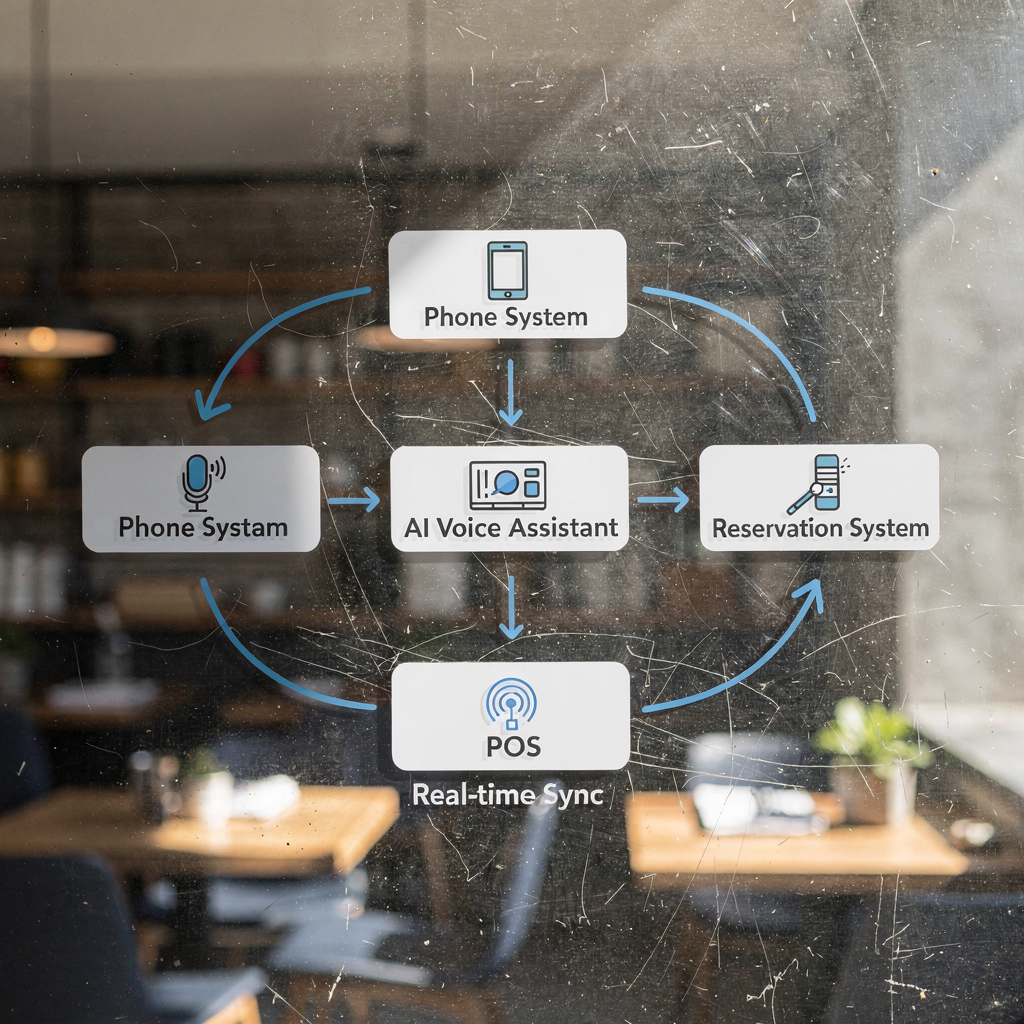
Start with a clear map of systems. First, list where availability, party size, and booking notes live. Next, identify API endpoints for OpenTable, POS, and your booking engine. Most voice AI vendors provide direct connectors or middleware so you can integrate quickly. When you integrate, ensure that the AI reads real-time availability and writes back changes. This prevents double bookings and maintains accurate reservation counts.
Minimum technical requirements often include a secure API, a webhook endpoint to receive callbacks, and an authentication method such as OAuth. Also, ensure your POS (or POS gateway) exposes the basic ops data the voice AI needs. Vendors usually describe a phased rollout: sandbox tests, small pilot, full go-live. During testing, validate synchronisation for cancellations, modifications, and no-shows. Use test calls to confirm that the AI updates reservations and notifies staff in real-time.
Privacy and data security matter. Ask providers about data retention, encryption, and access controls. Ensure customer phone numbers and booking notes are stored only as required. Also, confirm support for multiple languages if your restaurant serves a diverse community. To help with broader operational automation, consider tools that automate email workflows and route messages based on intent; this complements voice and ensures consistent follow-up across channels (automated correspondence and routing). That builds a dependable, unified guest record.
Testing and rollout phases should include a pilot that covers peak call times and busy service windows. Track early KPIs and set a rollback plan in case of integration issues. Finally, tune your conversational AI so it sounds like your brand. You can automate the routine while keeping humans available for exceptions. This approach ensures seamless handovers and helps restaurants integrate voice AI without disrupting service.
Drowning in emails?
Here’s your way out
Save hours every day as AI Agents label and draft emails directly in Outlook or Gmail, giving your team more time to focus on high-value work.
ai for restaurants: ROI, metrics and how to never miss a booking
Measure the right metrics first. Track capture rate, conversion from calls to reservations, average spend per AI-assisted booking, and staff hours reclaimed. Also measure customer satisfaction scores and wait times on the phone. Vendors report up to a 30% increase in order accuracy and speed when voice systems reduce manual entry, and many restaurants see a 20–25% bump in customer satisfaction after deploying conversational systems (reported outcomes for AI in restaurants) (improves guest experience).
Six KPIs to track: call answer rate, bookings captured, conversion rate, average spend per booking, reduction in missed calls, and staff hours saved. Run a short pilot for two to four weeks. During that pilot, compare reservations and revenue against the control period. Include peak call times and simultaneous calls scenarios. Voice AI platforms can handle unlimited simultaneous calls, so measure how many simultaneous callers you get and how the AI responds.
Estimate payback by calculating additional bookings captured times average spend, minus subscription and integration costs. Also include indirect savings such as reduced overtime and less pressure on a staff member. Use those figures to estimate a 3–12 month payback window depending on call volume. To see how AI agents can reduce manual work in other parts of operations, read about virtualworkforce.ai’s approach to end-to-end email automation for ops teams, which reduces handling time and supports accurate replies (virtualworkforce.ai ROI). This demonstrates how automation and AI together improve efficiency and customer satisfaction.
Finally, to never miss a booking, combine a voice AI with clear escalation rules. Ensure the system flags ambiguous calls for a human and confirms every reservation by SMS or email. With the right metrics and a focused pilot, restaurants can automate routine calls, capture more bookings, and free time for staff to focus on service and food quality.
frequently asked questions: every call, customer inquiries and staff impact
Will it sound natural? Yes. Vendors tune conversational AI voices and scripts to match brand tone. There is always a fallback to a human operator for unclear calls, and callers are told when they speak with an AI. This transparency helps manage expectations and preserves trust.
Can it handle messy calls? Modern conversational ai models are trained for real-world noise, accents, and interruptions. They can capture intent from imperfect audio and route or confirm bookings. However, set clear escalation rules for edge cases.
How does it affect jobs? Automation shifts repetitive tasks away from front-line roles. Staff can focus on in-room service and guest relations rather than constant phone triage. Use the freed time for higher-value guest interactions, training, or operational improvements.
How are complaints handled? The AI logs the interaction and escalates complaints to a manager with context. That creates a faster, traceable path to resolution and improves responses to customer inquiries.
Can it integrate with my reservation system? Yes. Most voice AI solutions connect to OpenTable, POS, and booking engines. Ensure your provider can map availability and write back changes so the booking process stays accurate.
Does it accept phone orders and delivery orders? Many solutions do. The AI can take phone orders, confirm items, and create an order in your POS or delivery stack. This reduces manual entry and improves order accuracy for food ordering.
How do we test before full rollout? Run a pilot that covers peak hours and simultaneous calls. Monitor KPIs and iterate. Use staged go-live windows and staff training to keep service steady.
Do systems support multiple languages? Yes, many vendors support multiple languages to match your guest base. This helps when your restaurant serves tourists or multilingual communities.
What if callers want to speak to a human? Configure a clear human handover. The system should escalate to a staff member on request and provide the conversation transcript so the human can respond quickly.
Where can I learn more about integrating AI with operational workflows? For more on automating operational messages and reducing manual email work, see practical guides on automating logistics correspondence and email drafting that apply similar principles to restaurant ops (automated logistics correspondence) and (email drafting automation). These resources show how AI makes repetitive tasks faster, more consistent, and more accurate.
FAQ
What is a restaurant voice AI and how does it work?
A restaurant voice AI is an AI system that answers phone calls using conversational voice technology. It captures intent, checks availability, and confirms reservations or phone orders, then writes the result back to the booking system.
Can voice AI really reduce missed calls?
Yes. Voice AI platforms operate 24/7 and handle simultaneous calls, which cuts missed calls to near zero. Restaurants report higher booking capture after deployment when calls are answered automatically.
Will guests know they are speaking with an AI?
Transparency is best practice. Most providers announce the call is handled by an AI and offer a human handover. That approach protects trust and improves the caller experience.
How does voice AI connect to my POS or reservation tools?
Voice AI uses API integrations or middleware to connect to OpenTable, POS systems, and booking engines. Real-time sync prevents double bookings and updates reservation records immediately.
Is it difficult to integrate with an existing restaurant stack?
Integration requires APIs, webhooks, and security checks, but most vendors supply connectors and a phased rollout plan. A short pilot helps validate the integration before a full go live.
Does voice AI improve customer satisfaction?
Yes. Fast answers and accurate booking confirmations reduce wait times and increase customer satisfaction scores. Studies show notable improvements after deploying conversational systems.
How are cancellations and changes handled?
The AI can modify bookings, accept cancellations, and log notes for staff. It writes changes back to the reservation system and alerts hosts when manual follow-up is needed.
Will automation affect my staff?
Automation reduces repetitive phone tasks and frees time for in-person service. Teams should plan staffing shifts so employees focus on guest service rather than constant phone triage.
Can voice AI handle peak hours and simultaneous calls?
Yes. Voice AI platforms scale to handle simultaneous calls and peak call times, which helps restaurants keep the phones answered when volume spikes.
How do I start a pilot to test voice AI?
Start small: define KPIs, pick a busy service window, enable test calls, and measure bookings captured and staff time saved. Iterate on scripts and integrations before a full rollout.
Drowning in emails?
Here’s your way out
Save hours every day as AI Agents label and draft emails directly in Outlook or Gmail, giving your team more time to focus on high-value work.