


ai in real estate — Core applications of Artificial Intelligence (AI) and ai use for real estate professionals
AI in brokerage means using automation, prediction and personalization to speed everyday work. It combines machine learning, natural language features and rules to automate tasks. For brokers and real estate professionals the aim remains simple. Save time, reduce errors and personalise client service. For example, AI can triage inquiries, score leads and suggest listing prices in seconds. Intellify notes that „AI is helping real estate agents stay competitive, efficient, and focused on the customer from finding properties to closing deals“ which captures the shift well AI v realitách: přínosy, případy použití a budoucí trendy – The Intellify.
Key applications cover listings, client matching, valuation, marketing and transaction automation. AI indexes property listings and then matches them to buyer preferences. It runs automated VALUATION engines and flagging systems for pricing anomalies. It powers CRM workflows and can automate invoice and contract checks. In short, AI-powered features help agents and brokerages manage large volumes of data and client touchpoints.
Adoption proves the point. About 39% of prospective buyers used AI tools in searches in 2025, showing growing consumer reliance Nový průzkum: Více kupujících domů se v roce 2025 obrací na AI nástroje. In commercial markets, around 92% of occupiers and 88% of investors run or plan AI pilots, which signals broad interest across asset classes Nejlepší AI nástroje pro realitní trh: Průvodce roku 2026 – V7 Go. These figures explain why firms invest in data, models and governance rather than treating AI as an experiment.
Outcomes include faster lead follow-up, less paperwork and improved market responsiveness. AI reduces time on repetitive tasks and frees experienced agents to focus on negotiation and client advice. Yet human judgement still matters. Use AI for decision support and for high-volume tasks, but keep humans in charge for sensitive client advice, price negotiation and local market nuance.
For teams that rely on heavy email volumes, consider AI agents that automate the full email lifecycle to streamline ops and client communication. Our platform describes how email automation reduces handling time considerably and keeps reply quality consistent příklady automatizované korespondence. In practice, leverage AI to automate routine steps, and then apply human expertise where it most affects the outcome.
lead generation and crm — How an ai tool and ai agent raise conversion and qualify leads
Lead generation hinges on speed and relevance. A well‑configured AI tool captures enquiries, scores prospects and books viewings without delay. Conversational AI and virtual assistants respond instantly to queries, gather details and route high-value leads to sales teams. For inbound calls and emails, AI agents can interpret intent and then create or update CRM records automatically.

Field evidence supports this approach. Conversational AI has lifted lead conversion by about 62% in studies that tracked bookings and follow-up rates Konverzní nárůst o 62 % díky konverzační AI v realitách. In practice, the flow looks like this: lead capture, automated scoring, CRM task routing and human follow-up for warm prospects. This flow improves response times and conversion.
Good CRMs come with AI modules that assist with lead scoring and reminders. Examples include platforms with built-in AI features and third‑party connectors for Salesforce, HubSpot and niche real estate CRMs. Integrate an AI agent with your CRM to auto-populate fields and to create tasks. Then, use CRM dashboards to monitor conversion KPIs in real-time and to detect follow-up gaps.
Quick wins exist and are easy to measure. Deploy a 24/7 chatbot to capture out-of-hours leads, link calendar integrations to allow instant viewing bookings, and add automated email sequences for nurture. These steps reduce manual triage and free agents to focus on high-value calls. For ops teams that handle large inbound email volumes, an AI assistant that automates the full email lifecycle will cut handling time and improve consistency—see our guide on improving logistics customer service as an example of email automation benefits jak zlepšit zákaznický servis v logistice pomocí umělé inteligence.
Implement metrics up front. Track response time, booking rate and conversion rate. Then refine scoring thresholds and routing rules. Use the data to train AI models and to tune prompts. Over time, agents and brokers see clearer pipelines, higher conversion and fewer lost leads.
Drowning in emails? Here’s your way out
Save hours every day as AI Agents label and draft emails directly in Outlook or Gmail, giving your team more time to focus on high-value work.
ai marketing and listings — ai marketing tools and tools for real estate agents agents can use to create ai-powered content
Marketing for property now uses AI to speed creative tasks and to test ideas. Generative tools create listing descriptions, social copy and email campaigns. Image and video tools produce virtual staging and quick tour clips. Use AI to generate multiple ad variants and then run A/B tests to see which creative converts best. This workflow reduces time to market and helps listings go live faster.
Popular applications include automated listing descriptions, captions for social posts and short promotional videos. For example, a generative AI model can draft a listing description in seconds. Then, an agent or marketer edits tone and local facts. This saves time and keeps brand voice consistent. Use AI-powered tools for image editing and virtual staging to show furnished options quickly. Tools like Canva and dedicated virtual staging platforms speed production, and partnerships with 3D tour providers improve immersion.
Measurable benefits are real. Faster listing go-live, higher click-through rates and lower cost per lead follow when teams combine good prompts with brand guidelines. Appinventiv documents many such applications and shows how AI improves operational efficiency for marketing workflows AI v realitách: 16 průlomových použití – Appinventiv. To keep control, build a checklist: brand guidelines, prompt templates, advertising compliance checks and a review step before publishing. This reduces brand drift and legal risk.
Also consider ad automation platforms that optimise budgets and bids using machine learning. These platforms monitor ad performance and reallocate spend to the best performing creatives. For compliance and transparency, save prompts and versions, and document approvals. If you need to coordinate marketing with operational emails and vendor communication, our platform shows how to integrate email automation into marketing workflows so responses remain consistent and tracked příklady virtuálního asistenta.
Finally, treat AI as a productivity multiplier, not a replacement. Agents use AI to create first drafts, and then they add local insight. That approach speeds marketing while preserving the expert knowledge that buyers value.
valuation and analytics — best ai for analysing real estate data, market trends and ai capabilities for price accuracy
AI models analyse large volumes of real estate data and then surface trends that humans might miss. They combine transaction records, listings, economic indicators and local amenities to produce automated valuations. AVMs and valuation engines run repeatedly and flag outliers. Use them to cross-check price strategy and to test scenario forecasts.
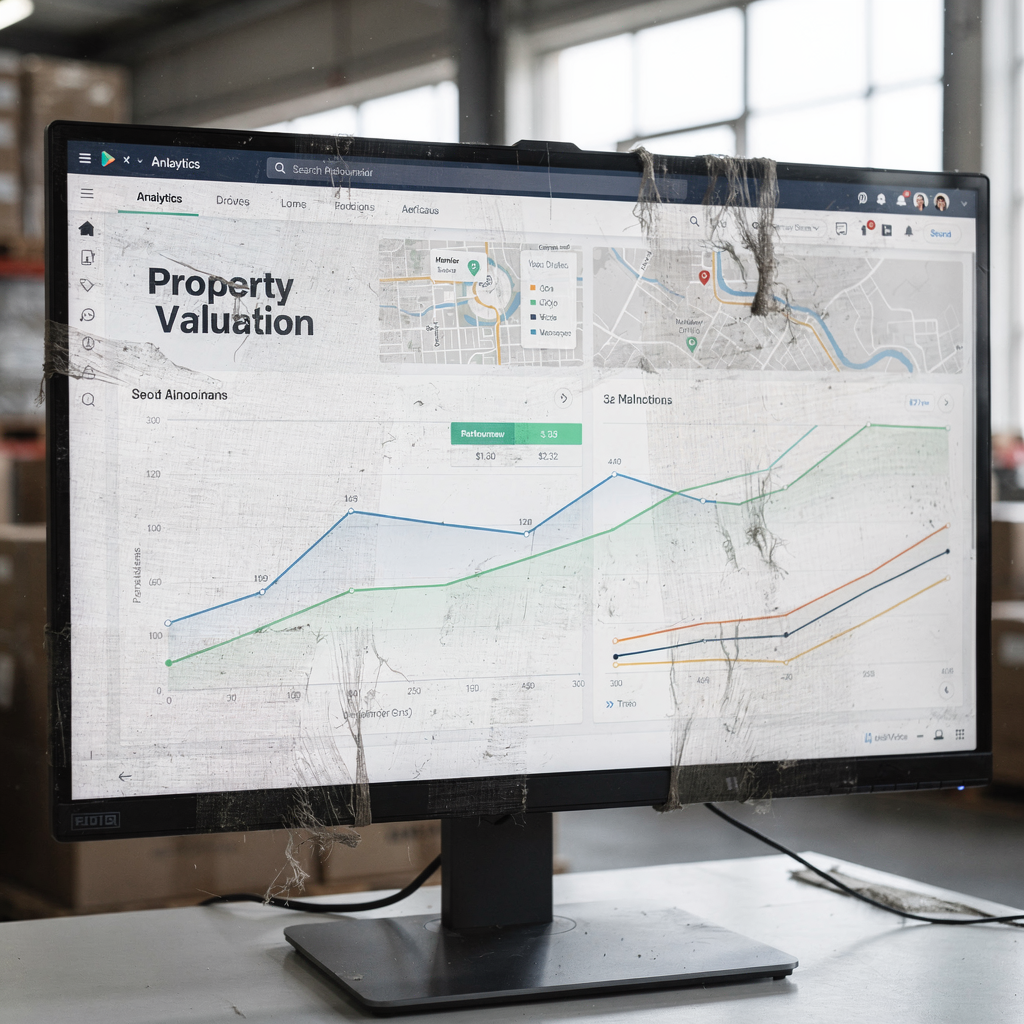
AI improves speed and consistency in valuation work, but it relies on data quality. Poor or missing inputs reduce accuracy. Data must be local, clean and timely. Dataforest and working RE note that AI uncovers subtle patterns and improves pricing strategies when models ingest wide datasets AI v oceňování nemovitostí: přijímání budoucnosti společně. Use the outputs as decision support and not as the sole price arbiter.
Representative tools include AVM platforms, portfolio analytics dashboards and custom models that ingest listings, sales and macro data. Connect valuations to CRM and property listings so pricing mismatches trigger alerts. This integration streamlines re-pricing and ensures teams act quickly when market shifts occur. For risk control, maintain explainability and audit trails so you can show clients the factors behind a recommended price.
McKinsey highlights generative AI potential while warning that many organisations find implementation and scaling difficult Síla generativní AI v realitách | McKinsey. That guidance matters here. Invest in data pipelines, validation rules and governance so models remain reliable. Then, measure valuation accuracy and track outliers.
Finally, use valuation outputs to inform buyers and sellers, to support investment memos and to tune marketing. When implemented well, analytics become a competitive edge because they let agents respond in real-time to price shifts and to demand signals.
Drowning in emails? Here’s your way out
Save hours every day as AI Agents label and draft emails directly in Outlook or Gmail, giving your team more time to focus on high-value work.
commercial real estate and transactions — ai-powered real estate platforms, generative ai use generative ai to streamline deals
In commercial real estate, AI supports lease analytics, occupant demand forecasting and contract review. AI reads long leases and summarises key clauses, flags unusual terms and helps with due diligence. These features speed transactions and reduce legal review time. Generative AI can draft summaries and investment memos from datasets and then help teams prepare pitch decks and proposals.
Platforms that combine document processing, NLP and custom models work well for portfolio managers and brokers. They extract clauses, create searchable libraries and then surface risks. For complex deals, AI highlights comparables and models tenant mix and occupancy scenarios. Use these insights to advise investors and occupiers with data-backed narratives.
Still, risk controls matter. Keep audit trails, require human review at approval points and use sector-specific datasets for training. The commercial market often requires deeper context than retail or residential. AI for CRE needs tailored models and careful validation. When firms apply AI, they report faster due diligence and cleaner contract negotiation cycles.
Generative AI is useful for drafting and summarising, but always pair it with human verification. For confidential emails and operational threads, an AI agent that automates the full email lifecycle can help maintain accuracy and timing across long deal conversations. See how an AI assistant that integrates operational data can reduce errors and preserve context in long email threads AI v komunikaci nákladní logistiky. That model of automation applies well to deal desks and portfolio teams.
Finally, measure outcomes. Track time saved on contract review, time to close and error rates. These KPIs show the value of AI-powered platforms and help justify further investment.
tools for real estate agents — Practical rollout: selection, governance and what agents can use tomorrow
Choose tools by use case. For lead capture and conversational flows pick chatbots and AI agents. For CRM integration choose AI-enabled CRM platforms. For marketing pick generative content and image/video platforms. For valuation and analytics use AVMs and analytics dashboards. For transaction automation consider AI platforms that process documents and draft replies. This shortlist helps teams decide quickly.
Start small and measure impact. Pilot one use case, such as 24/7 chat for lead capture, measure conversion and then expand. Use short test windows and clear KPIs. Track conversion rates, response times and handling time. In many cases, teams see clear ROI within 30 to 90 days when they focus on high-volume repetitive tasks.
Governance must cover privacy, compliance and bias checks. Apply responsible AI use policies, document data sources and obtain client consent where required by GDPR and local rules. Keep a human‑in‑the‑loop for client advice and for approvals of sensitive communications. For email-heavy workflows, virtualworkforce.ai explains how AI agents automate the email lifecycle, with full control for business teams and no prompt engineering required jak škálovat logistické operace s agenty AI. That pattern applies to brokerages with large operational inboxes.
Rapid action plan: in 30 days pilot a lead or email use case; in 90 days refine prompts and workflows; in 180 days embed the solution into team processes and reporting. Train staff, maintain data hygiene and measure agent performance. Use best practices for security and for tracking model drift. Finally, remember that AI should help agents focus on client relationships and negotiation, not replace those skills. Practical AI adoption delivers measurable gains and real results when governance and training guide the rollout.
FAQ
What is AI for real estate and how does it help brokers?
AI for real estate uses machine learning and automation to process listings, score leads and suggest valuations. It helps brokers save time, improve response rates and make data-informed pricing decisions.
Can AI improve lead conversion for real estate agents?
Yes. Conversational AI has shown uplift in conversion metrics, including a reported 62% increase in some studies Konverzační AI zvyšuje leady o 62 %. Quick responses and automated scheduling drive higher booking rates.
Are automated valuations accurate enough to set listing prices?
Automated valuations speed up pricing decisions and provide consistent benchmarks. However, they depend on data quality and local nuance, so treat them as decision support rather than the sole authority.
Which AI marketing tools should agents try first?
Start with generative copy tools for listing descriptions and a virtual staging platform for images. Then add short video creation and ad automation for testing. Keep brand guidelines and a human review step.
How do I integrate AI with my CRM?
Integrate an AI agent that writes back to the CRM, creates tasks and scores leads. Many CRMs offer AI modules or connectors to third‑party tools; map fields, test routing and measure conversion.
What governance should brokerages apply to AI?
Implement privacy controls, bias checks and a human‑in‑the‑loop for key decisions. Document data sources, create audit trails and ensure compliance with GDPR and local rules.
Can generative AI draft contracts and memos?
Generative AI can draft summaries, emails and memos quickly. Always include human verification and a legal review for contract language and deal-critical documents.
Is AI useful for commercial real estate too?
Yes. Commercial real estate benefits from lease analytics, occupant forecasting and document processing. Tailored models and sector datasets increase accuracy in CRE contexts.
How fast will agents see ROI from AI tools?
Many teams see measurable gains in 30 to 90 days when they pilot high-volume tasks, like chat capture or email automation. Track KPIs and scale the most effective workflows.
Where can I learn more about automating email workflows for operations?
For examples of end-to-end email automation and how it reduces handling time, review case studies on automated operational correspondence and AI assistants that connect to enterprise systems příklady automatizované korespondence. These resources show how to scale without hiring and how to keep responses consistent.
Ready to revolutionize your workplace?
Achieve more with your existing team with Virtual Workforce.