


How an ai leasing assistant can transform your leasing operations in multifamily property management
An AI leasing assistant can change how teams work across multifamily portfolios. First, it provides 24/7 renter engagement and captures leads outside office hours so you reduce missed opportunities. For example, RealPage found its tool can “automate leasing, boost conversions, and deliver 24/7 renter engagement” — a clear sign that continuous availability matters LUMINA AI Leasing Agent Transforms Multifamily Leasing – RealPage. Second, the business case is strong. Vendors and case studies report conversion uplifts of up to 30% in some deployments, and adopters sometimes see markedly higher lead-to-lease rates The Best AI Tools for Real Estate: A 2026 Field Guide – V7 Go. These numbers justify pilot budgets and staff time reallocations.
In this chapter I cover core capabilities and placement in the leasing funnel. An AI leasing assistant answers FAQs, schedules tours, pre-screens prospects, and routes complex issues to a leasing agent. It reduces repetitive tasks and lets the onsite team and leasing team focus on tours, negotiation, and resident relations. Set measurable goals early: lead-to-tour, tour-to-lease, lead-to-lease conversion, and time-to-lease. Track staff hours saved and vacancy days reduced. A single property manager can monitor dashboards and approve handoffs while the assistant handles routine messages.
Practical deployment hinges on accurate data feeds and integration. When tools are powered by artificial intelligence and linked to your property management system, prospects and residents see current availability and pricing. Keep governance tight so the assistant does not draft errors. Finally, if you need examples of how AI agents automate email-heavy ops outside leasing, see resources that explain automation for logistics email workflows and operational inboxes virtual assistant logistics. This project will transform your leasing operations when you align goals, data, and human oversight.
Automate prospect handling with ai agent, chatbot and virtual leasing agent to streamline leasing workflows
Start by mapping the flows you plan to automate. Core flows include first responses, qualification, tour scheduling, repeat followup, and answering questions. A chatbot can field early-stage inquiry and move a prospect to tour scheduling. Then a virtual leasing agent takes over for richer conversations and handovers. Real-world pilots show faster response times boost applications. In fact, quick replies often double application rates when prospects expect immediate contact RealPage. Fast lead response makes every lead count.

Design your automation to automate the simple and escalate the complex. For example, use a script that asks qualifying questions, checks eligibility, and presents a set of available times to schedule tours. Then integrate with calendar and e-signature links so the prospect receives a confirmation. Keep scripts short so the AI agent hands off when negotiation begins. That handover should be seamless. A virtual leasing assistant will route the chat and attach context so the leasing agent sees prior answers immediately.
Performance gains are real. Faster reply times reduce candidate drop-off. Using conversational ai reduces repetitive tasks and frees staff to focus on high-value work. A hybrid setup — chatbots handling FAQs and a human agent for nuance — often works best. If you want to understand automated email and message workflows beyond leasing, resources on automating logistics emails explain how to connect inboxes to systems and rules automated logistics correspondence. Finally, test flows with a small property, refine prompts, and log every handoff to maintain traceability and quality.
Drowning in emails?
Here’s your way out
Save hours every day as AI Agents label and draft emails directly in Outlook or Gmail, giving your team more time to focus on high-value work.
Measure impact: conversion, boost in qualified leads and faster closing leases with ai-powered leasing
Define metrics before you start. Track lead-to-tour, tour-to-lease, lead-to-lease conversion, time-to-lease, staff hours saved, and vacancy days reduced. These numbers show whether the tool helps you convert leads and shorten the leasing cycle. Benchmarks help. Some adopters report conversion uplifts near 30%, while other pilots show double-digit gains in qualified leads V7 Go. Use those figures to set realistic targets and ROI windows.
Run an A/B pilot by property. Randomize incoming leads or split by traffic source, then compare cohorts. Use consistent definitions for conversion and closing leases so metrics remain comparable. For statistical rigor, run the pilot for at least one full leasing cycle or 60 days. Track staff time saved and translate that into cost per closed lease. For transparency, log AI decisions and create audit trails so teams can review ai-generated responses if issues arise. A cautionary note: AI agents can sometimes hallucinate facts or lack judgment, so establish review checkpoints and monitoring processes The State of AI Agents in 2025.
Start with small goals: reduce response time under five minutes, increase scheduled tours per week, and raise lead-to-lease conversion by a set percentage. Then scale winners across the portfolio. If you need help automating operational email or tying inbox actions back to ERP data while measuring impact, review a practical guide on how to scale logistics operations without hiring extra staff how to scale logistics operations without hiring. That resource explains how to link data, governance, and human oversight to measure real benefit.
integrate and seamlessly deploy an ai leasing assistant solution across property management companies’ workflows
Integration is the backbone of a reliable deployment. Sync your AI platform with the CRM and property management system so availability, pricing, and lease terms remain accurate. For a smooth rollout, ensure you integrate calendar, e-signature, and payment links. Also, push updates from your central system to the assistant to avoid contradictions. In practice, a single source of truth for availability and rates prevents errors and protects reputation. Appinventiv highlights the importance of reliable feeds so renters get timely and accurate details AI in Real Estate: 16 Game-Changing Applications – Appinventiv.
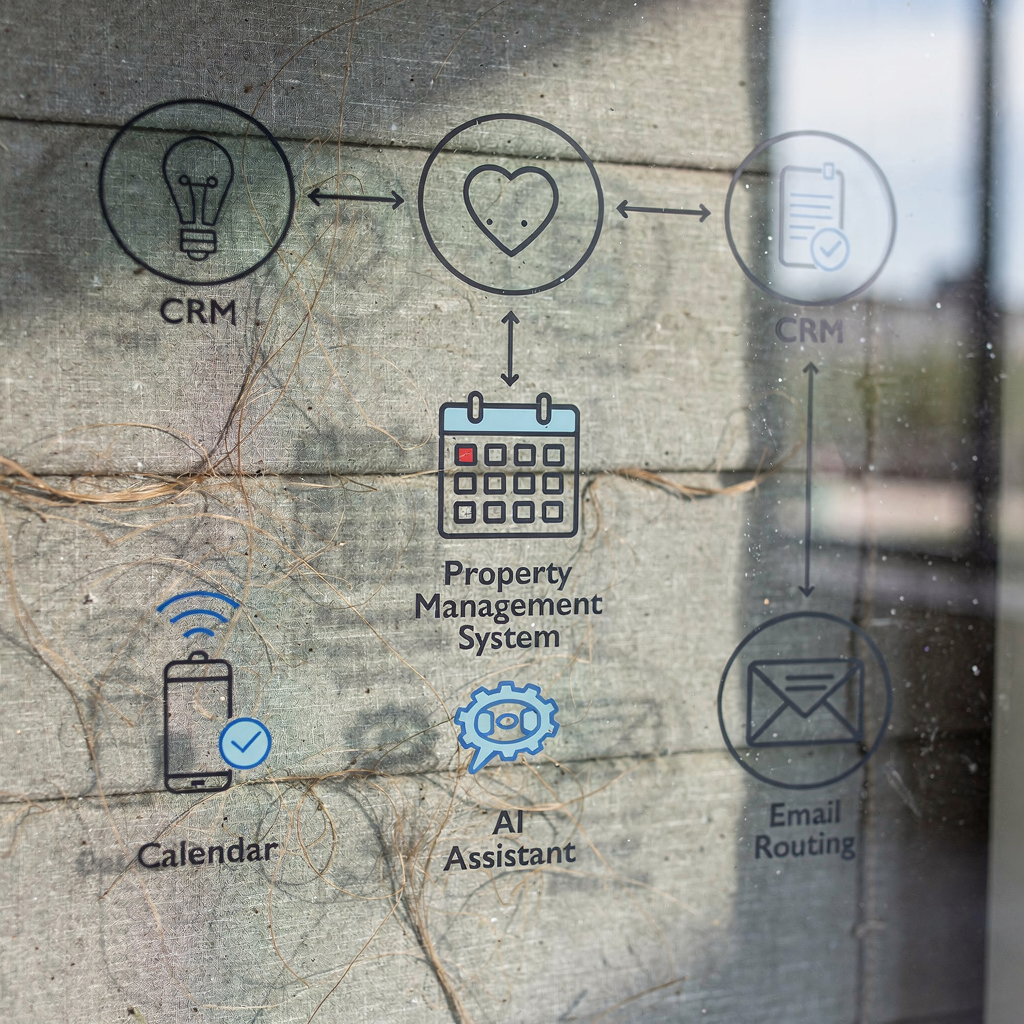
Follow a phased rollout. First, pilot on a single property and map workflows. Next, connect data feeds and train the model on local inventory. Then add calendar syncing and CRM writeback. Finally, scale across the portfolio. During each step verify compliance, privacy, and data governance. Ensure the ai leasing assistant solution respects tenant privacy and that audit logs exist for every interaction.
Risk control matters. Set rules so the assistant does not promise unavailable units or override special pricing. Create escalation paths for complex prospects and for pricing approvals. Also consider zero-code configuration options so leasing teams can update scripts without engineering support. If you want to learn about connecting inbox workflows to enterprise data for operational automation, check a guide on ERP email automation for logistics teams erp email automation logistics. That piece shows how to keep data grounded and responses accurate across systems.
Drowning in emails?
Here’s your way out
Save hours every day as AI Agents label and draft emails directly in Outlook or Gmail, giving your team more time to focus on high-value work.
Balance automation and judgement: how leasing team and leasing agent keep oversight of ai assistant and ai leasing agent for peace of mind
Automation should augment judgement, not replace it. Known risks include AI-generated inaccuracies and weak commercial judgement. Therefore, human oversight is essential. Create governance that defines when the ai agent must escalate. For example, any negotiation, lease exception, or pricing variance should trigger human review. Keep escalation SLAs short and clear so prospects do not wait.
Set up audit logs and regular sample reviews. The leasing assistant handles routine FAQs and reminders, but the onsite team must approve offers and special terms. Train the AI on local inventory and policies so it aligns with leasing policies. Also, label prospect inquiries and maintain a single thread for context. In operations-heavy environments, tools that automate the full email lifecycle show how to route and escalate with context attached. That approach reduces triage time and preserves traceability for compliance reviews automate logistics emails with Google Workspace and virtualworkforce.ai.
Restructure team tasks to capture the benefits. Redeploy leasing staff to focus on tours, complex negotiations, and resident experience. Keep one owner for final approvals and high-value decisions. Use clear guardrails for pricing and availability to avoid AI-generated mistakes. Finally, ensure continuous training on edge cases so the assistant improves over time. This balance provides peace of mind while you realize the time savings and convert leads into signed leases more reliably.
Adopt and leverage the best ai solutions to streamline workflows, boost conversion and transform your leasing operations
Choosing the best AI solution requires a checklist. Prioritise vendors with proven multifamily case studies, secure integrations, clear ROI, and data security. Look for platforms that offer conversational capability and that can connect to your CRM and property management system. A best AI choice will be easy to configure, provide traceability, and show measurable conversion gains. Vendors that supply case studies often include conversion metrics and lessons learned, which help set expectations.
Quick wins include automating FAQs, 24/7 lead routing, standard follow-ups, and tour booking. These steps reduce vacancy and accelerate closing leases. Tools like a smart leasing platform CRM can pair with AI assistants to convert leads from your website and Google Business Profile while keeping social channels active. Allow the tool to answer every lead and to push qualified leads into your human workflow. Also, consider advanced AI platforms if you need AI voice for inbound leasing calls or a full ai virtual leasing assistant that handles messages across channels.
Next steps: run a short pilot with clear KPIs and a predefined review cadence. Measure conversion, time savings, and impact on the leasing cycle. If you want more examples of using AI to scale operational correspondence and free teams from repetitive tasks, explore how virtual agents automate correspondence and drafting for operations teams. Those references show how AI can save time and provide better results while preserving oversight. With the right vendor, policies, and training, you can transform your leasing operations and gain peace of mind.
FAQ
What is an AI leasing assistant and how does it help leasing agents?
An AI leasing assistant is a conversational tool that handles routine communications with prospective renters and tenants. It helps leasing agents by answering common questions, pre-screening prospects, scheduling tours, and routing complex issues to humans so teams can focus on high-value tasks.
Can an AI leasing assistant improve conversion rates?
Yes. Vendors report uplifts in conversion and a reduction in missed leads when assistants provide fast, 24/7 responses. For example, some deployments show conversion improvements of up to 30% in published case studies RealPage.
How do I measure the impact of AI on leasing performance?
Track lead-to-tour, tour-to-lease, lead-to-lease conversion, time-to-lease, staff hours saved, and vacancy days reduced. Run A/B pilots and use consistent cohort definitions to compare results across properties.
Is human oversight still needed with an AI leasing agent?
Absolutely. AI can handle routine inquiry and scheduling, but humans should review negotiations, pricing exceptions, and complex approvals. Governance and audit logs help preserve quality and compliance.
What integrations are essential for a successful deployment?
Sync the AI with your CRM, property management system, calendars, and e-signature tools. Reliable availability and pricing feeds are critical to avoid misinformation and to maintain renter trust.
How fast can we see ROI from an AI leasing assistant?
ROI depends on portfolio size and current response latency, but many pilots show measurable gains within 60 to 90 days. Quick reductions in time-to-lease and vacancy days often translate into positive returns.
Are there risks of AI giving incorrect information?
Yes. AI agents can sometimes generate incorrect statements without guardrails. Implement escalation rules, sample reviews, and a single source of truth for inventory to mitigate that risk.
Can we use AI for inbound leasing calls and messages across channels?
Yes. Advanced solutions include AI voice and conversational AI that manage inbound leasing calls, web chats, and social messages. They route and summarize interactions for the leasing team to act on.
How does an AI assistant affect the onsite team and leasing staff?
The assistant reduces time spent on repetitive tasks and allows the onsite team to focus on tours, negotiations, and resident relations. Teams can redeploy effort to tasks that require human judgment.
Where can I learn more about automating operational messages and email workflows?
Explore resources on how operational AI automates correspondence and email lifecycle management to see principles you can apply to leasing. These guides show how to connect inboxes to enterprise data and rules for consistent, accurate replies virtual assistant logistics.
Drowning in emails?
Here’s your way out
Save hours every day as AI Agents label and draft emails directly in Outlook or Gmail, giving your team more time to focus on high-value work.