


AI in facility management: transform operations and improve operational efficiency
AI is reshaping facility management by combining machine learning, natural language processing and predictive analytics to transform routine building operations. AI helps facility teams sort alerts, prioritize repairs and analyze patterns across sensors and maintenance logs. For example, AI models can learn equipment behavior and flag anomalies before failure, which helps reduce reactive work and improve overall uptime. A recent industry write-up reports “fewer surprise breakdowns, faster response times, and better service experiences for occupants,” confirming measurable gains from using AI in buildings fewer surprise breakdowns, faster response times, and better service experiences for occupants.
Core benefits include energy savings and lower maintenance spend. Reports cite 10–20% energy savings and up to roughly 30% lower maintenance costs when organizations adopt predictive approaches and automation. These savings appear alongside large reductions in unplanned downtime, so tracking simple KPIs pays off. Immediate KPIs to follow are downtime, mean time to repair (MTTR) and energy per m2. Tracking these metrics makes returns visible quickly and helps justify pilots to stakeholders.
The shift to AI also changes how facility managers work. They can use an AI assistant to automate triage, create work orders from sensor alerts and tenant messages, and route tasks to the right team. That means staff spend less time on repetitive tasks and more time on strategic initiatives. If you need examples of AI applied to ops inboxes and email-heavy workflows, our company automates email lifecycle work for ops teams and reduces handling time significantly how to scale logistics operations without hiring. Also, generative AI is already appearing in executive workflows, with many leaders interacting with it regularly 350+ Generative AI statistics.
Adoption brings trade-offs. Data privacy, legacy integrations and staff acceptance require planning. Change managers warn that without transparent communication and training, adoption resistance can undermine benefits effective change management. Still, when teams align pilots to clear KPIs, facility management gains measurable operational efficiency and faster problem resolution. Therefore, starting small, measuring MTTR and energy per m2, and iterating can transform building operations in months rather than years.
AI assistant for facility managers: one AI tool to streamline work order and automate routine tasks
An AI assistant can act as a single ai tool that streamlines work order creation and helps facility managers automate routine tasks end to end. The assistant listens to sensor alerts and tenant messages, interprets intent with natural language processing, and creates a structured work order ready for dispatch. In practice, the automation flow looks like this: fault detection, work order generation, assignment to a technician, and closure with feedback. This clears shared inboxes and reduces triage time for a management team that otherwise spends hours deciding who handles each request.
For offices, healthcare and university campuses, the flows are similar but tuned to context. For example, an HVAC fault in an office might trigger immediate diagnostic steps, an SLA-aware dispatch and a temporary mitigation like adjusting setpoints. In healthcare, the ai assistant can triage alarms to protect patient safety and ensure compliance. On campuses, a single ai assistant can coordinate dozens of technicians across buildings, which helps reduce ticket backlog and improve response time.

Start pilots with one asset class such as HVAC or lighting. Measure response time, ticket backlog and MTTR before and after the pilot. Use a computerized maintenance management system or an integrated management system to capture outcomes. Piloting on HVAC systems often shows rapid wins because HVAC dominates both energy and maintenance spend. That approach helps demonstrate ROI and builds confidence for broader rollouts.
Automation reduces manual routing and improves consistency. A management tool that combines ai systems and facility management software can create contextual work orders with photos, sensor traces and suggested parts. This gives technicians the right context before they arrive, which cuts repeat visits. For teams facing high email and request volumes, consider a solution that automates email triage and drafting so inboxes no longer block service delivery. virtualworkforce.ai demonstrates this for operations teams, automating the email lifecycle so teams can focus on higher-value work virtual assistant for logistics. Overall, the right ai assistant helps facilities simplify task flow, streamline dispatch and shorten repair cycles.
Drowning in emails? Here’s your way out
Save hours every day as AI Agents label and draft emails directly in Outlook or Gmail, giving your team more time to focus on high-value work.
Real-time data and AI-powered predictive maintenance: proactive monitoring to reduce operational costs
Real-time data feeds combined with AI-powered models enable predictive maintenance that shifts operations from reactive to proactive. With continuous telemetry from building management systems and IoT sensors, machine learning algorithms spot degradation patterns and predict failures days or weeks ahead. Predictive maintenance reduces unexpected failures, lengthens asset life and improves repair scheduling. Studies show predictive approaches cut unexpected failures and produce a faster return on investment compared with purely reactive approaches AI in Facility Management Explained.
To implement predictive maintenance you need reliable sensors, robust BMS integrations and data quality checks. Start by cataloguing critical assets and ensuring sensor coverage. Then connect those sensors to an ai platform that applies learning algorithms to historical data and live streams. The platform should provide real-time insights and prioritized work orders so teams can schedule preventive maintenance during low-impact windows.
Integrations matter. Building management systems, computerized maintenance management system platforms and energy management tools must share consistent facility data. If data is fragmented, models struggle to predict accurately. Therefore, perform data audits and set up governance to keep data clean. For many organizations, one quick win is to analyze HVAC equipment cycles and filter anomalies into a prioritised work order stream. This practical step helps reduce downtime and optimize resource allocation for maintenance crews.
Predictive maintenance also delivers softer benefits. It improves occupant comfort and supports energy efficiency by preventing systems from operating inefficiently. When combined with energy optimization efforts, predictive maintenance helps managers spot inefficiencies and predict when components like compressors or drives will fail. Using this approach, facility teams see lower operational costs and fewer emergency repairs. For teams exploring email-heavy operational workflows, applying AI to emails and sensor alerts together increases throughput and clarity; see examples of automated logistics correspondence for operational teams automated logistics correspondence.
AI-powered solutions that leverage chatbots and management software to streamline decision-making
AI-powered chatbots and facility management software together simplify tenant communications, reduce manual triage and speed decision-making. Chatbots can answer common tenant questions, schedule room bookings, and open a work order when they detect a repair request. Meanwhile, dashboards provide ranked repair options and root-cause suggestions, which help managers choose the best course of action quickly. This combination supports faster decision-making and gives facility staff clear next steps.
Chatbots handle routine interactions and free the management team to focus on complex problems. When chatbots escalate, they attach context such as sensor traces, images and recent maintenance history. That context improves first‑time fix rates and reduces return visits. Because many operational emails contain repetitive requests, integrating AI chatbots with email processes further reduces manual work. If you want to see AI for heavy email workflows applied in logistics and operations, our case studies show how automation cuts handling time dramatically ERP email automation for logistics.
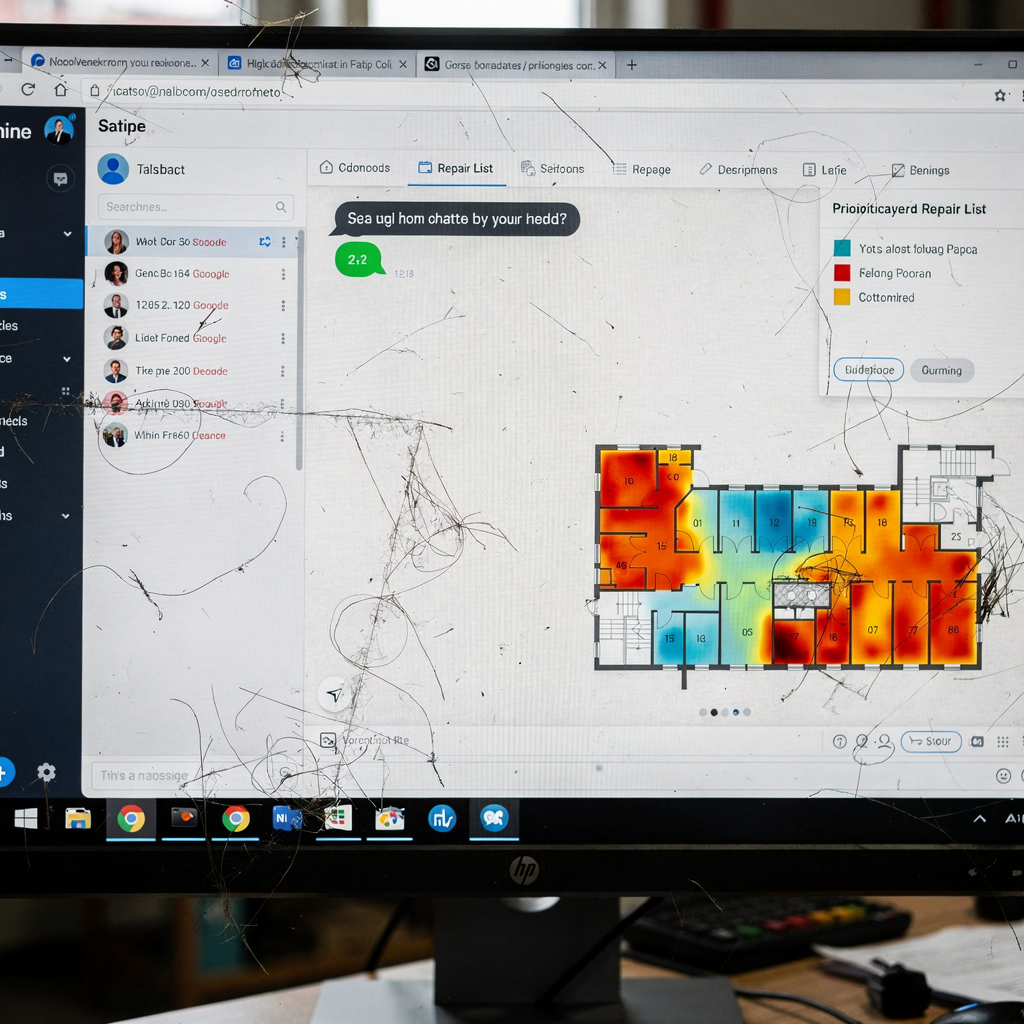
Decision-making support should be actionable. Good management software offers suggested fixes ranked by cost, downtime impact and parts availability. That produces actionable insights and helps teams optimize resource allocation. To reduce resistance, communicate how roles change, provide hands-on training and set realistic performance goals. Change is smoother when staff see how tools simplify work and increase safety.
Remember to evaluate security and data governance. Chatbots and management platforms must respect occupant privacy and follow IT access controls. Selecting vendors that support governance and provide transparent audit trails is essential. When teams pair ai chatbots with robust facility management software, they can simplify repetitive tasks, speed tenant responses and improve system performance while keeping control over sensitive data.
Drowning in emails? Here’s your way out
Save hours every day as AI Agents label and draft emails directly in Outlook or Gmail, giving your team more time to focus on high-value work.
Transform productivity and optimisation: integrate AI solutions to make facilities smarter and boost productivity
To transform productivity and optimise operations, plan integrations carefully and roll out in phases. Use APIs to connect AI solutions with existing building systems and a computerized maintenance management system. Start with a pilot, measure key outcomes and expand when results meet targets. Phased rollouts reduce risk and help facility teams adopt new processes with confidence.
Vendor selection matters. Evaluate total cost of ownership, expected payback and data access policies. Consider the right ai for your environment, and prefer solutions that let IT control data connections while business teams configure routing and rules. Assess whether a tool is powered by AI and whether it can analyze vast amounts of data without creating vendor lock-in. Look for platforms that support common building systems and offer transparent performance metrics.
Measurable outcomes include improved productivity, fewer emergency repairs and higher occupant satisfaction. Teams should track energy optimization, MTTR and ticket backlog. Many pilots show quick wins in energy efficiency and maintenance savings, which accelerates wider adoption. By integrating AI solutions seamlessly into workflows, facility staff can focus on strategic initiatives while automation handles repetitive tasks.
Finally, quantify ROI. Combine projected energy savings, reduced operational costs and labor efficiency gains to build a business case. For operations teams that handle heavy email volumes, automated email agents can be part of this plan by reducing time spent on communications. virtualworkforce.ai automates the full email lifecycle for ops teams and demonstrates how reducing email handling time helps teams focus on maintenance and strategic initiatives improve logistics customer service with AI. By taking pragmatic steps and measuring results, organisations transform facilities into smarter assets that boost productivity and lower costs.
Frequently asked questions: the power of AI — adoption, security, ROI and how to integrate AI-powered solutions
Here are frequently asked questions and clear answers for teams evaluating AI for facilities.
What is an AI assistant and how can it help facility managers?
An AI assistant is a tool that automates routine tasks, interprets alerts and creates work orders. It helps facility managers by reducing repetitive tasks and by enabling faster, data-driven decisions.
How secure is AI when handling facility data and tenant information?
Security depends on vendor controls, encryption and governance. Choose solutions that allow IT-managed connections, role-based access and audit logs to protect sensitive facility data.
What ROI can I expect from predictive maintenance?
ROI varies by asset and coverage but predictive approaches often cut unexpected failures and deliver quick payback versus reactive models. Studies show notable reductions in downtime and maintenance costs when predictive systems are adopted AI in Facility Management Explained.
How do I start a pilot for HVAC equipment?
Begin with a single asset class like HVAC, instrument key pieces, and track MTTR, ticket backlog and energy per m2. Use a short six‑month pilot to prove outcomes and refine integrations.
Will AI replace facility staff?
AI is meant to assist, not replace, facility staff. It automates repetitive tasks and frees teams to focus on strategic initiatives, improving job quality and safety.
How do chatbots improve tenant communications?
Chatbots handle FAQs, schedule services and open contextual work orders. They reduce response time and increase consistency while escalating complex issues to human agents with full context.
What integrations are required for predictive models?
Integrations with building management systems, CMMS and energy management platforms are essential. Reliable sensor data and data quality checks ensure models deliver accurate real-time insights.
How do we manage change and reduce resistance?
Communicate role changes, set clear KPIs and provide training. Involve the management team and facility staff in pilot design so people see direct benefits.
What about data privacy and compliance?
Ensure vendors meet local privacy regulations and offer data segregation options. Use contractual safeguards and technical controls to maintain compliance.
What is the quickest way to get started with AI for facilities?
Run a focused six‑month pilot, track energy and downtime KPIs, and iterate before a wide roll‑out. Also, consider automating heavy email workflows to clear the administrative backlog and let teams act faster virtualworkforce.ai ROI for operations.
Ready to revolutionize your workplace?
Achieve more with your existing team with Virtual Workforce.