


AI for the modern real estate agent — ai adoption, scope and quick facts
AI adoption has moved from pilot projects to everyday tools for many agents. First, hard numbers matter. Roughly three out of four agents were using AI tools by 2024, and adoption accelerated sharply in 2025. For example, industry surveys report that about 78% of real estate agents are currently using AI tools. Also, consumers now rely on AI for research. In one survey, 82% of Americans use AI to gather housing market information, so buyers and sellers often start their search with algorithmic data.
Usage frequency varies. About 20% of agents use AI daily, 22% weekly, and 27% a few times each month, while roughly 32% had not yet added AI to their workflow. These splits show that AI now supports both busy brokers and newer adopters. For the individual who wants to scale work, AI shortens routine tasks and helps manage lead flow. For the brokerage, AI improves consistency and data quality. Artificial intelligence now plays a visible role in the mix.
Why did adoption rise so fast? CRM integrations, AI chat assistants, and market analytics made the shift straightforward. Many CRMs now include AI add‑ons that score leads automatically, and many listing platforms use AI to suggest price ranges. Also, AI assistants handle scheduling, and virtual assistants draft messages to save time. Still, risks remain. Under‑use happens when agents buy tools without training. Poor integration occurs when platforms do not share data. Agents must watch for data drift and for AI outputs that require human verification. Therefore, treat AI as augmentation, not replacement.
Finally, remember that every real estate agent can benefit by learning the basics of AI. When agents use AI well, they gain time to focus on negotiations and client relationships. At the same time, agentic AI needs guardrails. Responsible AI use keeps client data safe and preserves the human touch that clients value most.
ai tools for real estate — AI‑powered tools that manage listings and workflow
Start with categories of AI tools that real estate professionals adopt most often. First, CRM automation sits at the top. Next, listing content and photo enhancement tools speed marketing. Then, scheduling and transaction management systems automate back‑office chores. Each category solves specific bottlenecks. For example, a CRM with AI scoring routes hot leads to an agent. Meanwhile, an AI-powered photo enhancer improves listing images fast. Tools like conversational assistants capture leads on a site. Also, AI virtual assistants draft showing confirmations and follow-ups, so staff can focus on closing.
One short example per category helps. In CRM automation, an AI model ranks inbound contacts and nudges follow-up. For listing copy, an AI-powered generator drafts a headline and three short paragraphs, which the agent edits. For scheduling, an AI assistant integrates calendars and books showings automatically. Each example shows speed and scale, and each still needs human oversight. Pros and cons follow. CRM automation speeds response and reduces missed leads, but it can route false positives. Listing generators save time, but they need a human edit to personalize and avoid errors. Scheduling tools free time, but they can create conflicts if permissions are wrong.
Agents and brokers should pick tools that integrate with their existing systems. For example, teams that handle many operational emails may explore platforms that fully automate email workflows and connect to ERP or document stores. Our platform, virtualworkforce.ai, automates complex, data‑dependent email tasks, which helps brokerages reduce manual triage and increase response consistency; see how teams automate operational messages at automated logistics correspondence for a logistics example that echoes real estate needs.
Use AI tools to streamline the publishing and management of listing content and to automate routine operations. Yet always review AI outputs. A short approval step prevents errors. Overall, AI-powered systems let agents scale marketing and administration while keeping client service personal.

Drowning in emails?
Here’s your way out
Save hours every day as AI Agents label and draft emails directly in Outlook or Gmail, giving your team more time to focus on high-value work.
Lead generation — how ai agent assistants capture leads and reduce losses
Speed wins when leads call or message. Statistics show why. Around 65% of leads are lost due to slow agent responses. Therefore, first response time matters more than you might think. An AI agent that replies instantly increases capture and conversion. An AI chatbot on a listing page can greet visitors, answer FAQs, and book showing times outside business hours. That means capture 24/7. Then, the AI passes qualified leads to a human. The workflow can follow a simple route: AI captures → AI qualifies → agent notified. This workflow reduces missed opportunities.
Practical steps make it real. First, set response templates and tone rules so automated messages match brand voice. Next, configure basic lead scoring rules in your CRM so the AI flags hot leads. Then, route high‑value contacts immediately to the agent’s phone or inbox. Finally, test the flow during a week and measure the results. Use metrics like response time, leads captured, and conversion rate to evaluate impact.
Examples help clarify. A small team added an AI chatbot to a property landing page. It captured contact info, scheduled showings, and answered basic questions. The team saw fewer cold leads lost, and appointment rates increased. Another firm used an ai virtual assistant to follow up with open‑house visitors. That assistant sent tailored messages, which resulted in more engaged buyers. Still, guard against over‑automation. Use AI to handle first contact and routine qualification. Then, hand off to humans for relationship building and negotiation.
Also pay attention to compliance. Always review automated messages for local advertising rules. Finally, iterate. Test which scripts work best for each property type. This approach gives real results, and busy agents regain time. For teams focused on high volumes, consider platforms that automate email and message handling end to end. For a view of AI systems that automate email lifecycles and preserve data grounding, check the case for automating emails and operations at how to scale logistics operations with AI agents, which shares lessons applicable to real estate operations.
ai in real estate — applications of ai for market insight and valuations
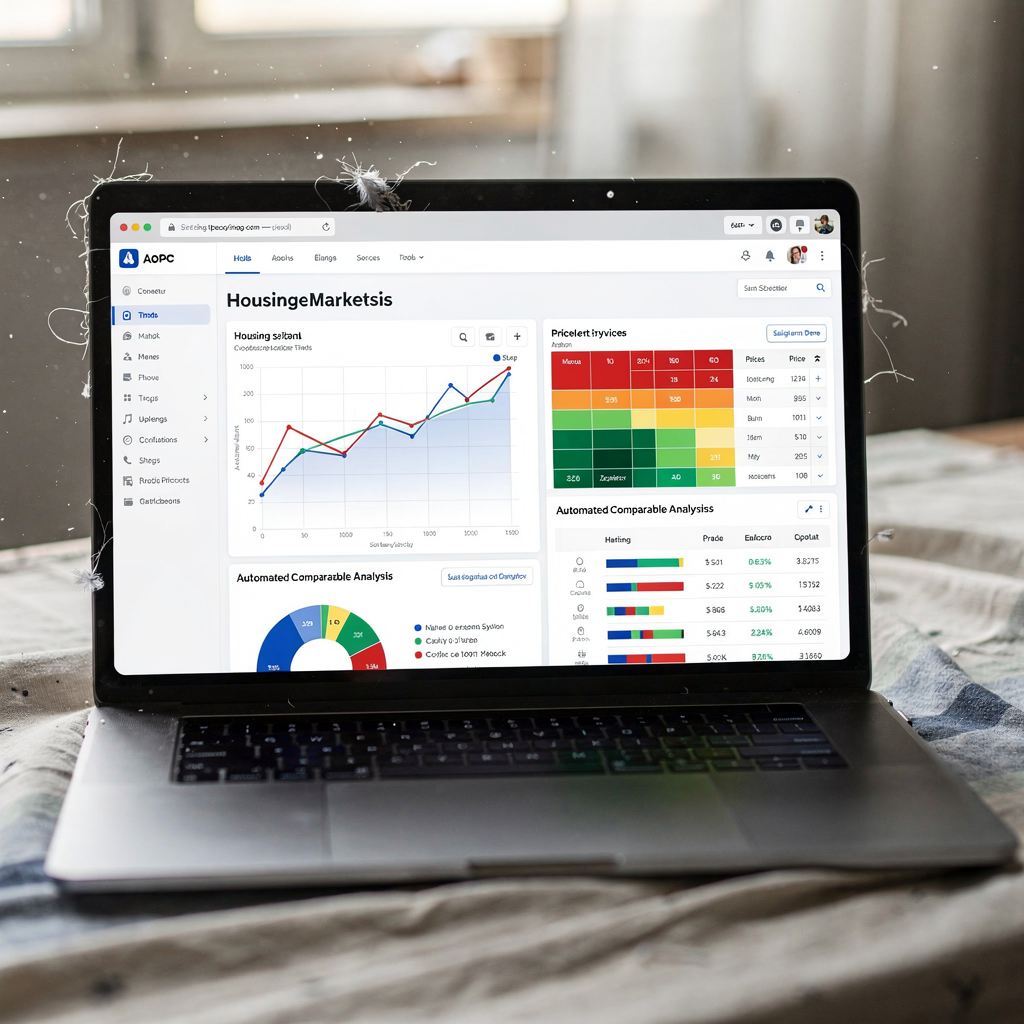
AI helps with pricing, comps, and neighborhood signals. Automated CMA and valuation tools combine historical transactions, current listings, and local trends to suggest price ranges quickly. For example, an AI valuation tool can analyze thousands of comps in minutes and surface outliers. That speeds negotiations. Also, predictive neighborhood trends can show likely price movement and rental demand. Agents can use these insights to guide sellers on timing and to inform buyers about investment potential.
One concise example explains the process. An agent runs an AI appraisal on a listing. The tool suggests a price band, highlights the three closest comparable sales, and notes two recent renovations in the area. The agent reviews the results, checks for unusual comps, and adjusts for subjective features like view or lot shape. In short, AI provides a faster, data‑driven starting point, and the agent verifies and refines the output.
Benefits include faster, more granular reports and consistent data for negotiations. Limitations include model opacity and risk of biased inputs. Therefore, verify unusual comps and review methodology. Also, keep clients informed about how AI arrived at a recommendation. Transparency builds trust. Use AI to create client‑specific market briefs that explain recent sales, time on market, and list‑to‑sale ratios. Then, humanize the brief with local insight and neighborhood anecdotes.
Agents should also leverage AI to monitor market signals continuously. Automated alerts can surface price shifts or listing patterns. For teams that manage many property listings, these alerts can streamline portfolio oversight. To dig deeper into operational automation that supports consistent responses across many contacts, read how email automation can reduce handling time and improve consistency at virtual assistant logistics.
Drowning in emails?
Here’s your way out
Save hours every day as AI Agents label and draft emails directly in Outlook or Gmail, giving your team more time to focus on high-value work.
ai marketing — tools for real estate agents to create listings, ads and outreach
AI marketing shortens time to publish and increases reach. First, automated listing copy generators produce headlines and descriptions that are SEO friendly. Then, social media posts and image edits get created automatically. Also, targeted ad creatives and A/B testing run more iterations with less manual work. For busy agents, this means consistent content flow across channels. Use a simple editorial process: AI draft → human edit → publish. This ensures accuracy and preserves brand voice.
Practical checklist for property marketing includes templates for property types, a compliance check for local rules, and a human review step. Also include image editing and virtual staging where needed. AI virtual staging turns an empty room into a staged scene, and image enhancers improve lighting and clarity for listing photos. Still, always verify that staged images reflect the property accurately and that marketing stays truthful.
For social media posts, an agent can use generative AI to create a week of content in minutes. Next, schedule posts and measure engagement for each property. Also, run small ad tests to see which headlines convert. When evaluating ad spend, track views, clicks, and leads back to the listing. ChatGPT or other models can help draft captions, but remember to edit for local flair and compliance. Use AI-powered tools for ad creative, but keep final approvals human.
There are ai marketing tools designed specifically for real estate, and there are general creative suites that adapt. Pick the right AI for your needs. For teams that handle heavy email volumes or transaction messages, consider platforms that automate both marketing and operational emails so responses remain consistent. See how automating logistics and customer messages improves throughput at how to improve logistics customer service with AI, which offers parallels to client communication in real estate.
Every real estate agent: workflow, best ai practices and benefits of using agents can use today
Start with a simple roadmap. First, assess needs and list the highest‑impact tasks. Second, pilot one or two tools, for example, a lead response chatbot and a listing content generator. Third, measure results by tracking response time, leads captured, and conversion rate. Fourth, scale tools that show clear ROI. This stepwise plan helps teams adopt AI without disrupting operations.
Best practices matter. Protect client data and use responsible AI use policies. Keep human oversight for client interactions. Train your team on the tools and document steps so everyone follows the same standards. Track KPIs such as response time, leads captured, and hours saved. Also, maintain an editorial checklist so AI drafts get reviewed before publishing. These are common best practices that produce real results.
Expected benefits include faster lead response, better market insights, and time saved on routine tasks. Agents and brokers gain consistency in communication. Busy agents regain hours per week. For brokerages with high email volumes, automating the email lifecycle can reduce handling time significantly and increase accuracy. For specific operational automation that turns emails into structured workflows and drafts accurate replies grounded in company data, explore how our platform automates email handling and routing at ERP email automation for logistics.
Action checklist for testing AI in your real estate business:
1. Identify two priority tasks to automate, such as lead response and listing copy. 2. Choose tools that integrate with your CRM and calendar. 3. Run a 30‑day pilot and track response time and conversion. 4. Train staff and set escalation rules so humans handle complex cases. 5. Scale when metrics improve.
Finally, remember that the power of AI comes from pairing AI systems with experienced agents. Apply AI to lift repetitive tasks, so agents can focus on high‑value client work. For teams who want to automate email workflows without heavy IT lift, virtualworkforce.ai offers zero‑code setup and full control, which helps real estate companies maintain accuracy and traceability while they transform operations.
FAQ
What is an AI agent and how can it help a real estate agent?
An AI agent is software that performs tasks autonomously or semi‑autonomously using AI algorithms. In real estate, an AI agent can capture leads, draft listing copy, schedule showings, and surface market insights so a real estate agent can focus on client relationships and negotiations.
Are AI tools safe for handling client data?
Yes, when teams choose platforms with strong data governance and encryption. Always verify that the vendor supports access controls, audit logs, and compliant data handling procedures, and train staff on responsible AI use.
Will AI replace human agents?
No. AI augments human work by automating repetitive tasks and by delivering faster insights. Human agents still handle relationship building, strategy, and negotiation, which require judgement and local expertise.
How quickly do AI chatbots capture leads?
AI chatbots can respond in seconds and operate 24/7. That immediacy reduces the risk that a lead gets lost, and it can increase initial appointment bookings before a human follows up.
Can AI create listing descriptions and social media posts?
Yes. Generative AI can draft headlines, listing descriptions, and social media posts quickly. However, you should always edit drafts to personalize the message and ensure compliance with local advertising rules.
How accurate are AI valuation tools?
AI valuation tools provide fast, data-driven estimates based on comps and trends, but they can miss unique, local, or one‑off property features. Agents should verify unusual comps and add local adjustments before finalizing a price.
What metrics should agents track during an AI pilot?
Track response time, leads captured, lead conversion rate, and hours saved. Also monitor content quality and compliance, and gather client feedback on automated interactions.
Do I need a CRM to use AI effectively?
A CRM helps centralize leads and supports AI scoring and routing. Many AI tools integrate directly with popular CRMs, which streamlines workflows and reduces manual entry.
How do I maintain personalization when I automate messages?
Use templates that include personalized fields and guidelines for tone. Then, have humans review key messages and set escalation rules so high‑value interactions always receive personal attention.
Where can I learn more about automating operational emails for my team?
Explore platforms that specialize in end‑to‑end email automation and operational grounding. For example, virtualworkforce.ai explains how to automate the email lifecycle for complex operations, which offers lessons that apply to real estate teams seeking faster, more consistent responses.
Drowning in emails?
Here’s your way out
Save hours every day as AI Agents label and draft emails directly in Outlook or Gmail, giving your team more time to focus on high-value work.