


Assess ai readiness: housing association strategy, governance and data
The social housing sector shows strong interest in AI, and yet readiness is uneven. For example, a survey of 220 respondents and 50 interviews found high enthusiasm but low confidence; “most organisations are unprepared to harness its full potential” (Lab Online). First, leaders must map strategy, governance and data in plain terms. Next, they should score current capabilities to set a realistic pilot baseline. For instance, capture metrics such as data quality scores, contact centre volumes, average handling time and tenant satisfaction. Then, record consent records and unified tenant IDs before any pilot starts.
Also, the research led by Dr Simon Williams highlights governance gaps: while many teams experiment with new tools, few have policy or oversight to manage risk (BCN / Service Insights). Therefore, start with a simple maturity checklist. First, check data standardisation and remove silos. Second, list core systems and where tenant data lives. Third, assign owners for data quality and retention. Fourth, define escalation points for urgent issues.
To help housing providers reduce email and case handling, consider how operational email behaves as an unstructured workflow. If your ops teams face hundreds of inbound messages daily, an AI agent can route and draft replies to simplify that load; see how this works in operational settings with email automation for operations (email automation for operations). In addition, public housing and affordable housing teams should include tenant representatives in planning. Finally, set a target for 3-month improvements and iterate. By taking these steps, you set a clear path from pilot to rollout while keeping legal and ethical controls front of mind.
Deploy ai assistant and chatbot to automate routine tasks and streamline tenant communications
Start small. Define scope around repairs reporting, appointment booking, benefits FAQs, rent queries and service requests. Then, pick 10–15 common intents that drive most contacts. For example, repair requests and tenancy change notifications often account for a large share of repetitive contacts. Use a phased rollout so you can test and refine. Also, include a clear human handover and escalation rule to handle complex cases.
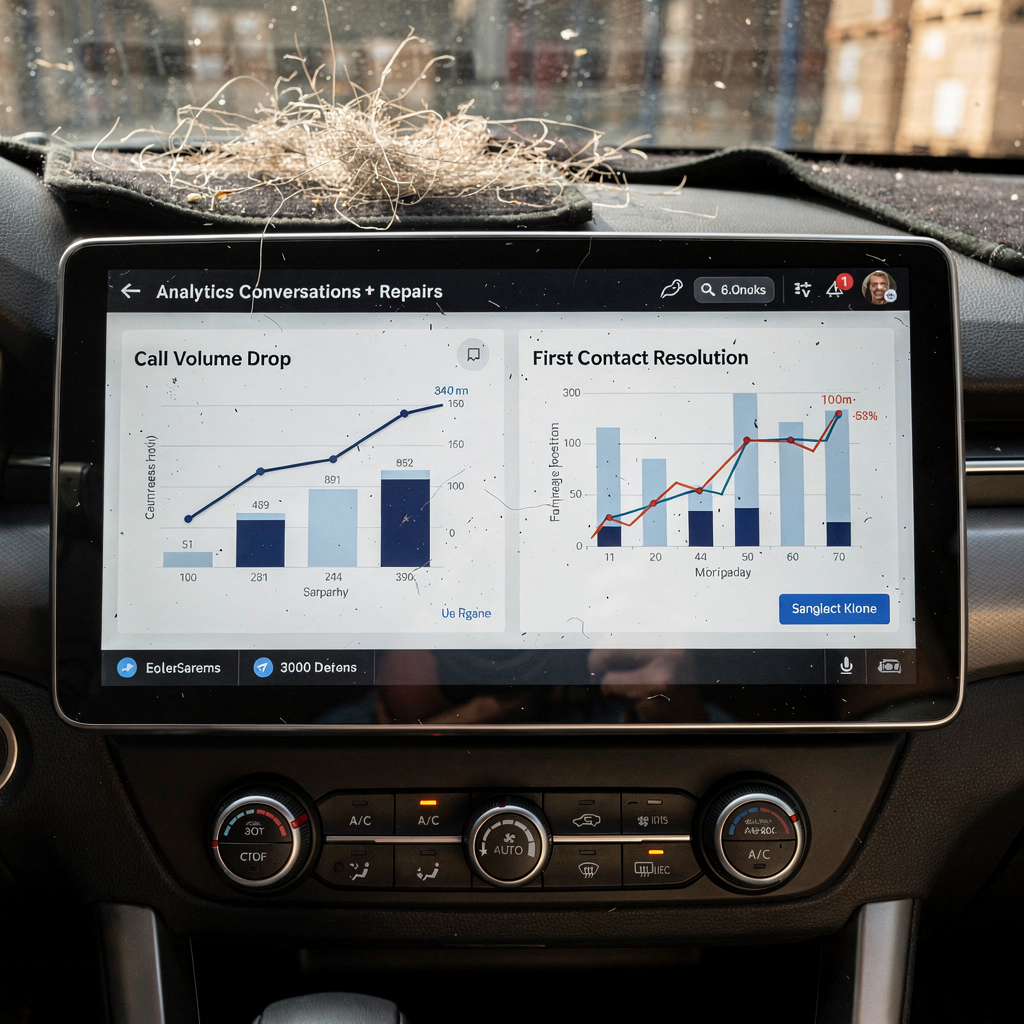
Conversational AI and an ai assistant can automating repetitive work and free staff for higher-value work. A Beyond Housing case study shows conversational AI reduces repetitive contacts and frees staff to focus on complex cases; “the key to success lies in taking a strategic, phased approach to AI deployment” (LogicDialog / Beyond Housing). To implement, combine an ai chatbot for common queries with an intelligent virtual assistant that routes tasks. Also, using natural language processing helps the system recognise intent, sentiment and urgency. First, train models on historical transcripts. Next, test with a small control group. Then, measure KPIs like call volume drop, first-contact resolution and average handling time.
For email-heavy workflows, an AI agent that automates the full email lifecycle will reduce handling time and improve consistency. For practical detail on automating emails in operations, review AI agents that automate email lifecycle (AI agents that automate email lifecycle). Moreover, craft robust tests for frequently asked questions and appointment confirmations. Finally, maintain a “powered by AI” label on automated replies to keep transparency. This approach will simplify triage, reduce workload and provide tenants with timely, accurate answers.

Drowning in emails? Here’s your way out
Save hours every day as AI Agents label and draft emails directly in Outlook or Gmail, giving your team more time to focus on high-value work.
Use ai-powered live chat, multi-language and around the clock support to improve tenant access
Provide 24/7 coverage without hiring night teams. An ai-powered live chat can offer instant responses and get instant answers for common requests. For example, the assistant can confirm appointments, give updates on repair requests, and answer basic benefits FAQs. This reduces contact abandonment and helps tenants with urgent issues outside office hours. Also, instant confirmations cut missed appointments and lower followup volumes.
Multi-language support matters. A mix of language models and simple translation fallbacks ensures accurate answers for diverse communities. To comply with accuracy limits, label content as powered by AI and offer a clear route to a human advisor. For high-risk or legal queries, escalate immediately. Measure tenant satisfaction, contact abandonment and out-of-hours resolution rates.
Live chat must hand over smoothly. Design handover rules so community managers and property managers receive context and a case history. This delivers the right context for urgent or complex cases. In addition, an ai chatbot can answer common tenant queries about relocation, rent payments and tenancy basics. Free your team from routine tasks so staff to focus on complex cases. Finally, monitor response times and wait times to keep quality of service high. The result is a seamless experience that provides tenants with information and improve tenant experience across channels.
Integration, analytics and ai-driven optimisation to reduce operational costs and optimise service
Link the assistant to CRM, repairs scheduling, workforce management and payment systems. Integration must be secure and auditable. For practical guidance on connecting to ERPs and Gmail, see how to connect to ERP and Gmail (connect to ERP and Gmail). Then, ensure you have unified tenant IDs, timestamped event logs and consent records. These data elements let analytics surface reliable trends.
Use conversation logs to spot repeat faults, predict demand and prioritise maintenance. Analytics can highlight where to optimise resource allocation and where to reduce customer wait times. For example, predictive patterns help reduce operational costs by scheduling trades proactively. Next, feed insights back into an AI platform to automate routine prioritisation. Over time, the assistant will learn to deliver the right routing and improve overall efficiency.
Also, operational data from emails and chat creates a structured record for each service request. For teams overwhelmed by email, an AI agent that understands intent and drafts replies can transform how staff interact with operational systems; see a practical example of reducing email handling time in ops (how to scale operations without hiring). This reduces workload and gives property management teams time to focus on higher-value work. Finally, track proof points: fewer repeat contacts, lower manual triage and clearer ownership. These are direct measures of improved operational efficiency.
Drowning in emails? Here’s your way out
Save hours every day as AI Agents label and draft emails directly in Outlook or Gmail, giving your team more time to focus on high-value work.
hoa management, hoas and ai solutions governance: ethics, compliance and how to leverage intelligent ai
Good governance is essential. Start by documenting policy on bias, accountability, data protection and vendor oversight. Engage tenant reps, front-line staff, legal and IT from day one. Then, define roles: who signs off on models, who monitors performance, and who owns data retention. This protects tenants and preserves trust for community associations and HOAs.
Include ethics checks in procurement. Ask vendors for model auditability, bias testing and data lineage. Use tenant-facing transparency: include clear “powered by AI” notices and easy opt-out routes. Also, co-design pilots with tenants to increase acceptance. For example, involve community managers in script testing and escalation design. This will boost uptake and produce better quality of service.
Train staff to use AI outputs, not blindly follow them. Upskill teams so they can interpret suggestions, manage exceptions and deliver personalised support. In operations where email rules matter, teach staff to use an ai platform that grounds replies in ERP or document sources. This approach helps housing management teams stay compliant while they leverage advanced AI for routine tasks. Finally, publish governance controls and review them regularly to stay ahead of regulatory change.
Pilot, measure and scale: request a free trial, proof points and next steps for intelligent ai adoption
Design pilots for 6–12 weeks with clear baselines and measurable targets. First, set control groups and define success: reduce call volumes, increase first-contact resolution, or cut average handling time. Then, capture baseline metrics and run a short proof of concept. Typical proof points include a reduction in manual effort for specific tasks by around 50% in case examples, lower call volumes and faster appointment bookings (Service Insights).
Next, plan scaling. Check integration maturity, data governance and staffing model before you expand. Also, include cost‑benefit forecasts and a review cadence. For email-driven operations, consider a no-code AI agent that automates the lifecycle of messages; this will simplify triage and improve consistency for operations teams who face high email volumes (AI agents that automate email lifecycle). Then, iterate quickly: pilot, measure, refine, scale.
If you want to test a tenant-facing assistant, request a free demo and tie it to clear KPIs such as reduced wait times, increased tenant satisfaction and fewer repeat contacts. For reference on practical implementation and ROI in operational contexts, review case examples of automated correspondence and drafting tools (automated correspondence examples). Finally, stay pragmatic: use generative AI where it helps, and use deterministic rules where accuracy matters. This balance will help housing teams boost service, reduce errors and provide tenants with relevant, accurate answers.
FAQ
What is an AI assistant for housing associations?
An AI assistant is software that automates routine tasks like appointment booking, answering FAQs and routing repair requests. It uses natural language techniques to provide tenants with instant responses and to reduce staff workload.
How can I assess AI readiness in my organisation?
Start by auditing data quality, governance and current contact volumes. Then, run a short maturity checklist and set measurable targets for a 3-month pilot.
Will an ai chatbot replace front-line staff?
No. An ai chatbot handles routine tasks and automating repetitive tasks so staff can focus on complex cases and higher-value work. This improves quality of service while reducing repetitive workload.
How do I ensure multi-language support is accurate?
Combine language models with translation fallbacks and human review for sensitive content. Also, label content as powered by AI and provide a quick route to a human advisor for urgent issues.
What metrics should we track during a pilot?
Track call volume drop, first-contact resolution, average handling time, tenant satisfaction and contact abandonment. Also, monitor data quality scores and escalation rates.
How do we handle data protection and ethics?
Set clear policies on bias testing, accountability and vendor oversight. Engage tenant representatives and legal teams in governance reviews to maintain trust and compliance.
Can AI integrate with our CRM and repairs system?
Yes. Integration with CRM, repairs scheduling and payment systems is essential for automated routing and accurate responses. Work with IT to map unified tenant IDs and consent records before deployment.
How fast can we see results from a pilot?
Most pilots show measurable improvements within 6–12 weeks. Typical proof points include faster bookings, lower call volumes and reduced manual triage for specific tasks.
What is the difference between an ai assistant and an intelligent virtual assistant?
An ai assistant often focuses on text and chat interactions, while an intelligent virtual assistant can combine routing, data grounding and automated actions across systems. Both aim to simplify workflows and provide tenants with information.
How can we get started with a pilot?
Define 10–15 common intents, set baseline KPIs and choose a small control group. Then, request a free trial or demo tied to clear review dates and measurable targets.
Ready to revolutionize your workplace?
Achieve more with your existing team with Virtual Workforce.